Хочете будувати кар’єру в Data Science та AI? Vodafone Big Data Lab відкриває новий набір —>
Олександр КузьменкоMoney
28 October 2026, 16:26
2026-10-28
The Verkhovna Rada has finally passed a bill on criminal liability for "drops." What penalties does it provide?
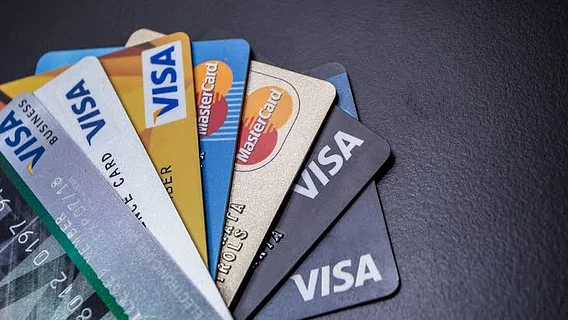
The Verkhovna Rada adopted in the second reading and as a whole the presidential bill No. 16013, which introduces criminal liability for the illegal transfer and sale of bank cards, accounts and electronic wallets. 270 people's deputies voted in favor of the corresponding decision.
The Verkhovna Rada adopted in the second reading and as a whole the presidential bill No. 16013, which introduces criminal liability for the illegal transfer and sale of bank cards, accounts and electronic wallets. 270 people's deputies voted in favor of the corresponding decision.
This was announced by MP Olga Vasilevska-Smaglyuk. The new law aims to eliminate the shadow market of bank accounts used for phishing, telephone fraud, masking the income of illegal gambling businesses, and "black" conversion centers.
According to the National Bank of Ukraine, about UAH 200 billion passes through such cards every year. In 2024 alone, Ukrainian banks were forced to terminate relationships with over 80,000 clients due to their participation in such transactions.
The main innovation of the document is the introduction of a new Article 200-1 into the Criminal Code. If previously law enforcement officers had to prove the direct complicity of the cardholder in a specific crime, now the very fact of knowingly transferring, buying, or selling means of access to an account for criminal purposes is an independent criminal offense.
As noted by the "Sudovo-Yurydychna Gazeta", the sanctions under the new Article 200-1 provide for:
For transferring or providing access to an account for the purpose of committing a crime - a fine from UAH 5,100 to UAH 17,000.
For buying, selling, storing or receiving someone else's payment instruments - a fine from UAH 51,000 to UAH 85,000, restriction of liberty for up to 3 years, or imprisonment for a term of 2 to 4 years.
For repeated actions or offenses committed by a group of persons in prior conspiracy - a fine from 85,000 UAH to 170,000 UAH or imprisonment for a term of 4 to 6 years.
In parallel, Article 200 of the Criminal Code of Ukraine has been strengthened. Forgery of payment instructions and means of access is punishable by a fine of UAH 51,000 to UAH 119,000 or imprisonment for up to 4 years. For illegal possession of someone else's cards and bank data - a fine of UAH 68,000 to UAH 136,000 or imprisonment for up to 3 to 5 years.
At the same time, the law provides a regulatory tool to protect those who accidentally fall into the scheme. A person who has committed an offense for the first time is exempted from criminal liability if he voluntarily contacts law enforcement before suspicion arises and actively contributes to the exposure of the organizers of the scheme.
"Organizers of fraudulent networks often use young people, students, and socially vulnerable citizens, promising easy money for handing over a bank card. But a bank account is not a commodity that can be safely rented out. For a few hundred or 1,000 UAH reward, a person risks becoming a participant in a scheme to steal or launder much larger amounts," the parliament emphasizes.
The amendments to the legislation have been developed since September 2, 2026 as part of the harmonization of Ukrainian law with EU Directive 2019/713 on combating fraud and counterfeiting of non-cash means of payment. By the second reading, the People's Deputies submitted 1,703 amendments, of which the relevant committee took into account 21. They complement the previous steps of the NBU, in particular the previously introduced limits on P2P transfers for individuals.
"The bank must itself see the suspicious activity of the client, determine whether to attribute it to drops, and enter the data into the register." The NBU explained how the drop register will work