Хочете будувати кар’єру в Data Science та AI? Vodafone Big Data Lab відкриває новий набір —>
Наталя ХандусенкоHot News
29 September 2025, 11:11
2025-09-29
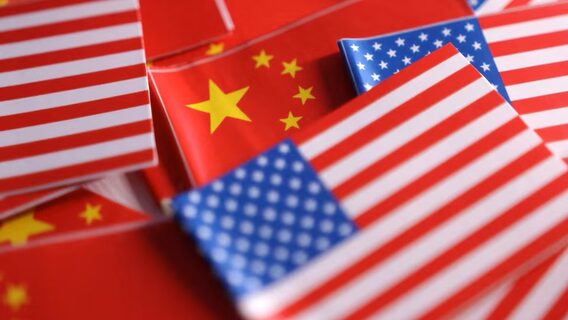
"While the US is raising barriers, China is lowering them." China offers IT talent its alternative to the American H-1B — the K visa
China's new visa program will launch on Wednesday, a move that could help Beijing in its geopolitical competition with Washington as new U.S. visa policies force potential candidates to seek other options.
China's new visa program will launch on Wednesday, a move that could help Beijing in its geopolitical competition with Washington as new U.S. visa policies force potential candidates to seek other options.
China's K visa, announced in August, is designed for young foreign graduates in science, technology, engineering and mathematics (STEM) fields and promises entry, residency and employment without a job offer, which could be attractive to foreign workers seeking an alternative to employment opportunities in the United States, Reuters writes .
“The symbolism is powerful: while the U.S. is raising barriers, China is lowering them,” said Matt Mountel-Medici, an Iowa immigration attorney who holds a so-called K visa.
Earlier this month, the Trump administration said it would require companies to pay $100,000 a year for H-1B work visas , which are widely used by technology companies to hire skilled foreign workers.
“The US has clearly shot itself in the foot with regard to H-1B visas, and the timing for the launch of the Chinese K visa is simply perfect,” said Michael Feller, chief strategist at Geopolitical Strategy.
Other countries, including South Korea, Germany and New Zealand, are also relaxing visa rules to attract skilled migrants.
Immigration experts say the main attraction of the K visa is the lack of an employer-sponsoring requirement, considered one of the biggest obstacles for those seeking H-1B visas.
The H-1B visa requires employer sponsorship and is subject to a lottery system, with only 85,000 slots available each year. The new $100,000 fee could further deter first-time applicants.
“This is an attractive alternative for Indian STEM professionals looking for flexible and simplified visa options,” said Bikash Kali Das, an Indian student at Sichuan University.
Despite its appeal, the K visa faces obstacles. Chinese government regulations include vague requirements regarding “age, education, and work experience.”
There are also no details on financial incentives, employment assistance, permanent residency or sponsorship for family members. Unlike the US, China does not grant citizenship to foreigners except in rare cases.
Language is also a barrier: most Chinese tech companies operate in Mandarin, which limits opportunities for those who don't speak Chinese.
Traditionally, China's talent recruitment has focused on overseas Chinese scholars and overseas Chinese.
Recent measures, including housing subsidies and signing bonuses of up to 5 million yuan ($702,200), have encouraged Chinese STEM professionals working in the United States to return home, especially amid Washington's increased focus on ties with China.
“Efforts to recruit Indian tech professionals in China are growing but remain modest, compared to more intensive, well-established and well-funded initiatives aimed at repatriating Chinese STEM professionals,” said Das of Sichuan University.
A Chinese STEM graduate who recently received a job offer from a Silicon Valley tech company was also skeptical about the prospects of a K visa.
"Asian countries like China are not dependent on immigration, and local Chinese governments have many ways to attract domestic talent," he said, declining to be named for confidentiality reasons.
While China is unlikely to significantly change its immigration policy to allow millions of foreign workers in, analysts say the K visa could still improve Beijing's position in its geopolitical rivalry with Washington.
“If China can attract even a tiny bit of the world’s tech talent, it will be more competitive in cutting-edge technology,” Feller said.
“It was like playing slots in Vegas: sometimes someone wins, but most don’t.” Indian engineer in US denied H-1B visa three times, but gets ‘Einstein visa’ thanks to AI work
“I’m willing to pay $100,000 for an H-1B visa to hire the best people for my AI company.” Metaview startup co-founder explains why Trump’s new visa requirement is no problem for him
A Taiwanese programmer was obsessed with staying in the US and planned his career for 20 years. But now he doesn't want his professional life to depend on H-1B visas.










Comment hidden for violating commenting rules.
Comment hidden for violating commenting rules.