Хочете будувати кар’єру в Data Science та AI? Vodafone Big Data Lab відкриває новий набір —>
Олексій ДзюбаWar
3 December 2024, 09:02
2024-12-03
"Even if we and other manufacturers scale, it takes 3-4 months to catch up with the Russians." Interview with the manufacturer of REB-resistant fiber optic drones, which are currently one of the main technologies on the front
In August, the Russians began using improved versions of fiber-optic drones at the front. Oleksiy Zhulinskyi and his company 3DTech are one of those Ukrainian manufacturers working on a response to the occupiers. His fiber-optic drone "Predator REBOFF" is currently undergoing codification, but military units are already able to purchase it and use it in combat. We contacted Oleksiy and talked about the fashion for fiber-optic drones, the features of their use and how we can win the technological race with the Russians in this segment.
In August, the Russians began using improved versions of fiber-optic drones at the front. Oleksiy Zhulinskyi and his company 3DTech are one of those Ukrainian manufacturers working on a response to the occupiers. His fiber-optic drone "Predator REBOFF" is currently undergoing codification, but military units are already able to purchase it and use it in combat. We contacted Oleksiy and talked about the fashion for fiber-optic drones, the features of their use and how we can win the technological race with the Russians in this segment.
About war, injuries and own company
— What did you do before the full-scale invasion and after it began?
— For me, the war did not start with a full-scale invasion of Russia, because I came from the temporarily occupied territories. I graduated from school in 2014, I already passed the secondary school entrance examination in Kyiv and started studying in the capital in 2016, when the so-called ATO (Anti-Terrorist Operation — ed.) continued. I studied, played sports, was the head of the BMX-freestyle Federation of Ukraine (this is cycling).
When the full-scale invasion began, I celebrated my birthday and joined the ranks of the Armed Forces at the age of 25. I joined my friends in SSO "Azov", it was a TRO unit. I was the commander of a mortar unit there. Worked as a 60-mm American mortar, then completed training.
The first mortar was issued to me together with YouTube. They said that you can learn how to shoot from it from a video.
Why a mortar? I answered the math and geometry questions well for grades 9-11. The commander said that I am the best and will be a mortar. Adding that now we will go to the battlefield, and then there will be a training ground.
I was introduced to drones there because the mortar adjustments were made with Mavic drones. There was a shortage of personnel in the army, so sometimes I had to adjust the mortar by giving corrections. That's how I learned to use the Mavic.
My military career was short-lived. In July 2022, we accidentally hit a TM-62 anti-tank mine with a car. We had two 200 (killed) and two 300 (wounded). I was very lucky to survive in that situation, but I could not continue my service due to my health.
Information about Russian fiber-optic drones that damage Ukrainian equipment appeared online. The expert reported whether this is really a threat
— How did your company 3DTech appear?
— I underwent rehabilitation after the injury.
My friends gave me a 3D printer. The 3DTech company first started with 3D printing.
I began to study how this technology could be used for civilian or military purposes. I realized that I am not very interested in printing by weight, as some services do. I wanted something more in-depth and more technological.
I decided to print a drone frame. At first it was something like a Mavic case. Everyone discouraged me, saying that the plastic frame for the drone would not be very rigid. Then I agreed with it, but first I tried to assemble the drone on a printed plastic frame. I tried various plastics, including carbon ones, but they do not measure up to the carbon frame in terms of their characteristics.
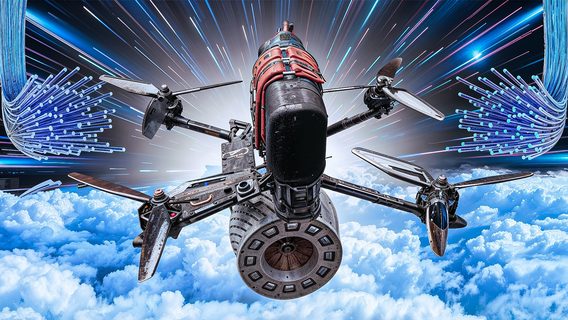
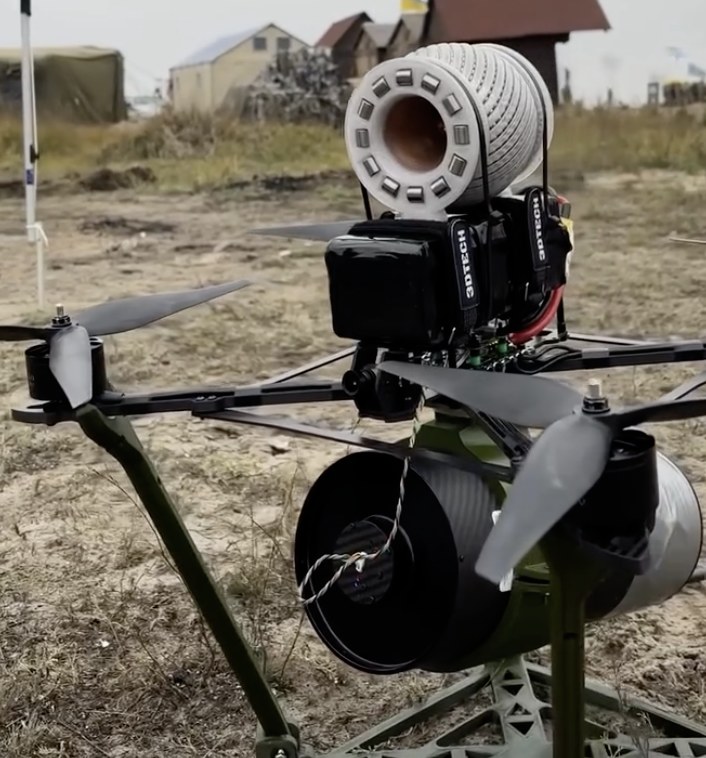
Photo — Optical fiber drone "Predator REBoff"
As I was also exposed to other drone components, particularly radio electronics, I became interested in building a drone that could be used in the military. It was in the fall of 2023. So I started learning fpv drones.
About the appearance of drones on optical fiber
— How did the idea to create a drone on optical fiber come about?
— Military personnel often come to us with their needs. A fiber-optic drone is not a new idea, there were such at the beginning of the war.
However, at that time their use was not economically feasible, because the EW was not so developed at that time and it was possible to fly on standard frequencies.
Now there are areas of the front, where even at shifted, low frequencies, pilots are unable to perform combat tasks and, in general, even take off.
Everything is covered by the enemy's EW, our EW, so the radio airwaves are very "clogged".
The military came with a specific goal: to find a solution for a section of the front where no radio-controlled drones can fly. So we decided to create a fiber optic drone.
- How long did it take to create it?
— We started its development at the beginning of the summer of 2024 and to this day we are implementing some changes. We presented a complete solution at the end of September, which can be used. In the course of use, every week we make some adjustments to its application.
— How does the Brave1 defense-tech cluster help you?
- We have been communicating for a long time, perhaps not as closely as now. Brave1 is helping us codify the product so we can officially supply it to the military. This is consultation, help with contacts, and we also travel together for a presentation to the military so that they can get acquainted with our product, its features and specifics of use.
About the difference with radio-controlled drones
— If we compare a radio-controlled drone and a fiber-optic drone, then the latter flies with the help of a wire, which is very fragile?
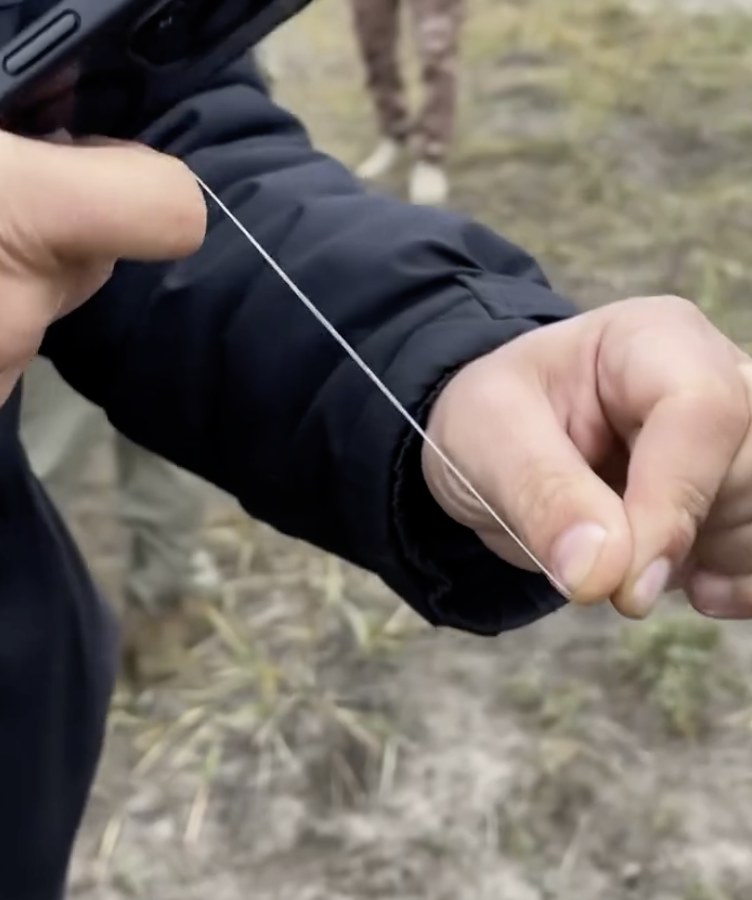
- This is both a plus and a minus. The fiber optic wire itself is very resistant to tension, while it is fragile. Accordingly, any bends of more than 45 degrees will break it. The tension of the optical fiber can withstand more than 30 kg. However, when you tie a small knot and stretch it, it immediately tears. But it will not be possible to tear it directly with your hands.
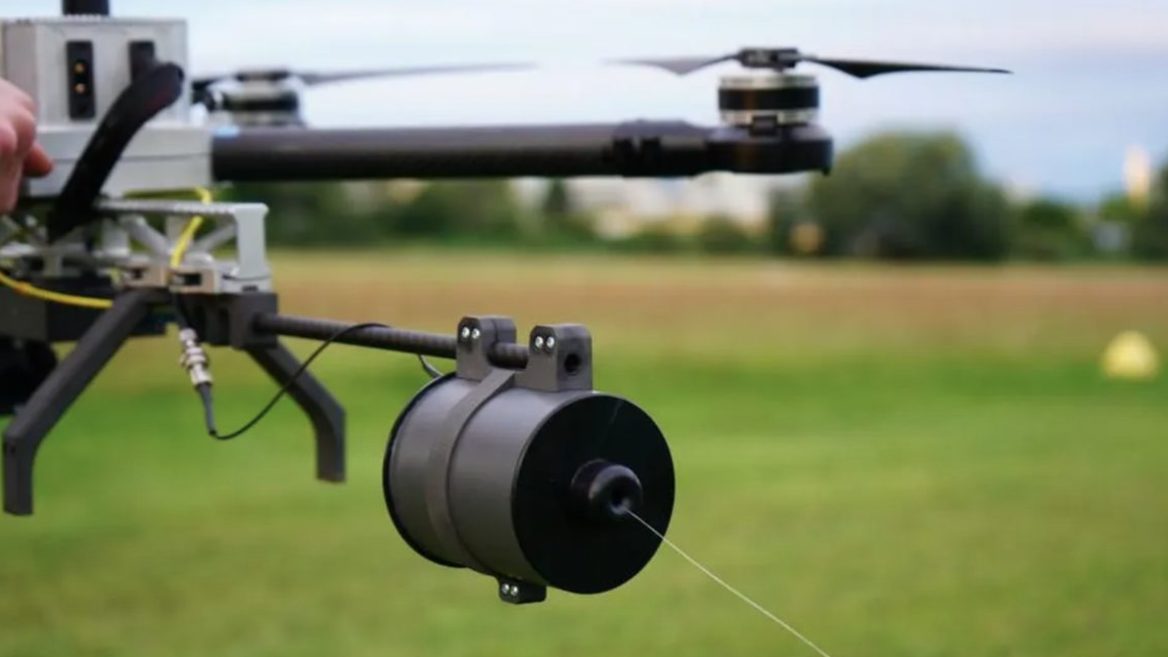
Another feature of such drones is that they are trailed by a fiber optic cable that leaves a trail behind them. Since the coil is installed on the drone itself, the cable cannot get tangled in a tree, because it is constantly unwound. If we talk about the structure where the coil remains on the ground, any first branch will become an obstacle and the drone will fly further, without optical fiber and control.
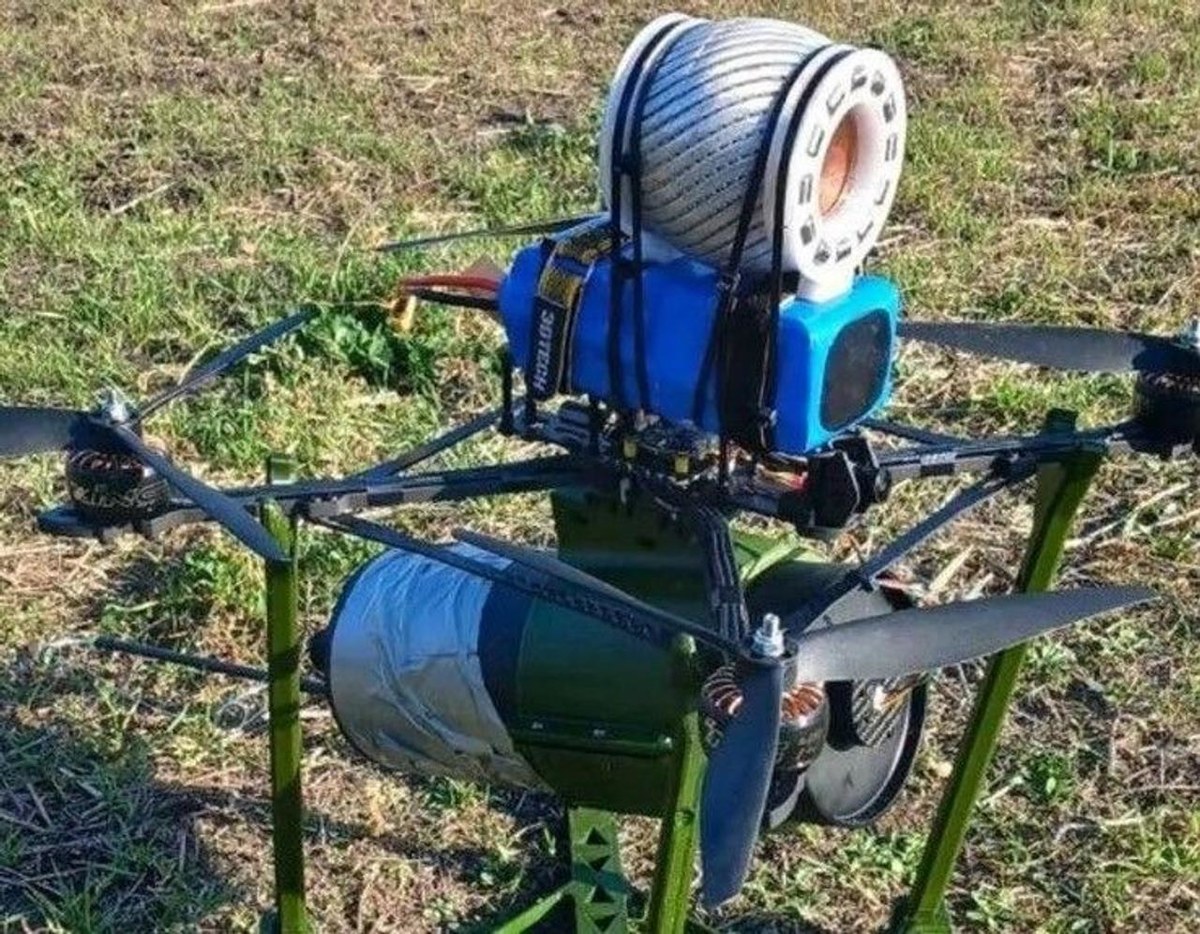
Therefore, the drone carries a coil with it. If we are talking about a flight of 10 km, then this is an additional weight of the coil of 2.5 kg. We had to develop a 13-inch drone to increase the drone's payload and flight time.
Now we are developing, where the flight takes place at 15 km and at 20 km.
There will be a thinner optical fiber, so the weight of the coil for 15 km will be the same as it is now for 10 km.
- You have several types of REBoff Predators. How are they different?
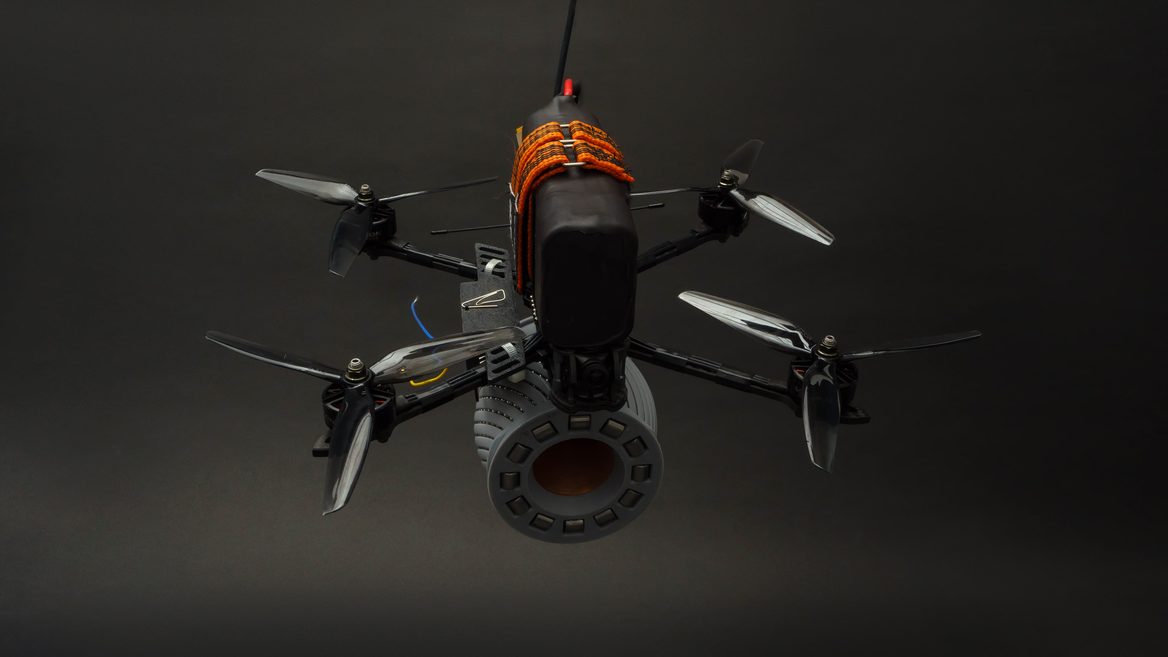
— There is a model for 5 km and 10 km. The first is usually taken for internal testing to learn to fly and understand the specifics of use.
We recently went shopping for personal winding and scaling machines. We got acquainted with the production, which, back in the 80s, was engaged in winding fiber optic bobbins, but for Soviet ATGMs (Anti-tank guided complex — ed.).
Now, in the winter, it is important to understand how the cold affects the optical fiber. Also, we are constantly refining the complex to improve its characteristics.
Of the latter, our drone now has helicopter-like elements to take off/land with the coil without an additional station.
In general, the biggest problem with this type of drone is taking off and flying the first 100 meters. Often, radio-controlled drone operators start abruptly. In this case, it is not necessary to do this.
— If the coil broke immediately, is it possible to return the drone somehow?
— There are options for integrating radio control on the drone as an additional and backup one. But fiber optic itself transmits video and control. Accordingly, a video transmitter and a radio control receiver will need to be installed on the drone. Installing the latter is not a problem, but the installed video transmitter will always work, and this unmasks the drone. We are currently thinking of an effective solution for this.
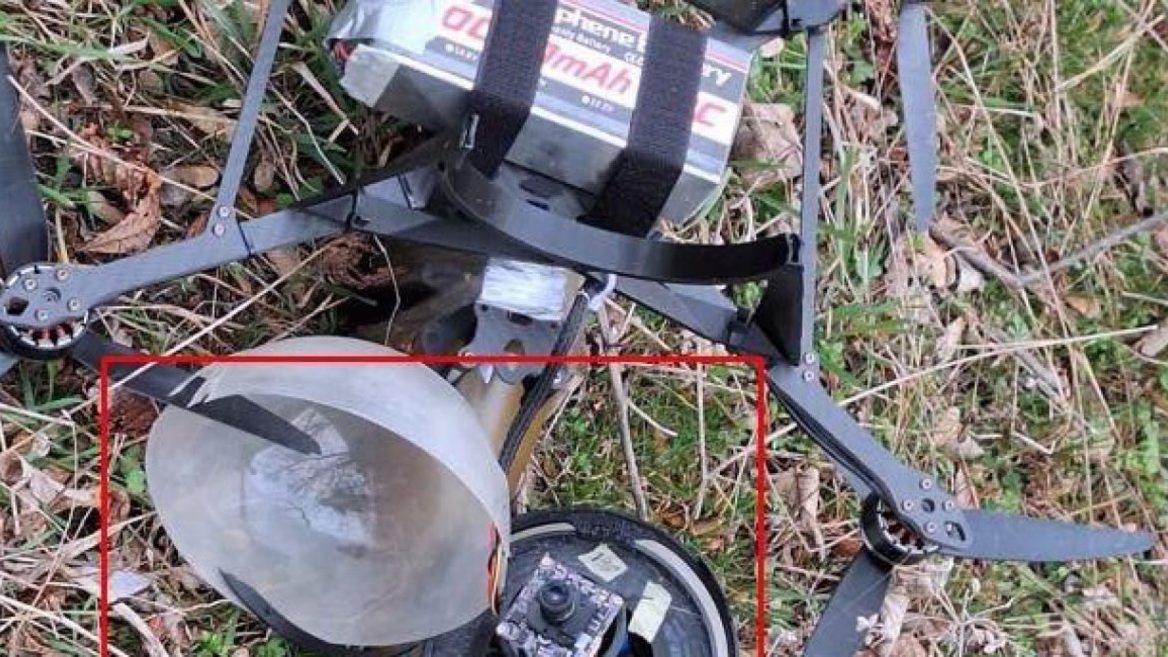
Photo — Fiber optic drone "Predator REBoff"
— To what maximum length can the coil be increased?
- The longer the coil, the greater its mass. The greater its mass, the more you need either a larger drone or a smaller warhead. There is also a battery, and the larger it is, the greater, accordingly, its weight. Therefore, it is necessary to maintain the proportion in the weight of the ammunition, the size of the drone and the battery.
You should also always leave time for flight and maneuvering. If it is 10 km, then the operator will need to be in flight not for 10 minutes, but for 15 minutes or 20 minutes to maneuver. Therefore, we are currently developing a coil of up to 20 km.
— Should a fiber optic drone pilot be more skilled than a conventional drone pilot?
— Actually, the specifics of piloting are not too different if you follow the basic rules. In addition, certain changes were made to the coil in order to move the fiber optic cable as far as possible from the propeller. Now there is a considerable distance. This eliminates the problem of winding the fiber on the propeller. In this way, you can maneuver the drone sharply enough, stop, fly around objects, etc. In the commotion, when connecting the drone to the ground module, you can accidentally step on the wire and break it. Therefore, you need to be careful with this.
About the sale of military drones and technological rivalry with the Russians
— Do you already sell fiber-optic drones? Who is ready to buy your drones and in what quantities?
— We are currently at the stage of product codification, so that we can officially join the catalog of drone manufacturers and provide products through the budget of the Ministry of Defense, the Procurement Agency or the State Special Communications Agency. This process is critical and takes quite a long time. But we are at the "finish line".
I assume that from the new year we will be able to officially supply our product to the Ministry of Defense.
Now we sell drones in small batches for the funds of military units or for the budgets of volunteers and foundations.
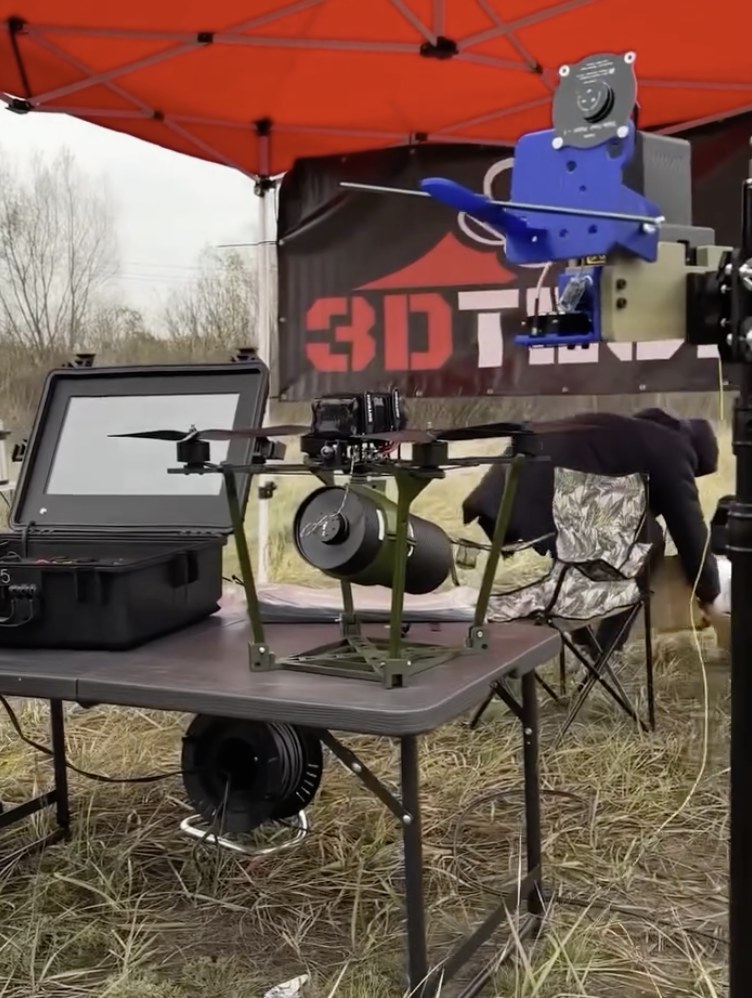
Photo — One of the REBoff Predator models
We focus on the needs of the military, as our complex is more expensive compared to conventional fpv drones. We are not the biggest company and we are limited in our budgets, so we mainly sell now with money from foundations. That's up to 200 drones per month with the ability to scale up to 2,000-5,000 depending on funding and budgets.
— How widespread are fiber-optic drones on the front now and will they replace UAVs on radio control?
— 100% they will not displace ordinary drones. It is like an additional tool for certain, specific operations. Some militaries are considering fiber-optic drones to repel enemy assaults. When a group or column of equipment is attacked, it is protected by EW. When the normal fpv cannot operate, the fiber optic drone flies, knocks out the EW, and the normal fpv continues to fly.
I think that the ratio with ordinary fpv can be up to 30%.
— the Russians also use fiber-optic drones. What do they have?
— Unfortunately, the Russians are ahead of us in this technology. They "threw" the front line as much as possible with fiber-optic drones. Unfortunately, our military does not have a mass ready-made solution against this. We are several months behind. Even if we and other manufacturers scale, it takes 3-4 months to catch up with the Russians.
— Does your company have many competitors in this market?
— I wouldn't call them competitors, because we all work for the same cause. There are producers who are more or less open and ready to cooperate.
But the companies involved in fiber-optic drones or coil winding can probably be counted on the fingers of one hand.
The problem is that no one has a mass solution yet or the ability to scale to some mass solution. First of all, it is related to bureaucracy and registration. We submitted the documents for codification a few months ago. Now there are some changes in DSSZZI (State Special Communications), they cannot put a signature. Work is being done every day, but it is also blocked.
There are two types of codification — accelerated and longer. We took the fastest route. But since the person who is responsible for signing documents in DSSZZI (State Special Communications) has been removed, and a new one has not yet arrived, the process is being delayed. This is for example. We try to do it as soon as possible and we do everything important from us.
— How much did it cost you to start production? Did you attract grants or was it your own funds?
— We supply conventional fpv drones and spend a larger share of our profits on RnD, development and improvement of our products. Therefore, we usually use our personal funds. We are currently considering attracting several grants, including a grant from Brave1, to scale this technology and increase coil production in Ukraine.
To buy an imported fiber optic reel in Ukraine now, you need about $900. Therefore, 1 flight is $900. We made more than 20 sorties, if you do not count the loss of sides.
Therefore, if we take the development itself, it cost us more than $20,000.
We are also currently scaling up our own winding. The machines for it also cost a lot of money. One machine is $10,000. Plus additional materials that go to the test. It will cost up to $350,000-$400,000 to open a production facility for 1,000 coils per month. This includes equipment, personnel and their training, and the purchase of materials.
— How many people work in your company?
— These are approximately 30-50 specialists, including freelancers. We are currently producing up to 1,000 regular drones per month.
Photo — One of the REBoff Predator models
— Now the use of AI in drones is becoming popular. Do you work with this technology?
— We integrate ready-made solutions into our drones as needed. But currently there is no 100% option on the market either. There are many developers working on their projects and improving them. We ourselves, unfortunately, do not develop such a solution, because we are somewhat limited in financial and human resources. We worked at the end of 2023 on similar developments. They couldn't find a good solution, so they switched to other projects that seemed more appropriate to us with our resources and capabilities.
— Your prediction is whether fiber-optic drones will increase their share at the front?
— In 2025, the share of fiber-optic drones in the military may range from 10% to 30%. We are trying to be a leader in this field to supply more drones to the army, because they are needed and the military has a lot of requests for them.
23 школи дронів, які допоможуть навчитись керувати безпілотником. Куди звернутись, щоби стати оператором БПЛА
Про важливість безпілотників та, відповідно, операторів вже говорять дуже багато та скрізь. Військові чекають, що штати БпЛА в бригадах мають розширити, особливо після оголошення створення «Сил безпілотних систем».
До переліку із зібраних нами закладів, які навчають операторів БПЛА, додалась ще одна 23-тя в цьому списку школа. Додаємо школу операторів USMT та оновлюємо інформацію по іншим закладам.
Якщо ви знаєте, хто ще навчає пілотів для безпілотників, пишіть на пошту [email protected].
(оновлений текст від 22 липня 2022)
На український ударний дрон PUNISHER зібрали понад 1,3 млн грн. Що може гроза командних центрів ворога
Дмитро Томчук повідомив, що найлегші та найменші ударні дрони PUNISHER, які не мають аналогів у світі, тепер коштують $70 000. Виробник додав у комплекс ще одного безпілотника, і тепер їх там два. Дмитро пише, що Юлія Черешня та Павло Харузов зібрали на комплекс більше 1,3 млн грн.
Раніше він розповів журналісту dev.ua, що вміють ці «пташки», та чому саме вони можуть переламати хід війни на користь України.
(текст від 1 червня 2022 року)
США в черговому пакеті допомоги надасть Україні дрони Switchblade 600. Подробиці про ці та інші «пташки», якими користуються українські захисники
Серед списку допомоги, яку пропонує Пентагон, є дрони-камікадзе Switchblade 600, які офіційний Київ просив передати раніше.
Контракт на дослідження та розробку для 10 дронів SwitchBlade 600 виробника Aerovironment, очікується протягом наступних 30 днів, заявила прес-секретар Пентагона Джессіка Максвелл в електронному листі до News Defense.
Ми зібрали список дронів, які використовують українці проти ворога, в тому числі і подробиці про Switchblade 600.
(текст від 17 травня 2022)