Хочете будувати кар’єру в Data Science та AI? Vodafone Big Data Lab відкриває новий набір —>
Марія БровінськаІсторії
25 July 2025, 08:48
2025-07-25
"You need to have one job that brings in enough money." Ukrainian fencer who represented Ukraine at the Olympics and built a sports career is now a Lead Software Testing Engineer. How it happened: here's her story
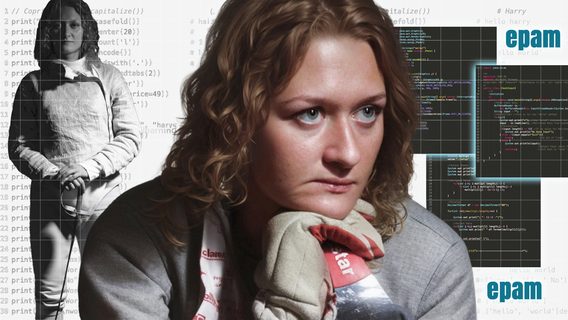
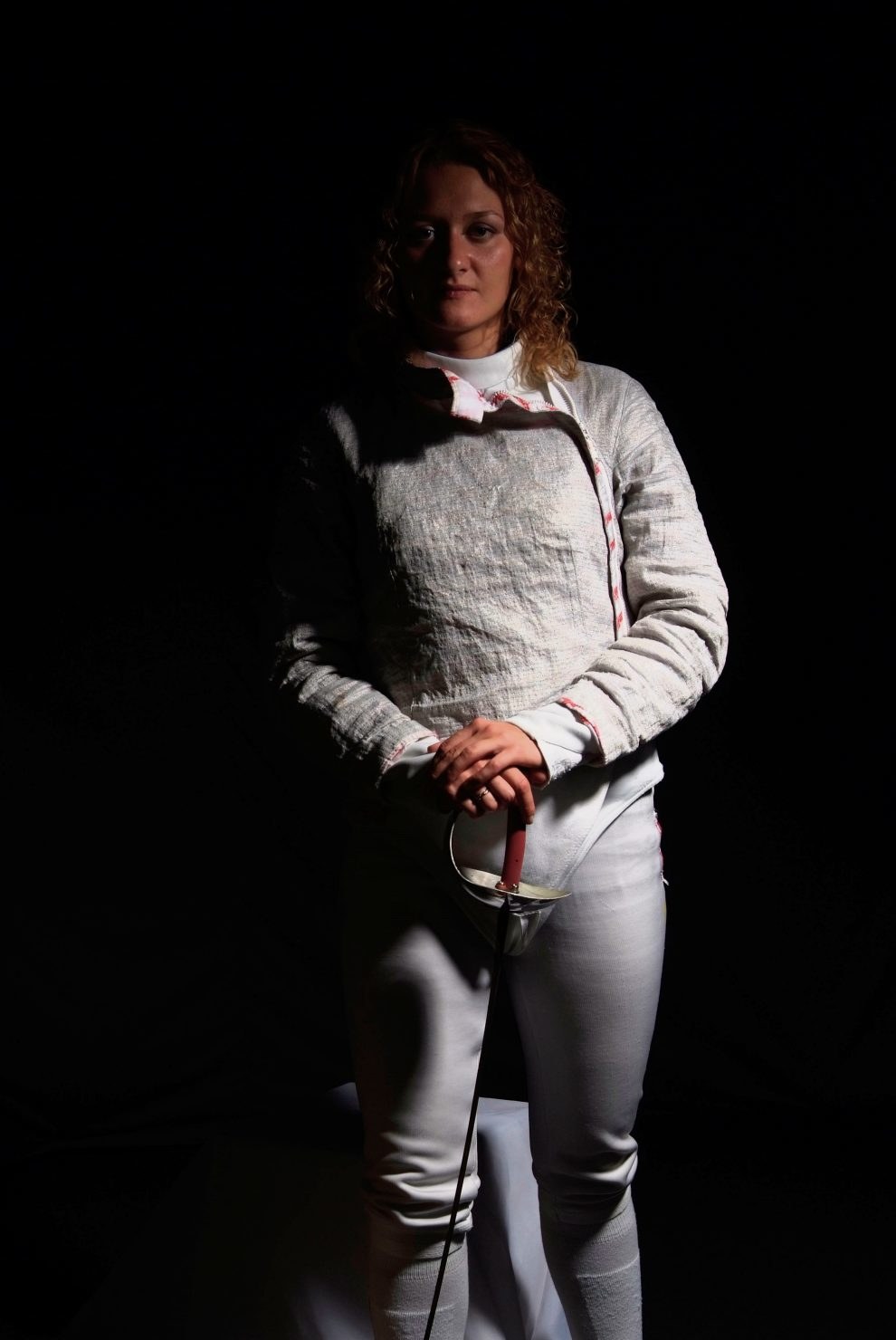
This story — about a radical change in life path — surprises and inspires at the same time. Daria Nedashkovska, Lead Software Testing Engineer at EPAM, before becoming an IT specialist, became the first female saber fencer to represent Ukraine at international competitions, including the 2004 Olympic Games in Athens. dev.ua talked to Daria — the girl told why she chose IT and whether her sports past helps her in her current work. Next — Daria’s direct speech.
This story — about a radical change in life path — surprises and inspires at the same time. Daria Nedashkovska, Lead Software Testing Engineer at EPAM, before becoming an IT specialist, became the first female saber fencer to represent Ukraine at international competitions, including the 2004 Olympic Games in Athens. dev.ua talked to Daria — the girl told why she chose IT and whether her sports past helps her in her current work. Next — Daria’s direct speech.
Sport as a lifestyle
My path in sports began in 1994. At that time, my parents and I lived in the small town of Netishyn, Khmelnytskyi region. I was engaged in rhythmic gymnastics, and at the age of 9 I started attending a new section. My mother was a foil fencing coach. I remember how she suggested that I train with her. I immediately agreed. That’s how, thanks to my mother, I developed a love for this sport. At that time, the Youth and Sports School had to have two coaches for different types of weapons in the section. My mother trained with the foil, and Valeriy Viktorovich Shturbabin — with the saber.
At first, we all trained in the same gym: a 40-minute warm-up, exercises in the fencing stance, and only then did each coach work with his own group.
I won’t hide it: the first steps were not easy. Fencing required enormous physical effort, and I was a tiny, fragile girl.
But thanks to perseverance, I began to show good results in Ukrainian competitions. After five years of foil training, Valeriy Viktorovych began to train me in sabre.
«Do you want to go to Paris?»
Although the rapier and saber belong to the same sports discipline, they are completely different types of weapons. The logic of the athletes is different. The rapier is exclusively piercing, and its target area is only the torso. In contrast, in saber, both piercing and chopping blows are allowed, and hits to the entire body above the waist, including the arms and head, are counted. These differences form the unique dynamics of fencing — a sport that is second only to boxing in terms of physical exertion, and to chess in terms of intellectual exertion.
There were no women’s sabre competitions in the world until 1999, it was an exclusively male sport. Then the International Fencing Federation decided to add this type of weapon. And when that happened, Valeriy Viktorovich suggested that I switch from foil to sabre and go to the Cadet World Championship in France.
The motivation was simple: «Do you want to go to Paris?» I said: «Of course!» — «Take up your saber.»
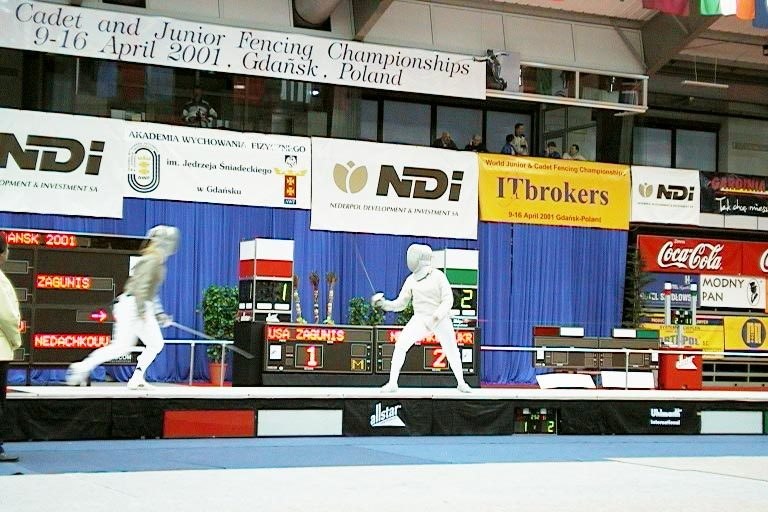
I didn’t win a medal then, but the realization that at 14 I had become the first athlete from Ukraine to compete at such a level felt like a victory to me. At that time, all the sabre fencers in the world were former foil fencers. Because where can you get «pure» sabre fencers if this type of weapon has just appeared?
To the Olympics — with a pack of notes
Fencing was my passion, but I also liked mathematics. I graduated from school with a silver medal. In 2001, two majors were fashionable: economics and law. The legal field did not suit me, but economics was closer to the exact sciences, which prompted me to choose economic cybernetics. This is a field where economics intersects with mathematics to predict economic processes.
Studying was relatively easy, although none of the teachers were thrilled with my combination of education and sports career. I attended lectures and took exams during the day, and practiced fencing in the evenings.
I remember having to postpone one of the sessions from summer to fall to participate in the Olympic Games in Athens, where I went with a pack of notes from my classmates and prepared for exams in the Olympic Village.
At these competitions, I also became the first female saber fencer from Ukraine.
I understood that I was unlikely to win the award, but getting there was already a great achievement. I was calm about everything on the eve of the competition. But when I got to the Olympic hall, I realized how big a responsibility it was.
Usually, when the cravings come, you just go for a run, warm up, and everything goes away. But here it didn’t help… I got a little confused, I started from the wrong place.
I won the second half of the duel, but lost the overall battle. I was in despair, walked and just cried for four hours, until my coach Garnik Davidyan said: «Dasha, you didn’t give up, you fought, everything is fine.» These words calmed me down. I don’t even remember a bigger hysteria in my life for any other reason.
She was rooting for her friend Olga Harlan
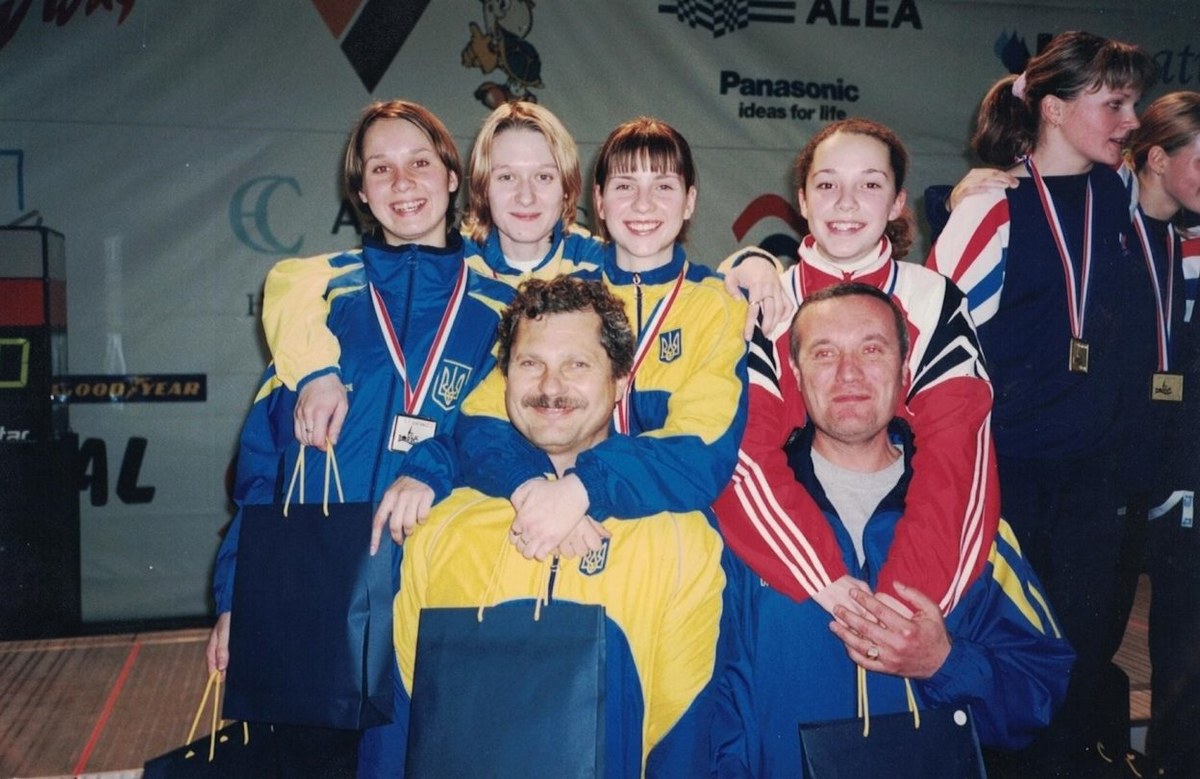
Each award holds special memories, but there are a few that are most precious to me. It all started with the first, symbolic «bronze» medal, or rather, a plastic one, won at a children’s competition. Later, silver from the 2001 Cadet World Championship and team silver from the 2003 European Junior Championship were added to it. A special place in the collection is occupied by the bronze medal from the 2005 European Championship, won in Hungary as part of the Ukrainian national team. Behind each of these trophies is a story of struggle and experience.
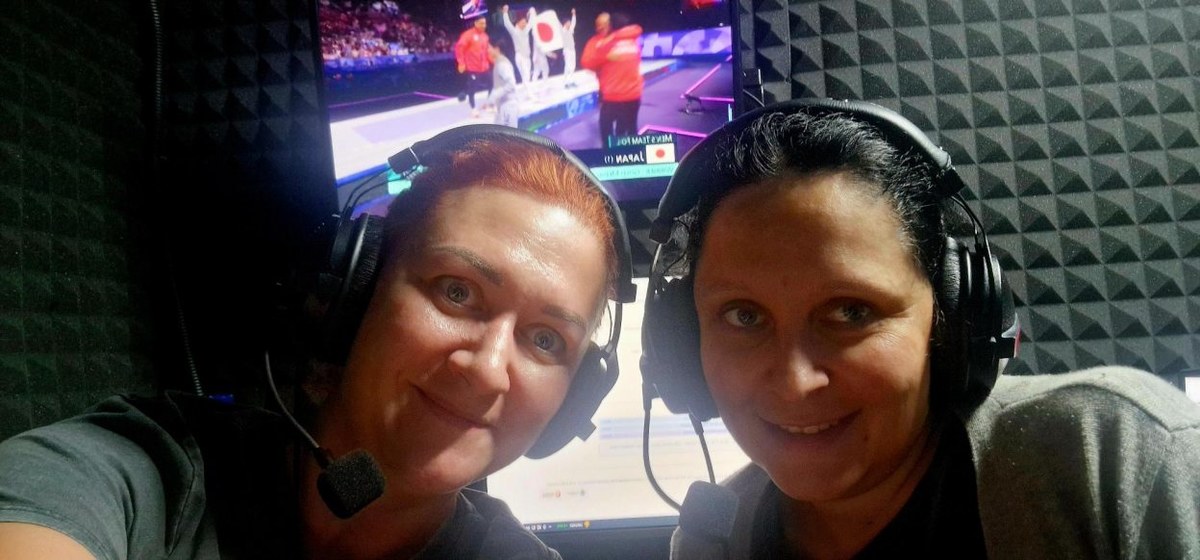
After ending my sports career due to a shoulder injury in 2006, I was a commentator on television several times. In 2008, I was invited as an expert to explain complex rules, tactical moves and referee decisions to the audience, translating professional language into simple and understandable language.
This experience proved invaluable when I was commentating at the Paris Olympics last year. At that time, I believed in our team more than ever.
Watching their victories, including the gold of the women’s sabre fencing team and the bronze of my friend Olga Kharlan, was incredible. I am proud to be a part of this sport and admire the professionalism of our athletes, who have once again proven the strength of the Ukrainian school of fencing!
«Have one job that makes enough money»
After finishing my sports career, I started looking for myself. I clearly understood that I did not want to be a coach. I started working for the Fencing Federation of Ukraine as a press secretary: I managed the website, wrote articles about the performances of our athletes. At the same time, I worked at the Razumkov Center as an expert on energy programs.
But, I didn’t like having multiple jobs. I believe you should have one that brings in enough money.
My ex-husband, who works as a developer, advised me to try IT. I signed up for courses, left for half a year, then looked for a job for a year. At the same time, I worked as a freelancer, and found my first job. In three years, I grew from a junior to a lead.
I joined EPAM in 2019. My colleague, who was already working here, wrote that his project was looking for lead testers, and suggested that I go for an interview. That’s how I got to the project where I still work. During this time, we have rewritten two platforms, and are currently developing a third. We work with data all the time, the project is related to Big Data. We are developing a platform for processing and standardizing data for an investment company that manages funds and assets of pension funds, governments, central banks, corporations, international organizations, university foundations, and charitable institutions. The company invests in global equity and debt markets, using an analytical approach.
One of the things I really like about EPAM is the thoughtful management system. Managers try to find work for their team members, even when they are on the bench (a period without a project).
In my past experience, losing a project often meant finding tasks on my own.
I also work as a manager, taking care of 16 talented specialists — two of them are currently in the ranks of the Armed Forces of Ukraine. I understand very well how important it is for our colleagues to feel valued and needed. A year ago, I completed my studies at EPAM Quality Architecture School, which trains quality managers and architects. The program teaches you to look at the work of a tester from a different angle — to put yourself in the client’s shoes. Now I am preparing to become a certified Quality Architect.
Looking back, I can conclude: if you fight and don’t give up, you can solve all problems and achieve success. My example is proof of that. After all, even when I got injured and was forced to leave fencing, I didn’t get lost, I started looking for myself and later ended up in IT. As Taras Shevchenko wrote: «Fight — you will win.»
«You don’t realize how many elephants there are around you until you start looking more closely.» How EPAM, SoftServe, Railsware, and others are motivating IT professionals to count elephants, see psychologists, and take sabbaticals, saving them from burnout
«Ukraine is still here. And I’m staying too.» The story of an American EPAM tester who lives in Ukraine, helps the military, «a little misses the choice of convenience foods in American supermarkets,» and is in no hurry to return to the U.S.
«Моя фінансова мета — накопичити $1 000 000, щоб мати пасивний дохід і жити на нього». Як айтішники витрачають гроші та в що інвестують
Зарплата айтішників в Україні — одна з найвищих. І ІТ-галузь під час війни — єдина галузь, яка зростає, попри війну. А айтішники — серед тих, хто найактивніше підтримують армію. Середній місячний донат айтішника становить 10% від зарплати, або $270. dev.ua вирішив розпитати айтішників, куди вони витрачають гроші й у що інвестують під час війни.
Не Патроном єдиним. Айтішник з EPAM шиє військову амуніцію для собак: історія диво-стартапу для чотирилапих захисників України
Максим Лісович, Interior Designer в ЕРАМ Україна, поза роботою допомагає амуніцією українським військовим… собакам. Так, службові пси носять унікальні жилетки та нашийники, мають спеціальні аптечки та турнікети. Чотирилапі в такому «одязі» більш захищені та впізнавані.
За словами Максима, тільки на заході країни нас захищають сотні військових собак. Айтівець допомагає військовим кінологам нести цю службу гідно, забезпечуючи відповідною амуніцією, спеціальними аптечками та турнікетами. Нещодавно він провів три дні поспіль, власноруч відшиваючи нашийники та повідці. А ще два роки тому шити він не вмів узагалі. Ось історія диво-стартапу.
Австралійське задзеркалля. Історія Delivery Director EPAM, який через війну релокувався із сім'єю до Австралії: як адаптуватися та вижити за океаном?
Григорій Клімов — директор з делівері і керівник великої Platform Engineering-практики в EPAM. Понад 10 років він будував свою кар’єру в українському офісі, але війна змусила його з родиною кардинально змінити життя. В березні Григорій з дружиною і трьома дітьми поїхали з рідного Харкова, деякий час провели в ЄС, а згодом — вирушили до Австралії. «Я мріяв жити в цій країні, коли піду на пенсію. Але війна підштовхнула до того, щоб прийняти рішення значно швидше», — каже Григорій.
Ось його історія.
Очільник EPAM Ukraine: «Було б класно мати якісь прозорі, відкриті механізми виїзду за кордон для обмеженої кількості людей»
Керівник EPAM Ukraine Степан Мітіш, який до призначення відповідав за київський та вінницький офіси компанії, дав велике інтерв’ю AIN. В компанії він працює вже 16 років, тобто знає про український IT-аутсорс багато, якщо не все.
dev.ua обрав найцікавіше з розмови.