Хочете будувати кар’єру в Data Science та AI? Vodafone Big Data Lab відкриває новий набір —>
Марія БровінськаІсторії
27 September 2025, 09:00
2025-09-27
“I resigned from an American company for the sake of a Ukrainian miltech project.” The story of a KPI graduate who saved an American healthtech startup from collapse, created a mini-competitor to Netflix, and is now preparing an AI defense system against Russian FPV
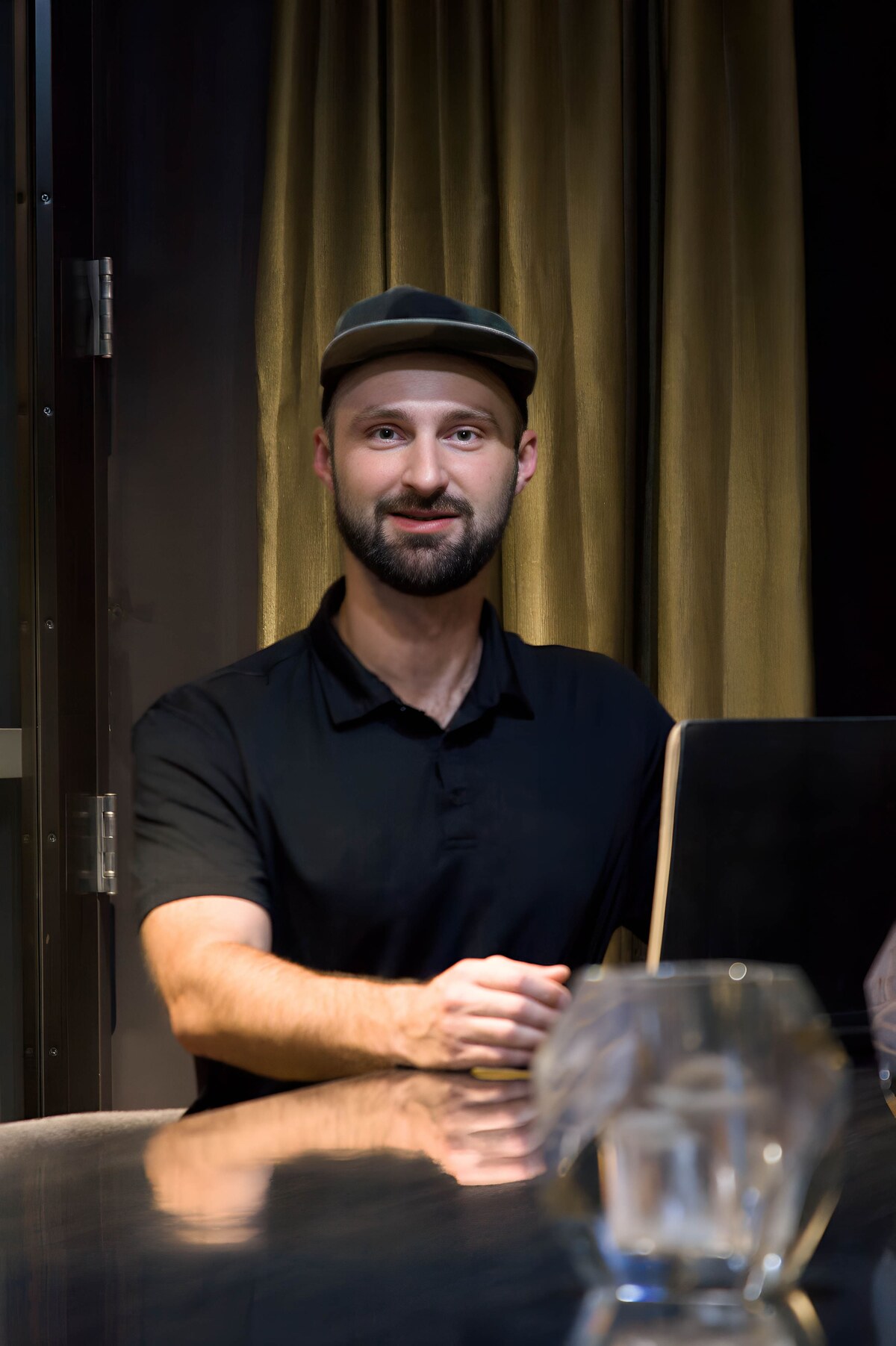
34-year-old Kyiv resident Oleg Polishchuk is the CIO of a Ukrainian AI startup in the miltech sector, which creates a product for tracking and shooting down FPV drones. He has actively integrated into the American IT community and, in addition to commercial activities, devotes a lot of time to science. His IT background includes several successful startup projects in the HealthTech and media sectors, and he is currently focused on a miltech startup, for the development of which he even resigned from the position of Head of Engineering in an American company, which he led out of crisis several years ago. Oleg has over 10 scientific publications and experience working in multinational teams. He is a polyglot, speaks four languages, so he knows how to open any door. dev.ua talked to a CIO from overseas and learned a lot of startup insiders that will be useful to every startup owner.
34-year-old Kyiv resident Oleg Polishchuk is the CIO of a Ukrainian AI startup in the miltech sector, which creates a product for tracking and shooting down FPV drones. He has actively integrated into the American IT community and, in addition to commercial activities, devotes a lot of time to science. His IT background includes several successful startup projects in the HealthTech and media sectors, and he is currently focused on a miltech startup, for the development of which he even resigned from the position of Head of Engineering in an American company, which he led out of crisis several years ago. Oleg has over 10 scientific publications and experience working in multinational teams. He is a polyglot, speaks four languages, so he knows how to open any door. dev.ua talked to a CIO from overseas and learned a lot of startup insiders that will be useful to every startup owner.
«I wanted to become a banker»
«As a child, as my school essay from the first grade testifies, I wanted to become a banker,» Oleg says with a smile. However, his childhood dream did not come true — the guy entered the Kyiv Polytechnic Institute, and later, under the double diploma program, he also received a master’s degree in AI at the French university of Le Mans. Now he does not regret that his childhood dream remained a dream, because his current activity brings a lot of benefit to society, and Oleg — satisfaction.
He began his career as a Java developer at service companies such as DataArt and CGI. Later, in 2007–2012, he worked as a tech lead at a startup, where he managed a team of three developers. «That’s when I realized that I was closer to not just coding individually, but to building system architecture, managing teams, and integrating technologies to solve business problems. This gave me a sense of greater influence — from idea to product, as in my projects with AI and cloud platforms,» Oleg shares.
American track
From French friends, Oleg heard that a full-scale invasion was a very realistic scenario. Since the beginning of the Great War, having already been abroad, Oleg actively helped the army by joining volunteer initiatives. «After the start of the full-scale war, I was actively involved in volunteer activities, founded two charitable organizations with my friends. All over Europe, we collected useful things for the army (spare parts for drones, body armor, medicine, sleeping bags), for civilians (hygiene products, food) and for animals (food, cages), found transport, transported everything to Ukraine. On the way back, we picked up people (in particular, from Irpin and Bucha) and animals that their owners had left behind, delivering them to a safe place,» says Polishchuk.
When volunteering died down, people stopped donating, they donated fewer things, and scammers became more active, and many scams involving volunteers appeared.
Kaleidoscope of startups
Polishchuk is an experienced startuper and seems to know everything about European and American culture. Several healthtech and media projects have taken place in his career. The first one is Family Doctor (2007–2012) — an innovative solution for medical diagnostics with a hardware-software complex. «The site was recently closed, its fate is unknown, but the main co-founder recently died,» says Oleg.
The second project, the creation of which was joined by a Ukrainian, is OKAST.tv (2015–2021). This is a cloud platform for VOD/FAST/livestream with analytics and multi-screen access. «A micro-competitor to Netflix. The company is active, it was bought out by the Franco-Chinese company FlameFy in 2017, and now the project has over 30,000 users,» says Oleg.
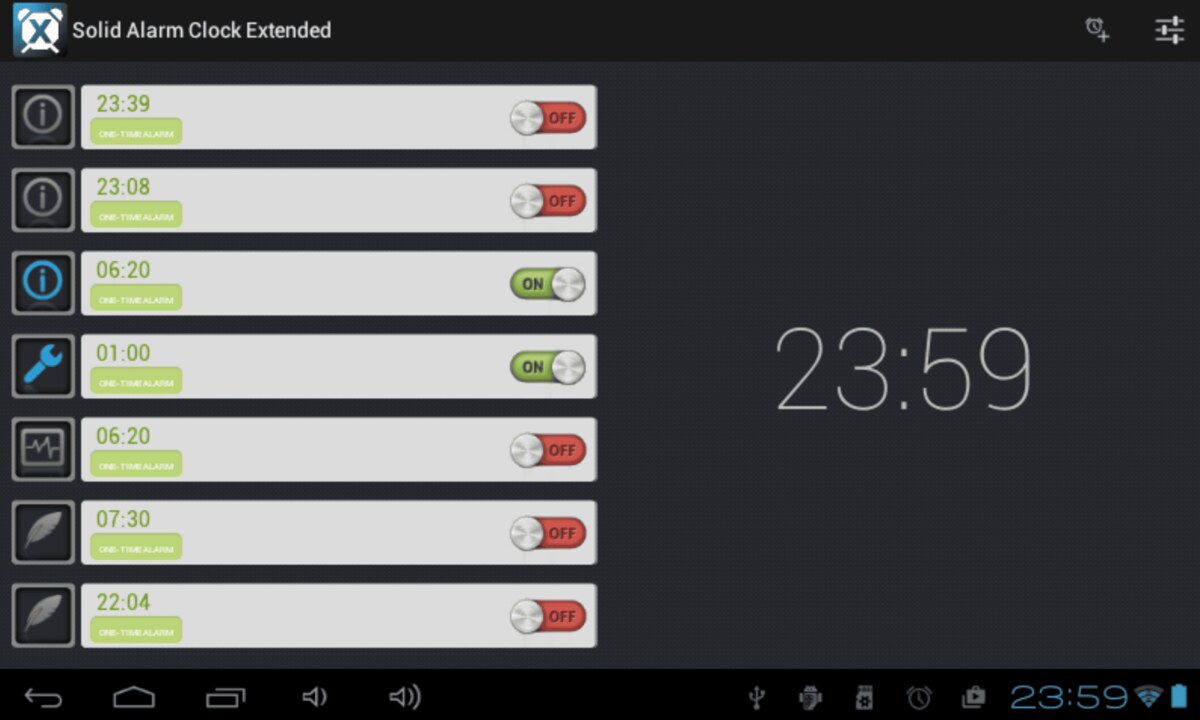
Solid Alarm Clock is another project by Oleg, which has been installed by over 100,000 users. It is an alarm clock with a function to turn off the alarm by solving a puzzle or taking a photo of a sink — as evidence that the user has really woken up and got out of bed.
Among other things, his work includes work on the Atletude.com platform for tennis players, for which the team received an award in 2019. Oleg and his team also created the Smog-free app with an electronic cigarette case to help smokers quit their addiction. However, the project had to be curtailed due to the war.
But Ukrainians did not give up and now, having created a team of Ukrainians in the USA, they have developed the QuitQly application, which will also help smokers quit smoking. It will soon be available in the AppStore.
Volta Health is another health-tech startup that Oleg worked with in 2023–2024. He considers this American experience to be one of the most successful. «When I was called to work as a Lead Engineer at Volta Health, the startup was feeling very bad. Presumably, the previous manager pretended to be working on a part of the product that investors were promised to release in a month. And a month before the deadline, it turned out that nothing was ready at all, he was fired and he took all the work with him, leaving nothing,» Oleg tells the story of his hiring. Then the company’s CEO desperately relied on the Ukrainian, hopelessly hoping for a miracle.
«I got to work, got to know the team — at that time there were only two junior developers in the team (an American and a Chinese woman). I studied the front of work, broke everything down into detailed small tasks, planned all tasks for sprints with a margin for testing time, determined that we were short of developers, urgently conducted interviews, found a very talented freelance developer for the development of this part of the product, and energized the entire team, simultaneously training the juniors and creating workflows, rules, discipline, and incentives,» says Oleg.
The team had to work day and night, not letting up. Finally, the team led by Polishchuk managed to release a product with minimal bugs, security, and automatic scaling in case of increased traffic load.
«In a month, we did what our predecessors couldn’t do in a year. After this success, my contract was changed, and I was appointed Head of Engineering of the company,» says Oleg without undue modesty.
The company began to develop rapidly, four more developers joined the team — two Ukrainians, a Pakistani and a Chinese, and later a CIO and Head of Product appeared. «Therefore, I can add this experience to my piggy bank of successes, because it seems that I saved the company from collapse,» Polishchuk says with a smile.
Resigned to help Ukraine
While holding a high position in an American company, Oleg received an invitation from the founders of a Ukrainian Miltech product for protection against FPV drones, codenamed Doron (the company’s name is not disclosed for security reasons). «The company had the means of destruction, but it lacked a targeting system, which accounts for 50% of success,» says the startuper. The problem with FPV drones, says Polishchuk, is that they are very fast — an average of 30 meters per second, small — 20–30 cm in circumference, have an unpredictable trajectory, and must be shot down at a distance of up to 1 km.
«At first, like others, it seemed to me that this was an unrealistic task — to shoot down such small, fast objects at a great distance. This is not a flying wing like the Shahed, which is quite large and flies in a straight trajectory. But for me it was a challenge, I believe that nothing is impossible,» says the Ukrainian.
It was for the sake of creating such a useful product for the Ukrainian military that Oleg quit his American job, losing a considerable income. «We started doing everything step by step, module by module, and after half a year of work, a system emerged that has very solid accuracy. Now, a year after the start of development, we can target flying targets at very long distances, our product tracks FPV drones with such a small error that you can even shoot down an „EFP-mounted beacon“ that is chaotically moving at full speed at a distance of 1 km,» says Oleg.
He adds: there are very few such systems in the world. «You can even point at birds and see them flying beautifully on the screen in close-up,» says the IT expert.
Technological solutions
The guidance program uses computer vision with YOLO algorithms for fast object detection, a proprietary tracking algorithm, neural networks and reinforcement learning for data processing and real-time decision-making with a latency of up to 2 ms. Python with OpenCV, PyTorch libraries provides algorithm development, and GPU and RT Linux guarantee high processing speed.
Oleg is currently the CIO of a Ukrainian miltech company and heads the guidance department. «The team is growing and we have successful results. We understand that in the American market, as in other countries, there is a big problem of drone protection. This topic is important for America’s national interests, so since there is demand and I am here now, I plan to develop in this direction also in the American market,» he says.
The IT worker’s further plans are to bring the product of the current Ukrainian company to successful results on the battlefield and our victory, and then create something else useful — perhaps miltech, entertainment, or sporttech with a focus on social impact.
AI startup expert
Given the number of startups launched, Oleg is an expert in the development of startup culture in different countries. According to him, the common denominators of the startup and tech culture of Ukraine, France and the US are a passion for innovation, flexibility and a focus on rapid prototyping. «Networking and adapting to change are key in all countries,» he says.
However, there are also many differences. For example, says the IT worker, in Ukraine it is difficult to procure goods because of the war. It is also extremely difficult to find specialists, because many are hiding from mobilization and do not want to move around the city. «But those we find are very hardworking, ready to work even at night,» he says.
A feature of France, from Oleg’s experience, is a structured approach, with an emphasis on regulation, corporatism, work-life balance, and government support. In the US, there is a hyper-fast pace, risk-orientation, mass access to venture capital, and a «fail fast» culture. There, the specialist says, there is greater pressure on growth.
Despite the difference in approaches, in general, the right business model is critical for the success of a startup, the IT expert argues.
«Simply strong technology is not enough. Technology is the foundation, but without a sustainable model (monetization, market, customers), even the best product will not survive. In my projects, such as OKAST or the current company, success comes through balance: innovative tech with a clear value proposition,» says Oleg.
Startup mistakes you shouldn’t make
Oleg says that startups without experience often make mistakes at the beginning of cooperation with the team. «Young startups often ignore market validation — they build without feedback; underestimate finances: they spend quickly, without having enough reserves; do not structure the team in the early stages; focus on tech, ignoring marketing. And also — they do not agree on fate and responsibilities at the start, which leads to conflicts,» he says.
He also has his own formula for interacting with teams: «Managing a team of five people means direct communication, if not remote, or Agile/Scrum, if remote, plus the ability to resolve conflicts if they arise. For a team of 50+, structured processes, delegation, HR, focus on culture. The difference: small ones are creative, fast, and flexible, large ones are stable.»
Thanks to these approaches at Volta Health, OKAST, and his current company, Oleg was able to speed up processes, establish teamwork, hire people effectively, and, as a result, steadily scale the project while maintaining a healthy atmosphere in the team.
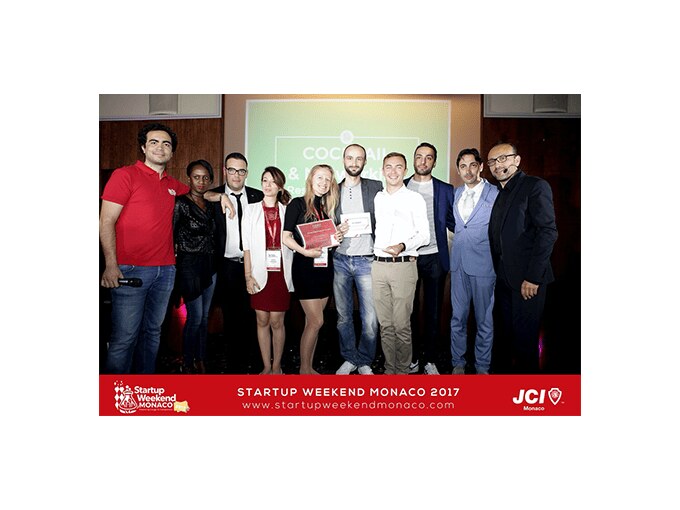
Another secret to the startup’s success, according to Oleg, is participation in hackathons, competitions, and accelerators. «Winning the 24h du code competition (first place, France, 2014) and Monaco Startup Weekend (first place, 2017) taught me to see innovation as a fast-paced team process. These events emphasized the importance of testing ideas in a matter of hours, creating an MVP, and working in a team with feedback, which influenced my approaches in startups,» he says.
The specialist also advises paying attention to Indie Hacking — an approach to development when one person or a small team creates and develops a product with minimal resources, focusing on quick launch, monetization, and direct interaction with users.
«Customers and PMs joked that I shouldn’t rush and relax a bit.» How a developer from Lviv is building an AI-Healthcare system in the US: an interview with a Ukrainian who conquered global IT
A Ukrainian created the KodDok program with unique encryption algorithms for secure file sharing and has already received a patent for its development.
«Ми не можемо дозволити путіну захопити Україну. Це божевілля». 20 тез Ілона Маска з великого інтерв’ю Business Insider
Мільярдер Ілон Маск дав відверте інтерв’ю виданню businessinsider.com, де торкнувся теми вторгнення рф в Україну, космічних подорожей та речей, що роблять людей особливими.
Наводимо тезисно адаптований переклад тексту.