Хочете будувати кар’єру в Data Science та AI? Vodafone Big Data Lab відкриває новий набір —>
Ігор Вишневський Around IT
17 November 2025, 09:00
2025-11-17
“I advise switchers to read fifth-grade computer science textbooks.” QA guru Oleksa Mashchyts — on the role of education, “form-slappers” and engineers, AI and automation, and “good Russians”
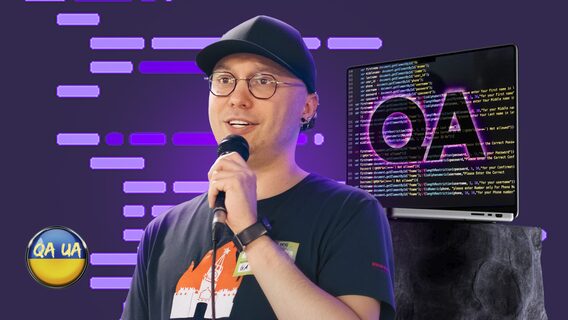
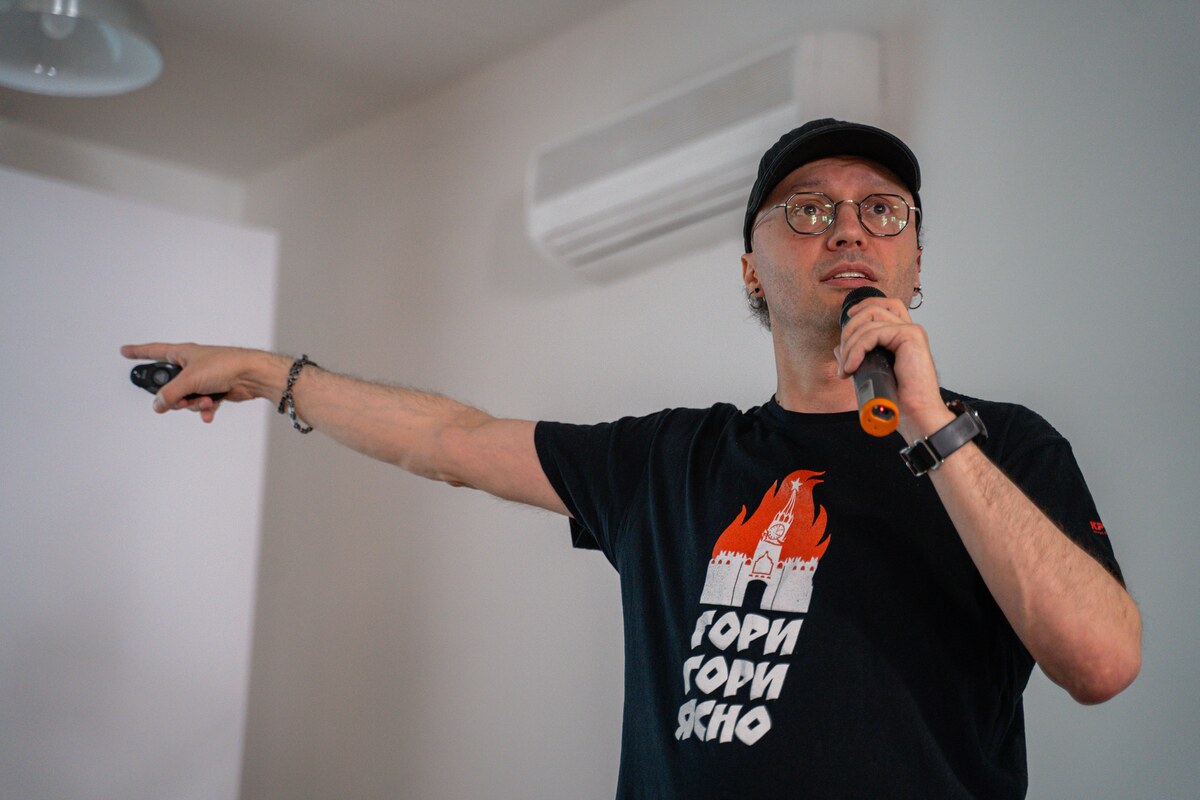
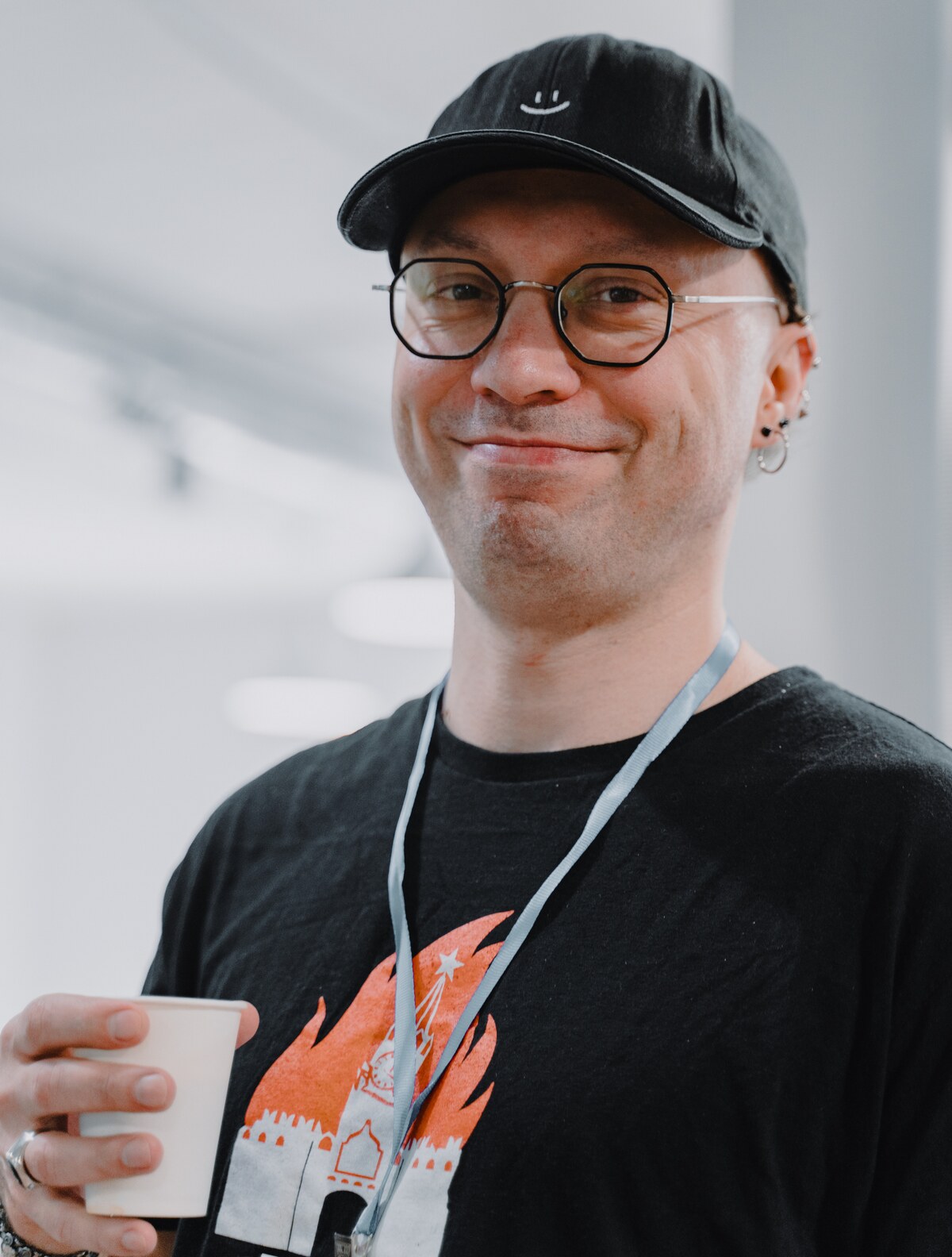
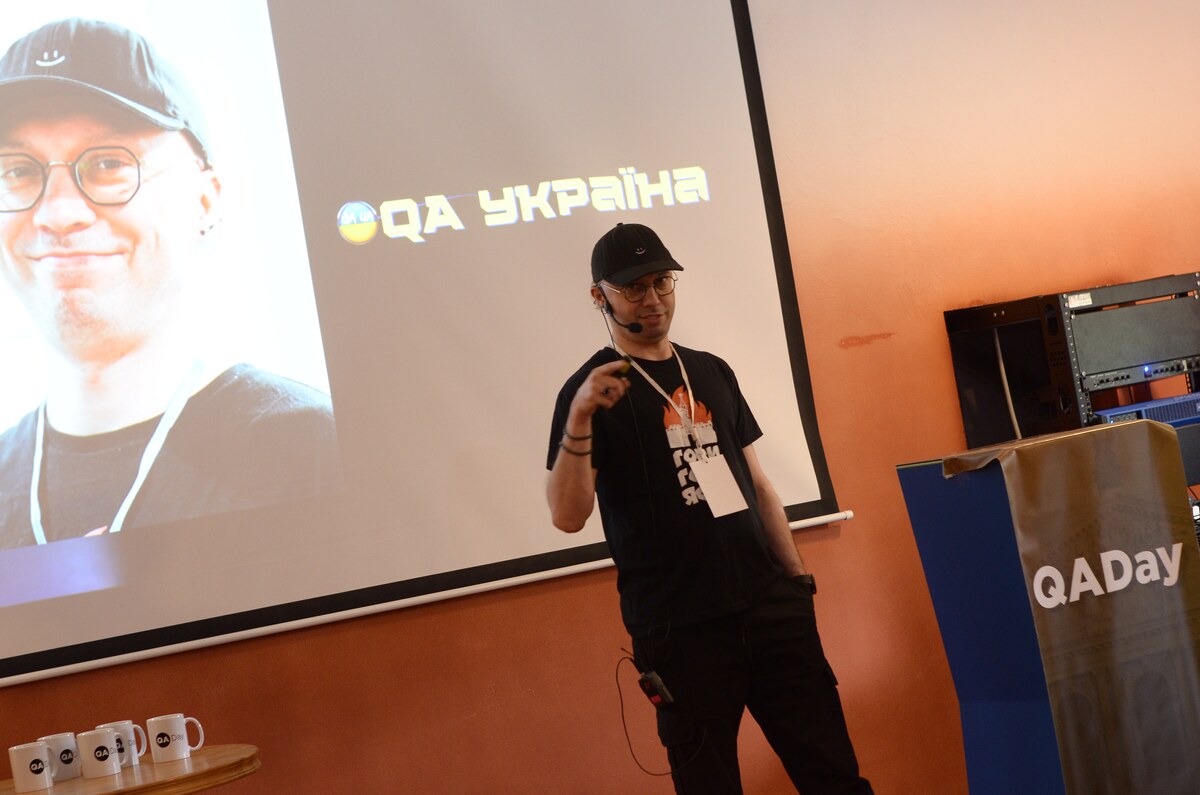
Oleksa Mashchyts is a landmark figure in the Ukrainian QA community. He is currently successfully transforming many years of experience in testing and team management into educational products for his colleagues, being a mentor, as well as the founder and main ideologist of the «QA-Ukraine» community.
In a conversation with him, dev.ua discussed many professional and personal issues — will automation make manual testers an «endangered species», why a QA specialist in a large outsourcer and a small studio are actually two different professions, for which testers AI will be a useful daily tool, and for whom it will take away their job, and why many switchers stubbornly deceive themselves by going into IT. In addition, Oleksa Mashchyts told why it is fundamentally important for him to be Ukrainian-speaking even in thoughts and not to cross paths with Russians at all — even good ones. About this and more — in a large interview.
Oleksa Mashchyts is a landmark figure in the Ukrainian QA community. He is currently successfully transforming many years of experience in testing and team management into educational products for his colleagues, being a mentor, as well as the founder and main ideologist of the «QA-Ukraine» community.
In a conversation with him, dev.ua discussed many professional and personal issues — will automation make manual testers an «endangered species», why a QA specialist in a large outsourcer and a small studio are actually two different professions, for which testers AI will be a useful daily tool, and for whom it will take away their job, and why many switchers stubbornly deceive themselves by going into IT. In addition, Oleksa Mashchyts told why it is fundamentally important for him to be Ukrainian-speaking even in thoughts and not to cross paths with Russians at all — even good ones. About this and more — in a large interview.
«A person who has worked for 5-10 years in web studios with simple sites and 5-10 years in EPAM are completely different testers»
— Let’s start with a prosaic question that everyone seems to be talking about right now — is there a future for manual testers who «don’t know how to automate»? Especially in the current market at the moment.
— I probably won’t answer in a very popular way, because answering in a popular way is not interesting. In my opinion, we need to differentiate which specific testers we are talking about, because the profession is very diverse.
For example, when we talk about a developer, meaning all developers, some of them write front-end, «assemble molds», and some program chips at NVIDIA. We divide them — Embedded, front-end, back-end, add a specific technology. That is, we indicate quite specifically who it is.
And in testing, it seems like there is some kind of general tester who can work everywhere, but this is not the case. Each technology requires different testing work. Therefore, before talking about the market for a tester, you need to understand that testers are different. And IT is different!
IT is not only a large outsourcing company like EPAM or Ciklum. We are used to thinking that this is what IT is, but we forget that there are a lot of web studios that do simple work. And they require different testing! There is also freelance.
In large companies, a tester must understand the process, be in contact with developers, and analyze requirements. But, in fact, these are two completely different jobs, although both are called «testing.» A person who has worked for 5-10 years in web studios with simple sites, and 5-10 years in EPAM are completely different testers.
We can, of course, only take large companies, single out some vacancies that are more or less similar to each other and are constantly present on the market, and say that this is testing. But once again, it’s not all IT. And statistically, the majority does not work in ERAMs, but in small web studios. Or, for example, they make some internal product in a conventional ATB.
By the way, such «semi-professional» companies can grow to several hundred people, and there are a lot of them. And when we talk about vacancies in them, they should be searched for not on DOU and Djinni, but on Work.ua. That is, sites that are not specialized in IT, but are global.
Returning to the specific issue of relevance in the market for manual testers, I would outline it this way. If we are talking about an effective approach to the work of a tester, then it should be similar to the following scheme: I go to the market, look at vacancies, look at what the employer needs. I reformat myself a little for a specific vacancy, sharpen certain knowledge and prepare to work here. That’s it.
It is a fact that our work will change and is already changing. But what I am saying is that we need to see testing as a broad spectrum and be able to adapt to the specific requirements of the project.
— By the way, when we are talking about, in essence, «different jobs» and «different professions,» do the definitions of «tester» and «QA engineer» also have a difference for you? Doesn’t the word tester have some lower connotation?
— We have a chaos in IT terminology, everyone is a little confused. For many, there is a connotation that a tester is something simple. And IT schools often play on this.
They like to call this profession QA, or Quality Control.
Although a world-class guru like James Bach says, on the contrary, that a tester is exactly what we do. And he calls himself a tester.
But in the name of the profession, I would go back to what we started the conversation with. We first need to understand what I do on the project. That’s how it will be clear whether someone will be a Quality Control Engineer or a tester.
Again, this matters in the system of some large company, where it really makes sense. Because if it’s a virtual web studio, you can call a person whatever you want — their work won’t change.
We need to realize that we actually have about a dozen professions in testing, which are sometimes not exactly similar to each other.
But most people don’t want to distinguish between them, it’s easier for them to see testing as one profession.
— In your previous answer, you mentioned IT schools. Despite the stagnation in the market, they still graduate a significant number of people with basic knowledge, giving them hope to «enter IT.» What advice would you give to graduates of such schools in the QA field to find their first job? How realistic is this, given the presence of a significant number of experienced specialists on the market who are sometimes willing to work for a salary of a hunk?
— As for experienced specialists, there are indeed fewer vacancies now, but if you are a good specialist, sooner or later you will find a job.
But for some reason, beginners are still guided by the times when everyone was hired, even without experience. It will not be the same as before. In general, the global and Ukrainian IT market has experienced more than one crisis, and the current crisis caused by the Great War is not the worst that IT has ever experienced. There have been crises when up to a third of all employees were laid off, but we have not had mass layoffs now. There are simply not enough vacancies.
And the drop in wages during past crises was strong, but if you look at the statistics, it actually didn’t happen here. There are certain fluctuations, but overall I wouldn’t say there’s a big drop.
Returning to the newcomers and those golden times for the candidate that everyone remembers, in a historical perspective it was very short-lived and generally uncharacteristic of the IT market.
Therefore, my advice is to take the profession seriously. We need certain knowledge that cannot be filled with crash courses. Yes, there is still work where you, almost as an ordinary user, without special knowledge, will detect some bugs in the site, but, firstly, there are few such vacancies. Secondly, they are the lowest paid. And, thirdly, such work is the easiest to automate and replace with various AI tools.
If you want to be in demand in the market, you need to learn technology. And I would put knowledge of the theory of testing in the first place, not knowledge of the domain area and its technologies. We need to know what we are testing. Conditionally — how can I test a car if I have no idea how it is built?
Why is this idea unpopular? Because it actually blocks the entrance for the masses of people. Everyone went to testing and went en masse because it was supposed to be possible not to learn technology here. That is why all these people did not go into development. But here is the answer: in the employer market, in the market when we have more and more automation and artificial intelligence, the only way to stay relevant is to be an engineer and know technology.
People want to believe in a fairy tale. It’s very attractive that you can quickly get a lot of money. In IT, for example, adult switchers come who earned a nominal $500 at their old job. Objectively, this is not much, especially if you have a family.
They come and tell them: «The first salary will be $400 or $600.» They answer: «Yes, but why do I need that? I already have it. I won’t leave.» But in IT you start with $400-600, and in six months or a year you might have $800-1000. And then you will grow even more — look at the perspective of several years. You want to reach thousands of dollars, and where you are now, you obviously don’t have such a perspective and won’t have it. But many people want everything so much at once that they don’t go into IT because now it will be $200 less than what they already have.
«If your job is as unintelligent as possible, you will be replaced by automation and artificial intelligence»
— Does a current competitive QA engineer need to know a programming language at a sufficient level?
— As someone who has worked mainly in manual testing, I called the first major course on my educational platform «Programming and Web for QA.»
The word programming comes first. If you want to become an engineer, you need it, even if you continue to work manually.
This is actually the only correct view from the tester’s side: then you can go into automation, you can delve into development. But knowledge of programming languages makes you an engineer. You can use this knowledge for any job, not necessarily writing in this language.
The popular belief is that if I learn something, I should use it at work tomorrow and, as a result, earn more money. But there is fundamental knowledge that allows me to better use other knowledge.
I advise you to learn programming to become a better specialist, and it doesn’t matter if you write in this language or not. And the more technical nuances you know, the less risk there is that you will be replaced by automation and artificial intelligence.
Therefore, I would advise everyone — even manual testers — to understand at a basic level what programming is, and to take any language that you like or that is relevant to your project. Just learn the basic concepts, try to write simple programs. The thing is, this is what children do in computer science classes.
And we, adults, come and say: «I want to go into IT, but it’s hard for me to learn a basic programming language.» Why do children in schools do this? That’s why I advise switchers to read computer science textbooks from the fifth grade. There’s a lot of useful information there!
There are simple things there — understanding a computer, understanding the operating system of files, basic input-output concepts.
This sounds like I’m kidding, but let’s think about it: if I’m going into IT and I don’t have the knowledge that’s in a fifth-grade textbook, how adequate an IT professional am I? Obviously, I can only do unskilled work.
— People are used to choosing the path of least resistance, rather than burdening themselves with something…
— It’s strange to me that we want to earn thousands of dollars, but refuse to study for more than four months. Even though this job can provide for you and your family for life.
You can raise your salary several times, but you say: «I don’t want to study for more than four months.» But before that, you calmly suffered for 10 years at some job, earning very little.
You seem to want to change your life, but you don’t want to spend time and effort on your studies. This is extremely illogical. That’s why I urge you to take your profession seriously.
Okay, switchers don’t have five years to get a university education. But shouldn’t you somehow spread the training over six months or a year? Let it be stretched out, but if your goal is to earn $2,000-3,000 or more, isn’t this an adequate exchange? Why should it be a miracle that after two months of courses you will receive several thousand dollars?
— Regarding AI, which is, on the one hand, a constant assistant and an effective tool, and on the other hand, a threat to employment, especially when it comes to not very qualified personnel in QA. How do you see this precarious balance for the market in your profession?
— The threat here is the same and it applies to any industry and profession. We need to answer the question, how intellectual is your work? I urge you to perceive it correctly. It is normal that jobs are different, and I respect people who do any job.
IT can also be more mechanical and more intellectual work, and some people really want more mechanical work because it’s less stressful. I understand that — you want to think less with your head at work, and save your head for another life — for something real, as it’s sometimes fashionable to say now. No questions! And in general — where would we be and what would we eat, being so smart, if someone didn’t work in the agricultural sector?
But still, assess how intelligent your IT work is. If it is as unintelligent as possible, and you do the same, typical things all the time, then automation and artificial intelligence will replace you.
If you use your brain to create new intelligent objects, you have some concepts in your head, and you’re not just copying the same thing, then artificial intelligence is currently at its weakest. It doesn’t create anything — it can only compile. It looks like creation, but it’s still compilation.
Be engineers, know technology, work with your head. It will be difficult to replace such people!
— What recommendations for using AI can you give for the QA engineer profession?
— There is a certain problem in perceiving artificial intelligence as a constant assistant. This is dangerous: someone may not know something now, may not learn something — because artificial intelligence will do it.
This is very attractive, so someone, being a Jun, thinks that with the help of AI, they can do the work of a Midle, and being a Midle, they can do the work of a Signor. But the problem is that artificial intelligence is very inaccurate.
A lot depends on the context in the prompt — literally one word can throw it off and change the accents. As a result, if you don’t know what you’re asking about, or you don’t understand it well, you won’t notice whether the advice he gave you is correct or not. Sooner or later, you’re bound to make a mistake.
You can perfectly use all these LLM models in those areas where you know, when it is a real routine for you. Routine in the sense that it is not just something that is repeated, but something that you know so well that you don’t even think about it anymore. This is your deep qualification that you do automatically.
But a beginner can’t do it automatically. It’s not routine for him, he has to think with his head. That is, if you want to use artificial intelligence to avoid learning, then I wouldn’t advise doing it.
We need to distinguish between the benefits of artificial intelligence for high-level professionals and the risks of its constant use for beginners.
«Manual testers are often quite underqualified. So if I can bring them closer to engineers, that’s my goal.»
— Why is it not enough for you to just be a highly paid professional? Why is your main focus now on creating a QA community in Ukraine? At what point did this become more important to you than just having a good job with a good salary and serious tasks?
— First, I want to pass on knowledge. When you’ve been in a field for a long time, you acquire certain knowledge. And the next logical step is to pass on this knowledge. There are such people, and I think I belong to them.
The next point is that people perceive employment and their own business differently. For some, it’s okay to continue working for an employer, while others really want to try something new. When their own business is combined with knowledge transfer, it’s generally ideal.
I think for me these are two main parameters. The QA Ukraine community is built around education, education is its central core. That is, it is not just an information channel.
Often, developers treat us, testers, very condescendingly and say: «We are not experts, not engineers, we don’t know anything.» For many years, I thought that they were biased and that was not true. And then I realized that in fact they are very often right. And it’s unpleasant.
And maybe it’s a bit of a dreamy position to try to change that. Well, let me have that dream. The problem is that often the qualifications of manual testers are really quite low. So if I have the opportunity to change that somehow, to bring them closer to engineers, then that’s my goal.
Actually, this situation is not only with regard to testers. For example, front-end engineers are also said to be nothing more than «form-slappers» or layouters. It seems that their main activity is to make identical forms. This work is really difficult to compare with an engineer who develops some rather complex designs. At one time, due to the temporary dominance of such work in the front-end, these developers also developed an attitude that they were some kind of underdeveloped developers. The same goes for testers. We can make people think differently about us!
— Returning to your community «QA Ukraine» — how has it managed to change during its existence? If you look at the point of creation and what exists now.
— «QA Ukraine» started with an emotional outburst at the beginning of a full-scale war. Then I realized that we don’t have many large communities that unite all testers in Ukraine.
They are either very local and original, or we have DOU — and that’s it. I looked and saw that there was, by and large, no general channel on our topic. And of course, I understood that there were many Russian-language channels on this topic. And a large number of people from Ukraine were there. I didn’t like it.
That’s why the idea arose to trap Ukrainian testers and drag them away from Russian-language channels. That’s how our Telegram channel was born. And everything else began to form around it.
And the question of QA education was already on my mind. Accordingly, a little later all the educational initiatives and materials of the «QA Ukraine ED» platform appeared. After some time, it became obvious that the community was growing rapidly. That is why last year the QA conference «Betelgeuse» also appeared. This year it was held for the second time — less than a month ago. In fact, it became the largest online conference of testers in Ukraine.
This is my contribution to the development of the Ukrainian community, because now there is still a great temptation for many to watch non-Ukrainians. Many do not know English at a sufficient level, so everyone still goes to Belarusians and Russians. I think this is not okay.
«Every 'good Russian' is another drag into the Russian space»
— Do I understand correctly that you are from Kharkiv? That is, you yourself also went through this internal transformation — regarding language and your identity? Were you also a Russian speaker?
— Of course, I was Russian-speaking. But, apparently, I was taught well at school, because the transition to Ukrainian became quite real. I did it in 2022, but the important thing is that I switched to Ukrainian not only in communication and content, but also in thoughts.
The real transition is not just communication, and language is more than just communication. Language is culture, it’s what you consume and how you think. It’s also what you watch — Ukrainian comedians or Russian Comedy Club.
Unfortunately, I only came to this in 2022. And then I became scared and uncomfortable with the realization of how much I was involved in a foreign, hostile culture.
All of this, like jokes, is tied to Russian history, Russian films, and Russian works. That is, such people become not just Russian-speaking, but also Russian-thinking.
— How important is this issue to you? IT has always been multicultural: multinational teams, international companies operating in dozens of countries. What should Ukrainian IT professionals do when a «good Russian» suddenly appears in their team? Reject the offer and slam the door?
— I can’t tell others what to do, because the person themselves must make that decision. It shouldn’t be forced because someone said so.
You have to understand how controversial it is when, conditionally, there is no money, but there is a family, children or some responsibilities, and a person makes a compromise. I am glad that I myself am not faced with such a difficult choice.
Of course, strategically, I believe that we should not work with the Russians at all. Why should I think about who is good and who is bad? I want to think only about the Ukrainians. And every «good Russian» is another drag into the Russian space.
For example, someone on social media talks about Alla Pugacheva or Maxim Galkin. They start listening to their interviews. But this is again a pull into another culture, into another context. Why do I need this?
We don’t know if they are telling the truth. They can pay taxes in an enemy country, help someone there, and indirectly finance the war. Do I have to understand everyone? So much attention to Russians? And why? I can work with a German, an American, a Pole, and first of all, with a Ukrainian! So why should I analyze the life of some Russian, and not distance myself from it as much as possible?
This war is based on these contexts. You are Russian-speaking, so you are us, we protect you. You watch our films, listen to our music, so you are ours. Therefore, I want to distance myself from this culture as much as possible and I advise everyone to do so.
The QA profession is gradually transforming into QE. Why is this happening and what should testers prepare for in the AI era: reflections of an experienced tester from Lviv working in the USA
Where to develop Manual QA when you hit a professional ceiling? A big conversation with a tester from Lviv who conquered the US market and is moving towards the positions of Staff, Principal and Technology Leader
«Навіть для виробників трун і пам’ятників я писав тексти». Як стати game-тестувальником під час війни: історія колишнього металурга, страховика, копірайтера
34-річний Андрій Зубков під час війни увійшов в IT, докорінно змінивши свою кар'єру і буденне життя. Тепер він QA Engineer у компанії Pingle Game Studio — тестує ігри. А до цього працював на металургійному комбінаті, в страхуванні та навіть копірайтером. Свою історію про вхід в нове життя Андрій розповів dev.ua.