Хочете будувати кар’єру в Data Science та AI? Vodafone Big Data Lab відкриває новий набір —>
Ігор Вишневський War
27 May 2026, 09:00
2026-05-27
"AR, Grot, we drive in "Hummers". No one believed that we were from TRO". The story of an IT-man who was a sniper, survived after being shot by an enemy tank and, despite everything, returned to his profession
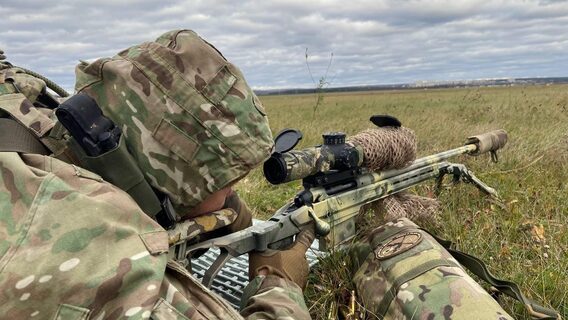
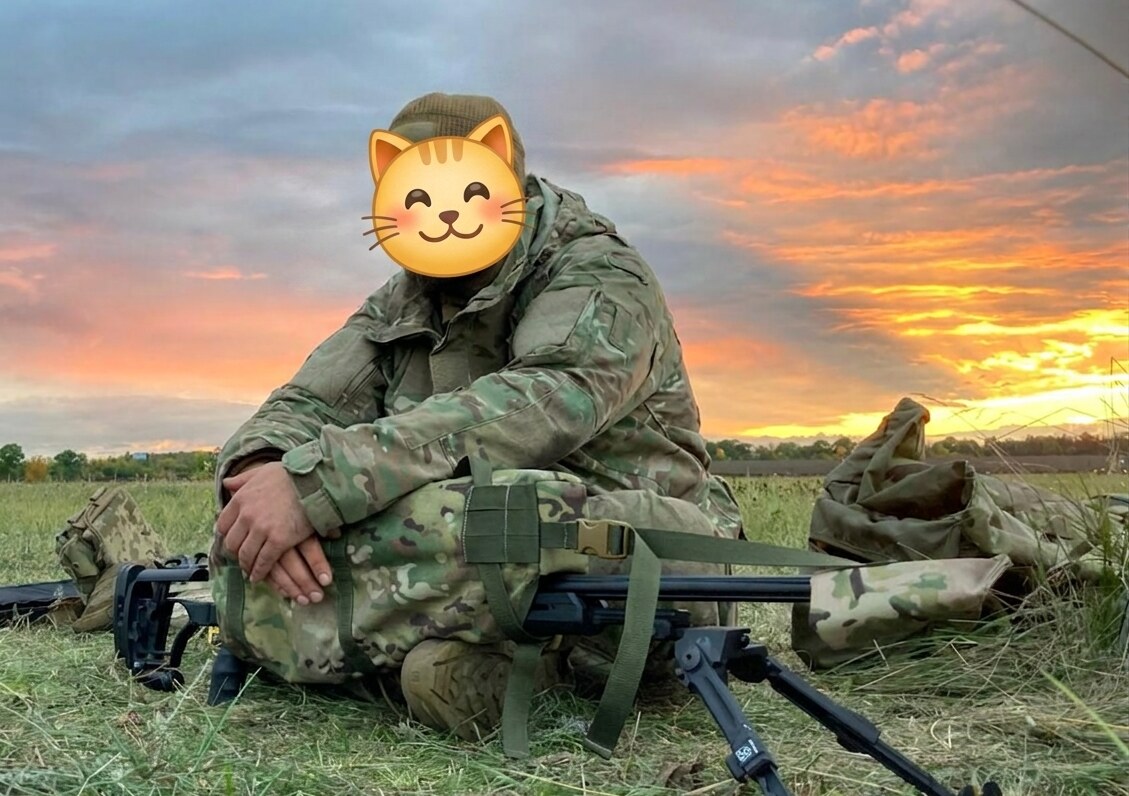
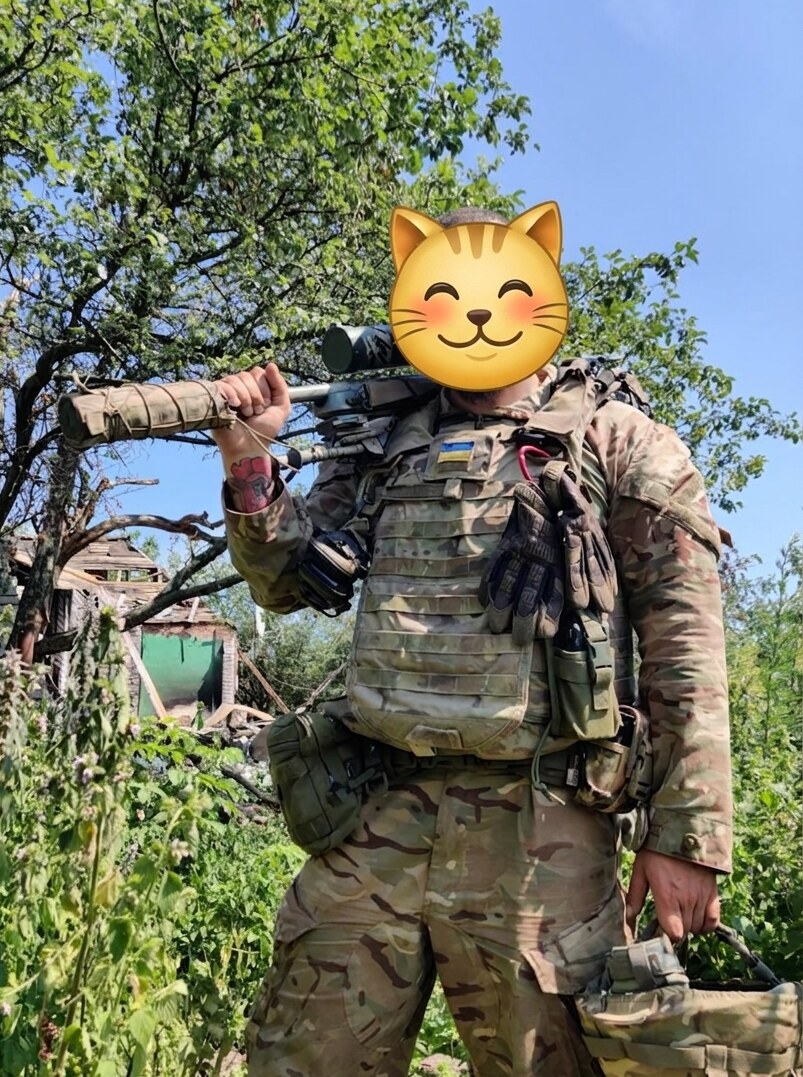
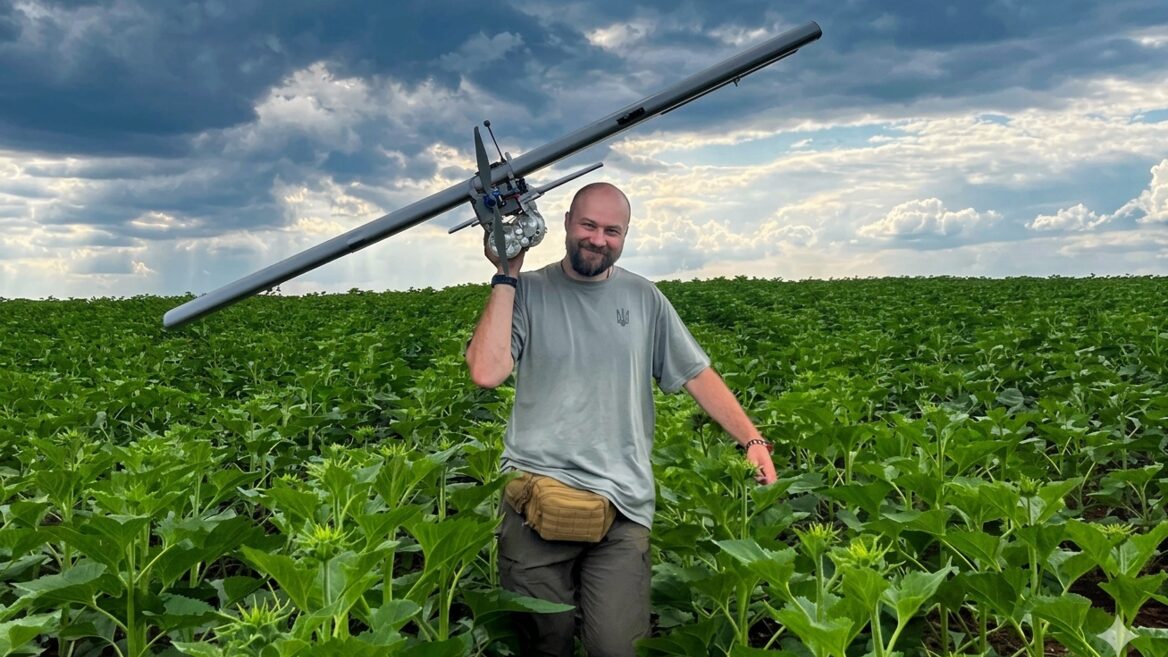
Veteran Oleksandr «Pykh» is currently a Lead System Engineer/Data DevOps at EPAM Systems. He has over 10 years of experience in IT, including about 5 years of specialization in AWS Cloud. His resume also includes a difficult experience that IT professionals from most countries of the world cannot list on their CVs: about three years in the Defense Forces during a full-scale war with Russia.
Veteran Oleksandr «Pykh» is currently a Lead System Engineer/Data DevOps at EPAM Systems. He has over 10 years of experience in IT, including about 5 years of specialization in AWS Cloud. His resume also includes a difficult experience that IT professionals from most countries of the world cannot list on their CVs: about three years in the Defense Forces during a full-scale war with Russia.
In a conversation with dev.ua, a former serviceman of the 130th battalion of the 241st brigade of the TRO, and now a veteran with the call sign «Pykh», spoke about his motivation to refuse relocation abroad and stand up for the defense of the country, participation in the defense of the Kyiv region and the liberation of the Kharkiv region, his combat and non-combat service in the Defense Forces, injuries, as well as his return to the IT profession and civilian life.
«They beat us, but we held on»: defending Kyiv instead of relocating abroad
— Tell me how you ended up in the Defense Forces at the very beginning of the full-scale invasion? Did you volunteer?
— Yes, as a volunteer. It is worth mentioning that before going full-scale, I worked for a fairly large Israeli company (ironSource — Ed.).
A few weeks later, they warned me about the possibility of such a scenario and offered me relocation from Ukraine, but I refused.
Just a few days before, my family left Kyiv, but I stayed behind.
In principle, I expected that there would be an invasion. Of course, I didn’t know exactly when, but I understood that all these maneuvers of the Russians were not accidental. Why did I immediately join the Defense Forces? One of my hobbies is high-precision shooting, I practiced a lot and was ready for it. In addition, I had many friends who were veterans of the ATO or simply related to military affairs.
So literally from the third day of the full-scale operation, I began to participate in the defense of the Kyiv region. At first, it was completely unofficial — my own weapons, my own equipment, my own ammunition.
At that time, I was around people who had military experience, and I knew how to handle high-precision weapons myself. My service moved to official tracks closer to the end of spring — a few months later.
I was with the 130th Battalion of the 241st Brigade of the TRO, which is based in Kyiv. In principle, I spent all my service in this battalion.
The first fighting caught me in the area of the settlements of Mila and Mriya in the Buchanan district. Well, as for the fighting, I would describe it as «they were beating us, but we held on.» That was the first time I heard the enemy’s «Grad» rocket, and there were more than enough emotions.
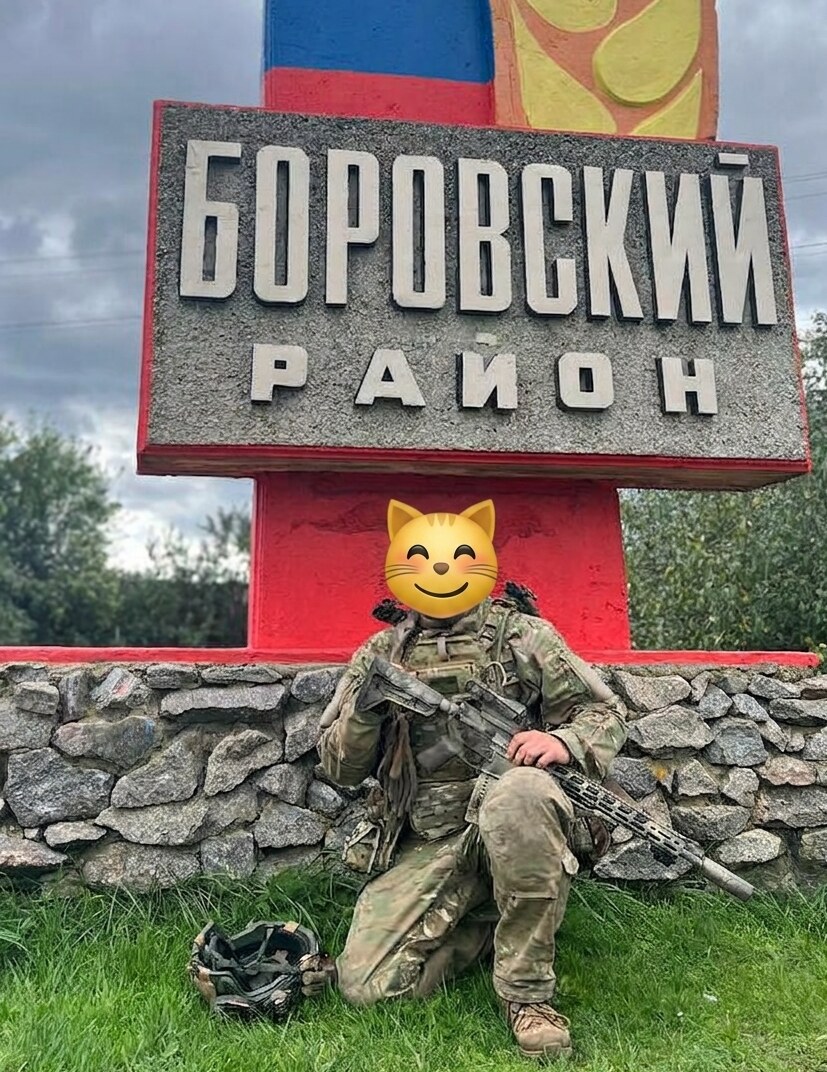
My guys were in Irpen after that, but I caught some kind of virus and was lying with a temperature under 40, so I didn’t take part in the defense of Irpen. But then there was the Kharkiv region, where we spent a lot of time. There was the famous Dementiivka, with a lot of losses. There was the liberation of the Kharkiv region, and fighting on the border with Russia.
— You say that the situation in the Kyiv region was like this: you took up certain defensive positions and were fired upon with long-range weapons. How close did the enemy come to you?
— In principle, I have never had close-range tasks: my rifle is not adapted for this. And I only received an assault rifle in the summer of 2022.
To storm their positions, we did not have the means and forces at that time. We were a kind of «collective hodgepodge» — we stood next to the «Alpha» of the SBU, the GUR and the DFTG from neighboring villages. Because of such a «hodgepodge», there was a bit of chaos, but the Katsaps could not move forward either. They settled near the «Grandma’s Garden» complex near the highway between Myla and Mriya. There was mainly an artillery battle.
— And how was this chaos resolved in the first weeks of the war? When was there a «collective hodgepodge,» roughly speaking, of professional military personnel from the SBU and GUR and local peasants? Didn’t this lead to a certain «Makhnovism» in our ranks?
— There was a certain «Makhnovism», but in places it even worked quite well. I can say that it was there later, in the Kharkiv region. There was a lot of chaos, and a lot of everything was based on horizontal connections. Not mine specifically, but those people who had both combat experience and certain acquaintances with related units. But, in fact, the whole war is still largely going on «behind the scenes» on horizontal connections: someone will be able to help, someone will conduct reconnaissance, someone will cover with artillery, and so on.
If we talk about any cases of friendly fire, then specifically in my unit, thank God, there was no such thing. But in general, unfortunately, cases of friendly fire are real and present in sufficient numbers. Of course, I will not tell in detail — but whoever is interested in this will find enough information.
«According to the laws of ballistics, the shell should not have hit our dugout»
— And in which locations, besides Kyiv and Kharkiv, did you have to stay during the war?
— We were still on the border of Luhansk and Donetsk regions in the area of Bilogorivka, not far from Serebryasny Forest. Of the adjacent units, the rather well-known K-2 was stationed there, and the guys worked well.
After I was wounded, our unit was also transferred to Bakhmut, where it took an active part in the defense right up until the last days while the city stood.
My unit was one of the last, if not the last, to leave Bakhmut. But after being wounded, I no longer took direct part in the fighting.
— How exactly did this happen, under what circumstances?
— An enemy tank and hitting our dugout.
In fact, I survived by a miracle — because my friend covered me with his body. Two of us were 200, there was also a heavy 300 and I was also 300, but the lightest of all.
According to the laws of ballistics, this shell should not have hit our dugout, because we were in a ditch. But it ricocheted off a tree. This happens too…
— You said that you trained in shooting for quite a long time and thoroughly before joining the Defense Forces. How big a difference did you feel when you got into real combat conditions?
— The difference is very noticeable.
You can learn to shoot at a shooting range. But no one will teach you how to do it — like when they’re already shooting at you.
Plus, this moment of fear, of tremor — you only feel it in war. So, it’s also incomparable.
The previous training gave me some basic skills that most people didn’t have. I think it really helped me survive in general. Especially there, in the Kharkiv region, when we were semi-encircled. For our unit specifically, it was probably the most difficult period of the war — the battles in Dementiivka.
But I want to say that war polishes everyone. Over time, everyone levels out in skills and psychological state. And in just six months, everyone I came with was hardened by real combat experience. Many were unrecognizable — they became real «rexes.»
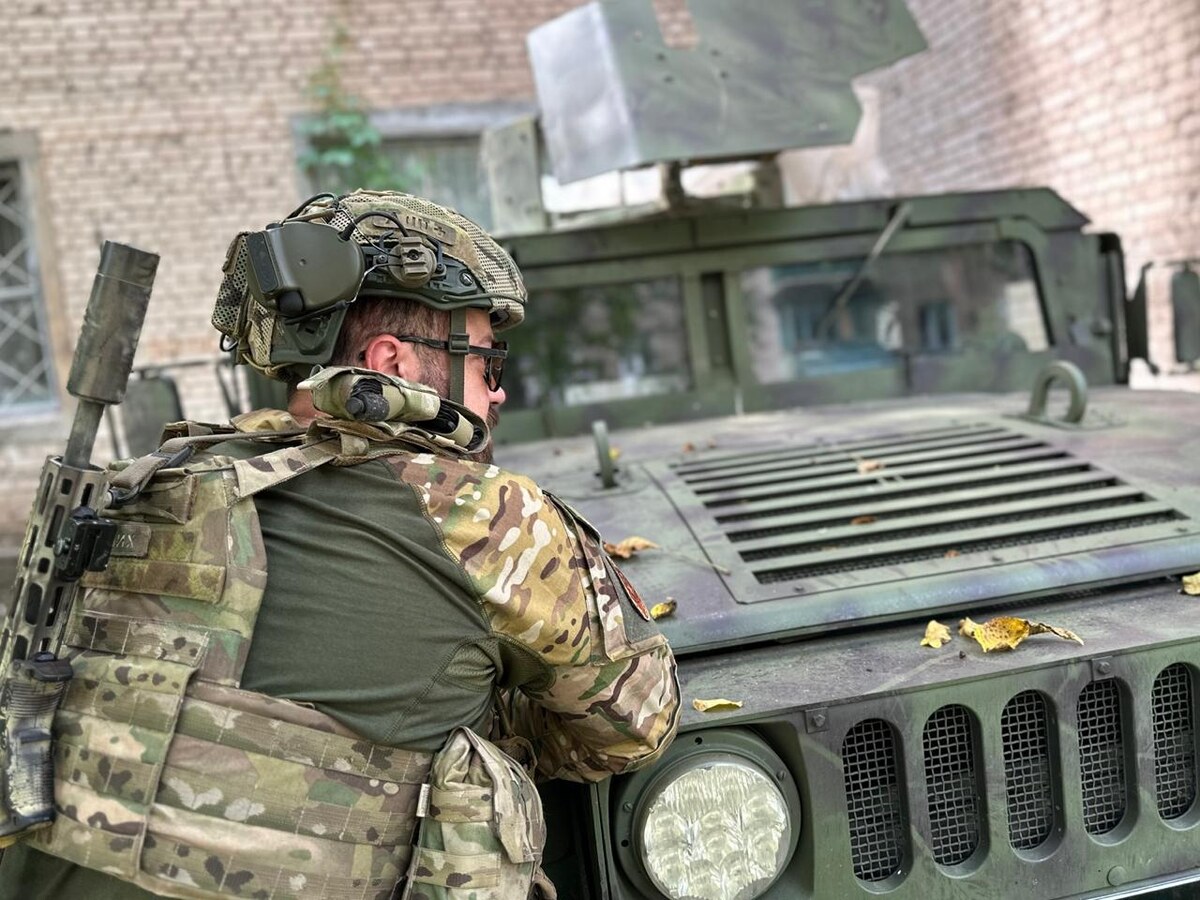
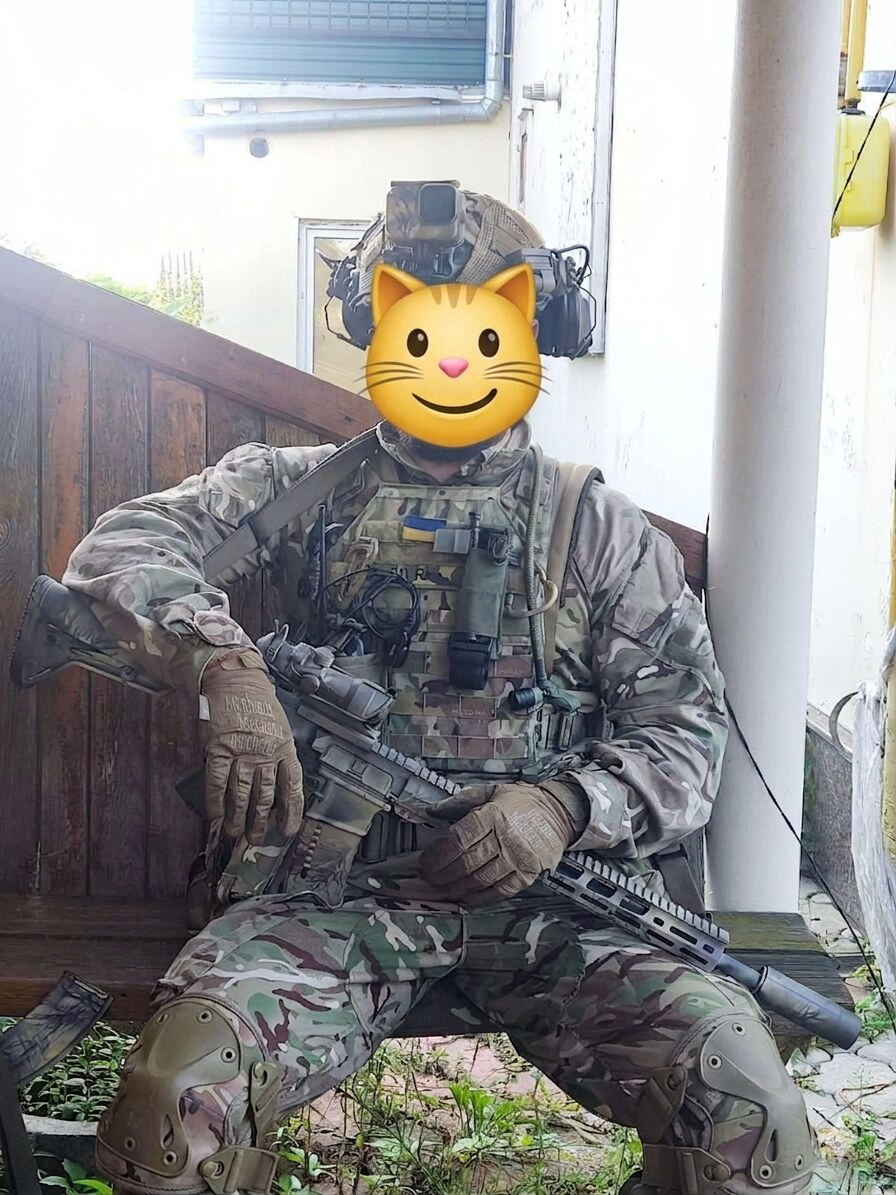
Later, my brothers and I laughed about how no one believed we were from the TRO. Everyone was well dressed, with foreign weapons — «arches», «grottos», we drove in «Humers».
— As far as I know, in the first years of full-scale provision of SROs, it was very radically lagging behind…
— Yes, everything was very bad with the provision, everything was bought with one’s own money.
I won’t say the exact amount, but I probably spent more than $20,000 specifically on myself.
But, again, connections, acquaintances, meetings — all of this helped a lot. Then, strangely enough, the katsaps also «helped.»
During the Slobozhansky counteroffensive in the Kharkiv region, my unit captured three tanks.
As far as I know, two of them are still working at the front for our defense. And besides the tanks, there were a lot of other «small things» — for example, infantry fighting vehicles. Then everything captured was shot back at the katsaps in Bakhmut.
— How has the provision of SRO changed over the following years? Have you felt it?
— I can’t say that everyone was equipped like «commandos,» but by the time of my demobilization, the provision of TRO had improved significantly. Already in 2023, before the general counteroffensive, we even began to receive «armor.»
Our battalion, thus, became a motorized infantry battalion. We had armored «Hummers». Did we have everything we needed? Of course not. But the situation changed.
My own unit, the reconnaissance company, which is now working very effectively, has over time become a UAV company — FPV, bombers, drop tanks, reconnaissance, «planes.» Do they have enough supplies? There will never be enough! Because it’s all used and lost.
From sniper to acting head of information protection service
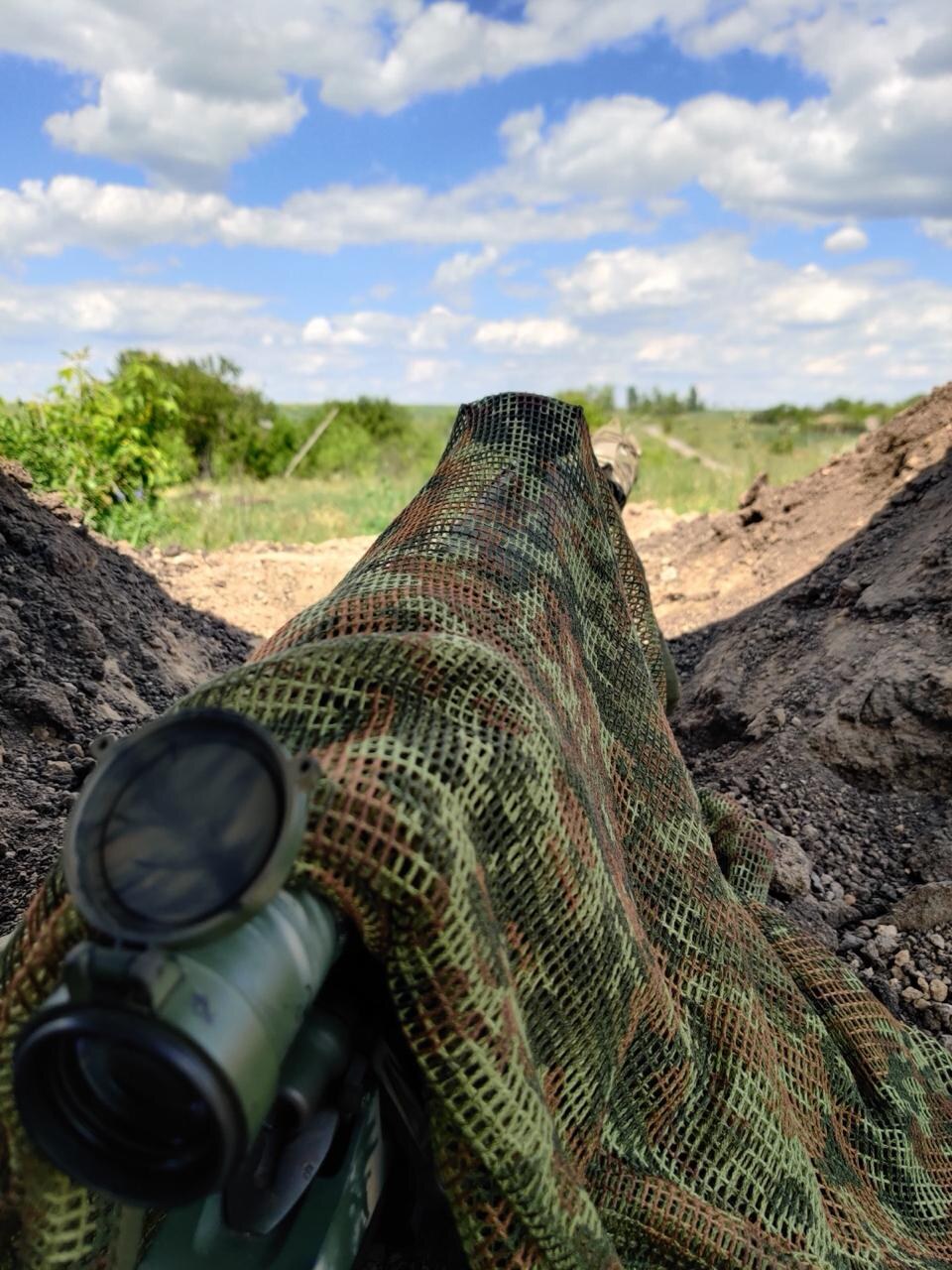
— You said earlier that you came to the Defense Forces with your own rifle and that you did not engage in close combat. So, if you add up these facts, you were a sniper?
— Yes, until I was wounded, I worked as a sniper. But in general, our battalion was just an infantry battalion. That’s why I didn’t perform any special tasks at first.
The fact that I had a rifle only means that I was an infantry element with slightly different tasks.
Of course, there were specifics to the work — I had to be on duty a lot at night, observe, but nothing more.
It was only later that we formed a reconnaissance unit, and I worked in it. And later there was a separate sniper unit, where we already had separate tasks, and we were subordinate only to the battalion commander.
Was I very effective? Definitely not. After all, the specifics of the war have changed a lot compared to the ATO.
The way I fought in 2022 and 2023 would basically be suicide now. Snipers may still be relevant in a point-to-point manner, but that’s a rarity now.
Drones have effectively changed the entire emphasis on the battlefield.
— Have you ever had a dilemma — whether to join the army for a combat position, or as an IT worker, following a conventional engineering line?
— To be honest, in 2023, after being wounded, I was thinking about transferring to another unit. Everyone had heard about Delta.
I was thinking of transferring directly to the unit that deals with Delta, but the conditions of service didn’t appeal to me.
Without details, but I decided to stay in my battalion, only from a combat position I was transferred to logistics and was engaged in car service. I served in this position for more than six months, and a lot of work was done to improve logistics. There was also a certain period when I was the acting head of the information protection service. That is, I finished my service in the Defense Forces already in a new position.
— How easy or difficult was it for you to return to civilian life and the IT profession?
— The last year or so of my service, I was no longer in combat. So that was also a kind of adaptation. During this period, there were business trips to Kyiv, so from time to time you are among civilians and at least live a civilian life a little.
There wasn’t much «army-ness» in our unit in a bad sense, so I would say that the adaptation process wasn’t difficult. At the same time, for those who are immediately discharged from the infantry, I think it’s 100% more difficult. And the longer you’re at war, the harder it is to return to civilian life.
As for employment and returning to IT, I didn’t focus on any veteran programs, I didn’t participate in anything like that. It wasn’t easy, because I was looking for a job for a month and a half, but by today’s standards, that’s still not much.
Ultimately, I had two offers, from EPAM and another company. But what can I say — if I had waited another year or a half, I would have had to start all over again in my profession.
If the same Kubernetes, Cloud technologies, some GitOps approaches and infrastructure plus or minus remained at the same level as before the full-scale war, then AI has leapt forward very much. Now it is generally a must-have and is needed everywhere. I was also helped a little by the fact that the company I worked for before the full-scale war actively used Machine Learning and AI models, so I did not completely fall out of context. At the same time, when I was in the army, even in non-combat positions, there was no time for self-improvement. There you focus on completely different things.
— After demobilization, do you maintain contact with your unit and comrades?
— Now it’s less, and right after I was released, I was really drawn back. I used to go to the guys almost every weekend. Now, on the contrary, I rarely go, so my brothers are a little offended.
At the same time, I try to get involved in organizational matters, to help. But again, there are guys who, after being released, continue to maintain all organizational processes. For example, they completely take on the repairs of the unit’s cars. I’m not that involved. My participation in supporting the unit now mainly consists of donations and supporting meetings.
I won’t give «bream» to anyone, but sometimes I hold on with all my might
— What do you think about the potential end of the war? Is Ukrainian society deceiving itself by expecting this?
— It’s hard to talk about such topics, because no one really has a clear understanding. When you’re sitting in positions, you think you know everything here. But in reality, you only see what’s happening nearby and roughly imagine where the katsap is sitting in the neighboring landing. The combatant who leads your unit sees the situation more broadly and has some kind of general plan in front of his eyes. Someone sees it even more broadly. But everyone looks at the situation «from their own place,» and sees it a little differently.
I would hate to think so, but it seems like this war could go on forever. Even if the active phase finally ends, it could turn into a passive phase, and then it could all happen again. I don’t believe that the Russians will ever catch up with us. I have a particularly hard time believing that everything will end in peace and harmony for many years.
We can cite examples of Chechnya and Georgia, where after the war, conditionally «normal» relations with the Russians have already developed. But I don’t think this is our option.
— The difficulty of adapting to civilian life for many veterans is due to a certain indifference of society to the war. How do you perceive the detachment of many compatriots from supporting the Defense Forces, do you see this trend?
— I will not voice any of my private opinions, but a fact — of course, people have become indifferent, and that is putting it mildly. But the question is that the motivation of both each individual person and society as a whole cannot last for 2-3-5 years continuously.
Motivation ends at such times, only discipline remains.
We repelled the attack on Kyiv and Kharkiv on motivation. From then on, it was all just a matter of discipline.
People helped, raised money, closed issues during the motivation, but motivation fades, and that’s natural. There’s no getting away from it. Such indifference could actually be seen in 2022, but it was much less against the general background, so no one paid much attention to it.
Sometimes I really get triggered, especially when I come to some establishments and hear conversations at the neighboring tables in the spirit of «no one sent you there.» I’m a pretty calm person, I won’t give anyone a «bream» for it. But sometimes I hold on with all my might. I have nothing but contempt for such people.
Anyone who wants to donate to the needs of Oleksandr «Pykha» unit can do so here
«There was a period when three people were hired a day. I have never seen such growth in IT.» The story of an IT professional who, after three years of service in the Defense Forces, works on new products at miltech
«I’d heard about ‘meat storms,’ but I didn’t really believe it until I saw them with my own eyes.» The honest story of an AIT veteran who managed to return to work in IT despite a serious injury
«When everyone in IT dreams of ‘remote work’ and ‘free schedule,’ I realized: I need a different type of freedom.» The story of a veteran who consciously chose the office format of work from 9 to 18 and does not regret it at all