Хочете будувати кар’єру в Data Science та AI? Vodafone Big Data Lab відкриває новий набір —>
Олександр КузьменкоSpaceTech
3 April 2025, 18:13
2025-04-03
The first 27 satellites from Amazon's Project Kuiper constellation will launch next week. The project will compete with Starlink
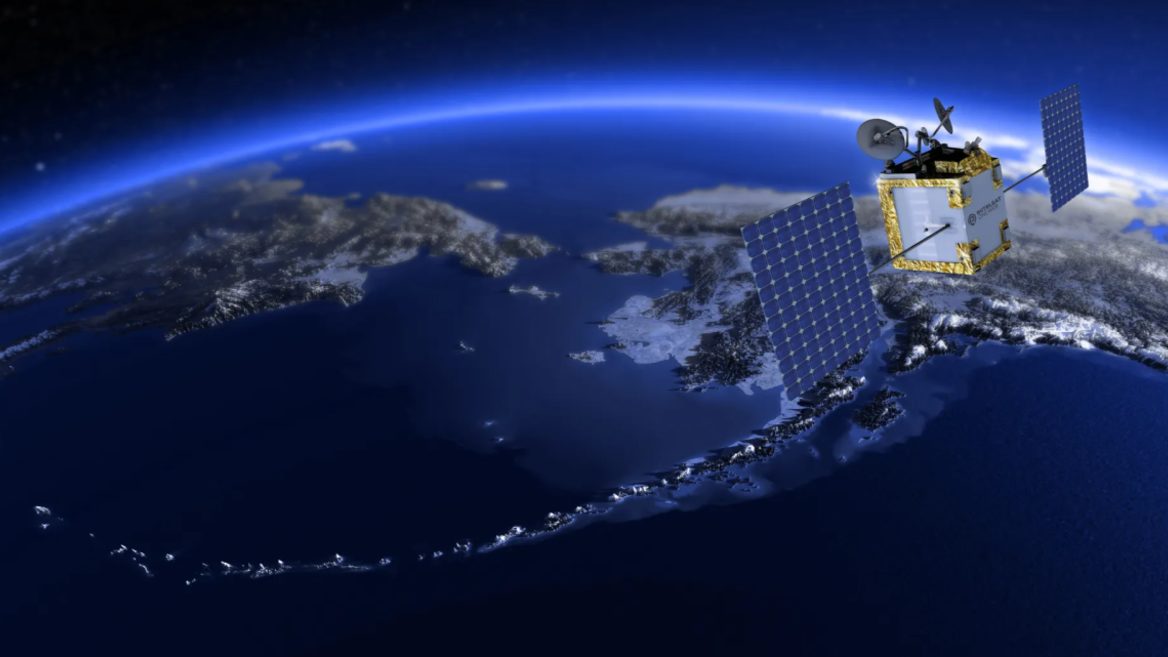
After nearly a year behind schedule, United Launch Alliance will launch the first 27 of more than 3,200 satellites planned for Amazon’s Project Kuiper constellation of broadband internet satellites. The satellites, which will compete with Starlink, are scheduled to launch on April 9.
After nearly a year behind schedule, United Launch Alliance will launch the first 27 of more than 3,200 satellites planned for Amazon’s Project Kuiper constellation of broadband internet satellites. The satellites, which will compete with Starlink, are scheduled to launch on April 9.
Amazon said it is preparing to launch its first batch of satellites into low Earth orbit aboard an Atlas V rocket from Cape Canaveral, Florida, as part of a mission called KA-01 (Kuiper Atlas 1), Space News reported.
According to Amazon, the satellites feature significant improvements over the two prototypes that ULA launched aboard an Atlas V rocket in 2023, including improved phased array antennas, processors, solar panels, thrusters, and optical inter-satellite links.
Successful tests of prototypes in orbit gave Amazon confidence that it could begin deploying active satellites in the first half of 2024. This should allow the company to conduct beta testing with potential customers such as Verizon and Vodafone later that year.
However, for unknown reasons that Amazon declined to comment on, there was a delay that pushed potential beta tests to 2025.
Due to FCC licensing requirements, Amazon must deploy half of the constellation by July 2026 and the rest by July 2029.
The commission noted that the constellation will be deployed in five stages, and operation will begin after the launch of the first 578 satellites.
The satellites will be distributed in orbit in the following groups:
590 km — 28 orbital planes, 28 satellites on each plane (total 784);
610 km — 42 orbital planes, 36 satellites per plane (total 1296);
630 km — 34 orbital planes, 34 satellites per plane (total 1,156).
«We have conducted extensive testing on the ground to prepare for this first mission, but there are things you can only learn in flight, and this will be the first time we launch our final satellite design and the first time we deploy so many satellites at once,» said Project Kuiper vice president Rajiv Badyal.
Launch details
Amazon said KA-01 will be the heaviest payload ever launched by an Atlas V launch vehicle, which will use its most powerful configuration (five solid-fuel boosters plus a main booster) to deploy satellites 450 kilometers above the Earth’s surface.
ULA has a contract to use seven more Atlas V rockets for Project Kuiper, as well as 38 launches using the larger Vulcan Centaur rocket. ULA’s CEO predicts 12 launches this year for Amazon and other customers, split between the Atlas V and Vulcan. A full batch for the Atlas 5 rocket is 27 vehicles, he said. Meanwhile, the Vulcan rocket can launch 45 vehicles in a single flight.
Amazon’s multi-billion dollar Project Kuiper launch deal also includes three SpaceX Falcon 9 missions, 18 Ariane 6 launches from Arianespace, and up to 27 New Glenn rockets from Blue Origin.
Interestingly, the satellites that will fly on KA-01 are coated with a «unique dielectric mirror film» that scatters reflected sunlight. This should help make them less visible to ground-based astronomers, Amazon claims.
Competition with Starlink
As a global service, Amazon’s space internet will eventually be accessible «from virtually anywhere on the planet». As with Starlink, users will need terminals to connect to the satellite constellation.
In 2023, Amazon said its smallest dish, a seven-inch square design weighing just half a kilogram, would offer speeds of up to 100 Mbps, making it an alternative to the Starlink Mini.
Amazon will continue to compete with SpaceX by offering larger antennas for home and business use with speeds up to 1 Gbps. The company plans to produce terminals «for less than $400 apiece».
SpaceX’s Starlink constellation currently has over 7,000 satellites in low-Earth orbit, the first of which was launched in 2019. However, following controversial statements from SpaceX owner Elon Musk, many countries began to doubt the reliability of the company’s services and began looking for alternatives.
«It’s a risk for bombers, but it can be managed.» Chief of Staff of the Nemesis Regiment on the risks of losing Starlink communications and its alternatives at the front
Musk has changed his mind. The SpaceX founder said that Starlink satellite communication terminals will never be used «as a bargaining chip» and is no longer going to turn them off for Ukraine
Amazon запускає шоу з записами «розумних» дзвінків Ring. Це той самий українский стартап, який продала Кіра Рудик і в якого були проблеми з витоком персональних даних
Розповідаємо про зв’язок американського техгіганта та української компанії.
«Чи є у мене талант, якщо комп’ютер може імітувати мене?». Штучний інтелект пише книги авторам Amazon Kindle. The Verge поспілкувався з авторами та виявив багато цікавого
Письменники-романісти використовують штучний інтелект для створення своїх творів. Видання про технології The Verge поспілкувалося з письменницею Дженніфер Лепп, яка випускає нову книгу кожні дев’ять тижнів, й дізналося про те, як працює штучний інтелект для написання романів. Наводимо адаптований переклад статті.
Google, Amazon, Lyft і DoorDash компенсуватимуть працівникам витрати на аборт. Проте така пільга доступна не всім: що відбувається?
Технологічні компанії покриватимуть працівникам витрати на поїздки, пов’язані з абортами, пише Wired. Проте така компенсація буде доступна не для всіх працівників.
Зокрема, зазначається, що Google, Amazon та інші компанії допомагатимуть штатному персоналу шукати медичну допомогу за межами штату. Розповідаємо, що про це відомо.