Хочете будувати кар’єру в Data Science та AI? Vodafone Big Data Lab відкриває новий набір —>
Ігор Вишневський Історії
11 November 2026, 09:00
2026-11-11
Between IT, theater and war. How a Jooble Product Manager left IT and became a military translator at Ukrainian army exercises abroad
Project/Product Manager Ruslan Bokach is originally from Chernihiv, but has been living in Norway with his wife and school-age son since 2023. He has changed his career path very quickly several times — first, while still at university, he connected his life with creativity and was a co-founder of the well-known shadow theater "Verba", then in the midst of the coronavirus pandemic he entered IT, starting to work as a Project Manager. And last year he left the position of Product Manager at Jooble to become a translator for Ukrainian military personnel undergoing training abroad.
Project/Product Manager Ruslan Bokach is originally from Chernihiv, but has been living in Norway with his wife and school-age son since 2023. He has changed his career path very quickly several times — first, while still at university, he connected his life with creativity and was a co-founder of the well-known shadow theater "Verba", then in the midst of the coronavirus pandemic he entered IT, starting to work as a Project Manager. And last year he left the position of Product Manager at Jooble to become a translator for Ukrainian military personnel undergoing training abroad.
dev.ua spoke with Ruslan Bokach about what made him make another sharp "pivot" in his career, about the nuances of the work of a military translator and how this work became a family one not only for him, but also for his wife. In addition, Ruslan told us about his desire to join the miltech sector and the obstacles on this path, the nuances of adaptation in Norway and the difference in salary between the Ukrainian "IT" and the Norwegian army, and also mentioned his past theatrical experience.
A vacation trip that is still ongoing
It so happened that at the time of the full-scale invasion, Ruslan was abroad with his family, having gone on a vacation to Egypt for several weeks. It was not a traditional tour to Egyptian hotels popular among Ukrainians, but a trip to visit friends.
“On February 6, 2022, my family and I flew to Egypt on vacation. We expected to stay there for about three weeks. Since I worked in the “IT” remotely, I could afford to do it from Egypt or any other country, so the duration of the trip was not a problem. When the full-scale war began, we were still in Egypt,” the IT worker explained.
When the Russians were on the outskirts of Chernihiv and Kyiv, returning to Ukraine with the child would have been madness, so the family’s vacation in Egypt dragged on for a long time — they spent more than a year in this country. During this time, the child even went to a local kindergarten, but the family faced the issue of social adaptation in a radically different culture. So they decided to at least return to Europe.
“We saw that the war would not end soon. The little one was two years old when we left Ukraine, and he was already three in Egypt. He attended a local kindergarten in Egypt, but we still wanted him to go to a kindergarten other than the Egyptian one. That’s why we started looking towards Europe,” Ruslan said.
According to him, he and his wife did not have any far-reaching plans to leave Ukraine, so they chose a country in Europe rather at random. They first flew to Poland and from there they thought of moving towards Austria, where they also had acquaintances.
At the last moment, we decided to go to Norway simply on principle — and why not?
“From Poland we got on a bus to Austria, but already on the bus they were like: "How about Norway? Well, come on — Norway!" We turned around and flew there on a plane," shared Bokach.
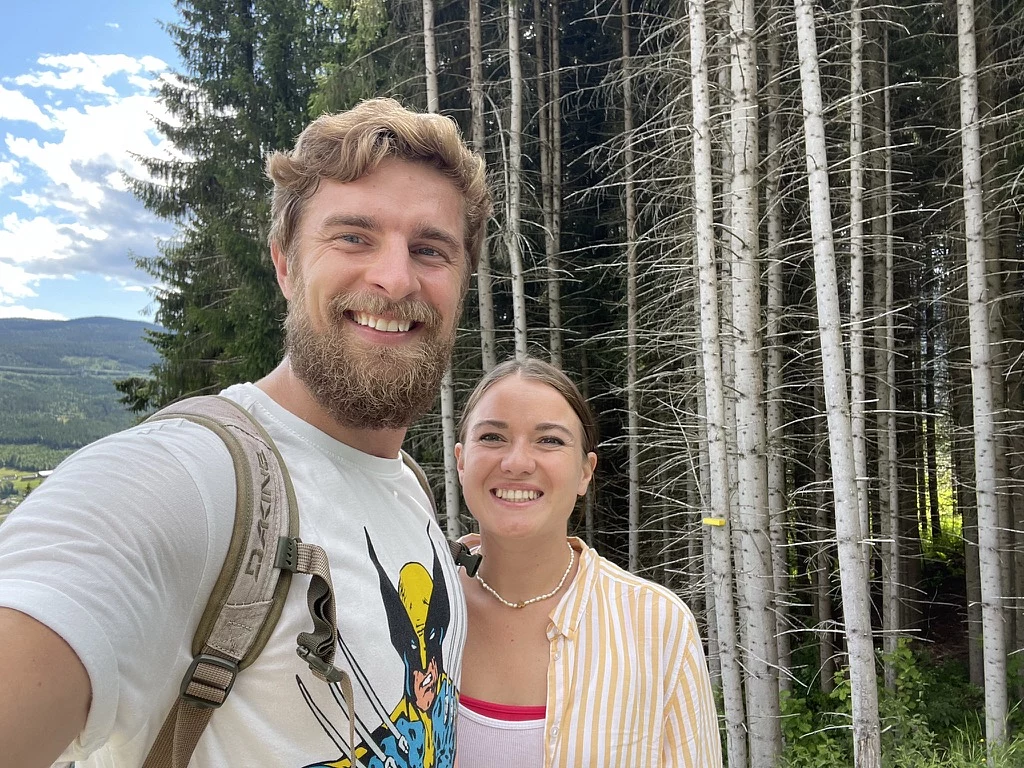
Ruslan Bokach with his wife
Although the family had no acquaintances or any clearly defined prospects in this country, adaptation, as the IT worker says, was as simple as possible, because the Norwegian authorities were very attentive to the needs of Ukrainians and provided maximum assistance in resolving all issues.
Exiting IT at a time when it is so difficult to enter it
As Ruslan Bokach recalls, he and his family arrived in Norway in early June 2023. And the first thing the AIT resident did was simply contact the local police for further instructions regarding his stay in the country.
“I went to the police at the airport and said, ‘We are Ukrainians, what should we do?’ They said, ‘Go to the hotel, they will tell you everything there.’ I remember it was a Friday evening.
There was only one metro station from the airport to the hotel, we were checked in completely free of charge and asked to wait until Monday. Later, various services came, processed the documents and sent us to a refugee camp for three months. It was an old ski base, but we had our own room there and everything was quite comfortable,” shared Bokach.
During this time, Ruslan continued to work remotely for Jooble, while the Ukrainian refugees were gradually distributed across different administrative municipalities. As a result, he and his family were settled about an hour’s drive from the capital, Oslo.
“In the first year, they give you the opportunity to learn the language, integrate into society, and pay you the local subsistence minimum if you regularly attend Norwegian language classes, so integration was completely painless. Moreover, I had a job the whole time. Our Norwegian curators who deal with refugees knew that I was working and didn’t touch me at all — like, if you’re working, then well done,” our interlocutor said.
At the same time, the IT guy, who worked at Jooble for about three years, from the beginning of the full-scale invasion constantly had an internal doubt — even abroad, he wanted to be at least a little involved in some processes that contribute to the defense of the country. Therefore, having a successful job in a product company, he began to look towards miltech and some similar employment. Ruslan warned the employer about his intentions, but implementing them was also not easy — after all, working in miltech usually involves an offline presence or at least staying in Ukraine.
“I was gnawing at the idea of doing something related to helping Ukraine. I started looking at vacancies in miltech, but unlike traditional IT, it’s quite difficult to find a remote job there. It’s a “task with an asterisk”. So when I accidentally saw an opportunity to join the Norwegian Armed Forces as a translator to translate from English to Ukrainian for our soldiers who are being trained in Europe, I decided it was worth doing. And as soon as the first opportunity to go on a mission came up, I quit and went,” the Ukrainian IT worker explained his unexpected career turn.
Since Ruslan warned his employer in advance, his decision did not come as a surprise to the team.
Financially, he did not lose from this, but even gained, because, as Bokach says, working in the Norwegian Armed Forces during training missions pays better than the average IT worker in Ukraine.
“A Ukrainian IT salary in Ukraine and a Ukrainian IT salary in Norway are different salaries. But, in principle, it was enough for us to live. My salary now as a military translator depends a lot on whether I am just at home or going on a mission. On a mission, I receive additional “travel allowances”, so on average I make more than in an “IT job” in Ukraine,” Ruslan Bokach concluded.
Family translation contract
One of the most interesting facts is that Ruslan and his wife simultaneously applied for military translator positions, and both of them were employed by the Norwegian Armed Forces.
They take turns going on training missions, as someone has to stay with their son. For a family that has been together all the time, it’s a new experience, but everyone gradually gets used to it.
“We both passed the interview, but we can’t fly to the mission at the same time. So we work in turns — now my wife is on a mission, I’m at home with my son, then she flies in, we spend a little time together, and I fly to the mission. If we used to be together 24/7 — both when I was in the “IT” and when I worked in the creative team — the “Verba” shadow theater — where my wife and I were co-founders, now everything has changed dramatically. We hardly ever get together — literally a few weeks in a couple of months,” the military translator shared the current realities, now no longer an IT worker, but a military translator.
Ruslan Bokach with his wife
However, more than a year has passed, and now it no longer seems unusual to the family. Their son, who was only two years old at the beginning of the full-scale invasion, has already started first grade — simultaneously attending both the Norwegian offline school and the Ukrainian online one.
Although Ruslan and his wife are employed by the Norwegian Armed Forces, the training missions of Ukrainian military personnel usually take place not only there, but also in other countries, so they both fly on long foreign missions, where in some cases they also have to live in field conditions.
“It could be Norway, it could be Europe. I could go for two months, the missions are quite long,” he says.
The specifics of his and his wife’s translation work are somewhat different, as she is currently on her third rotation and translates the same course for the Ukrainian military, while Ruslan has already completed four rotations, and each time it was a different course. “I mean, she went in-depth, and I went in-depth, let’s say. It works a little differently for us,” he concluded.
Our interlocutor shared another interesting career fact about him and his wife — the latter graduated from university with a degree in "information systems", but never worked in "IT", while Ruslan received a specialization in "accounting", which did not prevent him from working in IT for a long time.
“80% of feedback from the Ukrainian military is exclusively positive”
According to Ruslan Bokach, Ukrainian military personnel, regardless of the country where they are trained, usually receive positive feedback. However, soldiers with significant combat experience who attend foreign training may have their own views on certain issues, and they may differ from what their instructors teach them.
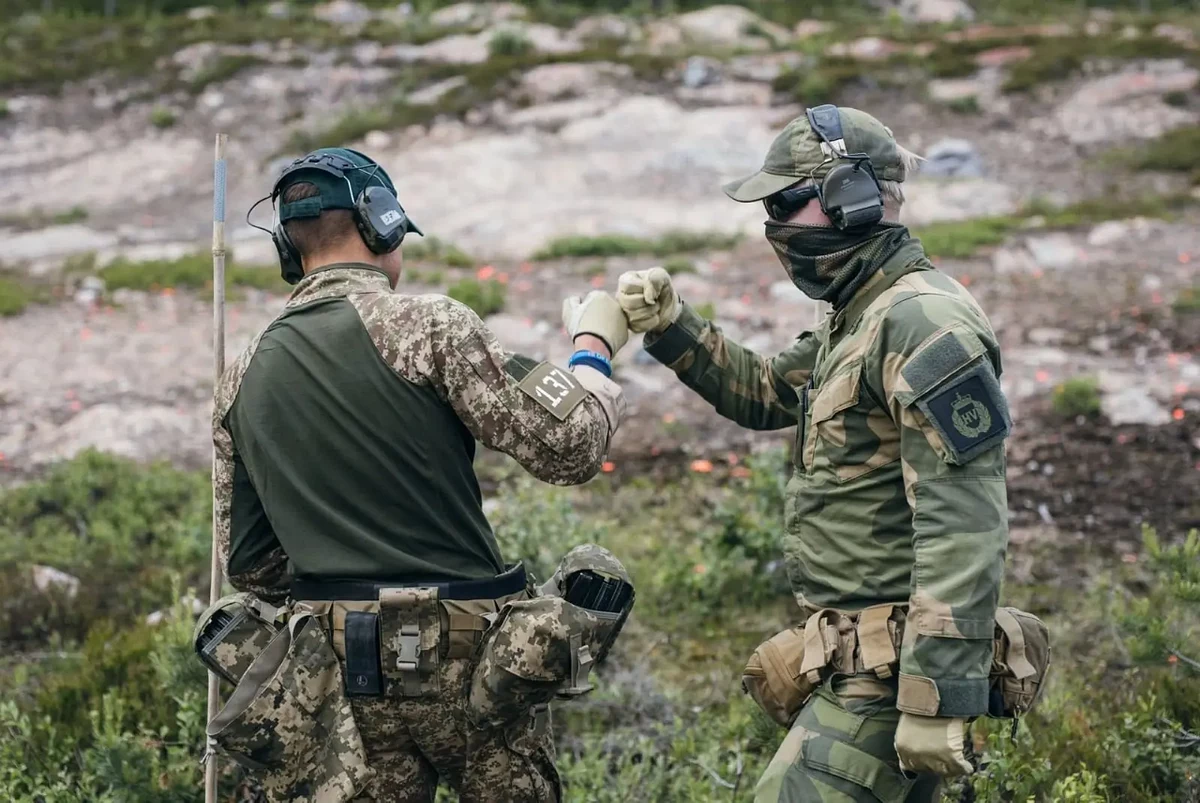
GUNGNE training operation in Norway, photo by the Armed Forces of Ukraine
“If these are, conditionally, some beginners without combat experience, then they respond absolutely positively. But there are guys who come after having fought for several years. They can compare something from the theory with the real picture of the battle in Ukraine, disagree with something,” the translator explained.
Also, the “involvement” of a soldier may depend on his motivation — whether he wants to learn something and immerse himself in the course, or just came to the training “to get a piece of paper.” “Sometimes, in order to be promoted, a soldier needs a piece of paper that he has completed a specialized course. Sometimes these guys are really “too cool for school” — they just came to sit the course, pass the exam and leave,” Ruslan shares. But one way or another, in his experience, at least 80% of the feedback from the Ukrainian military is exclusively positive.
During the exercises, the military translator is wherever the instructor is, so Ruslan has to work and live not only at the base, but also in the field.
"We are always 'tied' to the instructor we work with, and the instructor accompanies one of the units. That is, if it’s some field shooting or multi-day scenarios where the military sets up dugouts, we also spend the night somewhere nearby and have our own tents and sleeping bags," Ruslan Bokach told about the life of military translators.
Sometimes they are expected to be “fully immersed” and involved. “We also run through the trenches in gas masks if the “gases” are being used up,” he says with a smile.
Translation difficulties
We also wondered how difficult it is to translate specific military terminology, especially regarding various types of weapons, because an IT person, even with perfect English, is unlikely to have this vocabulary in their vocabulary.
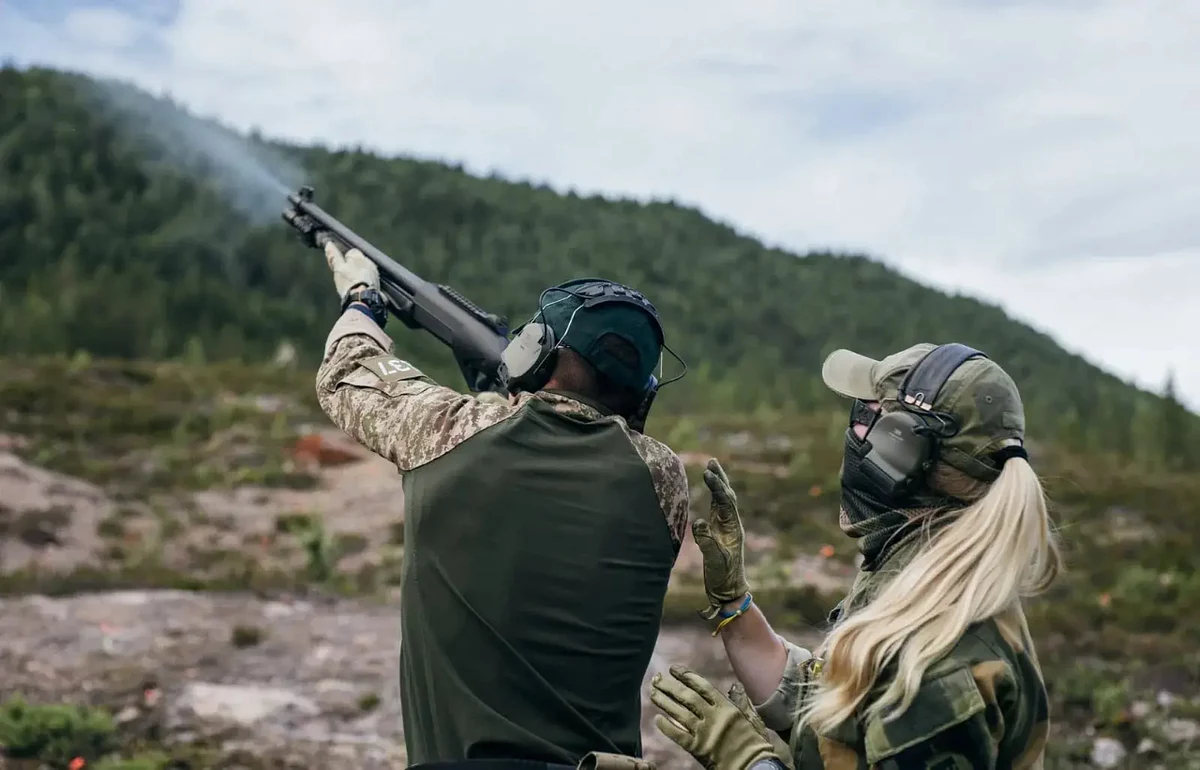
“In fact, the vocabulary is being developed. Another thing is that at the beginning I didn’t even know in Ukrainian how something was called and how it worked. For example, when I had to translate the names of the components of a Heckler & Koch rifle. That is, the difficulty is more in studying the necessary topic, rather than just translating it,” Ruslan Bokach clarified. He added that he usually arrives at the training site a week before they are held and has time to “pull up” the necessary theory and prepare himself.
GUNGNE training operation in Norway, photo by the Armed Forces of Ukraine
The nuances of translation are also related to the country of origin of the instructor. When English is not the native language of both the translator and the instructor, it is still easier to understand, because the vocabulary is not as broad and there is no specific accent.
“The most difficult thing to translate, of course, is native speakers. It’s one thing to translate Swedes, Norwegians, or other Europeans for whom English is a second language. Everyone can make some mistakes, but they speak with the usual constructions that they learned at school or heard on Netflix. It’s another thing to translate Australians or the British. You have to strain there, because they speak faster and the slang is specific,” Ruslan shares the details.
There are times when a military translator has to clarify things with an instructor or ask him to explain something in different words. But now Ruslan has already gotten used to his job and treats it as an everyday work situation. On the very first mission, not only he was a “newbie,” but also many other translators, and they discussed their incidents together over dinner.
“I had never worked as a translator before, let alone as a military translator. But when I first started, we had, to be honest, eight new guys for whom this was their first rotation. We would gather in the dining room every evening and discuss who was slowing down where, or what funny thing they said,” Ruslan recalls about his first experience.
He adds that many translators had an even harder time than him, because they are Ukrainians who have been living in Norway for 15-20 years, so during this time they have managed to forget their native language.
“There were a lot of random words that we laughed at later. After all, some of the guys left Ukraine as children or teenagers in the 90s. So they only spoke Ukrainian at school in Ukraine and it fell out of context,” he told about his first experience and his colleagues.
Dream of DefTech
On Ruslan’s LinkedIn page, the profile header already states — DefTech focused.
Despite having a current job that he likes and benefits the country, he continues to look for vacancies in the Ukrainian DefTech sector, where he could implement the skills and abilities he acquired in IT.
However, companies that are willing to hire remote workers are more the exception than the rule, so the chances of success are significantly reduced. If we focus on the representative offices of Ukrainian DefTech companies abroad, of which there are actually quite a few, then most likely we would have to move to another country, and Ruslan would like to avoid this. After all, his son went to school here, and he and his family have just gone through a long adaptation. So, again rushing off into the unknown and rebuilding his life is an undesirable step at the moment.
“I am satisfied with my current role, but at the same time I am looking at Miltech vacancies, and if I manage to find a remote job at Miltech from Norway, I will return. If not, I will continue to work as a translator,” Ruslan Bokach defined his priorities.
According to him, most Ukrainian companies still do not consider candidates for remote work from Europe, but he does not lose hope. “There were several interviews, but almost all of them came down to the fact that employers give preference to employees who are in Ukraine,” Ruslan stated.
He managed to find one company in Norway that hired Ukrainians and was engaged in the manufacture of drones, but logistically this job would also require moving or other significant changes for the entire family.
“They were looking for engineers for the “hardware”, sharecroppers, a UAV instructor with experience in military operations. The vacancies are mostly applied, and I was ready to go as a conditional sharecropper to gain experience from scratch, but their shift starts at 5:00 in the morning, and I have to travel to them for at least an hour or an hour and a half one way. What about the child and school? It didn’t really coincide with the schedule I live in now,” Ruslan explained.
Currently, to sharpen his skills directly under Miltech, Ruslan is taking the Miltech Product Management course on the Сhoice 31 platform.
Shadow theater
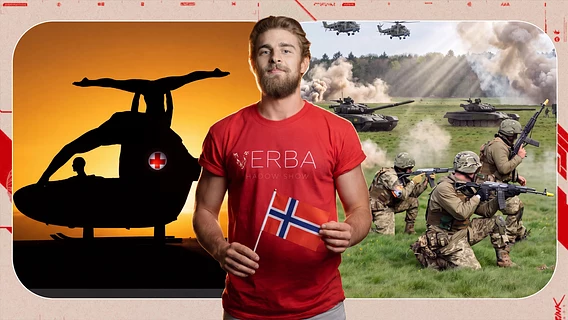
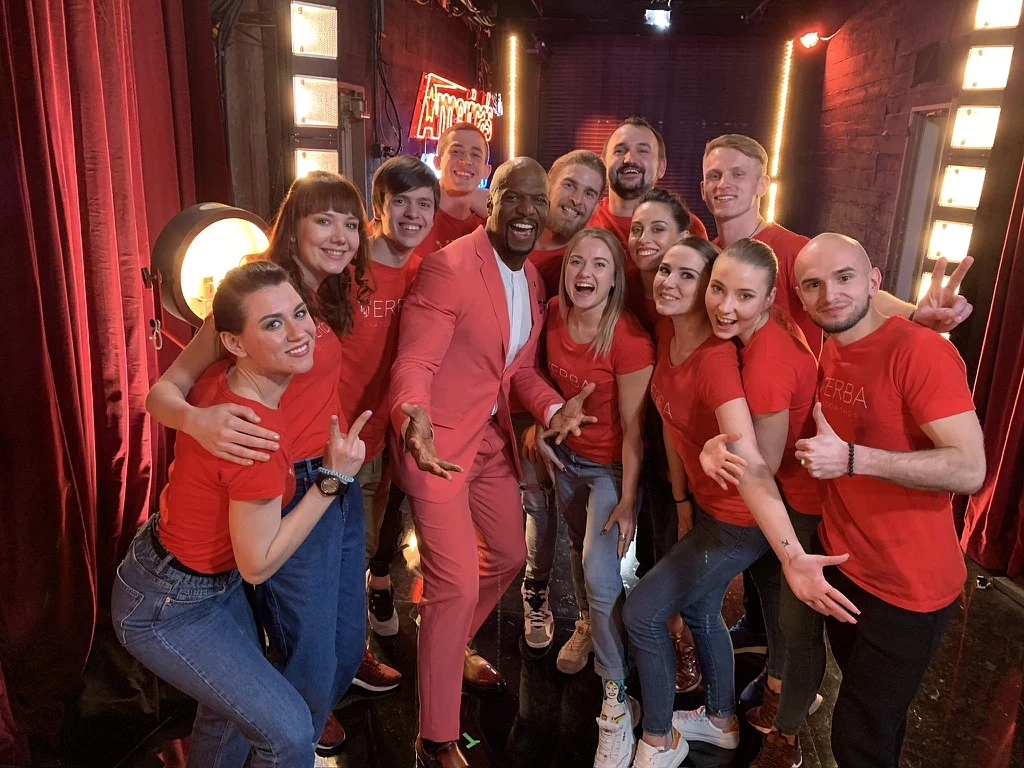
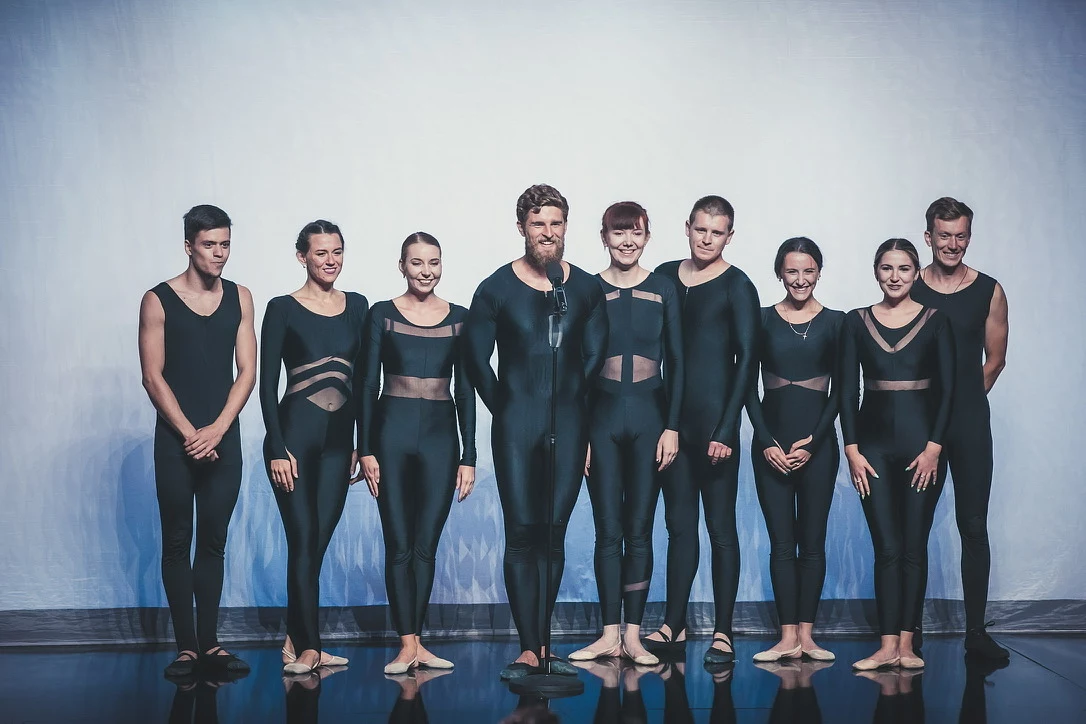
The Verba Shadow Theater, which Ruslan co-founded while still at university, has remained a great personal story of creative success for him. After all, the team has taken part and continues to take part in numerous Ukrainian and international performances and conferences — among other things, drawing the audience’s attention to the war in Ukraine.
For example, after performing in one European show, the producers offered to transfer 5,000 euros on their behalf to one of the funds provided by the theater itself.
And after another speech, Ruslan was approached by an American who wanted to donate money to Ukraine, but simply didn’t know where to safely send the funds so that they would reach those who needed them.
Shadow Theater "Verba" during a performance in the USA
“The history of the theater began by chance at university. We saw a similar show on the Internet, gathered a group of enthusiasts and began to prepare for the first performance in our free time after the couples. We performed — everyone liked it. And soon after we tried for the first time, we got on “Ukraine has talent,” shares Ruslan Bokach.
He recalls how their shadow theater came to audition for this big television show, having no idea about large-scale productions — all they had was a sheet and a flashlight.
“There our eyes were opened to how it could all be done. We were told that our shadows would not be visible in front of the television equipment, and instead of a flashlight they brought a projector. We tried it, and went to the live broadcasts. We lived in Kyiv, in Pushcha-Vodytsa, for a month — they trained us, showed us how it all works, how to make our performance have at least some kind of “picture”. I was only in my second year at the time, and everyone else was also in their second or third year,” Ruslan said about the experience gained on the show.
Shadow Theater "Verba" during the show "Ukraine has talent"
According to him, for a while their shadow theater performed exclusively at university events, but in 2011 one of the event managers found us and invited us to perform in Crimea — at a commercial event in Yalta.
“Only then did we realize that we could make money from this. Because before that, we didn’t even have such an idea, it was all purely for fun,” says Ruslan Bokach.
After that, they began to actively contact Ukrainian event agencies and look for opportunities for commercial shows, and the Verba shadow theater began performing not only in Ukraine, but also far beyond its borders.
“It came and went and we performed, starting from China and ending in the States — with concerts and private events,” added the co-founder of the theater, in which he was initially an actor along with everyone else, and then he also showed his organizational skills, arranging performances and doing promotion.
The Verba Shadow Theater continues to function successfully, but the full-scale war has, of course, added its own difficulties and challenges to its work. For example, only female participants and only one man are now allowed to travel abroad for performances.
“The group holds rehearsals in Chernihiv, but if a male role is needed, only one colleague, who has three children, can go. Previously, it was about 50% to 50% — half boys, half girls. And at the beginning of the war, only girls went,” recalls our interlocutor.
On the Internet, you can find many videos and texts about the performances of the shadow theater, of which he is a co-founder — “Verby” even managed to impress an American audience. In the meantime, Ruslan Bokach continues to search for himself in other areas, and IT is only a small part of his story.
"I harnessed myself and plowed in so as to earn experience, reputation, website ranking, and money." The story of an IT professional who earned enough money to buy a house in the village in a year and now works with Americans and artificial intelligence to the sound of roosters crowing in the background
«В аутсорсингових компаніях з’являється комплаєнс на рівні клієнта: 50% працівників мають бути за межами України». 5 важливих тез з інтерв’ю співвласника Jooble
Колеги з DOU поговорили із Романом Прокоф'євим, співвласником другого у світі за популярністю сайту з пошуку роботи Jooble. Публікуємо найцікавіші тези з розмови.