Хочете будувати кар’єру в Data Science та AI? Vodafone Big Data Lab відкриває новий набір —>
Олег ОнопрієнкоStartup
26 March 2026, 09:00
2026-03-26
"In classic dating you think for a long time whether to write, but with us you just come and get to know each other." Ukrainians have created a dating app where you don't have to wait for a "match." Interview with the founder of SpicyDate
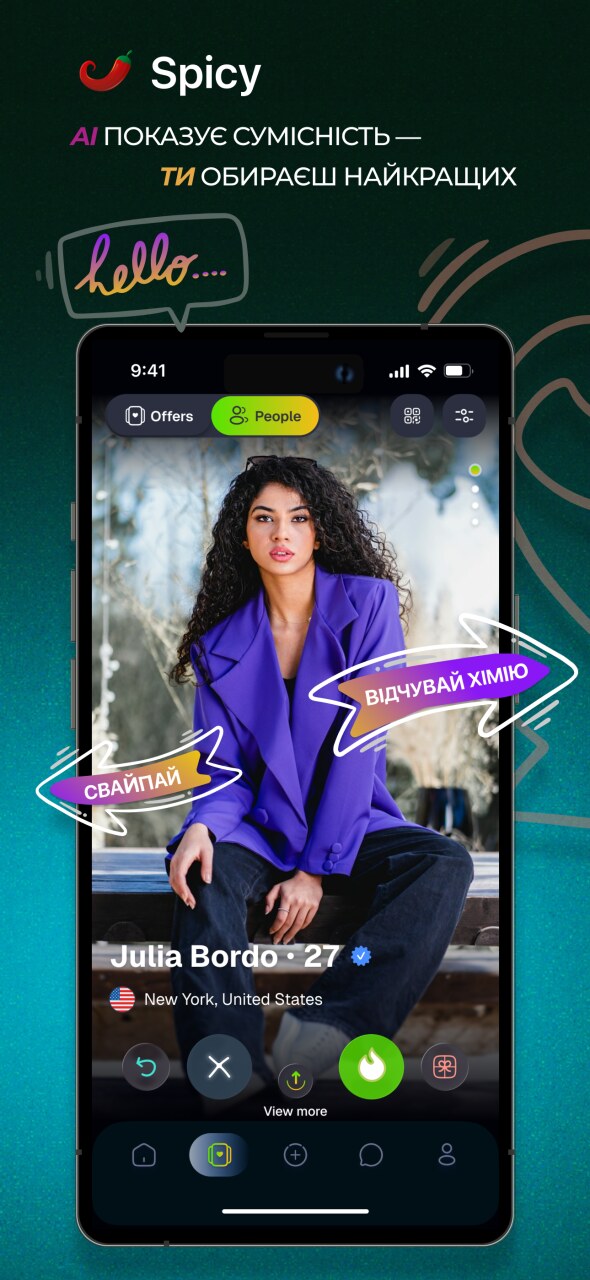
While Tinder and Bumble struggle with user churn due to “swipe fatigue,” Oleksandr Kazmirchuk is launching SpicyDate. It’s a dating app where you don’t have to wait for a mutual like to start dating, and annoying correspondence gives way to shared leisure time thanks to integration with establishments and attending events.
We talked to Oleksandr about how the experience of friendship helped him create a platform where people meet again in restaurants and on walks, not on smartphone screens.
While Tinder and Bumble struggle with user churn due to “swipe fatigue,” Oleksandr Kazmirchuk is launching SpicyDate. It’s a dating app where you don’t have to wait for a mutual like to start dating, and annoying correspondence gives way to shared leisure time thanks to integration with establishments and attending events.
We talked to Oleksandr about how the experience of friendship helped him create a platform where people meet again in restaurants and on walks, not on smartphone screens.
— Tell us about yourself and the team behind SpicyDate.
My name is Oleksandr Kazmirchuk, I am the founder and CEO of SpicyDate. I am a lawyer by profession, with a background in finance. I am currently based in Canada, where I am involved in product development and launch in a new market.
My cofounder Dmytro is a frontend developer whom I have known for over 15 years. We grew up together as neighbors and have a very strong personal connection and trust. It was together that we went through a lot of social experience, including meeting, communicating, and building relationships, which directly influenced our understanding of the problem.
Also on the team is Ruslan, a backend developer and my godson, which adds an even greater level of responsibility and trust in the team. He builds the technical architecture, system logic, and is responsible for the scalability of the product.
Oleksandr Dietrykh joined later as a designer, but quickly became a key part of the team. We saw that we had a common vision and worked very well together.
Today, we have a strong, close-knit team with a deep level of trust that covers the entire product — from idea to implementation. We are focused on long-term work and scaling to millions of users.
— How exactly did the idea of creating a startup in such a competitive niche as dating come about?
Dima and I have known each other for over 15 years. At one point, we lived nearby, constantly hung out together, walked, met girls, went somewhere, and made up things. And to be honest, the best acquaintances always happened not because you “chose” someone, but because you just ended up in the same place and started communicating normally. There was always some kind of context: a walk, a trip, dinner, company, atmosphere. And it worked.
Then I had a period when I broke up with my girlfriend and was left alone. Like everyone else, I went to dating apps — and very quickly realized that something was wrong there. Swipes, matches, correspondence — but almost nothing leads to real meetings. Everything is kind of superficial and exhausting.
We started discussing this and realized a simple thing: on apps, people try to meet in a completely different way than they do in real life. In real life, you don't swipe people — you go somewhere, do something together, and meeting happens naturally.
After that, our lives diverged a bit: Dima went to the USA, I stayed in Ukraine, and a few years later I moved to Canada. But we didn’t lose touch. On the contrary, we started thinking more about how we could do something serious together. And at some point it became obvious: we have common experience, strong trust, and a clear understanding of the problem. And we decided to use this to build a product together.
And so SpicyDate was born — a continuation of our friendship, but in business. We didn't just come up with an idea — we took how dating works in real life and started turning it into a product. And now we're bringing this idea to life together, with the same level of trust we had from the very beginning.
— What is the main difference between SpicyDate and Tinder or Bumble?
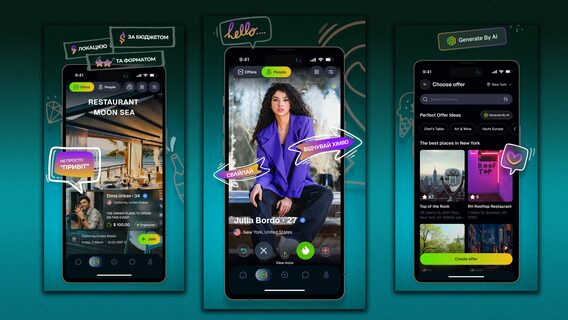
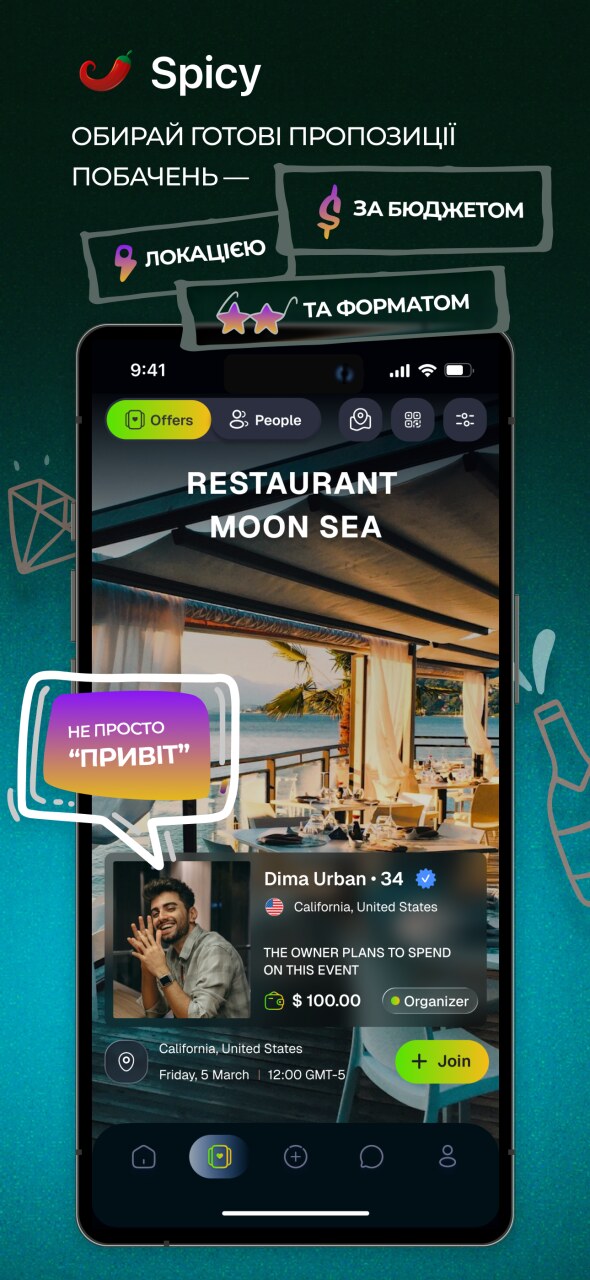
SpicyDate works a little differently than classic dating apps. Instead of just browsing profiles, the user chooses events — these can be dinners, walks, trips, activities, or other meeting formats. A person can create their own event or join an existing one, and the acquaintance takes place in real life, in a shared context.
Our target audience is typically active people in large cities who value not just a "match", but normal interaction.
The main advantage is that we are changing the very approach to dating. In most apps, everything is built around swiping and chatting, but this often does not lead to real meetings. With us, dating starts with an event - that is, people immediately move on to real interaction.
In classic dating, you think for a long time about whether to write, but with us, you just come and get to know each other.
And this is what significantly increases the quality of dating and the chance that it will turn into something more.
— You mentioned that one of the main problems of your competitors is swipe fatigue. How do you aim to overcome this problem at Spicy?
We don't see swipe fatigue as an "inconvenience" but as a consequence of a flawed model. Although we left it as part of the functionality for the experiment, we want to remove it in general.
In most dating apps, the user is constantly in a selection mode: swiping, rating, writing, waiting for a response — and often this does not lead to real meetings. Over time, this begins to exhaust and simply stops bringing results.
At SpicyDate, we eliminate the very cause of this fatigue. Instead of an endless choice of people, the user gets a limited, higher-quality choice of events. That is, the focus shifts from “who to choose” to “what we will do together.”
This changes behavior: less endless scrolling, more concrete actions, faster transition to a real meeting. A person does not spend weeks on correspondence - he immediately finds himself in a situation where he can get to know each other naturally. In fact, we transfer the user: from the “evaluating people” mode → to the “participating in events” mode.
And this is what relieves fatigue, because there is a real result, not just another chat.
Swipe to drink. How a 23-year-old IT guy from Kyiv created Tinder for $2,000 to find drinking buddies
— Tell us more about the concept of events, storis tokens. How will it work?
Events are the foundation of the product, and tokens are a tool that allows you to build an internal economy around it.
We built SpicyDate from the beginning as a platform for real interactions. That is, people meet not through swipes, but through events: they create them, join them, meet and spend time together.
As for tokens, we use them as a universal mechanism within the platform. They can be used for: participating in events or accessing certain formats, booking seats, sending gifts between users, interacting with stories and content.
A separate direction is stories. We want users to share not just photos, but interesting stories: travel, activities, experiences, moments from life. We are deliberately not moving towards adult content - it is important to us that the platform is about high-quality, lively and interesting content. Therefore, users will be able to: create stories, receive interaction from others, and in the future monetize their content. That is, this is not just an “additional feature”, but another level of interaction within the platform.
There is also a gifting mechanic. Users can send each other gifts (for example, men to women) as a way to show attention or interest. This adds a light, playful element to the interaction, but is not required for dating.
From a business perspective, events and tokens are an important part of monetization, but they work together with other areas: subscriptions, event commissions, partnerships.
Events are the core of the product, tokens are the mechanics that unify all interactions, and stories and gifts are a way to make the product more alive, interesting, and deeper for the user.
— Won't the system of stories and gifts become a barrier for those who don't want to spend money? Won't it be a "pay to win" format?
This is a very valid question, but it's important to understand one key difference here - we don't have the classic concept of a "match" at all, like in regular dating apps.
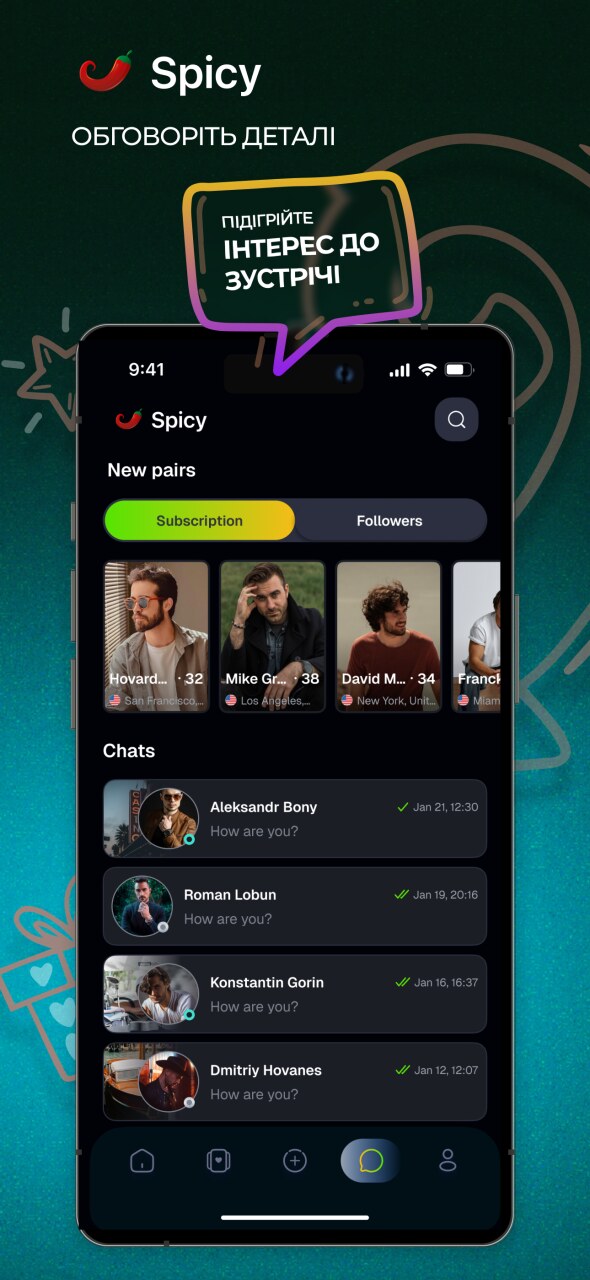
In most apps, you can only message someone after they've liked you. We don't have that restriction. Anyone can message anyone.
Our "match" doesn't happen through a swipe, but through an action.
For example: you liked the event - you joined, someone joined your event, you started chatting or met at the event. And it is at this moment that real contact occurs.
That is, everything is built not around "liked or not based on the photo", but around: the idea of the event, the mood, and the common interest. And this changes the dynamics very much.
As for paid features, they don't determine whether you'll be able to meet someone. Stories and gifts are just an additional tool to boost your activity or stand out, but they're not mandatory. On SpicyDate, it's not "whoever paid gets a match," but "whoever created or chose the right context gets a meeting."
“Often, a friend or girlfriend of an acquaintance, whom you didn’t know about before, can turn out to be interesting people.” The developer used ChatGPT to create a dating site for “normal people.” How does Normis work?
— What stage are you at now? What is ready to use?
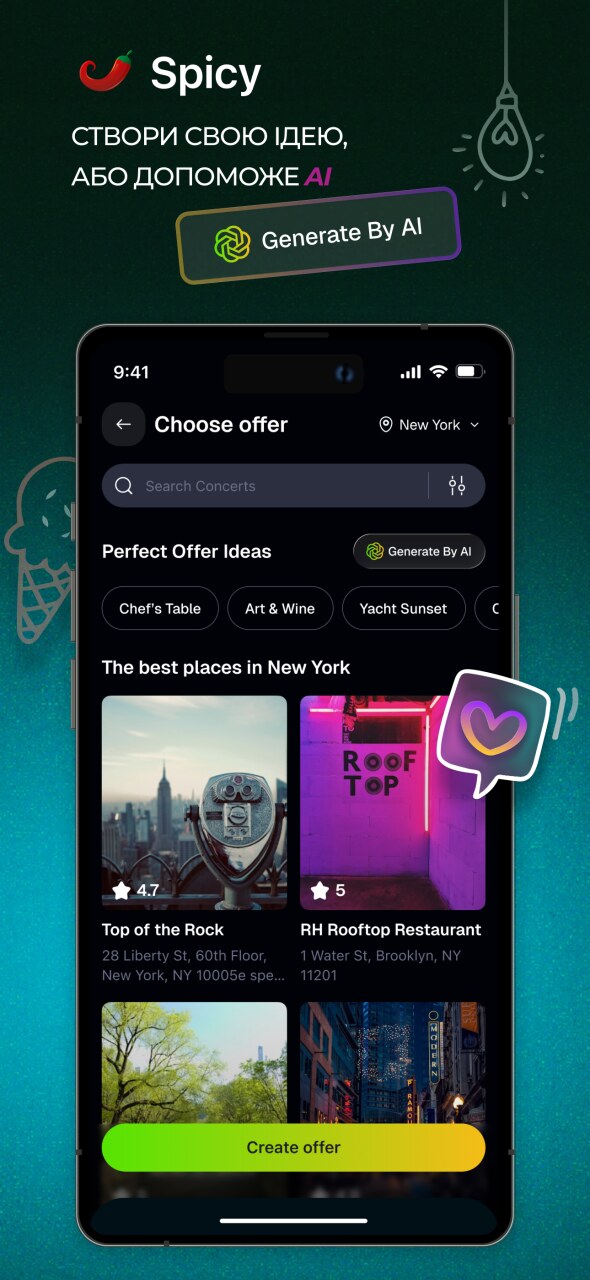
We already have a fully working MVP that can be tested with support for about seven languages and works on iOS, Android, and desktop. The basic logic for creating and participating in events has been implemented, AI recommendations and Google Places service have been integrated for convenient location selection.
We have also already connected the first API partner who is adding their locations to the system, and set up payment and withdrawal functions. We are currently finalizing the legal aspects with our company registered in England and preparing for the official publication on the App Store and Google Play.
— You mentioned AI. Tinder and Bumble are also introducing AI relationship advisors. How exactly does artificial intelligence help your users?
We don’t look at AI as a “fashionable feature,” but as a tool that really helps the user. In many dating apps, AI is basically an advisor or chat assistant. Our approach is different — we integrate AI directly into the product so that it helps a person move faster to real interaction.
We are already using AI in several places:
assistance in creating events — the user can quickly generate an event idea or description,
for each event, AI can create an interesting story or context that sets the mood,
AI helps shape texts within the product to make them more lively and engaging,
There is a function to wish friends a happy birthday, where AI generates personalized greetings.
That is, we use AI where it really saves time and makes interaction more interesting. And importantly, these functions already work in the product.
In the future, we plan to expand the use of AI, but with the same principle that it should help a person move more quickly to real-world experience, not replace live communication.
In short: for us, AI is not a "chat bot", but a tool that helps create events, atmosphere, and interaction between people.
— Who is already using the product? Are you targeting the North American market, why there, and do you plan to release the application in Ukraine?
Right now we are still in the soft launch and validation phase, so the main users are early adopters. These are people from our environment, acquaintances, as well as new users whom we gradually bring on board through product testing. We look at how they interact, what they like, where there are difficulties, and how they react to the very idea of meeting through events.
What's important is that people really show interest, because the format seems more "lively" and understandable to them than classic dating apps.
As for the market, we are focusing on North America, primarily Canada, for a very simple reason - I am here now and can personally handle the launch, partnerships, and product validation.
This gives us the opportunity not to launch something “blindly”, but to actually communicate with users, test hypotheses and adapt the product quickly. In addition, North America is a large and mature market, where people are open to new formats of dating in a developed culture of events and activities and a high level of use of such products.
We are also planning a launch in Ukraine, in particular in: Kyiv, Dnipro, Lviv. This is very important for us, as we understand this market well.
To summarize, we are starting with Canada because it gives us control and the opportunity for quality validation, but at the same time we consider Ukraine as an important market for launch and development.
"We were connected by IT": how to find love on a dating app and combine family and career - the story of a developer couple
— Tell us about the financial component. How is the project financed and how do you plan to earn money?
At this point, SpicyDate is being developed entirely with the founders' own funds. We have not attracted any grants or loans — the project is completely bootstrapped.
Tens of thousands of dollars have already been invested in development, design, integration, and infrastructure. Monetization will be based on subscriptions with premium features, commissions from paid events, as well as a B2B direction that includes partnerships with restaurants and event organizers to promote their locations.
Active monetization has not yet been launched, as we are at the product validation stage and preparing for a full launch.
— What are your plans for the future?
In the near future, we plan to launch publicly on the App Store and Google Play, conduct initial launches in cities in Ukraine and Canada, and develop partnerships with institutions. In the first stage, we need to prove that the model works.
In the medium term, we plan to scale city-by-city, improve recommendations through AI, and enter the US and European markets. Our strategy is to enter markets gradually through cities with active social life and build a global dating platform.
“We like to call ourselves Pokémon Go for dating.” Single startups have created a new free AR dating service, Left Field, that helps you find love, not Pokémon