Хочете будувати кар’єру в Data Science та AI? Vodafone Big Data Lab відкриває новий набір —>
Ігор Вишневський Hot News
28 July 2025, 09:00
2025-07-28
“We are a global company, and we are going to another continent.” CEO Svitla Systems – about opening an office in Australia, developing AI, and investing in Ukrainian miltech. Interview with Natalia Anon
Natalia Anon has lived in the USA for over 30 years, and the IT company Svitla Systems, founded by her, has significantly expanded the geography of its representative offices to almost all continents over the past 20 years. Two months ago, Svitla also entered the IT services market in Australia, opening an office there. Despite the wide geography, more than half of Svitla Systems specialists are still representatives of the Ukrainian offices.
dev.ua talked to Natalia Anon about what exactly motivated the entry into the Australian market, how preparations are being made for the «entry» into new locations, the realities of the Ukrainian IT industry during the period of a full-scale invasion by the enemy and the company’s performance. And also — why the miltech sphere will be the driver of the Ukrainian technology sector in the coming years. So about all this and not only — below.
Natalia Anon has lived in the USA for over 30 years, and the IT company Svitla Systems, founded by her, has significantly expanded the geography of its representative offices to almost all continents over the past 20 years. Two months ago, Svitla also entered the IT services market in Australia, opening an office there. Despite the wide geography, more than half of Svitla Systems specialists are still representatives of the Ukrainian offices.
dev.ua talked to Natalia Anon about what exactly motivated the entry into the Australian market, how preparations are being made for the «entry» into new locations, the realities of the Ukrainian IT industry during the period of a full-scale invasion by the enemy and the company’s performance. And also — why the miltech sphere will be the driver of the Ukrainian technology sector in the coming years. So about all this and not only — below.
About Svitla Systems and the company founder
Svitla Systems, an IT consulting and outsourcing company, was founded in 2003 and is headquartered in Corte Madera, California. The company currently has 15 locations around the world — North and Central America (USA, Canada, Mexico, Costa Rica), South America (Argentina, Chile, Colombia, Uruguay), Europe (Ukraine, Poland, Romania, Bulgaria), and other regions, including Australia, India, and Turkey.
The founder and CEO of Svitla Systems, Natalia Anyon, is a graduate of Stanford University Business School and a representative of the Ukrainian diaspora in the United States. Before creating Svitla Systems, she was at the origins of Lohika Systems, which was later acquired by Altran Solutions Corporation in 2016. In turn, the latter was acquired by one of the world leaders, Capgemini Engineering, in 2020, so Lohika began operating under this brand.
Natalia Anon’s career path also includes leadership positions at Ernst & Young, as well as significant experience in private equity and venture capital in the US and UK.
«Over the years of management, I have understood the main thing: it is worth hiring those who know more than you»
Ms. Natalia, in recent years, Svitla Systems has opened a number of new offices, including in rather exotic parts of the world, for Ukraine. Does Ukraine still remain the base location for Svitla Systems' business?
We are now a global IT company and operate in many markets. Thanks to the remote work format, we bring together specialists from all over the world — today our team covers 15 countries. We started with Ukraine, then Mexico and Poland, Costa Rica and Argentina and Canada. Recently, we also have our own development center in India. And this year we entered the Australian market and opened an office in Sydney.
In October of this year, the company will be 22 years old, 10 of which we have been working outside of Ukraine. But, despite all this, Ukraine still remains our important location, where more than 600 specialists are concentrated. This is half of the total number of all our employees. That is, in Latin America we have about 400 people, and in all other locations together — more than 200 more.
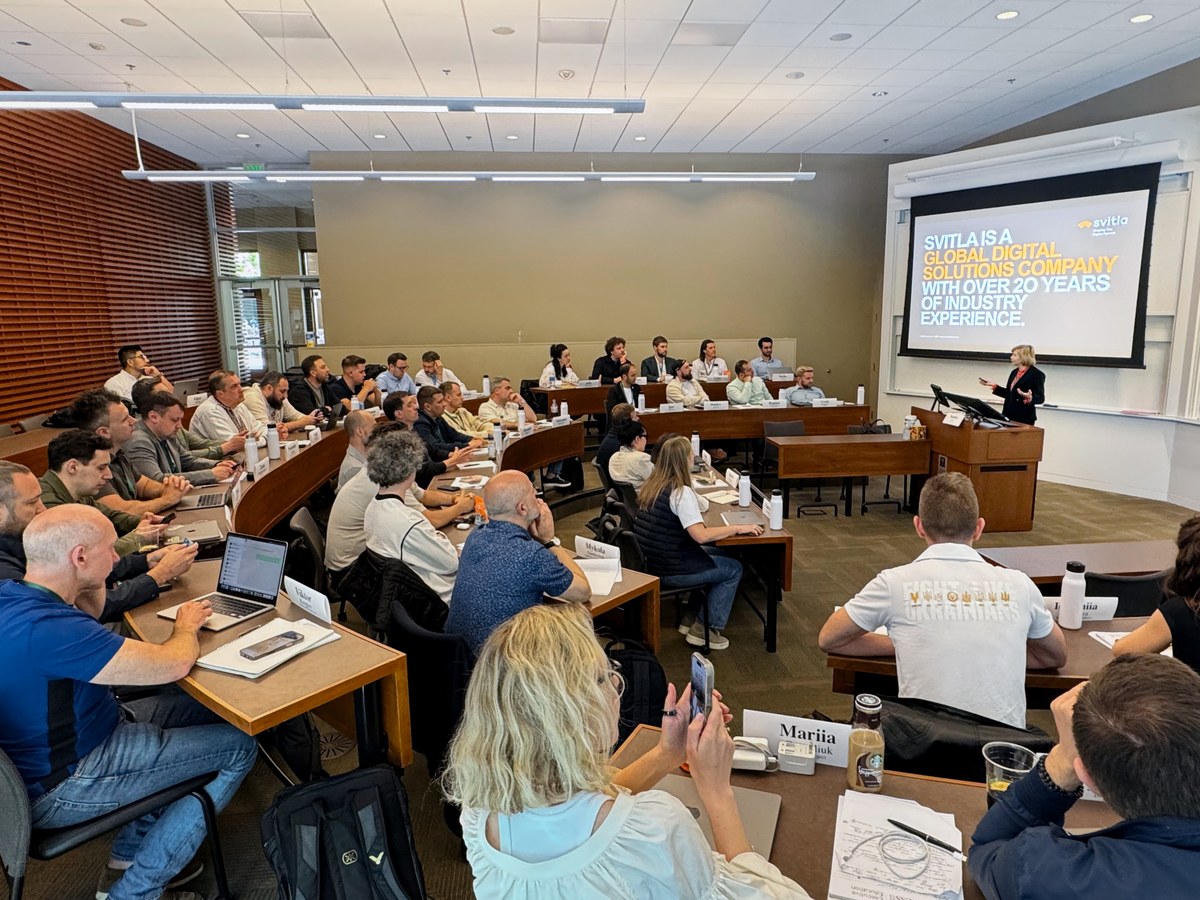
Natalia Anyon during a speech at one of the events
Ukraine has always had a special meaning for us. It was here that we opened our first office — and it’s no coincidence, because I am an ethnic Ukrainian myself. For me, it’s personal. When we communicate with clients, Ukraine is among the first locations we recommend. We are deeply aware of how important it is today to support the economy, create jobs and attract business to Ukraine.
As for foreign offices, why Australia? If Ukrainian companies open an office in India, it is clear that there is a lot of labor resources there and they are cheap. But what motivates the choice of such a location?
Australia is important to us for many reasons. First and foremost, it’s diversification.
You will probably ask me next what the situation is like in America right now? In particular, there is a lot of uncertainty about what will happen to the economy.
Diversification is always a good strategy for business, but we are not going to Australia just to recruit technical staff.
We also go there to grow our business and find new clients.
The second factor is specific personalities. One of our employees, whom we trust very much, recommended a high-quality manager who was interested in running our business in Australia. In addition, our strategy now is to go into AI, and the person we hired in Australia has deep expertise in this area. So there were a few factors that came together here. We are a global company, and we are going to another continent.
Tell us how you generally prepare for entering new markets? To what extent are you personally involved in this?
Of course, before entering a new market, we do in-depth research. We study the competitive environment, the level of technical staff, the level of salaries, the availability of talent, the cultural and social aspect, we look at the legal field: how it will be for us to work there if we potentially go to this country. We conduct such research both internally and with the involvement of external consultants.
We often practice scouting trips: we go to a country that interests us, communicate with local partners and consultants, and evaluate the location from the point of view of all the conditions that I have already listed.
I am definitely involved in this process when deciding whether it is appropriate for us to open a new location. I review the results of the research, discuss how to structure our management — whether it will be just a branch or a separate functional unit. I am always involved in choosing the manager who will lead our operations in a new country — this is an important decision. It is equally important for us to both transmit our company culture and take into account the culture of the country where we operate.
And how easily do you delegate responsible decisions — both regarding the opening of new locations and in general? After all, many people who have built a business themselves try, so to speak, to be present everywhere…
I simply don’t have the time physically to do all the processes. Those people who have built their business but can’t let go of a number of processes will never be able to scale it.
There comes a point when you can only do a certain number of hours a day. So it’s really important to learn how to delegate if you really want to scale. And I learned that pretty quickly.
Over the years of management, I have realized the most important thing: it is worth hiring those who know more than you. These are the people who drive the business forward.
Please tell us which domains Svitla Systems focuses on the most, as each company usually has its own specifics. Who are your largest and most famous clients?
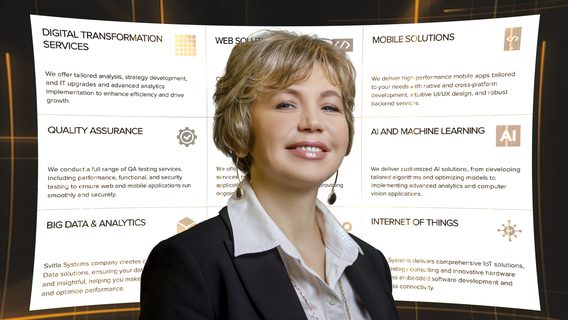
Our expertise is broad — it includes Digital Transformation, Web and Mobile Solutions, Quality Assurance, Cloud, AI, Machine Learning, Big Data Analytics, Cyber Security, DevOps, and Internet of Things.
We work with a wide range of industries, but the largest concentration of our projects is in the e-commerce, finance, healthcare, hospitality, logistics, and energy sectors.
Major clients include Logitech, a global leader in the production of computer peripherals and smart devices, and Global Citizen, a huge social organization in America that unites millions of people in the fight against poverty.
In education, we work with Cengage Learning, one of the largest publishers in the US. In biotechnology, we work with Quanterix, among marketing platforms, we work with Airship, and in insurance, we work with Simply Business, one of the largest brokers for small businesses in the UK. In fact, the list of major clients is very long — you can learn more about them on our website.
«We see the effectiveness of AI and increased productivity in those industries and functions where we use it»
Let’s talk about what is transforming the industry — AI. What processes at Svitla Systems are delegated to artificial intelligence, how deeply do the company’s specialists use AI, and what is your overall vision for it?
AI is an assistant, not a replacement or competitor for humans. Human intelligence, human creativity, and human initiative will still be needed.
We are a technology company, so we are actively developing in the field of artificial intelligence. For example, we created our own AI course for all colleagues, and most of our developers are already using AI tools to write code faster and more efficiently.
AI is helping us in other areas as well — marketing, recruiting, and employer branding. We’re also actively working on how to leverage AI agents in our financial operations. This is just the beginning, but we’re already seeing the impact of AI and increased productivity in the industries and functions where we use it.
Additionally, our developers work on many projects where they are AI architects for our customers. That is, they don’t just use AI tools to code faster, they create specific AI solutions for our customers.
There is an ongoing debate about whether the rapid development of AI will reduce the need for technical specialists. But there is also another opinion — on the contrary, the growth of AI will require even more developers.
AI can already take on simple tasks, so the need for juntas will likely decrease. Instead, the demand for experienced professionals who can configure and operate these tools will increase. And this raises the question — how do beginners gain experience to become seniors?
I read a lot on this topic, but you can’t predict the future. One thing is clear: AI is already a part of our lives and is developing rapidly. As a company, we are closely monitoring the changes, analyzing the actions of our competitors and trying to stay one step ahead.
You mentioned that it is difficult for specialists to rise to the senior level in such conditions. How difficult is it for juniors to make their way at Svitla Systems?
The specificity of our company is that most of our specialists are senior developers. We work on high-tech projects with large clients. But we also have junior and middle positions.
I don’t see a trend that interns or juniors will disappear anytime soon.
At Svitla Systems, we have both opportunities for growth and projects with teams of different levels, where young specialists can develop alongside experienced ones.
Tell us a little more about the Ukrainian office. The full-scale war has been going on for four years now. How quickly did you adapt to these conditions, was there a large outflow of clients, what did you do to prevent this?
I always remember with horror the beginning of a full-scale war, because it was very difficult emotionally and psychologically. I remember that on this very day, February 24, 2022, I was supposed to have an interview with the BBC, and I simply could not go there. There were a lot of calls, and I understood that I physically could not go to the interview and talk about IT and the development of the company.
Despite all the difficulties, we did not get lost — and began to act as a clearly coordinated mechanism. To guarantee the safety, stability and support of Ukrainian employees, we created a crisis team that worked non-stop from the Lviv office. It was engaged, in particular, in solving logistical issues and helping with housing. Many of our employees also left for Poland at that time, so we expanded our Krakow office. We compensated $1,000 to each employee who was forced to leave their housing.
Every day we received calls from worried customers and posted updates on the website about the situation at the company and our response.
Like many Ukrainians, we quickly adapted to the new realities: we quickly resumed work and worked almost continuously. Some took a few days to move, and we took care of the technical stability of the offices — even despite regular power outages.
We also paid special attention to the mental health of our employees. We hired psychologists and psychotherapists, with whom more than 30% of our company’s employees worked. We also held webinars on mental health, first aid, volunteering, and donated hundreds of thousands of dollars in aid to the Armed Forces of Ukraine.
We continue this support for the army, the company will donate significant funds to our internal volunteers. For example, we collect all the requests of our employees, if someone has their own open meetings, and transfer the funds equally between these requests. And this happens from year to year, starting in 2022.
We are often asked if we have lost clients during this time, but the opposite has happened — some have even increased their orders to support us. For example, one company we work with (unfortunately, we cannot name it due to NDA) significantly expanded its cooperation in 2022. Its CEO is ethnic Ukrainian, and this company became one of our largest clients that year.
Of course, there were clients who refused because it was too risky for them. There were also those who diversified their teams somewhere between Europe and Latin America. But when a client refused, our priority was to put our developers on other ongoing or new projects.
There were also very difficult moments in the company during this time. In August 2023, Andriy Galich, the former head of our Kyiv office, died in Zaporizhia, during the defense of the country. He was part of the team for eight years and left a deep mark. It was a great loss for all of us.
In his honor, we created 12 scholarships for the Ukrainian Catholic University. For the third year in a row, we are continuing this initiative.
21 of our employees are currently in the ranks of the Armed Forces of Ukraine, we support them both in communication and financially. A third of them have been in the Defense Forces since the first days of the war. We continue to pay over 60% of their salaries and are eagerly awaiting their return.
We also actively support social initiatives, especially educational volunteer projects for children. One of them is Smart Future, aimed at helping children whose parents serve in the Armed Forces of Ukraine, are missing or have died. This school organizes courses in programming and web design, and we have been cooperating with it for over 8 years.
In addition, we implement many other projects together with charitable foundations. We transparently cover all our initiatives on the company website.
«Miltech and Defense are a unique opportunity for Ukrainian IT. I’m not just watching this market, I’m an angel investor in these technologies»
And what about financial indicators for you in Ukraine now? Most top managers of IT companies assessed the situation as a plateau, but individual market players are already demonstrating significant growth. What do you have?
2023 was, of course, a year of slowdown — we needed to adapt to new conditions. And our answer was — it was diversification into Latin America and India.
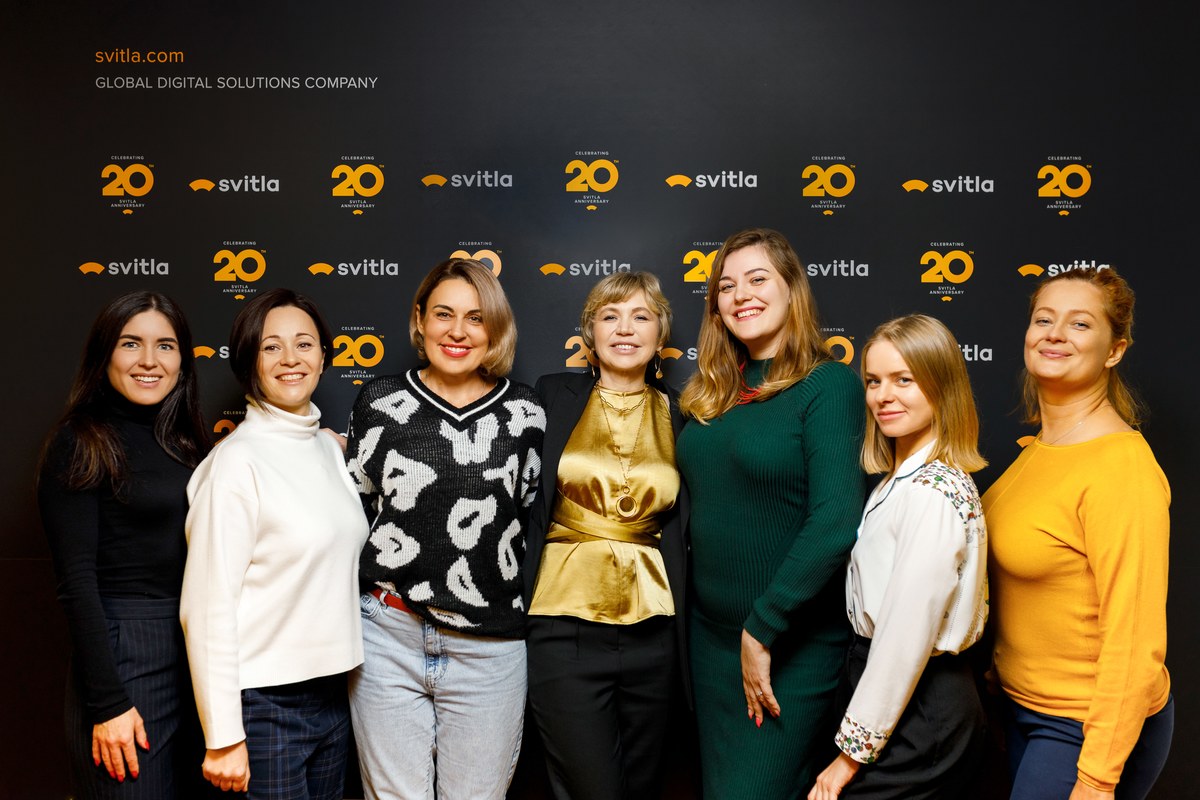
During the celebration of the 20th anniversary of Svitla Systems
But there were two reasons for our steps. The first was, of course, the war in Ukraine. But the second was the global slowdown in the IT market in 2023. In 2024, we already saw that these trends began to change for us. And every quarter we actually had overall growth for the company. In Ukraine in 2024, we also had a plateau — absolutely.
We have already seen a revival of the technology market since 2025. In both the first and second quarters in Ukraine, we are seeing growth.
But I want to touch on another important topic. Of course, war is the biggest challenge for both Ukraine in general and the IT industry in particular. Exports have slowed down, but a completely different, unique opportunity has appeared for the Ukrainian IT industry — this is Miltech and Defense. I am not just observing this market, I am also an angel investor in these technologies. I have some contact with this and I see that a huge wide field is being created now — many startups, young companies, a large number of them are successful.
This is actually the future for the Ukrainian IT industry. We can draw parallels with the United States of America during World War II. All these enterprises that started working for Defense and the military, after the end of the war became the industrial base of the United States and gave a huge boost to the economy.
What exactly have you invested in in the Ukrainian miltech sector?
This is mostly software. As an IT company, we understand how to promote software in this area, so my main focus is on software, which is relevant either in drone control or in the same electronic warfare solutions.
Let’s go back a little, in particular to financial issues. If, conditionally, in Ukraine you began to demonstrate growth only in 2025, then which locations are currently, so to speak, driving the Svitla Systems business and demonstrating the highest performance?
Yes, we already had growth in Ukraine this year in May and June, but, of course, Latin America is helping us tremendously. We have a very strong team in Mexico and Argentina, Costa Rica is growing well, and we are also hiring in Colombia and Chile. Poland has almost doubled in size over the past two years. We have also started opening positions in Romania and Bulgaria. And we are also growing the number of employees in the United States and Canada.
And what was the mood of the tech business in the US in the first months of Donald Trump’s presidency, because many of your clients are in the US market. Has the political and economic turbulence slowed down a bit now or is it still ongoing?
New tariff policies and geopolitical uncertainty have certainly had an impact. Whether it’s America or any other part of the world, everyone in business wants stability and certainty in order to invest and grow.
Now in the US we see a certain ambivalence. On the one hand, all the stock market indices are at their highest. There was a big decline, but now everything has turned around. But the uncertainty with tariffs and the geopolitical situation continues.
On the one hand, we seem to see cautious optimism and growth in the IT industry. This is not least due to large venture capital investments — this is a major engine for the IT industry.
However, on the other hand, we still see this uncertainty and this, in turn, affects businesses. For example, JP Morgan Chase some time ago predicted a 60% probability of a recession in the last half of 2025.
That is, on the one hand we see growth and revival, and on the other — caution. How it will be in the future — we will see. But, at least, internally we see demand and we have an increasing number of positions.
Finally, Ms. Natalia, although you denied having a crystal ball with predictions about the future, what awaits Ukrainian IT by the end of the year and in the near future?
The biggest potential growth factor for IT that will decide everything is, of course, the war. Let’s be honest, many new clients are afraid to go to Ukraine while it’s going on.
If there is an end to the war or at least some kind of truce, it will be a huge boost for the IT industry. So let’s stick to this cautious optimism. And, again, there are very great prospects for the IT industry in Ukraine precisely thanks to Miltech and Defense Tech.
These industries are developing so rapidly that even after the war ends, they will become the platform that will pull not only the entire Ukrainian IT industry, but also, I dare say, the entire Ukrainian economy in general.
«Clients forget that we are at war, because for them it looks like business as usual. And this is the highest rating that our location can receive.» A great interview with the head of Luxoft Ukraine Olena Samborska
«We need to end the war. We know what to do next.» A great interview with the Vice President of Global Branding at Avenga about Junos, military IT, booking specialists and women in IT
«There are much more opportunities on the market now than when I was looking for my first job as a C++ programmer in 1998.» CEO Sigma Software — about Ukrainian IT, war, childhood and adult dreams and opportunities
Професії у геймдеві. Хто такий левел-дизайнер і як ним стати?
Ми продовжуємо нашу рубрику, присвячену професіям у геймдеві. Тема нового матеріалу в ній — левел-дизайн. Його вважають підвидом геймдизайну, але все-таки практично кожна студія хоче окрему людину на позицію левел-дизайнера. Адже у цій спеціальності вистачає своїх нюансів та особливостей.
Розібратися з ними всіма нам допоміг досвідчений левел-дизайнер зі студії Fractured Byte Дмитро Нестеренко. Також він веде свій блог Game Designer Notes про геймдизайн в цілому, в якому розбирає багато цікавих нюансів розробки ігор.