Хочете будувати кар’єру в Data Science та AI? Vodafone Big Data Lab відкриває новий набір —>
Олег ОнопрієнкоІсторії
24 March 2026, 09:00
2026-03-24
"Most electronic warfare devices are "dumb" boxes with an "on/off" button." Interview with an IT professional who developed applications for Nova Poshta and Epicenter and is now building Smart Electronic Warfare Devices "Pugach" after a career at Genesis and Headway.
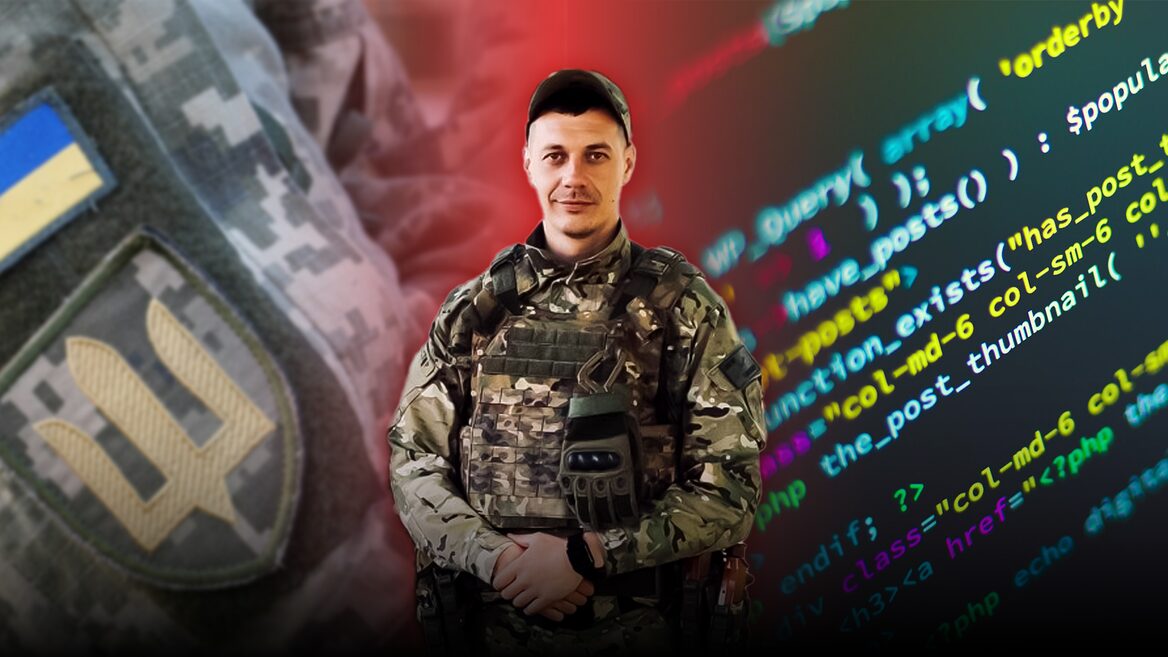
He created mobile applications for Nova Poshta and Epicenter, built a career at Genesis and Headway, but a full-scale war changed priorities. Today, Viktor Pavluchinsky, together with his team, is developing Pugach, an intelligent electronic warfare system. In an interview with dev.ua, Viktor tells why Smart-EW is about mathematics, not about a soldering iron, how to automate the "friend-or-foe" system, and why high-quality Ukrainian components are better than cheap Chinese imports.
He created mobile applications for Nova Poshta and Epicenter, built a career at Genesis and Headway, but a full-scale war changed priorities. Today, Viktor Pavluchinsky, together with his team, is developing Pugach, an intelligent electronic warfare system. In an interview with dev.ua, Viktor tells why Smart-EW is about mathematics, not about a soldering iron, how to automate the "friend-or-foe" system, and why high-quality Ukrainian components are better than cheap Chinese imports.
— Tell us about yourself and your background.
I'm an IT guy to the core, not a switcher. I started my career as a programmer back in 2014, writing on Android. The DevLight company later grew out of this. We made a lot of software for the Ukrainian enterprise: for example, the previous version of the Nova Poshta application and the current Epicenter application are projects to which I had a direct relationship.
Then I left the company, launched my own startup, which was later acquired by Genesis. I worked within Genesis, then the team and I moved to Headway. It was a kind of R&D work with mobile applications. When the full-scale war began, Headway was restructured, and I decided to leave. I took a few months off from the “hard work of Genesis,” and then a friend from The Ukrainians offered me the position of technical director. I have been there for two and a half years. And in parallel, for the last year, my team and I have been working on “Pugach” — our electronic warfare tool.
— How did the idea for the startup come about?
I am an entrepreneur by nature. From time to time I mentor startups in business school or help colleagues with presentations. Hearing about the latest SaaS software solutions based on artificial intelligence, I realized that this is definitely not what I want to do. I have already worked a lot with mobile applications and services, and now it is simply not interesting to me.
Even before the war, I had a desire to try my hand at Hardware. I even had some prototypes; this is my main hobby, which I was always drawn to. There was no specific idea at first, but it became obvious that the Defense sector was developing rapidly in Ukraine. There are and will be investments here — both now and after the war.
Now is the perfect time for this direction, because you instantly get feedback from real users. What used to take years in other companies, today you can do very quickly. The market is favorable, maybe you won't make all the money in the world here, but you can definitely create a cool product that will work for the future.
— Why electronic warfare?
When the DefenseTech boom started, I saw 100-500 booths at military shows, and every first one was a drone. It stands to reason that if there are hundreds of drone companies, there must be just as many countermeasure companies.
EW is more complicated than FPV. FPV can be assembled from a YouTube video: ordered components, soldered, and flew. EW is about math, physics, radio waves, and protocols. Most EW devices that currently exist are “dumb” boxes with an “on/off” button. They are assembled from Chinese modules, are not energy-efficient, and often do not show the claimed results in combat. These devices can be improved 10–20 times.
There is a specific way to make electronic warfare much better than what is usually purchased for the military. We understood where to go and from which side to look at it, so we chose a specific problem to start with - suppressing the video feed of a drone.
After a series of studies and tests at the training ground, it became obvious that we could go further. Not just copy existing solutions, but create a real Smart EW system that can analyze the situation in the radio-electronic space, identify threats, and suppress exactly what is needed.
— Tell us about the team behind "Pugach"
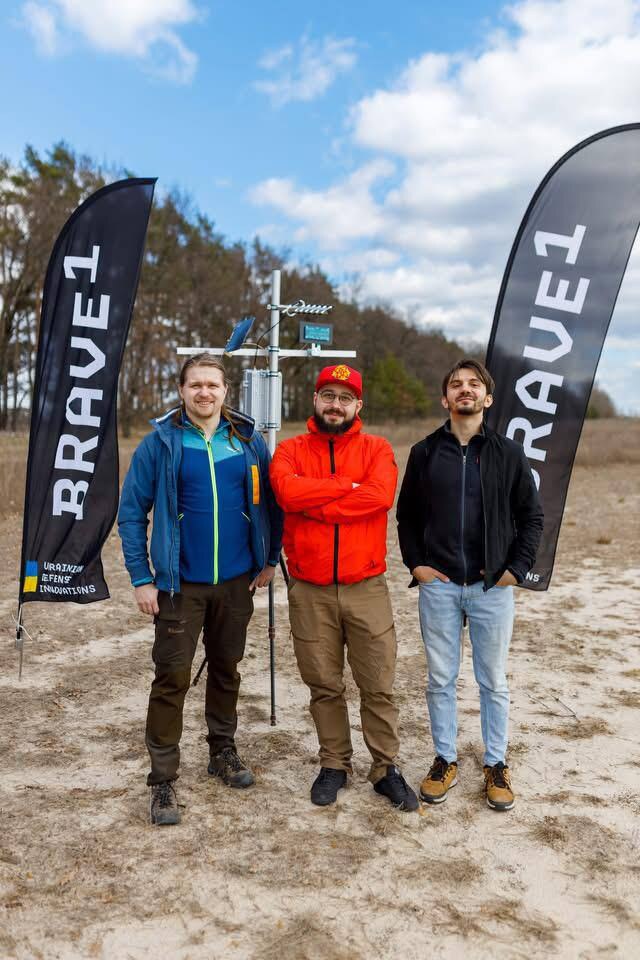
We have three co-founders: me, another Viktor, and Ostap. There is also Vitaliy — he is our military consultant, he cannot be a co-founder officially, because he is a military serviceman. We also have part-time people: one helps with software for FPGA (field-programmable logic integrated circuits), the other Igor helps me with 3D modeling of cases and fasteners when I am not pulling myself together.
Until recently, everyone worked part-time, but Ostap quit EPAM a month and a half ago and is now the only one who works full-time exclusively on software for Pugach.
— Where did you get your expertise in the field of electronic warfare?
We are all engineers. Ostap worked for a company that was engaged in radio-electronic intelligence (RER). Viktor is an electronics engineer by education, and I am a mechanical engineer. We simply solve engineering problems. If we had "fiddled" more at the start, it would have been faster, but it is realistic to learn everything.
— How many iterations has "Pugach" gone through so far?
This is the seventh iteration in 16 months. It all started with a hackathon, where Ostap and I came with a Raspberry Pi, some kind of antenna, and a soldering iron. We didn’t understand much at the time, but when our “thing with wires” choked the drone’s video feed at the training ground, we were shocked ourselves.
Then there was another hackathon, where we came with a whole bunch of concepts and elements. Vitalik joined us there - we had known each other for a long time, and it so happened that he also participated there. We talked a lot with the military, conducted interviews, and in the process it became clear that our initial idea needed to be changed a little.
In fact, in two days we implemented a new prototype. Its concept was radically different from the previous ones and became the basis of what we are doing now. It was a “smart” electronic warfare system that saw, understood the broadcast and broadcasted a response. And although it was a super-raw story at the hackathon, we took third place. Everyone said: “Oh, cool, it works.”
Three months later, the second stage of the hackathon took place - our fourth iteration. We went to the testing ground, prepared a device in a nice box, wanted to show how it "chokes" everything, but it... just didn't work. The development of the project goes in a kind of sinusoidal pattern. We reflected, understood the mistakes and continued to move iteratively: tested, changed, tested again.
It is impossible to say exactly how long it takes to create a prototype, because it is a continuous process. If we are currently on the seventh version, then there are dozens more ahead. In fact, the point is speed: seven iterations in a year is not much, ideally you should do one or two per month. But considering that we all worked part-time, the result is not bad.
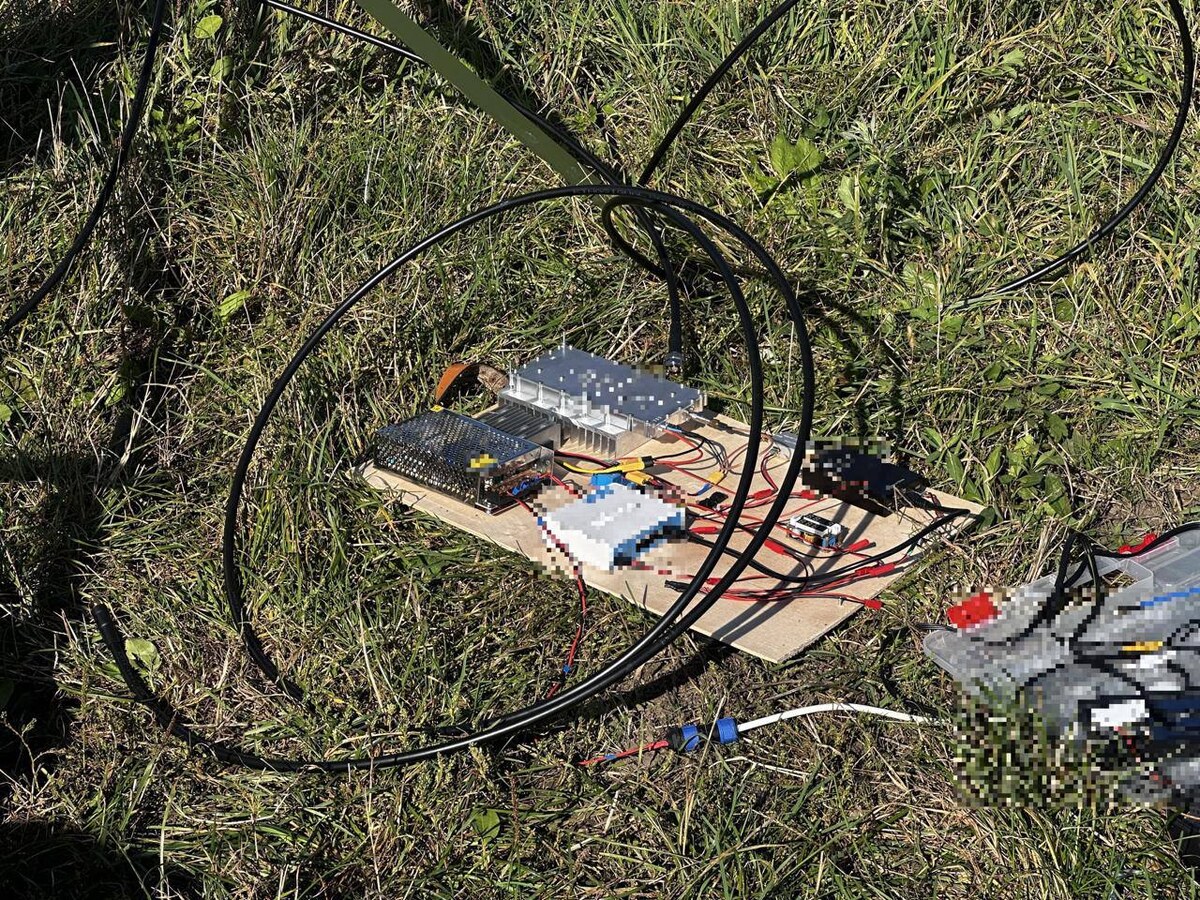
About three months ago, during regular tests, we finally made sure that the concept worked. We understood how to move forward and what the software should be like. If before that there were solid prototypes, then for the last three months we have been working on the “alpha version”. At the test site it still looked like a pile of cables on a PCB, without a case, but it did its job.
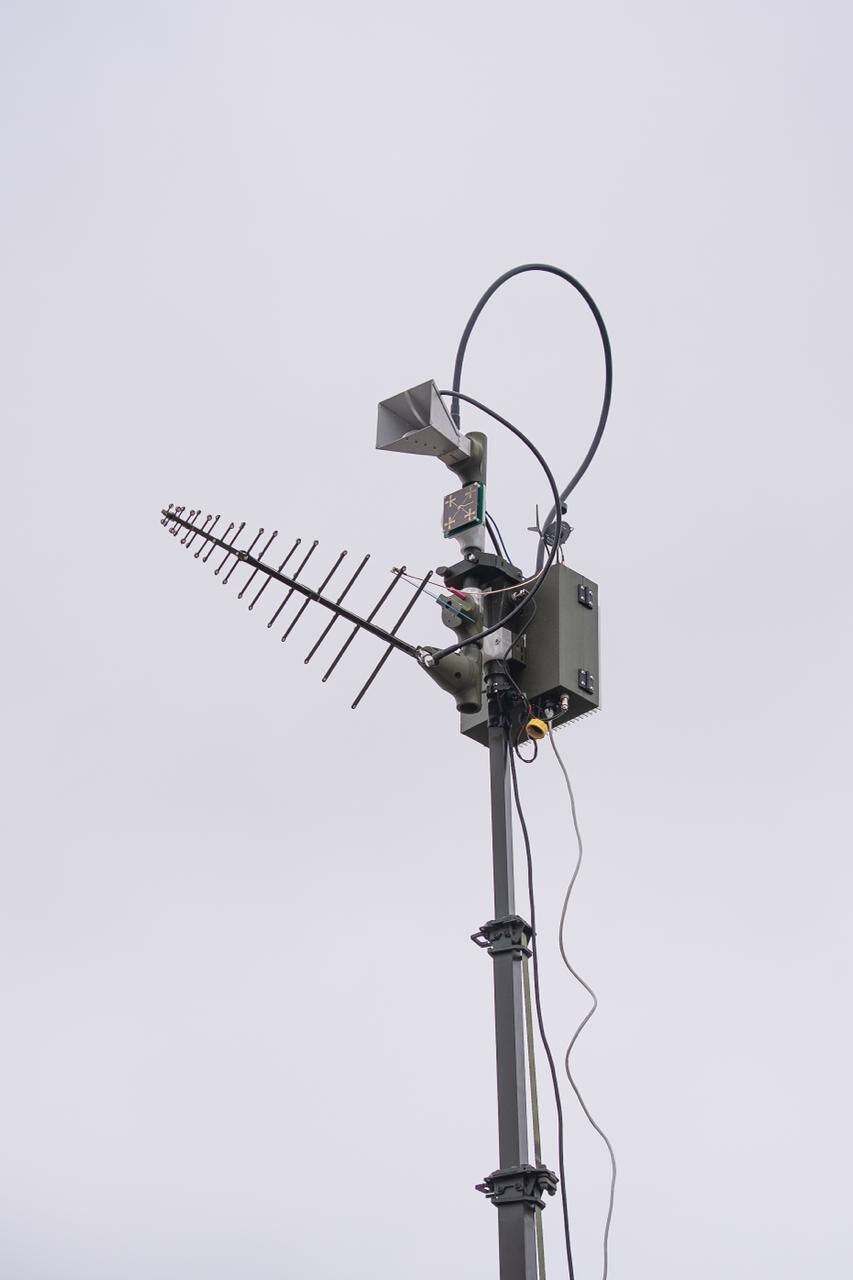
Now we are at the next stage: we have a few months to craft a full-fledged product from this. It will be a device in a high-quality case, with radiators, software and everything necessary. Actually, this is what we are working on now.
— Where did you get the funding from?
We started with our own money, but later we started winning hackathons. In total, we “raised” about $24,000. We received a grant from Brave1 for $10,000. In total, developing the prototype cost us about $30,000.
We have now attracted angel funding, but to scale we need about $400,000 for the next 12-18 months.
— Have you already thought about codifying "Pugach"?
And to me, it doesn't seem like a super complicated process. Maybe I'm wrong, but it's exactly what can and should be done. As soon as our device works not just on the training ground, but in real combat conditions, codification will be one of the first steps we take.
Even at the development stage, we take into account the requirements for the device to be suitable for this procedure. Now this bureaucratic machine is many times simpler than it was before, and certainly lighter than in NATO countries.
Of course, complexity is a very personal story. I hate bureaucracy, but that's why I know how to beat it. It amazes me when people hire consultants just to apply for Brave1. I sat down, filled it out, and submitted - there's nothing cosmic about it.
The same goes for codification: for some it is an impossible task, but for me it is an understandable step. So far everything seems quite real to me, but, of course, I may change my mind when I directly encounter this machine in practice.
— A question about “Chineseness.” How Ukrainian is “Pugach”?
We don't have a single Chinese component. And this was not a special goal, it just happened because of the search for quality. Antennas and amplifiers are Ukrainian, power supplies are Taiwanese, SDR module is from the USA, Raspberry Pi is from Britain/Taiwan.
Ukrainian amplifiers are simply heaven and earth compared to Chinese ones. They are f**king. Yes, they are expensive: one costs from $1500 to $3500, and there are two of them in the device. But when you want to make a thing that really works, you can't use cheap China, because it doesn't deliver the declared characteristics.
Obviously, we started with cheap Chinese components. But with each subsequent iteration, it became clear that this or that component was simply no good: it did not deliver the declared characteristics, did not work the way we needed, and had limited functionality.
After each prototype, we switched to a more expensive version of a particular part. Step by step, and by the seventh iteration, we were at a point where we were using top-of-the-line components. And the most expensive and highest-quality ones are usually not from China. People switch to Chinese analogues to cut costs, but then we risk becoming like those competitors who make dubious things that work in a haphazard way. Perhaps there are cool Chinese amplifiers, but we simply didn’t test them — it was easier for us to find a Ukrainian solution. Now we have also managed to agree on the supply of Korean components.
As for what exactly the market lacks… Actually, the issue is not even quality, but scalability. The way our components work now is already quite enough for efficient operation. The main challenge today is for manufacturers to learn how to produce them in the thousands.
Two years wasted. The Ground Forces criticized electronic warfare manufacturers for their dependence on Chinese components
— Tell us how the “friend-alien” system works in your electronic warfare system? How does the system recognize the enemy?
When an FPV drone flies, it broadcasts video. We are able to intercept this signal and display the image directly on the screen. Based on this, the operator can understand whose drone it is based on certain features — terrain, OSD settings, or antenna type. This is real feedback from the military: at interception posts, people sit and manually determine whether it is our device or an enemy. We decided to automate these features. We don’t need a person who will constantly “stick” into the monitor — the system itself recognizes the data and gives a probability: for example, “this is not our drone by 80%.”
Currently, we recognize text through the OSD menu. Often, it is the inscriptions on the screen that are evidence that the drone belongs to the p*dars. The user can set the parameters himself: for example, “drones with such and such OSD are flying in our direction”. The system sees this text and signals the operator. Then he can either go in and check manually, or completely trust the automation: “all are not ours — crush them”. And the complex will automatically suppress these targets.
Are there any drawbacks? Absolutely. The Russians can mimic us, we can mimic them. It's a war of tricks. But since the system is used directly by people "on the ground", they understand the situation and can turn this feature on or off as needed.
When we interviewed the military and showed them this functionality, they were delighted: "If you implement this, it will be really cool." We just heard how they work manually, and decided to make their lives easier. In the future, we plan to implement more "advanced" recognition: by antenna shape or even by relief. This is a matter of the next iterations, but for now we have done what is already giving results."
“I’d heard about ‘meat storms,’ but I didn’t really believe it until I saw them with my own eyes.” The honest story of an AIT veteran who managed to return to work in IT despite a serious injury
"And what about the other side? Have you researched Russian developments?"
Yes, we did a powerful OSINT. We analyzed 42 Russian Telegram channels, extracted 300,000 posts, ran them through semantic analysis. We identified 1,300 of their devices. They have good solutions, for example, the Silok complex, which works on video and has a similar intellectual component. In general, now we have parity in technologies.
— What are your plans for the near future?
Our plans for the near future are clear and iterative. The primary task is to successfully perform at accelerators. After the tests, the algorithm is as follows:
Finalize the body and rotary mechanism.
In April, transfer the first samples to the army to receive real feedback.
Go to the guys at the position to personally see the product in action and make adjustments if necessary.
In parallel, we are actively looking for funding. Our advice to everyone: if you see a hackathon or pitching, register. Don't be afraid that your idea will be stolen; the main thing is implementation. We have already attracted angel investments, which will be enough for components for prototypes, but not enough for scaling.
We are currently aiming for a $400,000 round. This will be enough for 12–18 months of work (depending on sales). After raising funding, we plan to launch a small series — dozens of units. It is difficult to predict something a year in advance in our conditions, but the main goal remains the same — to iterate the product together with the military until it becomes perfect.
"The instructor asked: 'Are you lying that you've never flown on wings?'" A native of Aiti and a veteran - about his journey in aerial reconnaissance, the liberation of the Kherson region, and how society deceives itself about the war