Хочете будувати кар’єру в Data Science та AI? Vodafone Big Data Lab відкриває новий набір —>
Ігор Вишневський Startup
24 December 2024, 11:59
2024-12-24
"You feel like a salmon swimming against the current, and you are being shot with a shotgun at the same time": the co-founder of the Fintellect startup talked about launching the product before the full-scale war and his service in the army
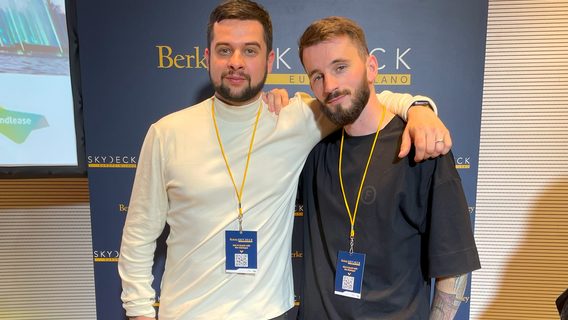
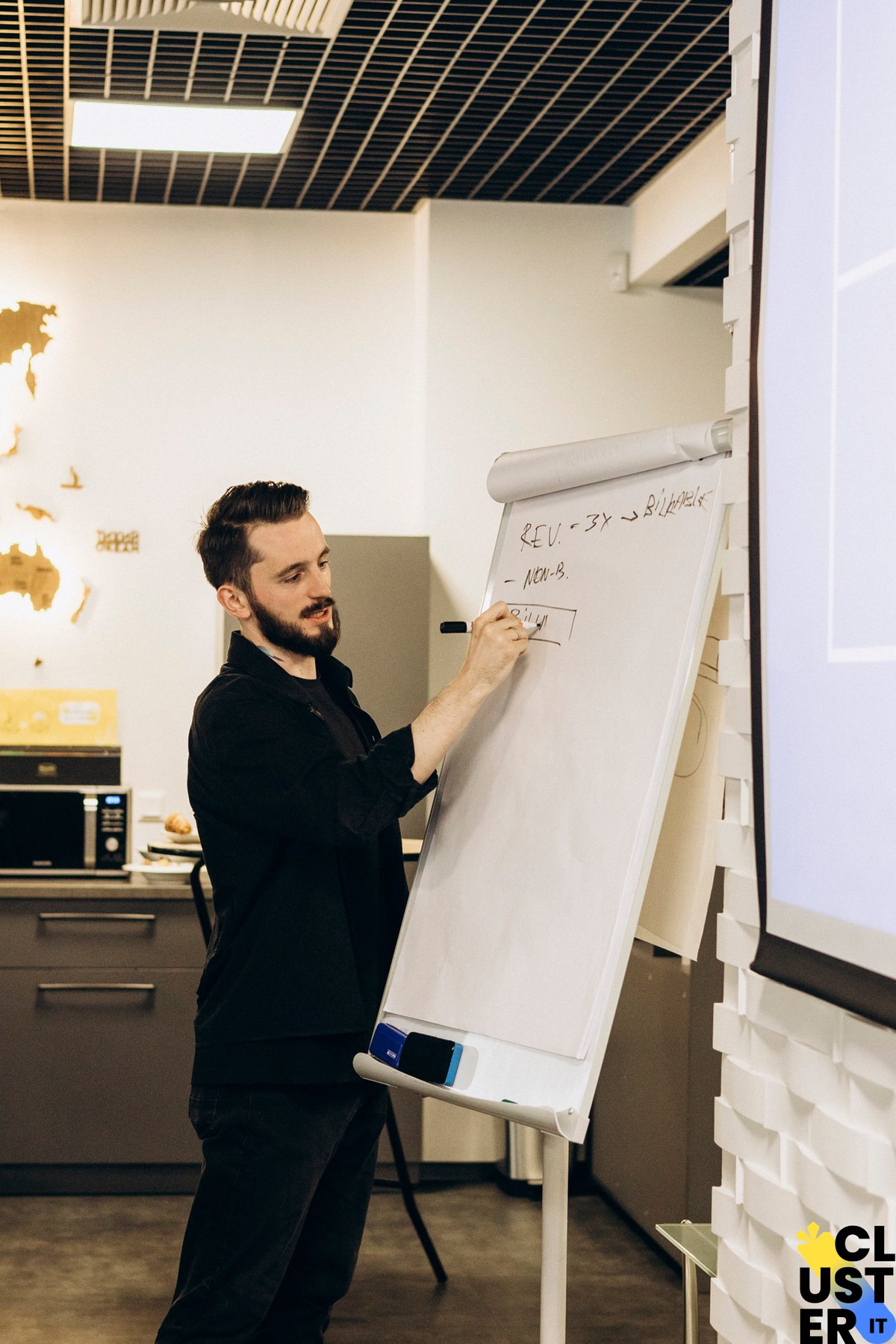
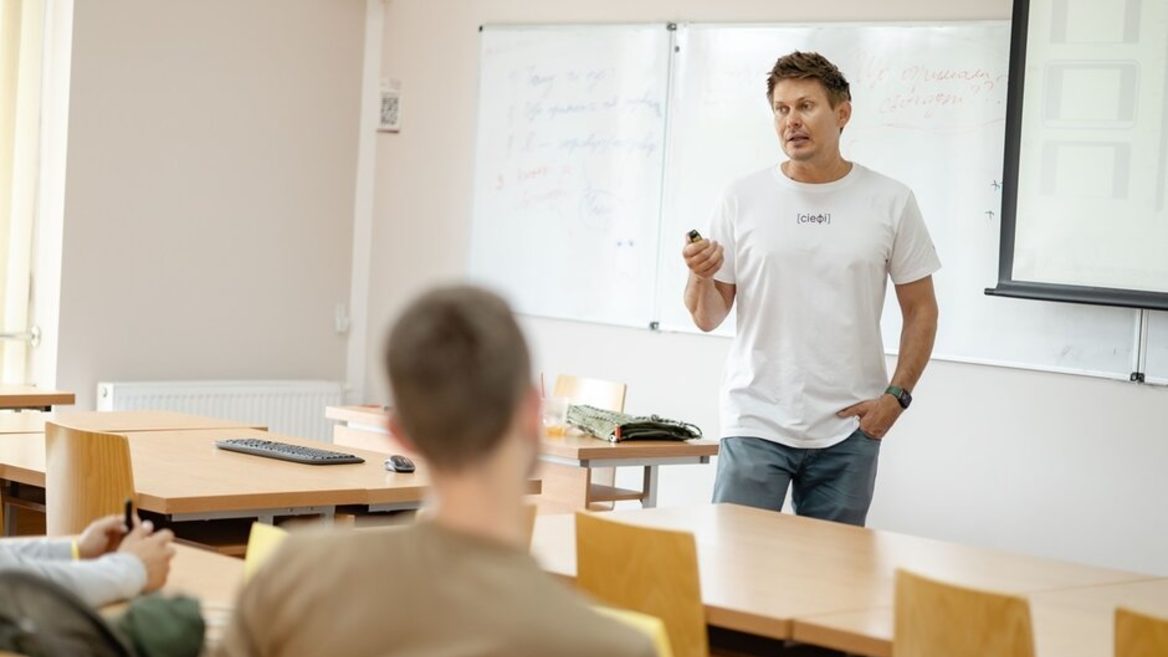
Danylo Golota is the co-founder and CMO of the Fintellect startup and a 3OSHB serviceman. His team describes the eponymous application as a «smart platform for managing money for service companies.» In particular, these are design studios, IT outsourcing, consulting companies, and other businesses that sell professional services. Despite the fact that the product appeared at an inconvenient time — just on the eve of a full-scale invasion, and part of the team actively volunteered, they had enough strength and perseverance to significantly improve the first version of the application and bring it to the market. In 2023-2024, the startup attracted investment and entered the American Berkeley Skydeck accelerator.
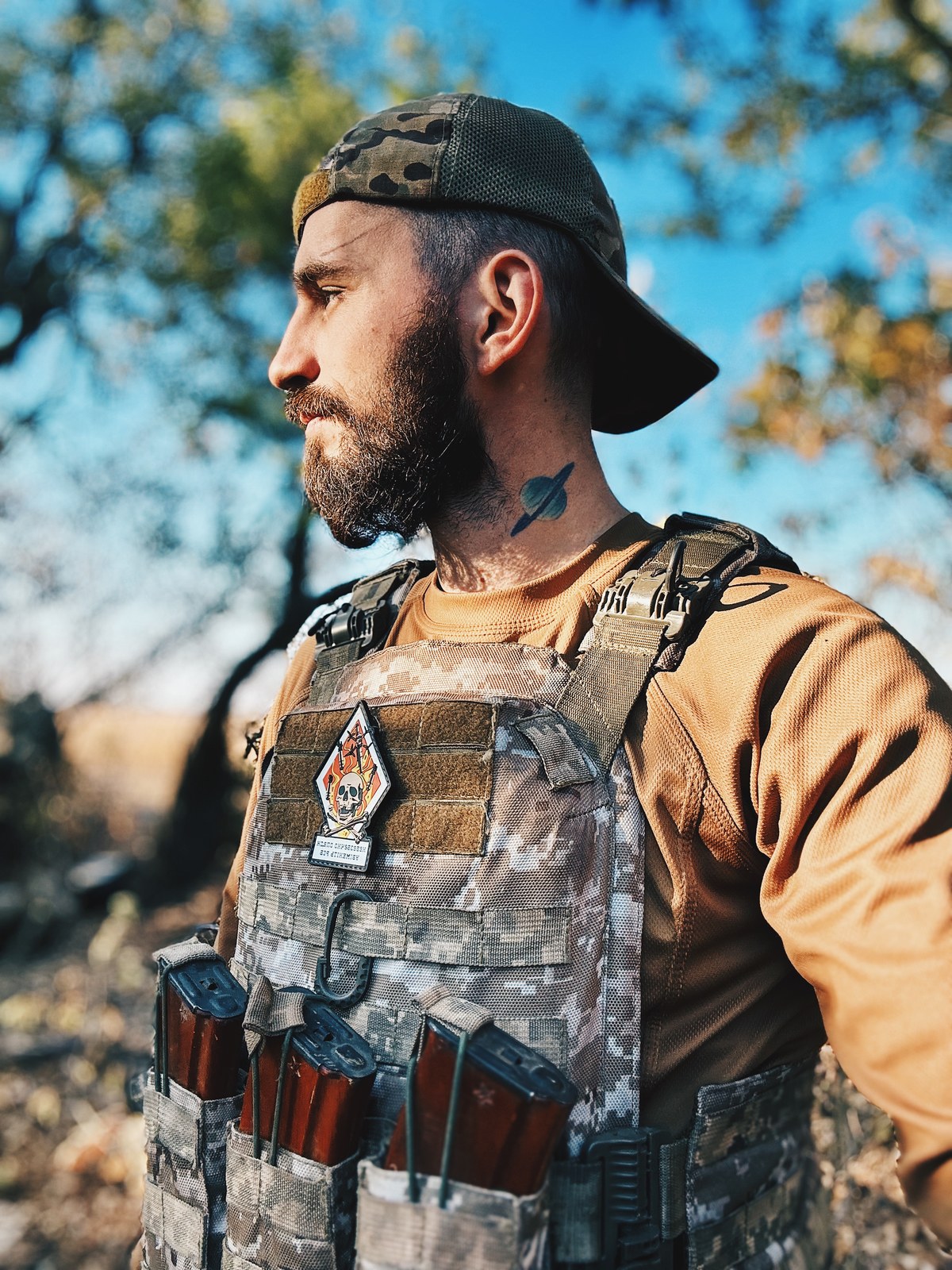
At the same time, Danylo himself has moved from active volunteering to serving in the ranks of the Defense Forces. He does not disclose his current role in the 3rd Military School, but in an interview he makes it clear that he is currently applying his professional skills and IT background in the army.
From dev.ua, Danylo Golota talked about how the product came about and what plans the team has for the near future; how you manage to promote it while being in the ranks of the Armed Forces of Ukraine; and what it takes to get noticed in the army and use your acquired skills rationally.
Danylo Golota is the co-founder and CMO of the Fintellect startup and a 3OSHB serviceman. His team describes the eponymous application as a «smart platform for managing money for service companies.» In particular, these are design studios, IT outsourcing, consulting companies, and other businesses that sell professional services. Despite the fact that the product appeared at an inconvenient time — just on the eve of a full-scale invasion, and part of the team actively volunteered, they had enough strength and perseverance to significantly improve the first version of the application and bring it to the market. In 2023-2024, the startup attracted investment and entered the American Berkeley Skydeck accelerator.
At the same time, Danylo himself has moved from active volunteering to serving in the ranks of the Defense Forces. He does not disclose his current role in the 3rd Military School, but in an interview he makes it clear that he is currently applying his professional skills and IT background in the army.
From dev.ua, Danylo Golota talked about how the product came about and what plans the team has for the near future; how you manage to promote it while being in the ranks of the Armed Forces of Ukraine; and what it takes to get noticed in the army and use your acquired skills rationally.
How did you come up with the idea for a startup? Was it some kind of «insight,» like in the movies, or a detailed analysis of the market and its needs?
Before getting into product IT, I worked in the service industry — I was a co-founder of a marketing agency, a kind of outsourced marketing team. On our side were strategy, management, operations management, design, advertising, and so on.
We were strong in everything related to marketing, but we had a worse understanding of how an agency should work from the point of view of a correct and healthy financial model. That is, our own problem was that we could not build adequate profitability for our projects and often went into cost overruns. We also could not find where to learn this. We talked to colleagues in the shop who had been in this business longer. They recommended something to us, showed us their signs, but these recommendations and signs often contradicted each other. We tried to build some kind of ecosystem, but we realized that we were spending half our lives digging through these signs, and there was not much point in it. And that was probably the moment when we thought that we needed to do something about it.
At the same time, my partner in the Fintellect startup, Yegor, had a web studio in Odessa and he had exactly the same pain. Yegor is a strong product designer who had a small IT team. They, just like us in our marketing agency, outsourced certain things on a turnkey basis for clients — from UI/UX to full development.
As a result, at that time he had already started to create a product that could solve our problems, and at that time I had been digging into the problem for a long time and in detail. Accordingly, based on this shared experience, the first version of Fintellect appeared.
Tell us more about the development, the functionality, and, ultimately, what came of it?
This is a product that counts the money of those who sell professional services: web studios, IT outsourcing, Digital Marketing agencies, design studios and all companies of this kind. Why are we focusing strictly on them? Because we ourselves had such problems and saw that this niche is not really closed. Most agencies of this type use a bundle of spreadsheets, accounting software, invoicing software. But in parallel, there is also time tracking software and CRM, in which we keep information about clients, as well as a Project Management Tool — some kind of conditional Asana or Jira, maybe — ClickUp. And this pantheon of technical solutions forms the solution to the problem of financial operational management of the agency!
But it doesn’t all live in one place! And there are almost no solutions tailored exclusively to the service business model. Because it has its own specifics, which is that everything is based not on money, but on hours.
Even if you don’t sell «by the hour» like IT service companies, the cost of your work is still determined in hours. Because you have a team, and for every hour that this team works, you, as the business owner, pay it money. That is, «the hours fly by,» and the cash register makes a «ding.» Developing a website or creating an advertising campaign, building an IT product for a client is a matter of hours. And if you make a number of mistakes, you will simply go into the red.
This is difficult to manage. And if the founders of such agencies have dark circles under their eyes from lack of sleep, it is not because they are doing a bad job in terms of producing any results, but because the burden on them is formed precisely by these operational and financial tasks.
So our product is exactly about that. Our team appeared almost immediately, but it grew a little over time. There were two of us founders, as well as frontend and backend developers from my partner’s agency. We started making the first prototype with them, and also applied for a grant from the USF (Ukrainian Startup Fund), which at that time provided up to $25,000. In the end, we made the first prototype. We rolled it out to production and started testing it with the first customers.
And what was their perception?
To be honest, it wasn’t very good. The first users told us that the interface was no better than a regular tablet. While talking to users, we realized that we were building the product without taking into account one thing: for an agency, what’s more important is not how much you earn and spend in general, but the unit economics of each individual project. That is, it’s important to know exactly how much you spent and exactly earned from each individual client, from each individual contract. And it’s important to track this in real time, because every action you take costs money, and every time a designer plays with fonts at the client’s request, you lose that money. And so we made the second version of the prototype based on this understanding.
That’s when we got the first positive feedback and the first users who started beta testing our product. We got a grant from USF that we applied for. And that was right before the full-scale war started, when we basically launched.
Did you even think about business and startups at the beginning of a full-scale invasion, or did your priorities shift dramatically? What is it like to be a wartime startuper?
When the full-scale war began, for a certain period of time we didn’t work on product development and startup development, but switched to volunteer work 24/7. We have a fairly scattered team in different cities — Kyiv, Odesa, Lviv, and each had their own volunteer tasks that were close to this. Back then, you didn’t ask a person if they didn’t mind doing something — you simply put them in front of the fact that 10 boxes of some equipment would arrive, which they had to accept, meet, and transfer to such and such a train. In Kyiv, we had a volunteer team and we delivered food to field kitchens. We delivered products and picked up ready-made hot food, delivered it to where it was needed: to hospitals, headquarters, and other places. And it was just daily work, actually from the end of the curfew until the beginning of the next one. That’s how the first four months went.
If you look at the tech market, the venture market, and the startup market, there was crazy growth until the full-scale start, that is, until the end of 2021. In the first quarters of 2021, you could raise money for a bare idea, especially if you already had some micro-hint about the team and an understanding of how to implement it.
After the start of the great war, this story ended successfully and we are still waiting for our market to return to the growth stage. At the same time, such a boom is now observed in the miltech and defense tech market: precisely due to the fact that people have seen: it is possible to mass-produce solutions that greatly change the course of the war for the better. Moreover, it is possible to do this quickly, efficiently and for very little money. Military tech has historically been the prerogative of large, complex and integrated companies, such as Lockheed Martin. And then a whole bunch of engineers appeared, who, conditionally, began to rivet all sorts of things in garages.
I remember when we received a grant from USF, there were guys with us who made a mobile application, which is essentially a shooting trainer. And they were given feedback like, «Your project is cool and interesting, but it’s not that relevant right now, because there are issues with weapons permits, legislation, not many people do it, and blah-blah-blah.» I don’t know where these guys are now, but it seems to me that everything is fine with them. That is, military and defense are growing, thank God. I am sure that this vertical of business in Ukraine will be a very big economy in the coming decades.
And everything else, less important from the point of view of the war, has sunk in. So if someone were to ask me at this moment whether it is worth doing a startup in such conditions, I would say no. It is very difficult: emotionally, financially, operationally, whatever. Your family, attention, life balance, well-being, mental health suffer. You feel like a salmon swimming against the current, and you are being shot at with a shotgun at the same time. To do any business, you need to have a very high tolerance for risk, and startups have never been a pleasant business, because a startup is, in essence, an idea without a business model. You have come up with something, but who knows whether the market needs it and whether it will sell. And you need to find an answer to that. And maybe, just maybe, it will pay dividends for you.
Let’s go back to your product a bit. Judging by your social media posts, you do introduce new features and release updates quite often. Is this a response to user requests?
My recommendation to everyone who will make their own products is to always build them in a feedback format. This feedback should come from the outside, but pass through an internal team filter. That is, the feedback generator should be the users. And the team that makes the product should be the filter for adequacy and appropriateness at this particular moment.
When we started developing the prototype, we had over a hundred interviews with colleagues who tested our product. Therefore, even at the first stage of product development, we formed a fairly large backlog on this, which continues to fill up. We prioritize this feedback, and whatever gets the most points in terms of priority goes into work first.
How did you go from simply being an active citizen to serving in the military? How spontaneous or carefully reasoned was this decision?
As I said, after the full-scale operation began, we switched to volunteering and for a number of months we were doing this 24/7. But the further along, the less chaotic the situation in Ukraine became, and what we delivered to the military in the first months could already be bought or received from foundations without any problems.
We switched to closing tactical requests. We held meetings, bought cars and drones. During this time, we accumulated a fairly large network of different units, which we systematically helped. In parallel, we returned to work on the startup.
In 2023, we got into the American Berkeley SKYDECK accelerator, flew to the program in Berkeley for a month (the Ministry of Digital Affairs gave us permission to leave).
We continued to work, but at the same time, I realized that I would have to serve in the army. It seemed inevitable, but I wanted to serve at least approximately plus or minus within the framework of what I know and can do. I mobilized simply because I am fit, I don’t have any serious health problems, and I can serve.
Didn’t you feel that as a volunteer you were doing enough and your impact was greater than from serving in the army?
My efficiency as a volunteer declined over time. We had no goal of building our own full-fledged fund, and I didn’t see myself as a manager or leader of such a fund. So the value of volunteering became less.
I have friends who don’t serve in the army, but who, conditionally, bought 100 cars for the army. And I believe that this is how it should be — not in the sense that you can buy off the army, but in the sense that a specific person who systematically buys something for units, for their friends or acquaintances who serve — they can really be more useful in this role. Accordingly, they need to work, earn money and buy cars. I don’t think that everyone should serve.
There is a moment of legislative obligation, but there is also a moment of common sense. Although very often legislation and common sense, unfortunately, do not have 100% overlap.
In fact, when I went to serve and got into the army, I made one conclusion: I should have gone earlier. But this is not a call to anyone: I just felt that I was ready for it. I also told myself that I was more effective there and there, I could do this and that. And I did. But at some point I stopped being so effective there. And I became more useful in the service.
As someone who created a product to streamline many processes, how do you deal with the fact that in the army, to put it mildly, everything is not very streamlined, and that it is a rather inflexible structure?
It’s like in some tweet — «Oh, you’re an IT guy! We need an IT guy to dig a 500-meter trench for the cable.» It’s a joke, but not a joke. There really is a lot of irrationality in the army, to put it mildly. But there are a number of brigades that are trying to build normal processes. Innovation and progress exist in all structures, and they will overcome regression over time. There is a very large amount of idiocy — you just have to be ready for this. It cannot be fixed quickly, as far as I’m concerned. I haven’t been in these processes for so long and don’t know them deeply enough to be able to draw any conclusions about when the army will become innovative. But this is a very large multifactorial and clustered structure, so it cannot change quickly. It can change pointwise — with such lights that light up and from which a blessed fire spreads.
My internal dissonance was related to productivity. I can work a lot and effectively. Like any normal person from «IT», I track time, I have a calendar, planning, prioritizing tasks. We try to squeeze everything out of working hours. And then I get into the army and I have to get used to the fact that I can just do nothing for five hours. You just have to approach this philosophically and fight it if possible in order to increase efficiency.
And what tasks do you perform yourself and where, if it’s not under NDA? And how do you manage to combine service and startup development, given that in the army, a person doesn’t belong to himself?
I am currently temporarily in Kyiv, I recently returned, I won’t say where I came from or what I did there. But at a certain point, my service changed to a more specialized one. And I am grateful for that, because being able to not just serve, but also «serve in my specialty» is expensive.
As for combining these two roles, it’s always difficult to sit on two chairs, but I’m not particularly sorry. But if I were in a dugout position right now, we wouldn’t be talking. And I wouldn’t be able to talk about any additional activities or development of the startup.
As soon as I got into the army, I didn’t keep quiet about my skills and my experience. But I saw a lot of people who kept quiet about what they could or knew, and that’s why they ended up in the most priority positions — in the infantry. It’s banal because, based on the realities of war, the infantry ends the fastest and needs replenishment the most. So if you have specific skills, you have to fight your way to work within the framework of these skills.
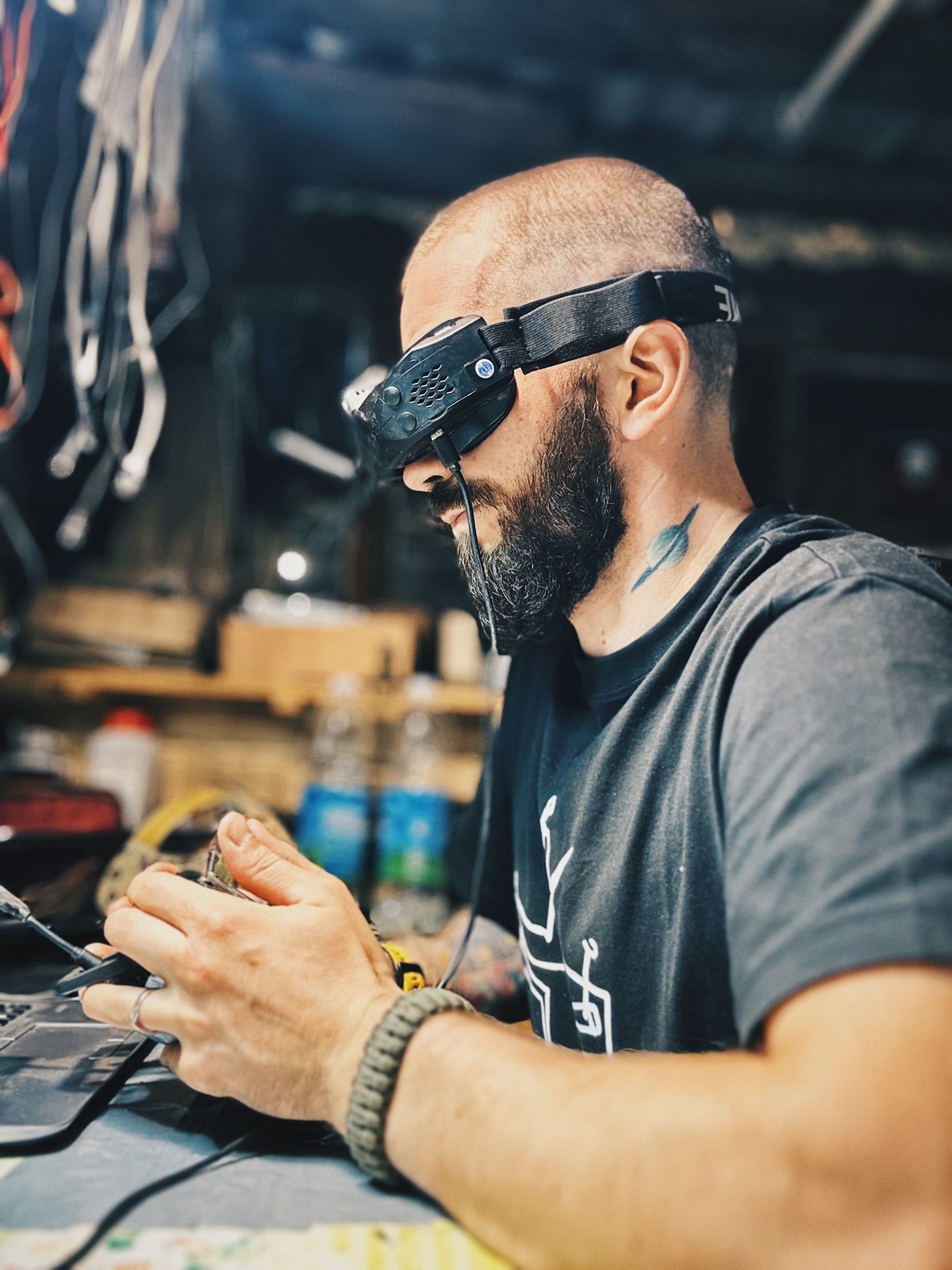
So, when I got into the army, I really «puffed» everyone up about what I could do and what the benefits were. Actually, that’s why I managed to get transferred to the Third Assault Brigade. Before that, I was in another brigade, where I served as an engineer in the FPV calculation. I had to learn very quickly how to configure drones, solder receivers, and so on. I took a course on FPV and bombarded my senior comrades with questions, called and pestered them, but I figured it out. Because hardware engineering is not exactly what I knew up to that point.
Now I’m working on tasks that are closer to my specialty, because I’ve been doing this for 10 years, and now my goal is to create maximum benefit for the team from this experience.
Therefore, it is unlikely that you can be in the trenches and simultaneously think about your own business. But if you are involved in some IT issues in the team, then, although it is difficult, between your official tasks you can join a call or communicate with the team in Slack, do sales, etc.
How was your experience with the translation? They are currently trying to digitize it in «Army+», but for many military personnel this process took not just months, but years.
Now the transfer should really be easier. But what helped me was that the brigade I’m in now was interested in me. That is, my case is a really good scenario: if everyone agrees and you’re let go. A bad scenario for many is if you’re not let go. Ideally, you need to negotiate and find ways. If you can’t negotiate, some use the extreme option of going to the SZCh, and then simply come to a new brigade. The army is a multifactorial system in which anything is possible. And so you can get into a situation where you’re cool, motivated, strong, and smart, but you’re unlucky with your immediate commander.
But the further we go, the more we see adequate updates that really give you the opportunity to serve where you can be useful and use your skills. And even if you don’t have any skills, there’s a lot of educational content now. Even these free FPV courses are banal. They’re accessible to everyone, cool and detailed. So you can learn how to assemble, disassemble, solder and configure FPV in a week or two.
What can you say in general about the digitalization of the army? How is the process going? We always ask about the perception of IT professionals who are in the Armed Forces of Ukraine.
I didn’t do super-deep research to make a competent statement about the whole process. But from my experience, digitalization is definitely making huge steps forward. The same «Reserve+» or «Army+» are also such steps. I saw brigades that almost 100% switched to electronic reports in «Army+». I submitted reports through it myself and everything was received efficiently and done quickly.
Are there any «holes» or corruption behind all this? Probably, there are. I would be surprised if there aren’t. But it does its job. True, it seems that sometimes there is not enough normal training for people — in particular, for many officers who have to work with this system, and the subtleties and details have not been explained to them. That is, any software product should be accompanied by normal on-boarding, materials that explain how everything works, and preferably — by some kind of manager who integrates and controls it all. In addition, there is also a banal human fear that an electronic report does not physically exist, and a piece of paper — you can hold it in your hands, they will sign it there! This is banal logic for the software world, but, unfortunately, it also works for now.
It’s not easy to make any clear plans for your product while in the army. But nevertheless, what’s on the agenda now, on the eve of 2025 and in its first months?
One of the main short-term goals is to release an AI financial manager based on our software that will be able to not only provide answers and micro-analytics, but also recommendations, forecasts, and draw attention to planning inaccuracies. Taking into account security, levels of access to information, and product nuances, by itself.
The user communicates with such an AI financial manager via an integrated chat and asks him anything within the framework of the agency’s finances: net profit forecasts, the efficiency of individual team members, their income, or vice versa, losses.
We want to reduce the amount of manual work, and at the same time give the user a manager who you can ask at 2 am about something that keeps you awake as an agency founder, and he will answer with accuracy to the cent.
Our task for 2025 is to give agencies using Fintellect the maximum benefit from this functionality, and to see how exactly we can save them time and make more money. This cannot be achieved by simply asking some financial questions to the GPT conditional chat and feeding it your tablet — because it is not in context. We need the AI to understand the specifics of the business model for which our software is designed. This should protect small studios from the mistakes that we ourselves made in our time.
So in this transition from 2024 to 2025, and with how quickly artificial intelligence is developing, it’s all possible to do. And I think we will do it!
«There are very few quality teams in Ukraine, and this is holding back the development of the market,» the managing partner of the Angel One fund shared the key criteria for selecting startups for investment.
«Іноді я граю в криптовалюту для тестування продуктів». Співзасновник Revolut Ніколай Сторонський про розвиток бізнесу, крипту та вторгненні рф в Україну
Співзасновник фінтех-сервісу Revolut, 37-річний СЕО проєкту російського походження Ніколай Сторонський дав інтерв’ю Bloomberg. dev.ua публікує найцікавіше з бесіди.
«Ми не можемо дозволити путіну захопити Україну. Це божевілля». 20 тез Ілона Маска з великого інтерв’ю Business Insider
Мільярдер Ілон Маск дав відверте інтерв’ю виданню businessinsider.com, де торкнувся теми вторгнення рф в Україну, космічних подорожей та речей, що роблять людей особливими.
Наводимо тезисно адаптований переклад тексту.