Хочете будувати кар’єру в Data Science та AI? Vodafone Big Data Lab відкриває новий набір —>
Наталя ХандусенкоWork
20 March 2026, 12:32
2026-03-20
AI tokens are becoming part of the reward in IT — a new trend in Silicon Valley
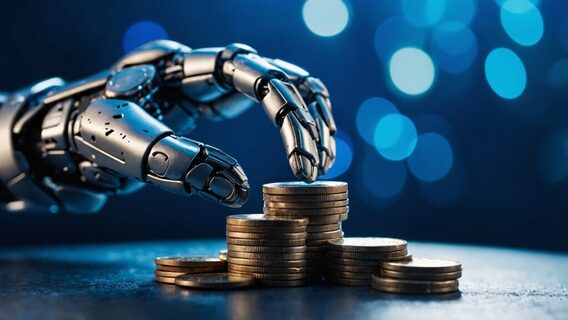
The traditional formula of “salary + bonus + shares” in Silicon Valley has been supplemented with a new element — AI inference. Now companies are luring IT talent with access to computing power.
The traditional formula of “salary + bonus + shares” in Silicon Valley has been supplemented with a new element — AI inference. Now companies are luring IT talent with access to computing power.
As AI tools become an integral part of software development, the cost of running the underlying models — known as inference — is becoming a productivity driver and a budget line that executives can no longer ignore, Business Insider writes .
AI engineers and researchers at tech giants have long fought over access to GPUs. That computing power is strictly allocated to the highest-priority projects. Now, job candidates are openly asking how much AI budget they will get if they join the company.
“In interviews, candidates increasingly ask me how much dedicated inference capacity they will have to develop with Codex,” Thibaut Sottio, OpenAI Codex’s engineering lead, recently wrote in X.
He added that the intensity of resource use by a single user is growing much faster than the total number of users, indicating that AI computing is becoming increasingly scarce and valuable.
This shortage is changing how engineers perceive their work and pay. OpenAI President Greg Brockman put it bluntly: “The amount of inference power available to you will increasingly determine your overall software development productivity.”
In other words, access to AI could soon be as important as a high salary or a hefty stock package. For a developer in the AI era, not having access to large-scale computing means risking producing far less than their peers, jeopardizing their career prospects.
Hakim Shibli, a data scientist at Levels.fyi, recently noticed an interesting detail in an engineer’s income statement: a subscription to Copilot was listed as part of the compensation package. It’s a small but symbolic step toward making access to AI a standard perk.
The developer community predicts the emergence of new hiring standards.
According to Peter Gostev, head of AI capabilities at startup Arena, giants like OpenAI and Anthropic should launch their own job search services. Each vacancy should include, in addition to the salary range, a token limit available to the future employee.
Investors have already taken notice. Tomasz Tunguz of Theory Ventures noted that companies are effectively adding AI inference as a fourth component of engineer compensation: salary, bonus, stock, and now tokens.
Tokens are the economic language of generative AI. Models break down words and other inputs into numerical tokens for easier processing and understanding. One token is about ¾ of a word. They are also used to calculate the cost of running AI models using a commonly accepted standard — the cost per million tokens.
“Will you be paid in tokens? In 2026, it is likely that you will start receiving them,” Tunguz concluded.
For CFOs, this potentially huge expense item needs to be tracked as meticulously as personnel costs, Tunguz noted. “It’s already becoming a reality,” he said, as AI use by employees increasingly impacts the overall velocity of spending across the company.
Since top developers earn about $375,000 per year, Tunguz calculates that if you add $100,000 to pay for AI power, the company's total costs for such an employee will be $475,000. Thus, a fifth (21%) of an engineer's "cost" is no longer money in his hands, but payment for his computing resource.
If this trend continues, 2026 could be the year when engineers negotiate pay not only in dollars and shares, but also in tokens.
"Sleeping at work, they pay, I'm in." The recruiter asked IT professionals which corporate benefits impress them the most. A selection of creative options for HR
Як нейромережі бачать вільну та незалежну Україну? Тест dev.ua
Нейронні мережі для генерації зображень бачать світ по-своєму, їхню логіку зрозуміти часом зовсім неможливо. Але таки хочеться. На честь Дня Незалежності України редакція dev.ua вирішила провести невеликий експеримент.
Ми задали чотирьом різним нейронним мережам п’ять однакових запитів: «прапор України», «День Незалежності України», «український Крим», «перемога України» та «українці». Отриманими результатами ми ділимося з вами нижче.
У TikTok тепер можна генерувати фон за допомогою нейромережі. Ми протестували її та ділимося результатами
У TikTok з’явилася нова функція «Розумний фон». З її допомогою як фон для тіктоків можна підставляти згенеровані нейромережею зображення. Редакція dev.ua протестувала цю технологію і ділиться своїми враженнями.