Хочете будувати кар’єру в Data Science та AI? Vodafone Big Data Lab відкриває новий набір —>
Олексій ДзюбаІсторії
6 January 2025, 10:24
2025-01-06
“We will work for subscribers, and they will show us where we belong.” Interview with DVL’s CTO about 33,000 batteries for networks, the abandonment of 3G and the introduction of 5G, French owners and ambitions for competition in the market
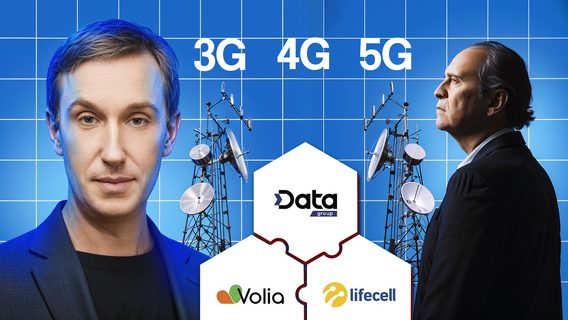
«For me, this is a life project,» says Serhiy Tereshchuk, CTO of DVL, in an interview with dev.ua about his new position, planning the company’s further development plans. Recently established after the merger of Datagroup, Volya, and lifecell, DVL is today the largest international telecom group present in Ukraine. It faces many challenges — from ensuring uninterrupted network operation during wartime and booking specialists to developing 5G and launching new products on the market. We met with Serhiy Tereshchuk and talked not only about the above-mentioned topics, but also about the use of artificial intelligence, the situation on the telecom market with small and medium-sized providers, and ambitions in competition with other mobile operators and companies.
The interview has been edited and shortened for clarity.
«For me, this is a life project,» says Serhiy Tereshchuk, CTO of DVL, in an interview with dev.ua about his new position, planning the company’s further development plans. Recently established after the merger of Datagroup, Volya, and lifecell, DVL is today the largest international telecom group present in Ukraine. It faces many challenges — from ensuring uninterrupted network operation during wartime and booking specialists to developing 5G and launching new products on the market. We met with Serhiy Tereshchuk and talked not only about the above-mentioned topics, but also about the use of artificial intelligence, the situation on the telecom market with small and medium-sized providers, and ambitions in competition with other mobile operators and companies.
The interview has been edited and shortened for clarity.
About the difficult first months of work and the French owners of DVL
— 100 days have passed since your appointment (the interview was recorded at the end of December, Serhiy Tereshchuk took office in September — ed.). During this period, it became clearer to you why a French billionaire would want to do business in a warring country with vague prospects?
— These three months were like three years for us, because they were turbulent for us. The first reason for this is the merger of two large companies. This is not only lifecell, but also Datagroup-Volya. Datagroup-Volya itself is large. It was a challenge to understand the structures and merge them. The second reason is the technological component. It was necessary to make an analysis and a development strategy in a short period of time.
The main challenge we faced was related to network sustainability. The number one challenge for all of us was how to keep the network powered and running for up to 10 hours. So there were strategic and operational issues. And of course, the business components that you’re asking about.
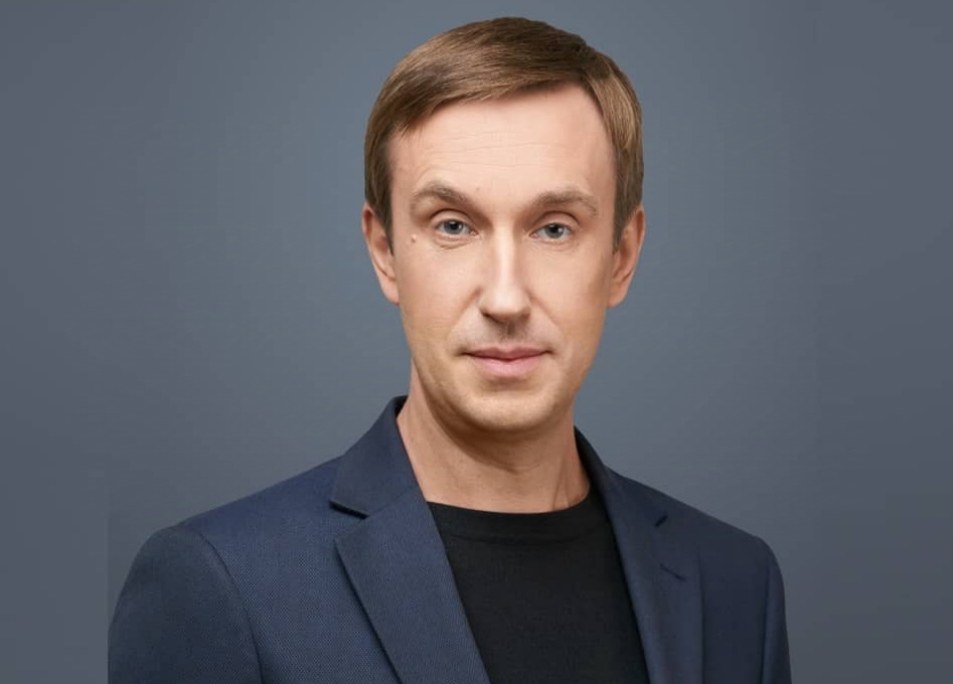
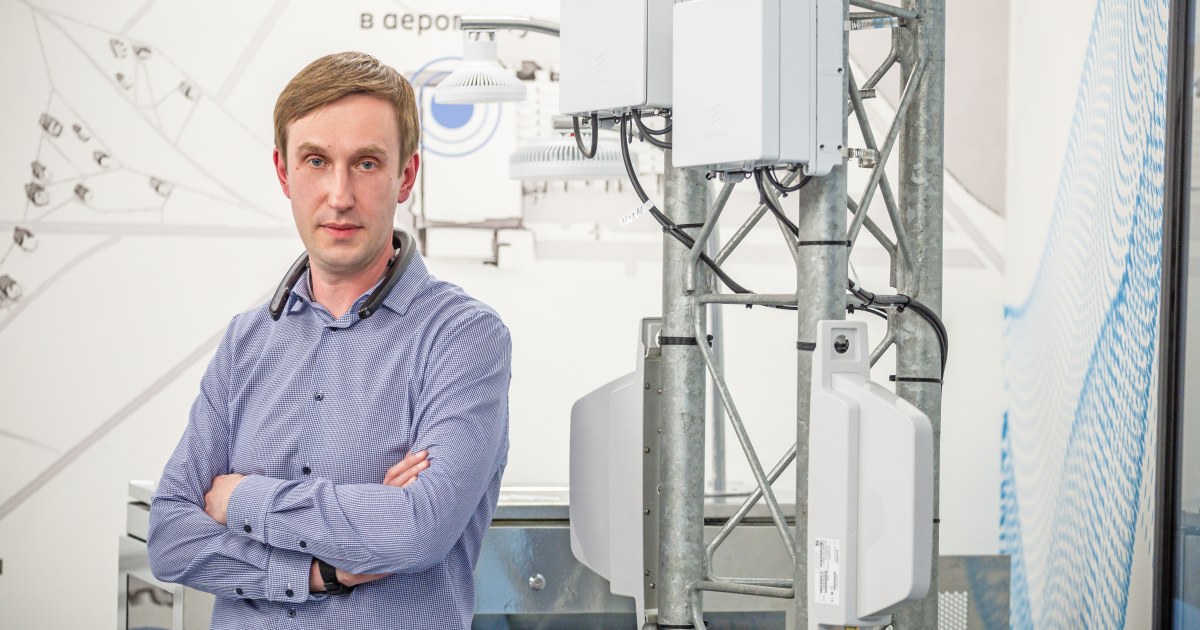
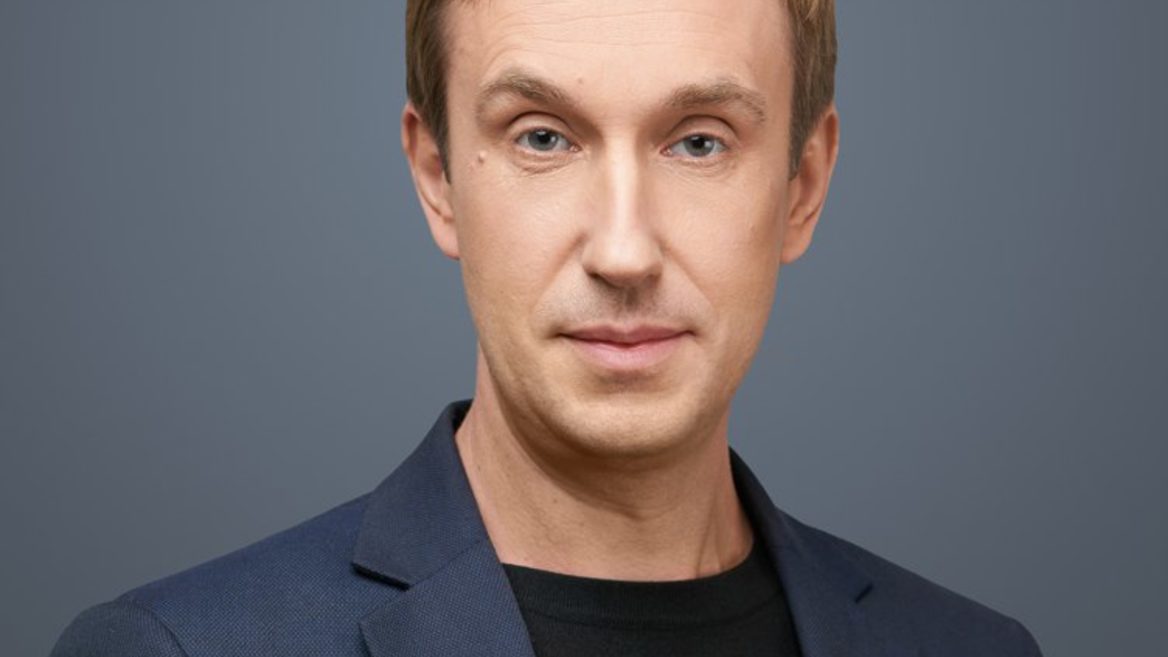
Photo — Serhiy Tereshchuk
The question of why the French need this business is simple and understandable. Starting in 2020, when the COVID pandemic occurred, everyone understood that telecom is like a railway or a road, that is, it is impossible to live without it. During the full-scale invasion, it became clear that our lives depend on telecom. Telecom will remain, will develop and has great potential.
Datagroup and lifecell are two large companies that, after merging, only strengthen each other in terms of technologies, organizations, and products that we can bring to the market for users. Datagroup-Volya is a powerful operator for the B2B segment, lifecell focused more on B2C.
Of course, many people have left Ukraine now, but we expect them to return.
Of course, many businesses have now suspended operations, but they are operating and there is a need for telecommunications. We expect that after the war is over, new businesses will enter Ukraine, so there is a need for telecom services. Therefore, one of the decisions was to invest (in Ukrainian companies by the French — ed.).
— Have you met with Xavier Niel himself, the owner of NJJ Capital, which invests in Ukrainian companies?
— We did not meet with Xavier, but we had meetings with shareholders, that is, representatives of the NJJ Capital holding company, both from the technical and commercial sides.
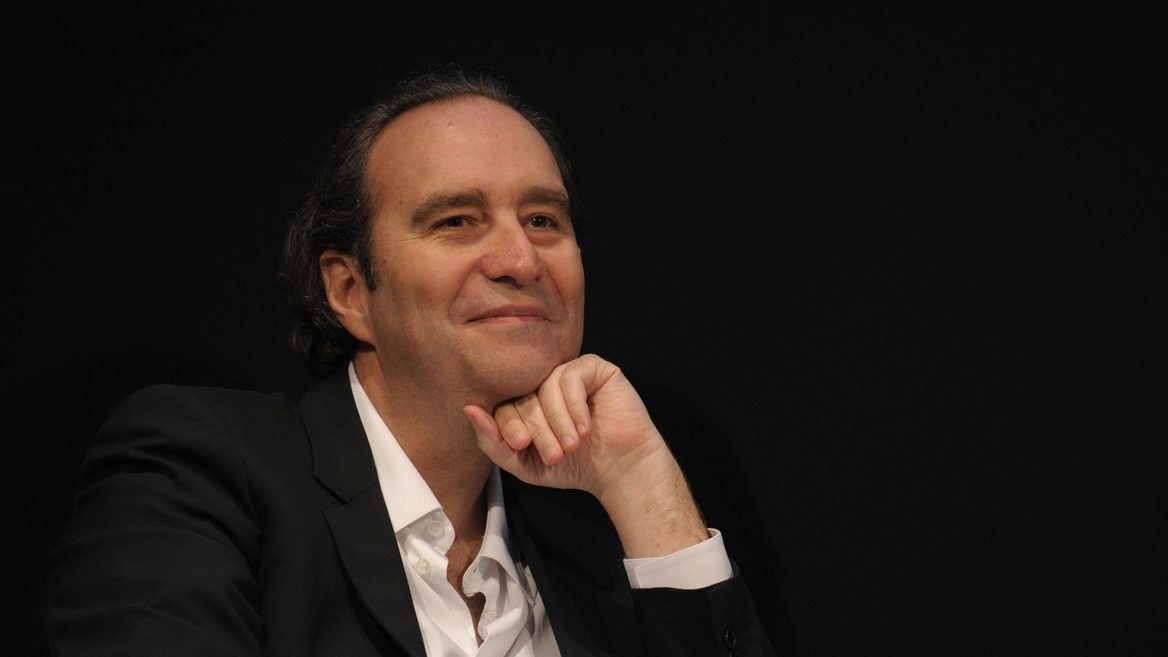
Photo — Xavier Niel
Our first meeting took place in September, where we discussed plans for development, merger, infrastructure and services. In December, we had a second meeting, where we agreed on plans for the next year. We met in Warsaw.
He started with erotica, has a fortune like Akhmetov’s, is connected to Unit City, doesn’t say whether he left the Russian market. Who is Xavier Niel, who wants to buy lifecell?
— Are they ready to come to Kyiv, the capital of a warring country?
— We really invited our colleagues. And we expect that the next meeting, at the beginning of 2025, will already be held here. They are ready in advance and we would be happy to do it. Therefore, we expect them in Ukraine.
— You and your team need to «sleep» on different businesses. Are there any moments that are more difficult than you expected?
— It’s not just businesses. We need to «merge» two separate companies and cultures. The most important thing is to unify organizational structures. Lifecell was part of Turkcell — it’s one structure. Datagroup was a different culture, Volya was a third culture. The big challenge is to do this during a full-scale invasion, when people are working remotely, some of them abroad. And we need to do it in a short period of time.
Over the past three months, we have been coordinating with NJJ Capital and within the company how to combine these organizational structures. Our goal is to increase work efficiency through synergy. That is, not through external competencies and employees, but through internal intelligence. We are combining commercial, financial, technical, and organizational structures.
The next step, and we have already started it, is the unification of technological networks.
Datagroup has a powerful optical network. We are currently converting most of lifecell base stations from radio relay systems to optical channels.
The merged Datagroup-Volia-lifecell announces new personnel changes in key areas of the company
— How long does it take to complete the merger?
— From January 2025, we will begin implementing organizational structures. The goal is to complete this project by the end of 2025. We understand that during the war, changes can occur at any time. Even now, what is happening is that we need technical specialists, because mobilization is taking place and people are being taken to the army. The same applies to our contractors. Therefore, the situation may change. The technological component has already been implemented for the last two months, it is much easier to unite there.
EBRD and IFC confirmed that they will invest $435 million in the combined company Datagroup-Volia-lifecell. Where will the money go?
About problems with booking specialists
— You ordered mobilization. When DVL is looking for specialists, do you indicate «reservation» in the job description? It is clear that telecom is a critical infrastructure.
— Reservations are absolutely correct. But on the other hand, competence is important. Those specialists who have to go to the facilities and have the competence to work with optical equipment are simply not available on the market.
Even those employees whose bookings have expired and we have re-submitted them for booking, we are losing such specialists. We also use the competence of contractors' specialists. They have the same situation. There are those who are booked and the booking has expired, and there are unbooked specialists.
There have been several cases where teams went to a reconstruction site and were simply mobilized. The critical situation is related to people.
— What way out of this situation do you see?
— Providing reservations for employees who work as operators for contractors, who work in the fields, who are engaged in the reconstruction of radio networks, the reconstruction of optical communication channels. That is, to protect people who could travel to the facilities.
We have now delivered 33,000 batteries. We have more than 10,000 facilities. Work will be carried out on each of them: replacement, expansion or addition. This is a field trip to facilities located throughout Ukraine. Do you understand how many specialists are needed for this? If we lose our employees and contractors, the project will be at risk and we will revise the plan.
— What part of the specialists is reserved?
— On December 19, 2024, the reservation ended and we had to submit specialists again. Since the database was not working (due to a hacker attack by the Russian Federation — ed.), the reservation was extended for another month. After that, we will again submit specialists for rebooking.
As for specific data, I don’t have this number because it changes constantly. If we talk about the total number, it is more than 1,700 specialists in the merged companies, in the technical directorate.
— How many of them are involved in setting up networks in the fields?
— If you look at lifecell, it’s 30%. That is, we plan to use these specialists, even if they didn’t have the competence to install batteries, we planned to train them and attract them. In Datagroup, this percentage is higher, because their specialization is fixed communication, cable laying and connection. This is up to 70%.
— Is there synergy with the state in terms of reservations and do you understand all its criteria in this regard?
— As for the criteria, there are no problems here. We have a department that deals with reservations. That is, they cooperate with state structures. The questions arise, what if the database is not working, what to do during this period? Is it to wait weeks or, perhaps, to use another method to obtain.
What are the alternatives for providing armor? Unforeseen situations arise. It is during these times that employees are lost.
Of course, when it was possible to book through «Reserve+» in 2 days, it was convenient and fast. When it was done on paper, it took more than a month and this is a problem. We received the status of a critical enterprise and tried to make reservations for our employees as much as possible.
«The issue of adopting economy booking has been delayed, entrepreneurs are ready for any model.» What is happening with economy booking and are there any prospects for its implementation?
— What should I do when the CCC has already taken the specialist? Should I go after him?
— If a person ends up in the TCC and begins to undergo a VLK (military medical commission — ed.), we have no way to provide for and return them. Therefore, we try to avoid such cases in advance.
About my transition from Ericsson to DVL
— Moving on to your biography. How did you come to be the technical director of DVL? Was there a competition for the position or was it, for example, an invitation from DVL CEO Mykhailo Shelemba?
— I have been working at Ericsson since 2005. I came at a time when Turkcell bought the Ukrainian operator Astelit (a mobile operator in Ukraine that operated under the life brand — ed.). When I joined the project at Ericsson, it was Astelit, I was a technical manager at the time. I started my career with lifecell in 2005 and since then, despite working at Ericsson for 19 years in different countries, I knew both the team and the lifecell network, maintaining contact with them.
As for the competition for the position, when such associations as DVL take place, a team is prepared in advance for the project. If before the war it was possible to attract specialists from abroad, now it is much more difficult to do so. Therefore, indeed, we had a discussion with Mykhailo Shelemba, we discussed it. We had previously worked on Datagroup projects. He knew that I had expertise in the mobile direction.
Photo — Serhiy Tereshchuk
When it became clear that the DVL deal would be closed, I was offered to join the team. This decision was unexpected for me, but it was made quite quickly. I had been with lifecell for 19 years, it was natural for me (to accept the offer to move — ed.).
Leaving Ericsson was not a problem. I had been CEO of the company since 2022. I had plans to develop the business and build a team. The goals were met, so it was natural to leave Ericsson and join DVL.
The position of Technical Director of the Datagroup-Volia-lifecell group of companies was taken by a former top manager of Ericsson in Ukraine
— How many days did you take to think about it?
— It was a matter of hours. I knew this project would happen. I came back with an answer to Mykhailo Shelemby a few hours later, because this project is unique. Every person should have a life project. You can work in the industry, constantly doing the same job. This is really the project of my life, it appeared and this is a success for me.
— Isn’t there a penalty that DVL has to pay Ericsson for taking you away?
— This was not discussed at all. There were no problems with the transition. On the contrary, it provided an opportunity to change the structure of Ericsson locally and grow new managers in the company. When a manager leaves, other specialists «step up» to take his place.
About 33,000 batteries for the network
— In the news about your appointment, you mentioned «ensuring the energy independence of the network.» On September 19, there was news that lifecell was ordered to deliver generators to several base stations to ensure communication for three days without electricity. There is a similar story at Kyivstar and Vodafone. How big a problem is this now and what will it be in the winter?
— We held a tender and purchased 33,000 batteries. Now they have arrived in Kyiv and we are starting to deliver them to the regions. This applies to generators. The part of generators that was previously ordered has already been installed. In January, we expect additional generators. But the war may make adjustments, because deliveries are delayed. Thanks to manufacturers and logisticians, we received the batteries on time.
10,000 sites will be upgraded. Some of them will have their batteries completely replaced because they are old and not designed to last more than four hours. Some of them will simply be adding additional capacity.
— Are these the batteries that hold a charge for at least 8 hours?
— We are currently installing 5 new lithium-ion batteries on each facility. One of these supports about 4.8 kWh. Our consumption is up to 3 kWh. The battery lasts 8-10 hours, depending on the facility.
UPD. Lifecell was ordered to deliver generators to several base stations to ensure communication for three days without electricity. What the company says about this
— Does the state now require such network operation?
— The state requires up to 10 hours. Our task is to get closer to this indicator. But it is a question of the availability of batteries and their installation. And also, so that they are charged, adding additional capacity. There are objects that are easy to get to, there are those that are located on buildings, there are those in front-line areas where there is no access to equipment. Our goal is to ensure continuous operation for 8-10 hours.
— How difficult is it to find 33,000 batteries?
— It’s difficult. All Ukrainian operators ordered batteries. Lifecell previously installed 15,000 lithium-ion batteries. With the new ones, the total number will be 48,000 lithium-ion batteries. The first part — 6,000 has already arrived. By the end of 2024 — it will be 7,000 more. The next batch — at the beginning of 2025.
— Is this one manufacturer?
— Yes. There are a lot of them in general, but not everyone can produce them in such quantities.
— Where exactly did you buy the batteries?
— This is a Chinese manufacturer. Basically, all batteries are made in China and there are no alternatives to this. Especially in such quantities.
— How good are they?
— Absolutely high-quality. There is no question of quality. Before the tender, the batteries were tested by our technical specialists. In addition, the same batteries are already operating on the network. That is, this is not a new solution, we already had 15,000 such batteries.
— Will you cover the entire network with 33,000 or will you still need to buy more?
— It was calculated to modernize batteries at 10,000 facilities. In the near future, we will be installing them. Even physically removing everything is a task. To understand, the weight of one battery is 42 kilograms.
— In the occupied territories, are the Russians «re-flashing» base stations for themselves?
— We don’t have the details. We are losing access to the infrastructure. We don’t know what is happening to it because there is no control and access to the equipment. Some base stations are physically damaged. Perhaps the enemy is using certain equipment for its own purposes.
— Can the state compensate for such losses?
— I think that everyone will raise this issue after the war is over. Every operator bears great losses. This issue is relevant and everyone is interested in receiving compensation. But this is a post-war issue.
Generators and batteries. How many hours can Lifecell, Kyivstar and Vodafone provide communication during blackouts
About 5G, 3G, radio frequency auction and artificial intelligence
— How do you plan to develop 5G in Ukraine?
— 5G can be broken down into three components. For use by end consumers (consumption of high-quality video, for gamers, virtual reality, etc.). For business, this is, for example, for the creation of autonomous cars or the extractive industry (mines). The third component is technological, when the capacity of existing networks (4G) is not enough and we unload them, getting higher quality.
Depending on the specifics of the market and the penetration of devices that support 5G, the operator decides when to introduce the technology. Of course, it is still early for Ukraine. In our networks, such penetration is 20%. On the other hand, the possibilities of 4G have not yet been exhausted.
When we make planning and development strategy, we lay the foundation to be ready for the implementation of 5G, but the earliest is in three years.
The availability of frequencies is also important. They are currently used by the military and are unavailable. It is only a matter of time before this changes.
— Have they already started moving away from 3G?
— Strategically — yes, definitely. Because 3G frequencies are mainly used for voice. We will free them up and transfer them for LTE 2100. An important issue here is the implementation of VoLTE technology, voice over LTE. The first such project was carried out in Slavutych, Kyiv region. There we disconnected the 3G network, transferred subscribers to GSM, to VoLTE. There were no complaints from subscribers. In such projects, proper planning and analysis of the subscriber base are important so that there is no impact on subscribers.
And it’s not just about frequencies, but also about energy efficiency. By eliminating 3G equipment, we will significantly reduce energy consumption.
This year, mobile operators will begin turning off the 3G network in Ukraine.
This will free up space for 4G and provide faster and better services, writes the National Commission for State Regulation of Electronic Communications, Radio Frequency Spectrum and Postal Services (NCEC). Before turning off 3G in a specific region, operators must notify users.
Disabling 3G will not affect calls or SMS. However, to use high-speed internet, you must switch to 4G in advance to «avoid future inconveniences.»
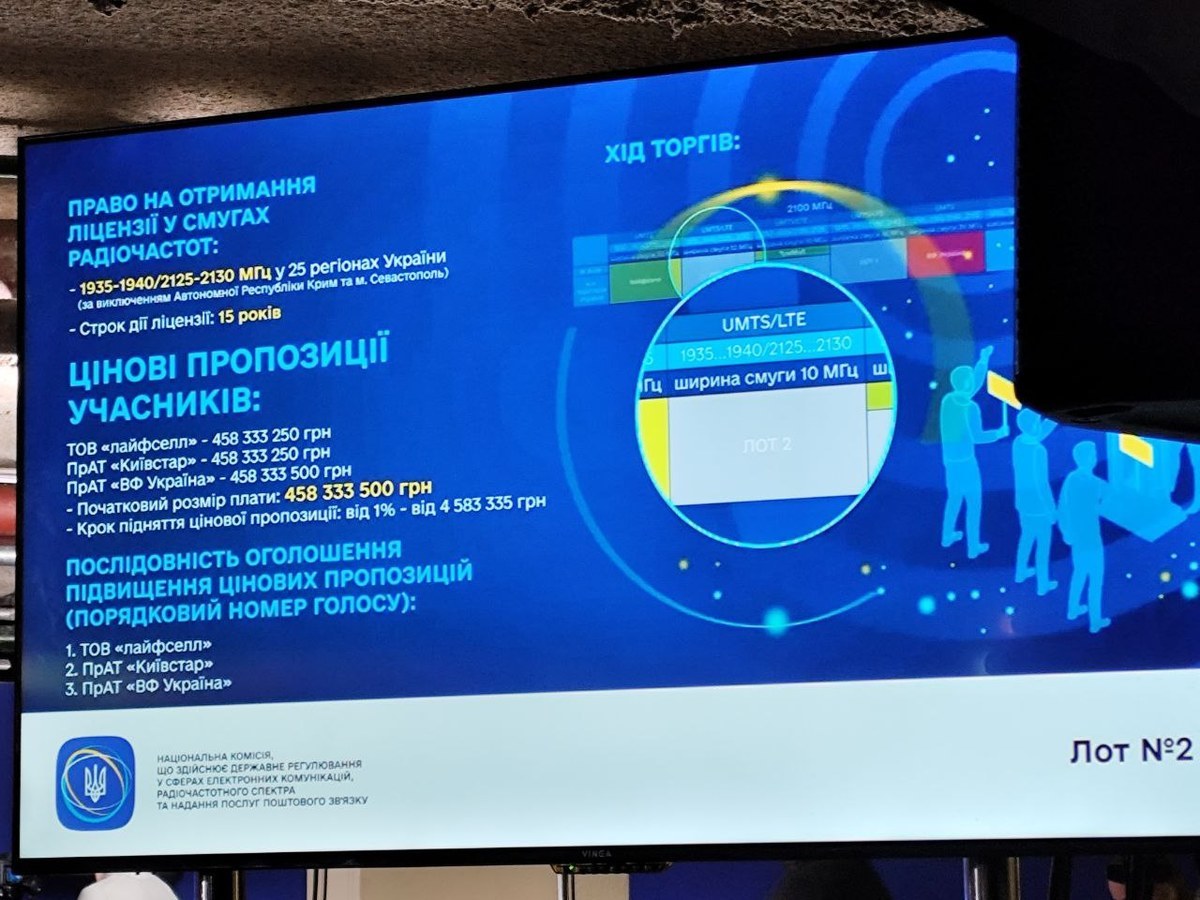
— Not so long ago, a tender was held for the purchase of frequencies by mobile operators. Each operator purchased frequencies convenient for them. Is the company satisfied with the result?
— It was clear to us that lot number 2 was the most attractive because it was located next to our existing frequencies. In order to use them, we do not need to purchase additional equipment. We can start implementing LTE 2100 technology using existing equipment.
As for the frequencies of 2300 MHz and 2600 MHz, a separate level of technology needs to be built for them. This is additional equipment, antennas, services, etc. This is a costly project and we did not count on it. Our goal was to get lot No. 2 so that we could use these frequencies as quickly as possible.
At the radio frequency auction held today by the National Commission for the Competition and Markets of Ukraine, mobile operators bid for licenses. How the lots were distributed and how much the budget will be replenished in the end
— Artificial intelligence is the most important technology at the moment. What are DVL’s plans for its implementation and expansion in work?
— Artificial intelligence and machine learning are absolutely the right things. The company uses them in solutions for servicing subscribers. AI is also interesting for the company’s operational activities — network maintenance and planning. This is very effective when new technologies appear, and 5G in particular.
We are considering solutions based on AI and machine learning to reduce the energy consumption of network base stations.
We are working with our technology providers. We are starting pilot projects. Yes, it is not full-fledged AI, but we are really working in this direction. We have a development team that is developing a technical solution based on machine learning to manage electricity consumption. Such a system should be autonomous and automatic, because there is a high risk of using it during blackouts.
On big data, small telecom operators and ambitions for competition
— In one of the interviews, DVL CEO Mykhailo Shelemba talked about «big data analysis of subscriber traffic for business.» What are the plans here?
— Indeed, there are large volumes of data. This is an important thing, because you understand the specifics of subscribers and can build trends for business development. Colleagues from the commercial direction look at the behavior of subscribers, analyzing what they need and where they are. This is important for the implementation of new products. As for the next steps in development, it is advisable to talk about this in the second half of 2025.
We are currently focusing on operational activities. We are also looking at what new services to bring to the market and what subscribers need. Big data is very useful in this regard.
— Is a new business direction for DVL possible in this direction?
— We are working on new products and services, but when they enter the market, then we will be able to say what these products are based on.
— About the situation in the telecom market. Small and medium-sized providers that were on the simplified taxation system and registered as individual entrepreneurs (IEOs) were forced to switch to the general system from October 1. Thus, the tax authority wants to receive additional revenues to the budget in the amount of UAH 3-4 billion per year. For many of them, this is a gradual death. How adequate is this story from the market and the state towards the participants of this very market?
— I will not be able to comment on this issue, because it is a financial and taxation issue.
— Then is DVL interested in buying a business if one of these providers sells it?
— Absolutely. Because small players built networks in small cities. This is a built infrastructure. During and after the war, it was a big problem to build a network. It’s interesting for every large operator. But I think this is a prospect in years. Our goal is to stabilize the business we have. This is stability, the launch of new services, and then the possible acquisition of small, regional operators.
«Hetmantsev speaks by labeling absolutely legal providers in Ukraine.» Interview with the top InAU about taxes for small/medium telecom businesses and pressure from large players
— When lifecell belonged to the Turks and was headed by Ismet Yazici, that’s one story. Now there is DVL, which is managed by a Ukrainian team, and from the outside I get the impression that you are motivated and actively competing, because you are here, on the spot, and you know the whole situation. And it seems that you are ready to squeeze Kyivstra and Vodafone a little bit. Is that true?
— Everyone was feeling energized. Because the waiting period for the deal to happen had an impact on the company. The transition period is difficult. When there was already certainty, it was clear that it was necessary to «energize» the team and the company. «Energized» people came, for everyone this is already a life project.
Regarding competition, we have plans for how we will develop the company. We are building them for three years ahead. For 2025, these are tactical things that create a base for 2026 and 2027. These are network stability, network coverage and capacity, additional services and their quality. If we implement these plans, the perception of the operator will change.
We will work for our subscribers, and they will show us where our place is.
Therefore, there is no direct competition, but there is hard work on the plans.
Will lifecell-Datagroup-Volya overtake Vodafone Ukraine and become No. 2? We asked CEO Mykhailo Shelemba about this and more
— DVL is the largest international telecom group with a presence in Ukraine. What obligations does this impose on the company?
— Of course. What we do has gone beyond Ukraine. When the agreement to create DVL was signed, colleagues from Europe and our market contacted me, asking about expectations and plans. This is not only the technological component, but also business development, what we will do with services. We are being monitored by everyone. Everyone is waiting for the next steps, what will happen.









Одиниця виміру кількість енергії = кВт-год
кВт/год це приріст потужності за одиницю часу