Хочете будувати кар’єру в Data Science та AI? Vodafone Big Data Lab відкриває новий набір —>
Ігор Вишневський Weapon
10 July 2025, 09:00
2025-07-10
Kateryna Myhalko, TSU: “Ukraine has a surplus of drone capabilities. We call it a surplus not because the army doesn’t need it, but because our state doesn’t contract it.” A great interview about arms exports and the pitfalls of miltech
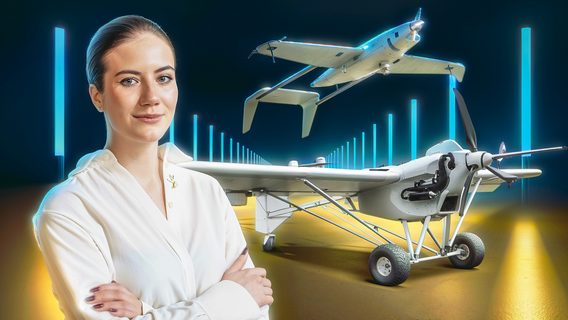
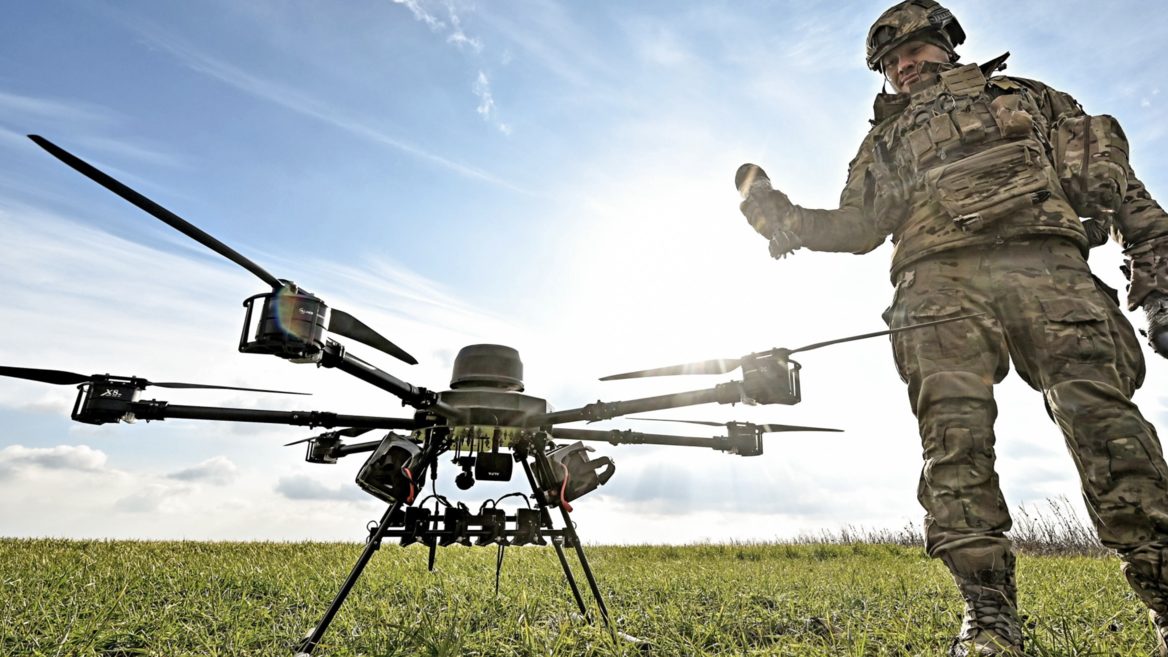
«Fight with robots, not with people» is one of the slogans of the Technological Forces of Ukraine, an association of Ukrainian gunsmiths that is approaching its second anniversary and has grown from its initial six members to several dozen members. The TSU mainly includes Ukrainian manufacturers of drones and electronic warfare systems, which are currently the main weapons of this war.
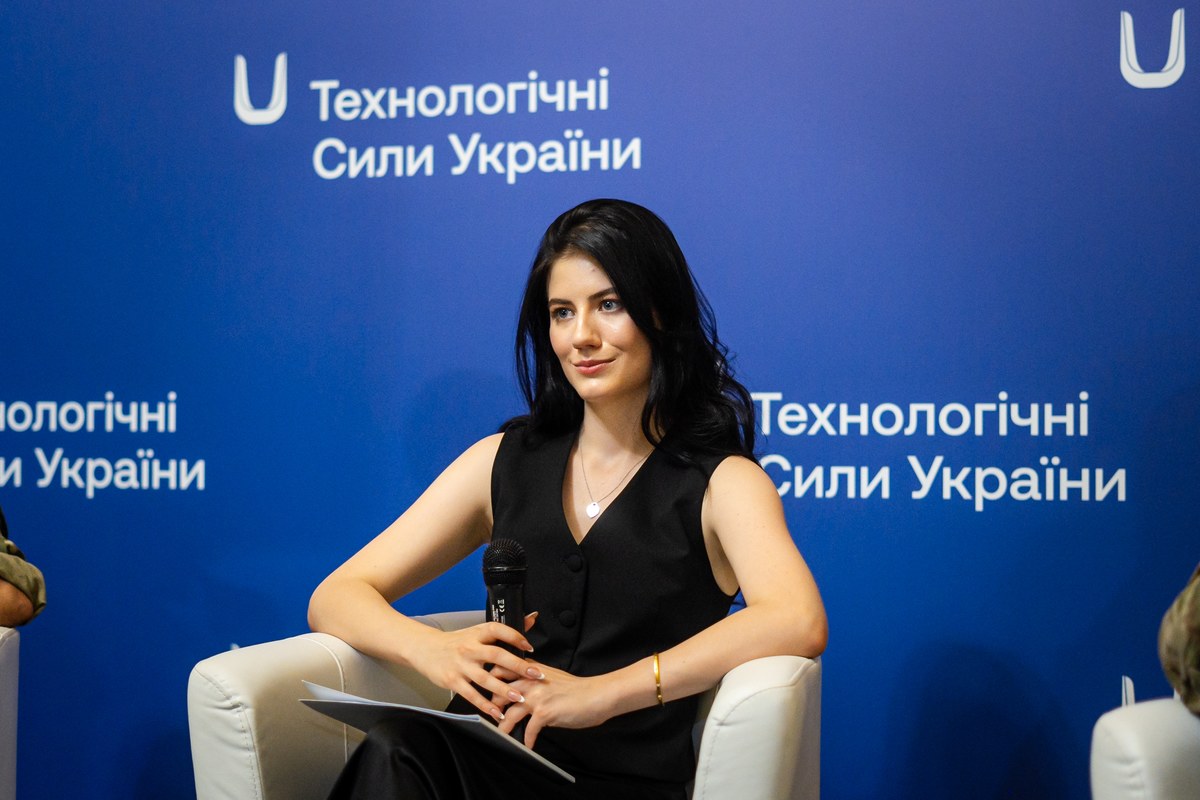
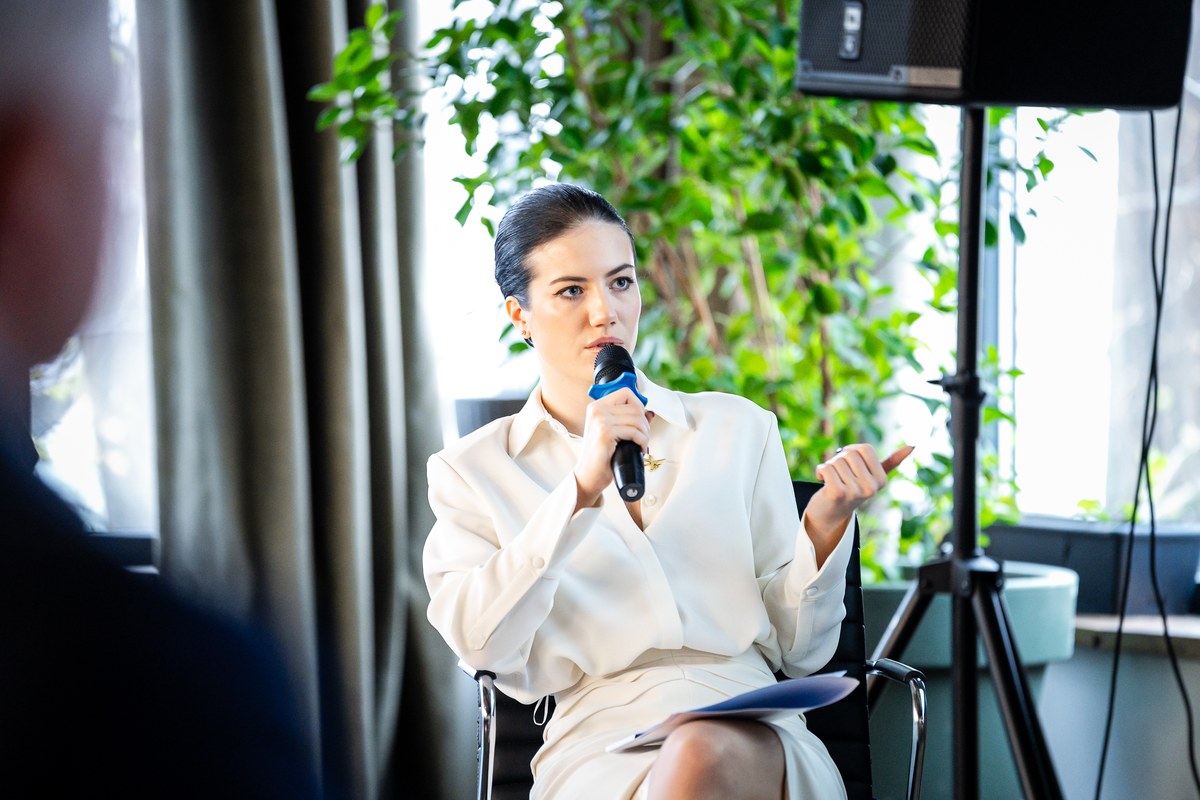
How close the association has come to this and its other slogans in reality, who can get into it and who is denied, how close Ukraine is to opening up arms exports and whether society will understand this, and whether Ukraine should fight for arms export markets with Russia, dev.ua spoke with the executive director of the TSU, Kateryna Mykhalko. More on these and other questions below.
«Fight with robots, not with people» is one of the slogans of the Technological Forces of Ukraine, an association of Ukrainian gunsmiths that is approaching its second anniversary and has grown from its initial six members to several dozen members. The TSU mainly includes Ukrainian manufacturers of drones and electronic warfare systems, which are currently the main weapons of this war.
How close the association has come to this and its other slogans in reality, who can get into it and who is denied, how close Ukraine is to opening up arms exports and whether society will understand this, and whether Ukraine should fight for arms export markets with Russia, dev.ua spoke with the executive director of the TSU, Kateryna Mykhalko. More on these and other questions below.
Brief background
The Technological Forces of Ukraine Associationbegan its work in August 2023. At the initial stage, the TSU included six drone and robotics manufacturing companies: UKRSPECSYSTEMS, Roboneers, Skyeton, AeroDrone, Deviro, and ISR Defence. Over time, dozens of other participants joined it. The TSU actively lobbied on a number of key issues for gunsmiths, in particular, the opening of arms exports. In May, the TSU participants signed an appeal to the President on this issue, appealing to the fact that arms exports would bring the country up to $2 billion in foreign exchange earnings.
Today, one of the key issues for your market is arms exports. There was a statement by the President, but for the uninitiated, there are only quite general phrases. What and how exactly will be allowed is still unclear. Has arms exports already received the «green light» or is this just a neat and veiled promise without any concrete content?
If the President said it, then I have no doubt that it will happen. Therefore, we thank the President for the «green light.» But, of course, we are waiting for the actual regulatory regulation.
Technological Forces is also in the process of developing this vision. We have reviewed some documents, provided feedback to the state. We have specific recommendations, and we hope that the state will take them into account. After the legislation is adopted, only then will it be possible to state that international markets for exports are fully open. But we see that legislative activities are taking place, and there is a movement towards new regulation.
And where exactly are these activities taking place? Should the draft law come from the government or will it be registered by the people’s deputies?
People’s deputies will register, and on the basis of these changes there will be a by-law from the government. Most recently, on July 1, there was a meeting with representatives of the Tax Committee of the Verkhovna Rada. This is one of the types of work that we do: we bring our weapons manufacturers to meetings with the authorities, as a public organization we initiate such a dialogue.
It is clear that the industry explains the need for arms exports quite well. But how will it look in the eyes of people — a full-scale war in the country, the army is far from being provided for, and our arms manufacturers are exporting products to other countries?
The fact that the military lacks weapons is a fact, we do not argue. But how to make sure that the Security and Defense Forces have more weapons? They need to be bought! Because no matter how much a private or state manufacturer produces, if he does not have a contract, he cannot transfer it to the army for free. He himself needs to buy components and pay salaries.
If some people were to speak out publicly against arms exports, I would like to ask them, do they get paid, can they buy food for their children? Surely they wouldn’t work for free at a company, right? That’s the first aspect.
The second aspect is that no company can take and hand over any weapon at will. It has to be according to need, and the army has to order it.
For this, they must go through the appropriate procedures. For example, companies, in order to buy some components, must have an end-user certificate from the army. Because if these are some explosives, they are not sold to anyone, right? This is a very regulated story. Accordingly, government contracts here are certainly an important aspect. Therefore, between the army, security and defense forces — on the one hand, and the private sector — let me talk only about the private sector now — on the other hand, there is an intermediary. It is the state that has to purchase this.
Let’s also focus on another aspect: when production is loaded to the maximum, when more is purchased from it, then the cost of one drone or one electronic warfare system is lower. Because the larger the production batch, the lower the cost of one unit of production. This is an axiom.
Accordingly, under the conditions I have described, a Ukrainian company will be able to supply our army with weapons cheaper for the same money than under conditions when they have very few government contracts. This is if we talk about the economic aspect.
Export is broader than money and even broader than providing an army. It is about international security cooperation. Ukraine is currently also a security guarantor for the European Union. And very few countries in the European Union know how to manufacture drones.
We can ask Western countries for Patriot missiles, strategic weapons. But we have a surplus of drone capabilities. We call it a surplus not because the army doesn’t need it, but because our state doesn’t contract it. In addition, there are some specific drones that our army actually already has enough of. Well, there are indeed categories of drones that our military no longer needs so urgently.
So all this surplus can be used to strengthen the European Union, to teach them how to use drones. And in return, to receive tax revenues, money, currency into the country, or the same missile launchers.
This will teach our state to earn money through exports and promote us in international cooperation. Because if we want to have a strategic defense capability, our defense industry must be integrated into the European one. Our manufacturers must work according to European standards, and in return, move away from Soviet standards. And all this cannot happen if there is no international cooperation.
Therefore, arms exports are not about crossing the border with a piece of iron. It is about a mental model where our industry can freely cooperate at least with the European Union so that our industries integrate and we have a common security framework. Therefore, it is about strengthening defense capabilities, not the other way around.
«Export to the European Union is the first and logical step. But it is strategically important how Ukraine will win back the market of neutral countries in Russia»
But how should the issue of arms exports be regulated politically? After all, even in the EU there are conditional Hungary and Slovakia, which are currently blocking many initiatives regarding Ukraine and are far from friendly in certain aspects. What can we say about many other countries in the world that are openly loyal to Russia. How exactly should Ukraine determine for international players where the export of our military technologies is possible and where it is not?
Of course, this should be spelled out at the legislative level and determined by the government. It is. There is the State Export Control Service, which has its own criteria according to which it must issue permits. There is the Interdepartmental Commission on Military-Technical Cooperation Policy and Export Control, which makes such decisions, and its chairman is the First Deputy Minister of Defense. This includes, among other things, the special services, in particular the SBU, which coordinate these decisions.
In addition, there are special specialized bodies that must check the counterparty. And this is not only a matter in the country itself, because it is important who exactly in a particular country buys it. That is, it can be the government of that state, or it can be some intergovernmental or private structure. So here the end-user, the end user, must be checked.
And this entire chain is checked by Ukrainian special services and there is much more context than just the counterparty state. It depends on what kind of weapon it is, what technology it is, what kind of cooperation there was before. Therefore, the decision on export in each specific case must be made in a balanced way, taking into account, among other things, the position of our Ukrainian special services and all diplomatic contexts.
What about arms exports in Russia? What does it look like for them, how active is Russia in this export race, to what extent is it willing to sell its technologies and to whom?
I can only say from open sources what they declare. Last year they came out with a statement that they have contracts worth $50-55 billion. The amount can be argued, it may be significantly overstated, but under any circumstances it is a lot.
This winter I was at the IDEX exhibition in Abu Dhabi. I happened to come across the Russian center at this exhibition. The drones they manufacture were beautifully presented there. So something makes me think that they probably see the drone market as their significant export potential as well. In fact, the trouble is that there are only two countries in the world that have similar experience with drones — and these are Ukraine and Russia.
The question here is who will gain world leadership in this faster. We have both the moral right and the ability to monetize our experience with drones. It is clear that the European Union will not buy this from Russia, but there are other markets — neutral countries that are equidistant from us and Russia.
So could we potentially sell there, if not military technologies, then dual-use technologies? Or some drones that are already unnecessary or technologically obsolete for us? Because this is a potential inflow of foreign currency into Ukraine, and the security risks are minimal. If we have diplomatic relations with these countries, and if we are talking about dual-use technologies, then these are potentially good markets for Ukraine.
That is, perhaps, exports to the European Union are the first and logical step. But strategically important is how Ukraine will win back the market of neutral countries in Russia. Because this will make us richer, and our enemy — if not poorer, then at least deprive him of the opportunity to earn additional income. That is how it should work.
Let’s talk about the issue of legislative and regulatory lobbying for gunsmiths, which is actually one of the main tasks of the Technological Forces of Ukraine. Why is it that in the fourth year of the great war, the state still does not fully understand the problems of the industry in order to remove a number of outdated and artificial regulatory restrictions? What have you managed to do to alleviate this situation?
We entered the Great War with a lot of Soviet norms. But I wouldn’t want to put all the blame for this on the people who are in power now. Many actually ended up there after 2022 and, on the contrary, wanted to take responsibility at a difficult moment. These changes should have happened a long time ago.
The first thing I want to note is that this is a difficult area, because the arms market has always been closed.
Second, there were many state-owned companies and few private ones. Therefore, many regulations were aimed specifically at state-owned enterprises.
Third, before the full-scale war, we didn’t produce as much weaponry as we do now. That is, Ukrainian miltech in its current form is essentially a new field. Most manufacturers have only recently appeared on the market, so objectively, it’s a difficult challenge for a civil servant to rebuild all of this.
I wouldn’t say that everything is bad. There were several key initiatives, for example, at the beginning of a full-scale war, the «Drone Army» appeared. And they made a special regime specifically for drone companies and companies that produce electronic warfare equipment. This was one of the factors why the field grew so quickly. And this regulation still continues to operate, it is important for the sector.
What else has become better? For example, this is 100% reservation for defense industry enterprises so that they can predictably fulfill contracts. There is also preferential lending for defense industry enterprises.
It is very important for us that the president recently made a statement about access to international markets. Now, a special regime called Build with Ukraine is being developed, which the president also mentioned. That is, there are some significant steps, but not everything is happening as quickly as we would like.
What are we trying to do to make this work easier for the state? The first is analytical materials. We made a «Counter of Weapons That Don’t Exist». We made a detailed guide to the life cycle of weapons, and we also prepared a guide to the life cycle of explosives. That is, this is the expertise that exists within enterprises and this is analytical coverage of the problems that they face every day. And I really hope that this helps the state, in fact, to develop regulations and state policy.
We, as a public association, cannot shape state policy. But we can provide this data, a vision, and we are trying to do this. And for this purpose, we have also launched the analytical module zbroya.online. We hope that on the basis of this analytical module, even more initiatives will be developed by the state, so that it would be easier for a private manufacturer to produce weapons in Ukraine.
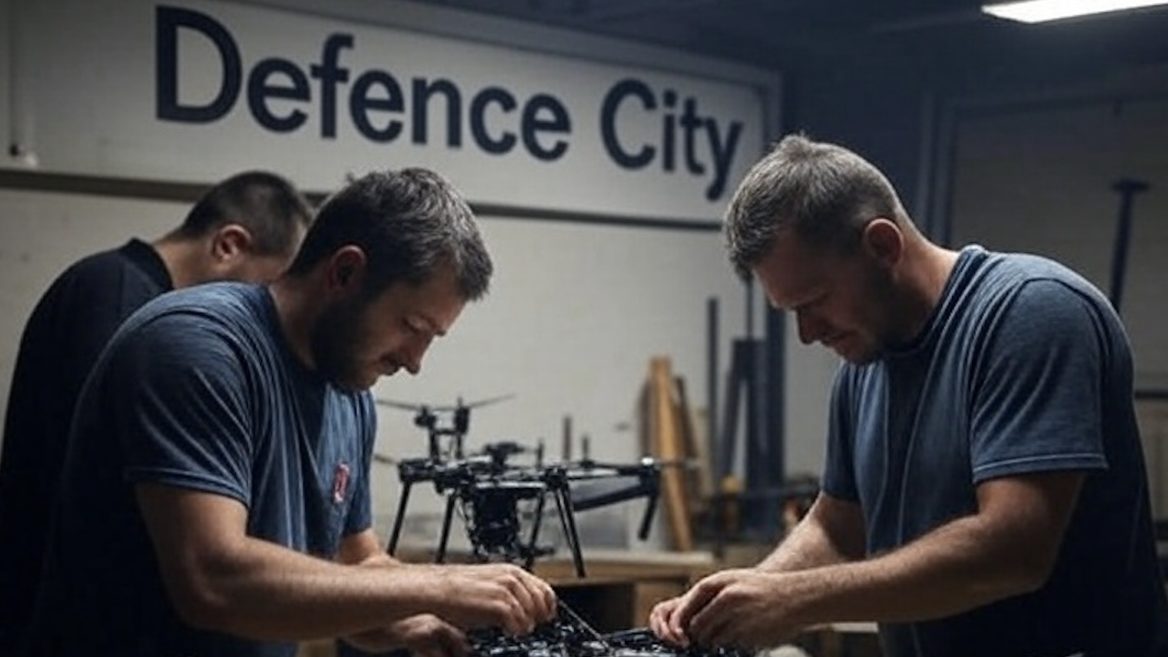
An incentive for the development of the industry, a space for corruption or an attempt to keep arms manufacturers in Ukraine? What does Defence City envisage and are arms manufacturers ready to become residents of the new legal regime?
Does the Ministry of Defense even listen to associations like yours? After all, over the years, there have been occasional incomprehensible procurement issues, scandals, and problematic issues with state regulation…
He hears 100% of the time. The Ministry of Defense is now a very important player in the process of international cooperation and they do a lot of important work. They, in fact, formulate the largest budget for procurement. They have the Defense Procurement Agency, which is the main customer. Therefore, we have a very productive dialogue.
We agree with something, we don’t with something. If we don’t agree? We send official letters with positions. But in general, I have the feeling that we are being heard. Although, everywhere has its own contexts.
Not all of our problematic issues are addressed to the Ministry of Defense. In total, there are 19 customers in Ukraine who can purchase weapons
And we work with all departments. We go to every state body and work out our position.
«We get many more companies than we have members. We screen out a significant percentage.»
The Technological Forces of Ukraine is already approaching its second anniversary. It is obvious that you have significantly increased the number of participants. But what achievements could you really name during this time?
The Technological Forces of Ukraine are known for uniting, first of all, the asymmetric weapons sector, that is, drones of all types and all domains, electronic warfare (EW), electronic warfare (ER), drone ammunition, and software solutions.
Since this is a fairly new area in Ukraine, the most important achievement is, in fact, the unification of these companies and the consolidation of their positions into a single one. It is clear that businesses usually have the same problems. But, nevertheless, everyone has their own reality, their own context. And the great work that our team does is, in fact, to hear everyone, and then to develop this single position that will be supported by all companies.
I would also mention among the achievements of the entire market and us personally — the expected long-term contracts, access to financial resources, localization and preferences for Ukrainian manufacturers in procurement. And, of course, this is the continuity of production, which is ensured, for example, by solving the issue of booking and a number of other problems. We are working on all this.
We had deeply worked out positions on all these issues, and they were sent to state authorities. Also, many such detailed changes were made to standard contracts, to the methodology of work that takes place with the state customer.
Arms exports also promise to be the most high-profile project — it’s probably one of the most important things that’s happened.
How difficult is it in general to form a common position among representatives of the arms market? Are debates heated, since market issues are sometimes very debatable?
Yes, the issues are debatable very often — almost always. We are a fairly democratic organization. That is, all decisions are made by voting of its members. Plus, we try to combine companies of different sizes — the main thing is that they have a real product and are virtuous.
We have very large players who have multi-million dollar contracts, and there are players who are just starting out and have only a few completed government orders.
We are trying to strike a balance — in order to strengthen not only big business, which is certainly of great importance for the front line, but also to build such regulation that a new player with innovative solutions can enter and successfully develop here.
It can be difficult. But in two years, in principle, we have always overcome this challenge and developed a unified position on most issues. There has never been a time when we received objections from any of our member companies.
About contributions. I know that you don’t disclose this information in figures, but on what principle are they formed — a fixed amount or, conditionally, some percentage of turnover? If so, what is it?
We have fees fixed by the decision of the general meeting. They are paid by all companies. We have two types of membership — associate and full. Full members can vote, they have more powers. For them, the amount is slightly different.
But in general, we set a single annual contribution amount for these two categories, and all companies pay their annual contribution.
You mentioned that companies undergo a check before joining the association. But some dubious connections can be hidden due to rather complex schemes in the ownership structure. Plus, for some, miltech is not so much about patriotism and helping the army, but simply about profitable business. So anyway, how exactly do companies undergo a check before joining the TSU and how do they get into the association?
The first thing I want to say is that we trust the state. And if state authorities purchase and contract with a company for its products for the needs of our military, then there is already a certain legitimacy in this. When a company wants to join the TSU, they contact me, and I ask them: «How do you work with the state? Do you have operating permits from the Ministry of Defense? And who contracts you?» They give their description of how they interact with the state. And this is a very high percentage of legitimacy.
Because if our military believes that this product is necessary, if the state allocates funds for it, then it is a legitimate company. Then, of course, the integrity factor is included, because different stories happen with contracting. We cooperate with the Osinters from Molfar, and they find all the data about the company in open sources.
Everything may look good, but then certain details emerge. For example, there was one case where they found potential Russian citizenship in one of the founders of the company.
Of course, this is a red line. Also, a red line is some past corruption scandals. That is, an OSINT report is being prepared based on open sources with the help of our partners.
In addition, industry recommendations work. Although our industry has grown significantly, of course, everyone still knows each other. So it doesn’t look like one company should bring another and say, «Take them to us.» This is more about verifying the company. We go to the industry, to our board and current members, ask who has worked with this company.
If necessary, we also ask the military, who are users of this equipment, whether they believe it is effective and useful. Accordingly, based on all this data, the board votes and makes a decision on joining the company. This, again, is done democratically by voting.
We receive many more companies than we have members. We screen out a significant percentage: either because we find something that concerns us, or when we realize that the company is not yet mature enough to provide quality military support.
Yes, and you help such companies «grow» — I mean some legal or organizational support, advice, contacts, etc. Or do you just say — sorry, you’re not a good fit for us?
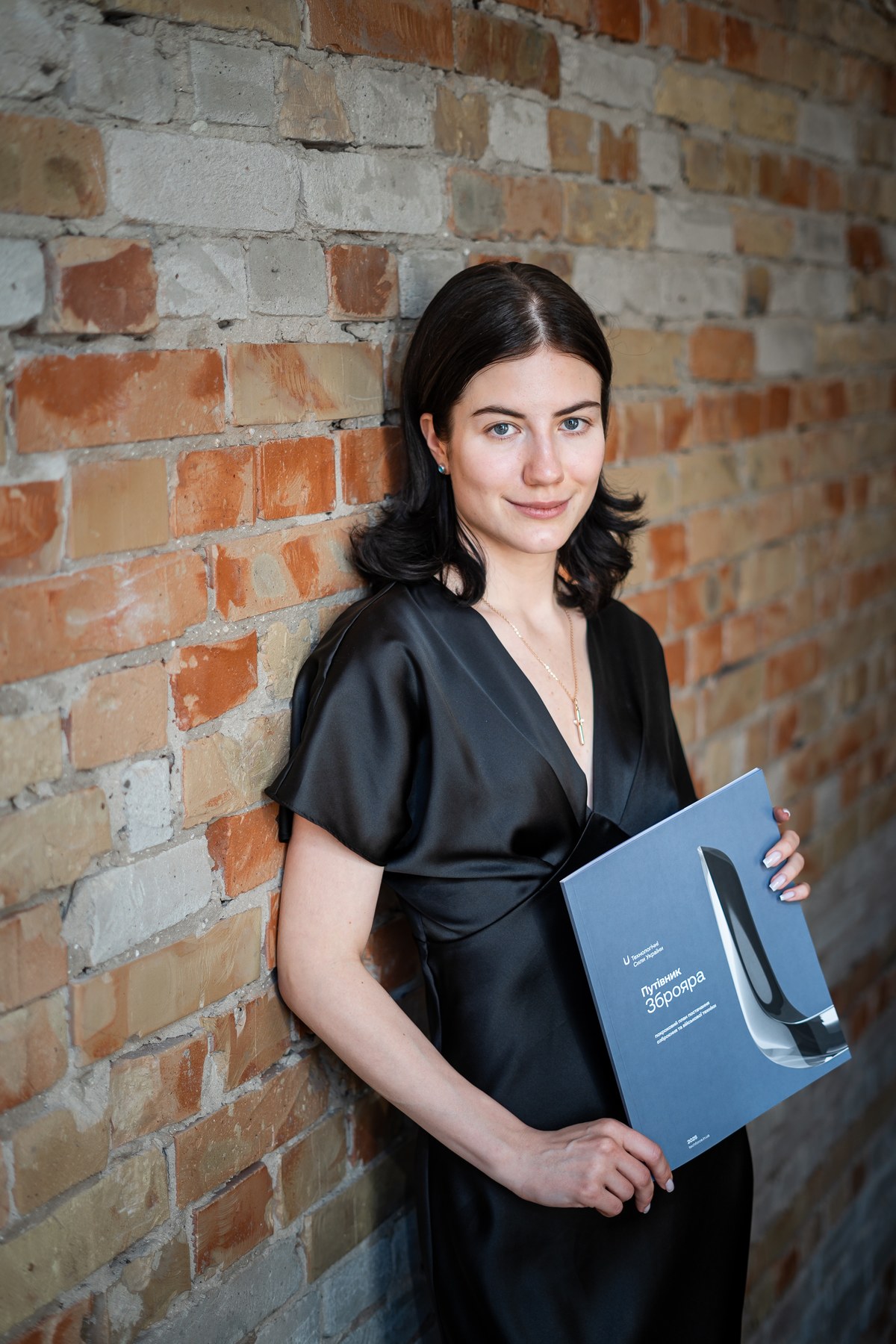
We have a social project called «The Gunsmith’s Guide «. Actually, it’s a very detailed guide on how to enter the arms market. And it is relevant primarily for companies that are at the beginning of their journey.
Because members of our association, of course, can have their employees, in particular lawyers, read it, but they themselves already know all this. Therefore, we made this document just for new enterprises, which may not be our members, but can use this book in order to learn everything faster and work more effectively with the state. We also periodically hold events where external companies, not only our members, have the opportunity to join. Educational and lecturing work also gives such companies some access to various opportunities.
But it is the operational activities that are, after all, directed at our members. They pay their dues, they support our team. That is why the priorities are set that way and we are required to do so by the statute. Of course, when there is an opportunity to help the industry grow or transfer knowledge, we do it.
«85% of surveyed gunsmiths have already relocated or are planning to do so.» The head of the Technological Forces of Ukraine spoke about the consequences of closed exports for Ukrainian defense tech