Хочете будувати кар’єру в Data Science та AI? Vodafone Big Data Lab відкриває новий набір —>
Олег ОнопрієнкоІсторії
18 March 2025, 09:00
2025-03-18
We are a country with PTSD. An interview with Christian Zheregy, a war veteran who is developing a cinematic game about the Russian invasion
Biopunk Labs is working on an ambitious project called UNBROKEN, an interactive film that will reveal the story of two sisters and civilians during a full-scale Russian invasion. The game is designed to bring the realistic experience of war to an international audience. dev.ua spoke with Biopunk Labs founder Christian Zheregy about the game and the difficulties for veterans in civilian life.
Biopunk Labs is working on an ambitious project called UNBROKEN, an interactive film that will reveal the story of two sisters and civilians during a full-scale Russian invasion. The game is designed to bring the realistic experience of war to an international audience. dev.ua spoke with Biopunk Labs founder Christian Zheregy about the game and the difficulties for veterans in civilian life.
Christian Zheregy is a Ukrainian director, journalist, and war correspondent, founder of the Clear Sky Foundation, which dealt with veterans with PTSD.
During the Revolution of Dignity, he joined the creative association "Babylon'13". As a journalist and cameraman for BBC, CNN, and PBS Frontline, he covered the events of the annexation of Crimea. Since 2014, he has been a war correspondent.
In June 2014, he joined the volunteer battalion "Kyivska Rus" and participated in the war in eastern Ukraine. Author and director of the film "The Edge of the Earth: ATO Zone" about Ukrainian volunteers.
Currently, Christian is the creative director of the American-Ukrainian company Biopunk Labs, which is developing an interactive game with the working title UNBROKEN. The game will tell the story of two sisters and civilians who find themselves at the epicenter of a full-scale Russian invasion of Ukraine.
What will the game be like?
Our game is being developed in the genre of interactive cinema, close to projects such as Life is Strange, Beyond: Two Souls, Heavy Rain, Hellblade: Xenua's Sacrifice. We do not aim to make a high-budget AAA project like Detroit: Become Human, but it will be an interactive cinema in which you play as two characters separated by war in the early days of the invasion.
The game will be in the third person, which is the most similar project to Life is Strange in terms of form, because it is also a story about two people. This is not an entertainment project, our concept is to convey a realistic experience through the stories of people whose lives were simultaneously destroyed by the outbreak of war.
The choice of events was difficult for our team, but the biography of the developers allows us to take the risk of raising such topics, because we have a direct connection to this, experience and the courage to do such a project.
― Biopunk Labs already consists of some war veterans, and you also give preference to hiring specialists who have served in the military to your team. How many people are currently on the team who directly participated in the events of the Russian-Ukrainian war?
Yes, Biopunk Labs consists of both veterans of the game development industry and veterans of combat operations. Ukrainian and American veterans with military experience are working on the project. My goal, as the founder of the team, is to provide jobs specifically for war veterans, because I see that there is currently such a crisis and unpleasant situation among the IT industry, in particular in game development.
I have many friends and acquaintances who once worked in this field, they have nowhere to return to, because with their post-traumatic effects it takes them a long time to simply return to civilian life. Some are disabled, some have the effects of concussions and injuries.
The mental state of such people is very bad, and I will try my best to create jobs for them in our studio. I know how difficult it is to return to peaceful life: a year ago you were working with large amounts of data, and after the war it is difficult even to simply work with your memory, when you can't remember literally elementary things, and you get tired in 10 minutes. Our team consists of experienced game development industry specialists, we are open to cooperation with all specialists in the field.
― Can you tell us more about your journey in the game development industry and what difficulties you faced along the way?
I came to game dev after 6 years of war, serving in the ranks of the Armed Forces of Ukraine from 2014 to 2017, after being injured. I spent almost two years just to get out of the state of post-traumatic stress disorder. Although in reality, veterans never get out of it 100%. I worked with rehabilitation specialists and in about two years I was almost able to acclimatize to civilian life.
Before that, I worked in the film industry for 15 years, and one of my strongest hard skills was video editing. This work requires rapid use of short-term memory, a large amount of data is processed by the brain. And when I came back from the war, I simply could not edit a single second, because I did not remember what I was doing a second ago.
It took me almost five years to fully recover. And many war veterans go through this difficult path.
Veterans often don't understand this, they are still in a crisis, adrenaline state and it seems to them that they have a lot of energy, that everything is fine, but when you come out of the crisis state, you start to have a very serious setback and all the health problems start to manifest.
Unfortunately, many of our friends died after returning from the war. They simply died of heart attacks, strokes, and other complications. So we want to set a trend and talk about it, because it's important.
― Why did you choose Unreal Engine to power your game?
We were in talks with 4A Games about possibly using their engine, which I think is the most beautiful and powerful rendering solution. However, from a production perspective, if it's not an open world game, Unreal has absolutely all the advantages that we can use for our game: pipelines related to cutscenes and cinematics, character and facial mocap.
Biopunk Labs has Senior and Lead specialists who worked specifically on AAA projects, and we hope that together we can make a truly unique project, even with somewhat limited funding.
― What is the project budget and where does the funding come from?
The company was founded before the full-scale invasion by founders from Ukraine and our partners in the US. Due to the war, we had to shift our focus to more important matters — primarily helping the army.
We currently have private investors. We are looking for additional funding, so we are trying to cooperate with both European and American partners.
I see a lot of interest in this kind of project in the professional community. I have received a lot of feedback and offers of cooperation from filmmakers and veteran game developers from Canada and the USA. Even Americans from Hollywood are very interested in projects from Ukraine.
"We don't want to suggest that people from Ukraine go through this experience again."
― Regarding the ethical view of working on games that tell about the events of the Russian-Ukrainian war. Earlier, there was a scandal with the team working on the shooter Glory to Heroes, who first announced that their game would have multiplayer, respectively, players would be able to play for the Russian side, and this was negatively perceived by the citizens of Ukraine. In your opinion, are Ukrainians ready for this type of product at all, because it is not just a movie, it is a game, it is interactive?
When, in principle, military journalism and ethics were being formed, I worked as a journalist and was one of the, so to speak, ambassadors who stood from the very beginning of the formation of the institute of military journalism. That is, I was involved in developing the program and requirements that should be imposed on journalists in the combat zone. Therefore, I am quite familiar with this topic.
Given this experience, we decided not to make our game in the shooter genre. This is a story about civilians, and how they perceive the beginning of war, how they overcome crises without losing their lust for life.
Moreover, the project is not designed for a Ukrainian audience. We do not want to offer people from Ukraine to relive this experience.
The purpose of this story is to tell the world, especially the youth, the young players from the rest of the world who don't know and don't want to know about our war. I think that in 10 years, 15 years, they will be the new politicians, writers, musicians, and so on. They should understand that they will be dealing with a country that has experienced such a terrible war. We are a country with PTSD.
"The game gave an understanding of what you will have to work with in reality." Interview with an artilleryman of the Armed Forces of Ukraine about gamification in the Defense Forces
Regarding the Ukrainian traumatic experience. Our team understands better than anyone what a traumatic experience is, because almost the entire team has directly experienced shelling, or the loss of people, family members, evacuation, the loss of loved ones. That is, we understand and know how to work with this topic.
We faced a challenge we hadn't initially thought about - sound for the game. Realistic sounds of explosions and battlefields can be extremely distressing for people who have had traumatic experiences.
I will say from my own experience, I might not be here now if the fragment from the 120th mine on Svitlodarka had not landed a couple of millimeters to another place. The sounds of the landings 10 years later still shock me when I hear something like that.
Sound, flashes, graphic content, all of these can trigger traumatic memories. So we're planning to create two separate soundtracks for the game, something that no one has done before. One of these soundtracks will be specifically designed for people who have experienced any kind of war-related traumatic experience. It will be a Hollywood soundtrack that is more casual.
For those who want to feel completely immersed, we will create binaural sound that will bring the player as close as possible to real sounds, so that the player can feel this experience for themselves.
― Will there be any other features for people with disabilities?
This is not an action game where you run, shoot, and actively control your character. It's a more human story, with lots of cutscenes and less gamification. This fits in well with the gameplay we have.
In addition, we, of course, take into account possible triggers. For example, after the Maidan, where I was in the first hundred, I saw how people suddenly started having epilepsy after using gas weapons against people. Before, they had no problems, but after that incident it remained forever.
I work a lot with specialists to avoid the risks of emotional and physiological triggers. For me personally, when I see certain flare-ups, it can be unbearable. Many people who have experienced gunshots, explosions, concussions can also have strong reactions.
Therefore, we will do everything possible to make the project safe for everyone. We will either warn players or adapt the gameplay so that it does not cause unwanted consequences, in particular for people with disabilities.
― Now many Russian game companies are also making products related to the Russian-Ukrainian war. Accordingly, they present it from their point of view. How to convey to another audience that such games should not be popularized and should be banned for sale altogether. How to deal with this challenge?
We need to do better. Our intelligence has told us that the Russians are working on a game that will tell the story of the Bucha and justify the atrocities of the aggressor. This is a big company with a big budget. Moreover, they plan to release this game on the anniversary of the events in Bucha, and all the blame for it lies with the Ukrainian authorities, who are shooting local people. Therefore, we need to counter it with something — a better product.
The Poles, for example, are working on the Play of Battle strategy in which you can play for Ukraine, Poland, the Russian Federation, participate in the defense of Kyiv, annex Crimea… In fact, I don’t consider it a very ethical project. However, I am familiar with the co-founders, they are very pro-Ukrainian guys. But as citizens of Poland, they have no ethical conscience.
For example, I was once offered to cooperate with them, and when I saw at their presentation that Crimea was marked as Russian territory, I refused to cooperate.
Another example is Terra Invicta , where Crimea is also part of Russia at the beginning, but there is a war going on there, in which it is scripted that Russia will lose it. I am friends with the creator of this game, he is also a former military journalist. We had thermonuclear arguments about this, but I conveyed to him the idea that such topics are important for Ukrainians, so he made some adjustments.
Future plans
Currently, the project is in the pre-production stage and full development will begin this year. A lot is changing, new people and professionals are joining the team, and negotiations with investors and partners are ongoing.
We take our reference collection very seriously, so we review a lot of materials from the scene of war crimes, and it's quite morally difficult for the team. As a journalist with 10 years of experience, it's hard for me to review some things again, but we try to endure it anyway, because if we don't do it, maybe no one else will.
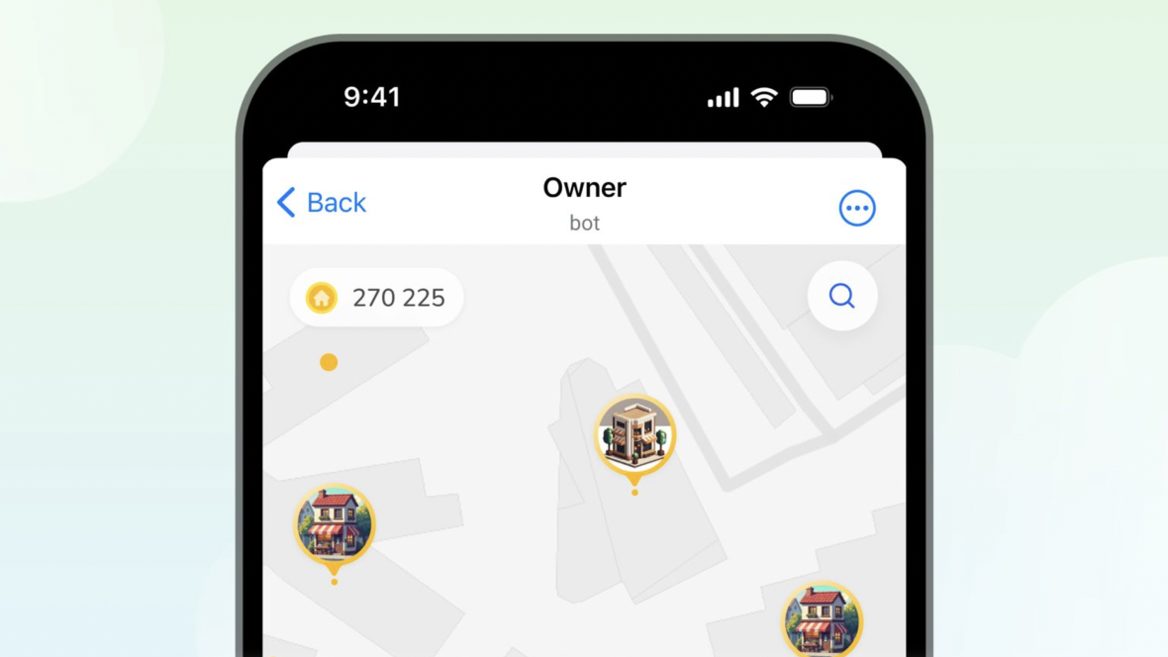
“I created the game of my dreams because no one else did.” A developer from Vinnytsia and two colleagues created the economic simulator game Owner, where you can buy real estate and create businesses on a real map
«Навіть для виробників трун і пам’ятників я писав тексти». Як стати game-тестувальником під час війни: історія колишнього металурга, страховика, копірайтера
34-річний Андрій Зубков під час війни увійшов в IT, докорінно змінивши свою кар'єру і буденне життя. Тепер він QA Engineer у компанії Pingle Game Studio — тестує ігри. А до цього працював на металургійному комбінаті, в страхуванні та навіть копірайтером. Свою історію про вхід в нове життя Андрій розповів dev.ua.
Хто такий Unity Developer: основні задачі, обов’язки та зона відповідальності. Огляд професії від Team Lead Unity у Pingle Game Studio
Продовжуємо цикл матеріалів про ІТ-спеціальності. Кожну описує «типовий представник» — досвідчений фахівець і просто авторитетний колега, та сама людина, яка знає всі таємні куточки своєї професії. Ми сподіваємося, ці матеріали допоможуть школярам, студентам, перекваліфікантам, студентам і всім тим, хто зацікавлений у виборі ІТ-спеціальності. Цикл не тільки допоможе оцінити перспективи, а й дасть можливість краще зрозуміти індустрію і особливості професії зсередини. Обговорюйте і доповнюйте матеріал в коментарях, щоб зробити його ще корисніше.
Про професію Unity Developer розповідає Володимир Мельничук, Team Lead Unity у Pingle Game Studio.