Хочете будувати кар’єру в Data Science та AI? Vodafone Big Data Lab відкриває новий набір —>
Олег ОнопрієнкоGameDev Eng
1 September 2026, 09:00
2026-09-01
Without leveling, but with spatial puzzles. Stas Shostak about the new game Hear My Light, everyday life in the Armed Forces of Ukraine and the perfect development "under the palm tree"
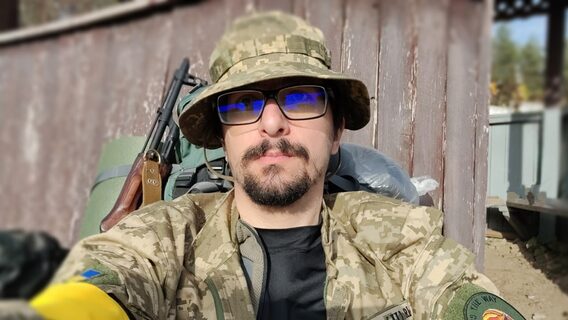
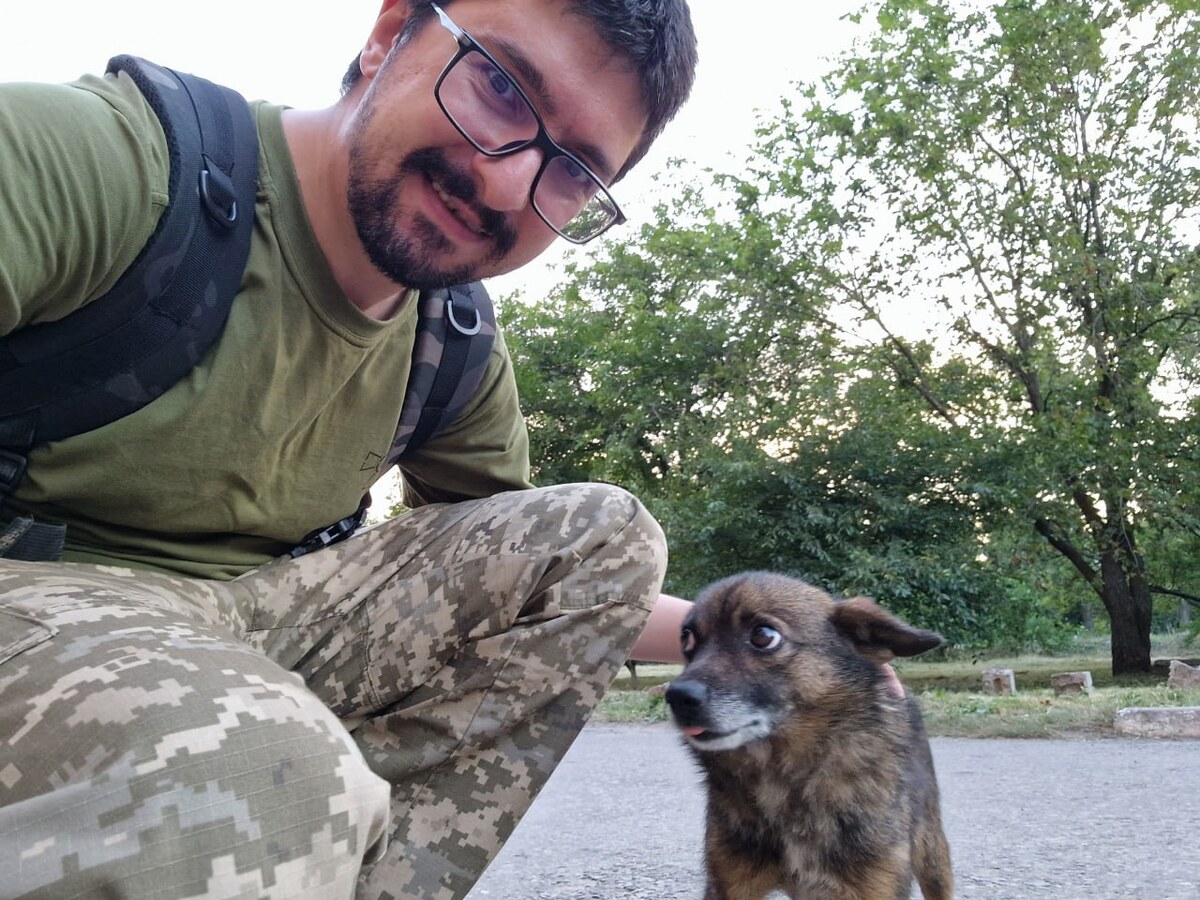
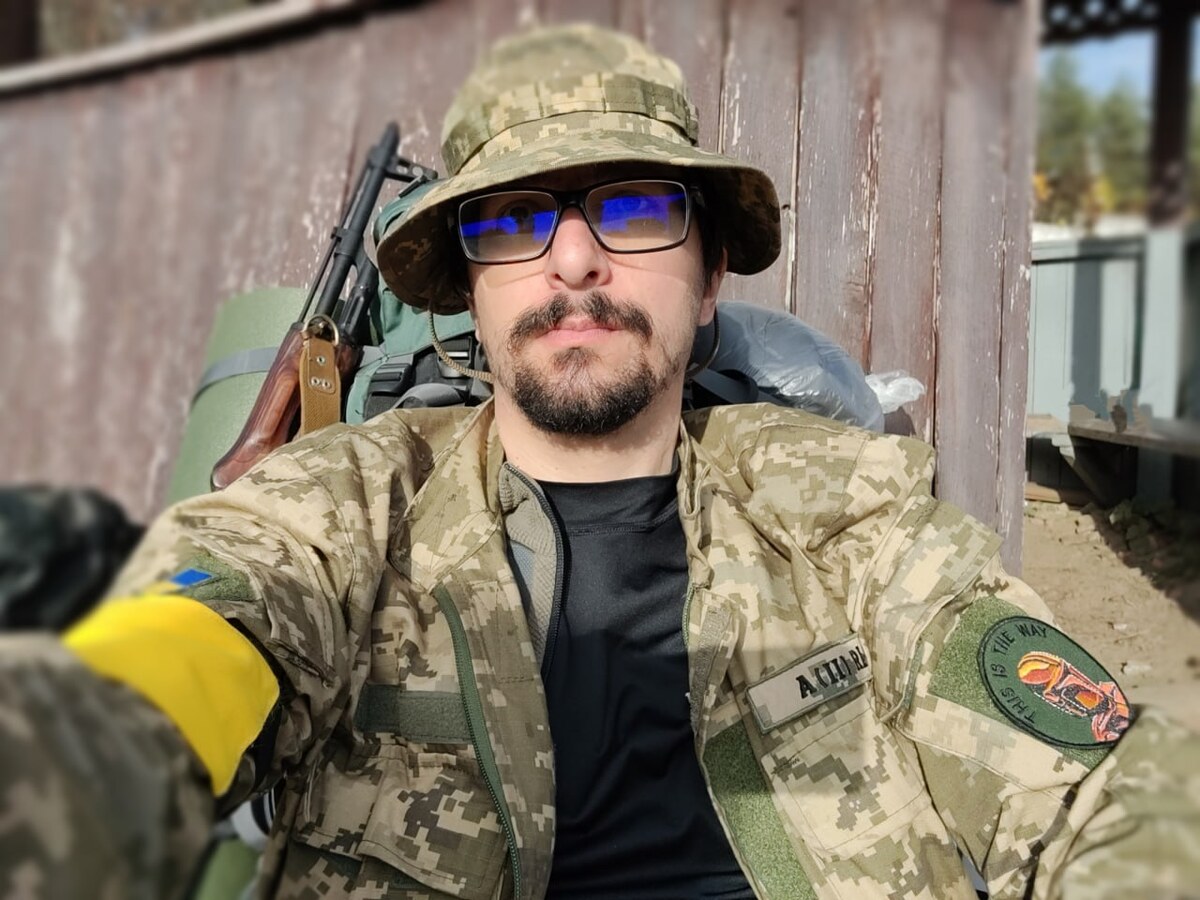
Ukrainian indie developer and military serviceman Stas Shostak announced his new project — an atmospheric game Hear My Light about a brother and sister in a bioweapon attack zone. In a long interview for dev.ua, the author of the hit Titan Chaser talked about the mechanics of controlling drones in the new game, creating games alone during military service, the feasibility of using AI for development, and also shared his thoughts on trends in Ukrainian game development and how his experience working with game engines helped him in artillery calculations.
Ukrainian indie developer and military serviceman Stas Shostak announced his new project — an atmospheric game Hear My Light about a brother and sister in a bioweapon attack zone. In a long interview for dev.ua, the author of the hit Titan Chaser talked about the mechanics of controlling drones in the new game, creating games alone during military service, the feasibility of using AI for development, and also shared his thoughts on trends in Ukrainian game development and how his experience working with game engines helped him in artillery calculations.
Content
New game — Hear My Light
And Hear My Light actually has everything shown in the trailer, it's all already playing.
— The announcement of your new game Hear My Light came quite unexpectedly. What will Hear My Light be about and what mechanics do you plan to introduce?
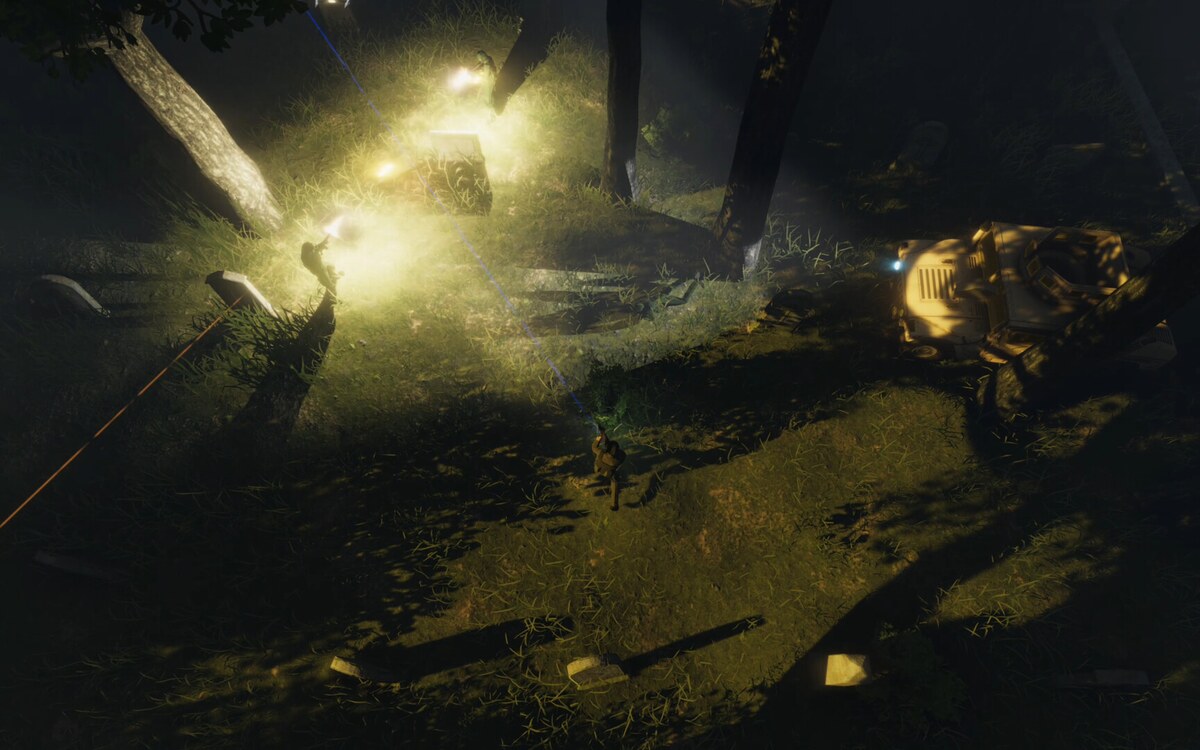
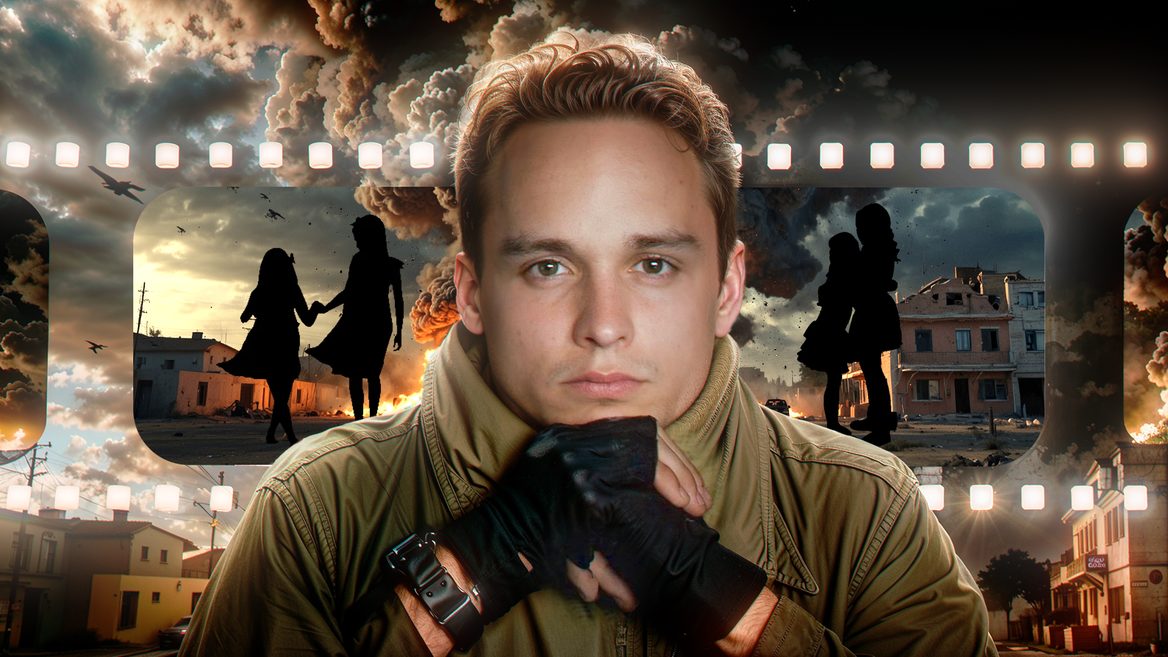
The game is generally about a sister and brother who are military personnel. I don't plan to ever say in the game itself that this is Ukraine or Russia. This is an abstract war in which the invaders dropped some kind of biobomb that affected everyone on the battlefield: everyone went blind and seemed to go numb. Since the sister was in cover, it didn't affect her. She has drones, and with their help she will try to get her brother out of this zone. She hopes that when he leaves the infection zone, he will return to his normal state. That is, people here are still alive, they are not zombies, at least until they are shot.
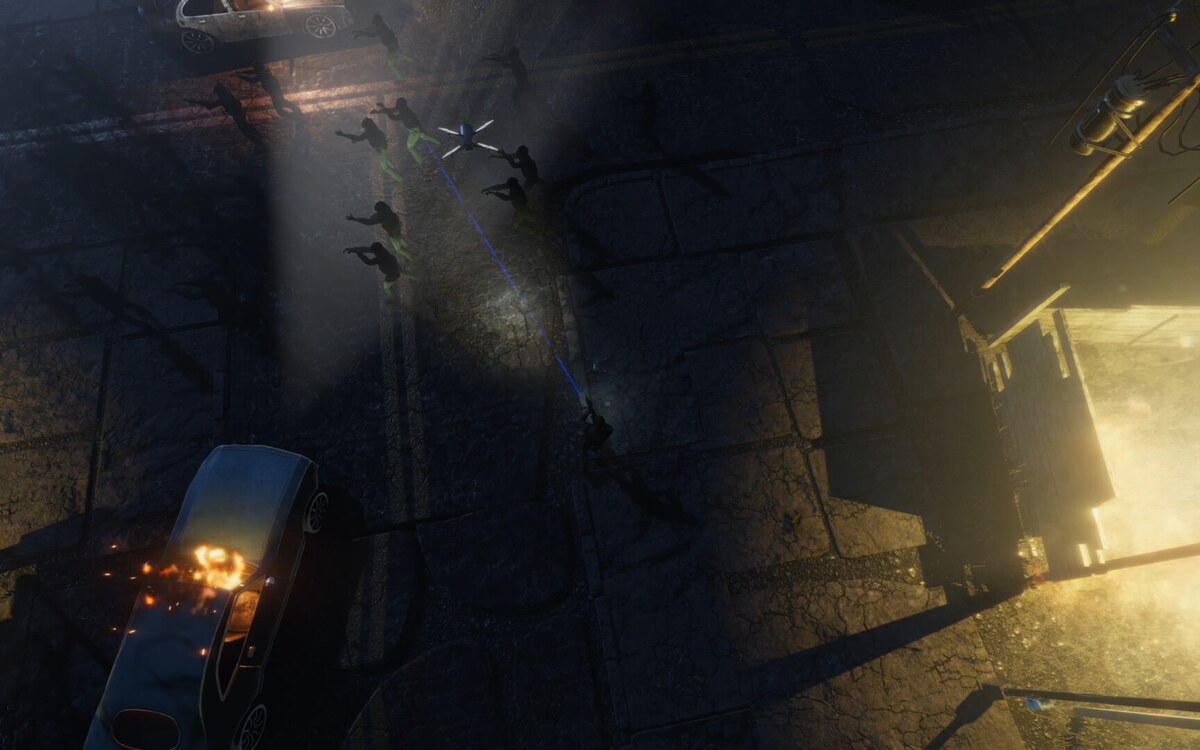
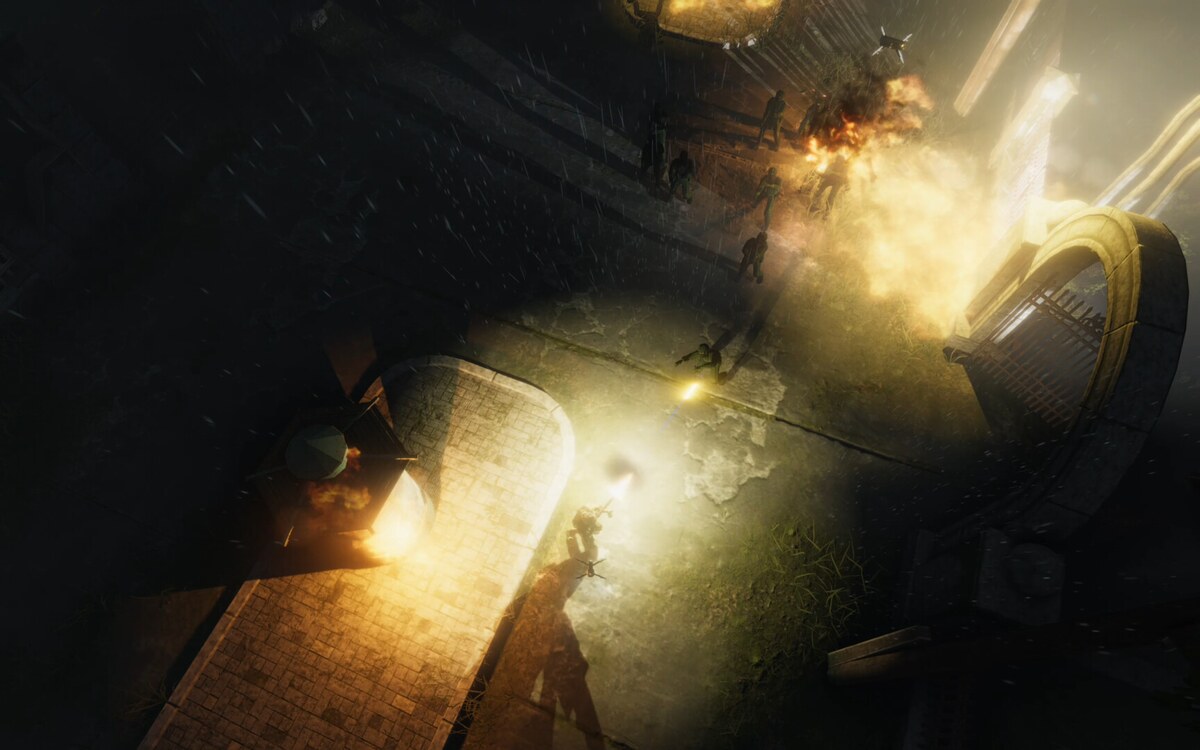
As for the mechanics, it's primarily drone control. It may not be very visible in the trailer, but there's one small drone that flies right above the character and shows him where to go: flies a little forward - the character goes in its direction. The same goes back, left, right. And the second drone is a sight. The game feels like a regular twin-stick shooter, but the drone is physical and can be blocked by a building, a tree, or something else. Therefore, you won't be able to quickly aim while running, you have to think about where exactly to fly with this sight.
Plus, due to the fact that everyone is aiming at the same point, when you try to shoot at the enemy, he is aiming at you at the same time. Therefore, you need to think: either fly behind the enemy, or make the enemies shoot at each other. All this will be seasoned with different types of opponents. Someone will hear the player's shot and shoot back in the other direction, someone will react to footsteps. That is, different types of enemies will modify the complexity of this puzzle in different ways.
Another nuance: shot enemies rise like zombies and try to kill the player or the nearest other enemy. And here it becomes more cheerful. You have to kill a zombie and although it does not shoot in response, it is a force that does not stand still, but moves towards you. So you have to react more dynamically. At the same time, you need to remember that while you are shooting at a zombie, other enemies are also shooting somewhere, depending on where your sight is.
As always, I chose a concept that is very difficult to explain in words. But when you play it, it seems to me organic and immediately fits into muscle memory.
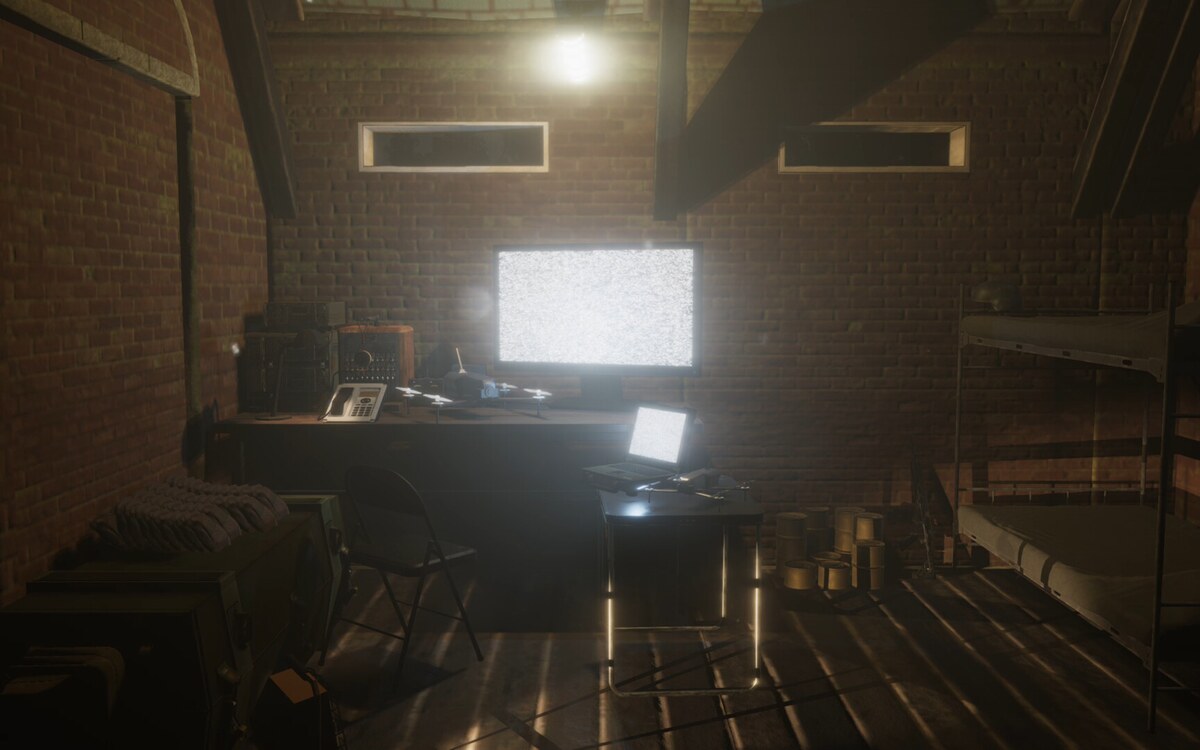
In fact, I plan for it to be more of an atmospheric "adventure game" in which you have to get to the end of the level, find a way to pick up something with the same drone or drop it somewhere to open a passage. That is, find ways to solve spatial puzzles that will be mixed with action elements and encounters.
There will be no leveling in Hear My Light. It will not be a typical game. I like to play mainstream game design, where you are constantly fed with increasing numbers. But I don't like to do that, I like to create finished compact stories. So there will be no leveling of weapons or anything like that.
There will be several levels, and each of them has its own nuance. Somewhere it will be a searchlight that hunts those who move: you will have to somehow avoid it, or place enemies or zombies under it so that they shoot at them, and not at you, and so get through this zone. Somewhere it will be a location with a conventional tank that shoots and you can't do anything to it.
Somewhere zombies will be going in a certain direction, and you have to cross their path in a way that doesn't make everyone angry. So each level is the same mechanics with the addition of something new and unusual. Everything will be very limited and compact. Usually the games I make last two or three hours, four or five is the maximum. And that's somewhere around the scale I'm aiming for.
— You previously wrote in X: don't expect new games from me, especially about war. And now you've announced a new project. Although it's not directly about war, it's definitely inspired by your own experiences. Tell us about the idea itself: when did it come about and when did you decide for yourself that you were going to implement it?
As Stepan Prokhorenko (one of the organizers of the Ukrainian Games Festival) said when he saw the trailer even before the announcement: "It's immediately clear that the game is not political at all, and the developer wasn't in the army for four years."
Everything went smoothly. I tried to make prototypes when I first joined the army in 1922. At that time, I was in the 40th Artillery Brigade at the PPD (permanent deployment point), very far from the front. I was doing computer and printer work there, and I had some free time.
I was experimenting with a prototype back then where both the player and the enemies were aiming at the same point. That is, you control the sight, and everyone on the level was looking at the same point — so any shootout would be like a kind of puzzle. But back then it wasn't yet narratively framed: that it was a drone or something related to war. It was just the idea of a post-apocalypse where everyone was blind. That's it, I didn't think about it any further.
Then the terms of service changed, and until this summer there was literally no time to even breathe, let alone work on the game. When the time came, I initially completely forgot about this old prototype. I experimented with an atmospheric "walker", similar to Titan Chaser and in the same universe. It was also connected with the war - about a bar in a besieged town.
But I was tinkering with it and at some point I thought I wanted something different - to experiment, to make something more like a game. The atmosphere is cool, but I wanted to make a game with mechanics, not just walking around and triggering monologues. Then I remembered that prototype.
I updated the Unity version, fixed everything, and slowly, literally half an hour or an hour a day, started adding small mechanics. For example, everyone now shoots on cue, or someone hears something. I added small features one after another.
And then somehow the idea came to me that it could be drones. It somehow came very smoothly, not that I had been carrying this idea for a long time - everything just fell into place, and what came out was what came out. Besides, I knew that my strong point was lighting and atmosphere. And when I understood that this could be a game metaphorically about our war, and that a lot could be overcome with the help of light and darkness, I started collecting levels with an emphasis on this. Then the project finally took shape into such an idea.
— As far as we know, at first you wanted to announce the game yourself, but then Stepan Prokhorenko convinced you to wait and appear at the Ukrainian Games Festival?
Yes, actually I was going to announce the game, and then write to Stepan: they say, I have a new announcement, can I bring it to the festival? I don't like using what we know to come up with something that doesn't exist yet. I'm used to it: if I have something, I come with it. If I don't have it, then I don't.
I had everything ready, I had all the screenshots, the trailers, everything was ready. But there's a process: before the page is open, it has to be sent to Steam for moderation. They check to make sure everything is clear and correct. This takes about three to five business days, after which they come back with feedback. Once they've checked everything, you open the page, and then you can change anything you want, whenever you want. But this initial opening of the page goes through them.
It turns out that I waited five days for the review. They send a response, and there's an error in one of the images. Steam gives you a set of templates where you can insert your art to immediately see where the discount sticker or something else will be, to arrange the elements correctly and not overlap them. And I filled one of the images directly with their template. I punched in, exported all the layers, and filled it in. They say: "This is such garbage, fix it and everything will be fine."
But "corrections" means another five days of checking, they don't do it in real time. I corrected this picture, I look - there's a month left until the festival. I think: maybe I'd better write in advance. I wrote to Stepan, and he says: "No-no-no, you're not announcing this yourself. You have to announce this loudly." Since then, I sat for a month, waiting for the festival to start, and tried not to shine anywhere.
— When you announced Titan Chaser, you basically only made a trailer, and there was no gameplay prototype as such. If you look at the current project, have you done more now, or have you followed the same path?
With Titan Chaser, things were even more interesting. I had a cube-like terrain with grass textures, and I put some roads on it, and stuff. That was the first trailer. It was just an idea of what the gameplay could be, and it ended up changing a lot. I even hid that first trailer on YouTube because it didn't look like the final game. When I finished it for Early Access, it was clear that the project was alive.
And Hear My Light actually has everything that is shown in the trailer, it's all already playable. The only thing is that there is no level design yet. That is, I specifically placed the enemies in such a way as to remove a piece for 15 seconds for editing in the trailer. The levels themselves are already there, I set the lighting on them specifically for the video, and all the mechanics are working.
There is no finished gameplay: when you get to a level, you pass it and move on to the next one. Right now there are just these "sandboxes" that I collect to test different mechanics and, in fact, shoot a video. But the atmosphere is already exactly what it will be. The mechanics are already as they will be. I will not change what is already there. Some new tricks will be added - for example, right now you can't pick up and drop something with a drone, so I didn't shoot it. That is, now I have shown exactly what already works.
The difference is that Titan Chaser was a kind of vibe game. There was no gameplay: a first-person controller plus you drive a car. And you could twist and fantasize about it whatever you wanted. In the trailer, for example, a dragon flew over the car, but in reality it could only fly the 10 meters that I needed for the video. And you could fantasize that there was "wow, what gameplay, that you're directly hunting a dragon."
Titan Chaser was a direct proof of concept (testing the idea) whether it would work or not. And here I first made sure that the mechanics actually worked. And when I realized that it worked and I was interested in playing it myself, then based on that I made a video of what it is.
— Now your main place of work and life in general is service in the Armed Forces of Ukraine. Will you turn to freelancers for help, or perhaps look for a publisher to finance the project?
Actually, no. And this, in principle, is not even connected with the service. I made my first games with a team. Then there were freelancers. On the first projects, I constantly tried to contact the publisher. Katana Kata was even directly with the investor and publisher, but it is now removed from Steam, because there is a long history there - who owns it and so on.
But with Titan Chaser I realized that the easiest thing for me is to actually do everything as much as possible myself. Because even before the service, my schedule for working on the game was such that I could do nothing for a week: get inspired, watch TV series, play other games, gather ideas. And then, bam, and sprint in a couple of days what takes someone a week.
It's quite inconvenient to work with someone with such a schedule. A freelancer needs a clear TOR and for you to consistently give him feedback. And I never knew when I would have this window of inspiration and when I would be able to work. Especially with a team: you can't expect a person to work consistently when I fluctuate back and forth like that. Or that they will adjust to my schedule and my peak productivity, either.
And there is, in fact, an Asset Store, where I buy 3D models to assemble levels from them. That is, I treat 3D models like movie sets. For example, somewhere in Hollywood there was a street from the Wild West, and dozens of movies were shot on it. Some of them are serious, dramatic, some are comedic. It's all the same street, but the way it's arranged, lit, and used narratively makes it feel completely different.
I feel the same way about assets: I collect them in my atmosphere, and no one has ever seen these assets in this form. So, it seems like for now, I can get by with this, plus or minus.
Ukrainian Games Festival and artificial intelligence
Things are very different now. It feels like people are approaching development with taste and style.
— A question about this year's Ukrainian Games Festival , which showed over 50 new trailers and many new projects. Can you share your impressions: what trends are currently felt and what do you think about the new wave of Ukrainian projects?
I'll be honest: during previous festivals I somehow didn't have time to look at what was shown there. That is, I can't compare over time. But this time I watched the entire UGF Direct: all the trailers, announcements, releases. I was in awe, to be honest. I didn't even think that we had so much and so much variety being made.
I knew about some teams that I was familiar with — Podoba, Marevo, and a few others. I knew that they were making cool niche stylized projects. Well, of course, there are STALKER, Metro, The Sinking City — they are AAA, they are famous. But it's cool that there are so many small, very stylish projects. They know that they are niche, and they don't try to be mega-famous right away. People are creating their own niche, it's obvious that they are excited and happy, releasing and finishing games in our conditions. It's really cool.
From the trends, I noticed that there is a lot of friendslope . Not that there are a lot of them, but I noticed a few projects. And there are also a lot of incremental games that I completely missed and don't understand. I missed their birth because I was in the army and didn't play for a while. It seems that they became so popular somewhere after 22. And I still don't really understand the joke, why play incremental games. But I see that globally it is a fairly popular genre.
The Friendslope Phenomenon. How Friendly Chaos and Ukrainian Indie Hits Took Over the Gaming Industry
In terms of style, they look different than what I've seen in trailers on YouTube or on Steam from other developers. I really like that many Ukrainian games have their own cool style. Previously, at the dawn of indie, there was something standard: low-poly, found popular assets, assembled them — and it all looked more or less the same. Now everything is very different. It feels like people approach it with taste and style.
Although there were a few projects that disappointed. For example, the one that looks like The Banner Saga (talking about Sal Terrae: in search of SALT). In statics, it looks awesome. I wouldn't even bother using AI if it wasn't overused and stopped at that slow vibe, where there are beautiful landscapes with some constructions, if there were interesting texts and plots. But the way they developed this theme... I was actually a little upset that, having such cool style elements, you can approach their further development so tastelessly.
— By the way, will you use artificial intelligence during development, or do you have a complete taboo about it?
I still have everything manually. Again, artificial intelligence as a tool was developed during the years I was already in the military. I just didn't have the time to keep up with it.
And now, when I figured out that I would have a few months and be able to devote some time to the game, I had a choice: either use the tools that I am like a fish in water with, or learn something new - how to generate code for myself with the help of agents or something else. But what the hell do I need it for.
If I were planning my career 10 years ahead, I might switch to AI as a tool. I can see how it can help with writing boring code. I've been working on Unity for over 10 years now. And still, when I'm writing some boring crap like loops, I just forget the syntax. I need a hint from the editor to know where to put a comma and where to put a semicolon in those parentheses.
And it's good that there is an opportunity to give AI the task of writing such boring nonsense. When I know that I need a specific feature, it's conditionally 50 lines of code that just need to be written. They are obvious to me in advance. I would give that to AI with pleasure. But I just don't want to understand it, it's a shame to waste time. While I have it, I want to spend it on development, even if it's just writing this boring code.
Actually, now I plan more so that all the features I make are very easy to write. I don't make a game with complex systems that require any calculations or analyses. I came up with a feature, wrote it in 10 lines - it works, everything is fine. And then I'll tweak the lighting again or do something atmospheric. After all, everything in this game is done by hand so far.
Lying under a palm tree and eating bananas: about the pace and style of development
I'm not interested in porting the game, fixing any bugs, or marketing it on consoles when I've already done it on Steam.
— Your development style is quite chaotic and individual, do you plan to continue working like this? Or will you perhaps change something in the pipelines, or will you leave everything the way it has been working so far?
I really hope that I can afford to continue working like this, because for me it is actually happiness. I do what I love at the pace that my inner desire demands. Therefore, as long as I can afford to work like this, I would like to do it.
We once had a conversation with a partner we eventually worked with — he was porting my games to consoles. He was such a straight-up businessman: "Let's scale! You need a producer, we'll hire a team that will do what you don't want to do."
We came to an agreement like in that joke about two people lying under a palm tree. One says to the other: “I worked since childhood, saved up money, then worked as an adult, built my own corporation, worked hard all my life, and now I can afford to lie under a palm tree and eat a banana.” And the other replies: “And I didn’t do anything, and I still lie under a palm tree, eat a banana and get just as high.”
First of all, because I work on games myself. I adequately assess the scale. When I plan something, I understand, plus or minus, how much time it will take me to implement this or that idea. I don't plan anything global and I understand: if I planned to do something in three months, I'll do it in six. But even if I do it longer, it still won't look like something large-scale. It will look like a project that was planned for three months.
I allow myself some time to rest, get inspired, and do my thing at a pace that you are comfortable with. That is my ideal approach to work.
— In one of your interviews, you didn't talk about Titan Chaser sales on consoles, apparently due to an NDA. Can you talk about that now?
It's not even about the NDA, it's about the fact that, to be honest, I just don't remember. My interaction with my partners is built on trust. He dumped all the statistics: how much, where, what and how. But I didn't read into it and didn't remember.
Again, our main condition when porting games was that I didn't bother with it. I'm not interested in porting a game, fixing some bugs, doing marketing on consoles when I've already done it on Steam. For me, the game is already finished at this point. So he took all that on himself.
He just threw out a report for a month or a quarter: so much was sold, our share is this, yours is that, let's invoice. And that's it. I didn't calculate these numbers in total. For me, it was just an additional check on top of what I earn on Steam. So I honestly can't even say roughly what the results were on consoles.
— Were you satisfied with the size of the check that came?
Absolutely. At times it was even more than on Steam for some of my games. There was a long tail of sales that lasted until last year. I was very well supported by this unexpected, but always timely check from consoles. This year it has already dried up a bit, and, in principle, the income from consoles can now be neglected.
Service in the Armed Forces of Ukraine and how to keep the "frame"
It's much harder not to get wet when you're a civilian.
— Considering your gaming experience, have there been any cases where games helped you in some way during your service?
I immediately remembered how it wasn't even games that helped me, but game development. But it wasn't directly in the army, but in "training." We were taught to work with a compass. It's a piece of crap on three legs, with which you have to calculate angles - to make a reference to the terrain for accurate shooting. It was important to tinker a little there, to take into account all these sines and cosines.
And here it helped me a lot that I used to make a lot of games on Flash. And there is no physics engine or anything like that, everything was written by hand. I was making a game about drifting back then. And in this drift there were a lot of different composite forces: where the car pulls, where the rear end takes it, all these dependencies of angles and forces. I remember how I then, for the sake of the game, understood physics, which I could not understand either at school or at university.
And this analysis really helped me in the "tutorial" to easily understand the principle of working with a compass. One guy there almost cried and said that he wanted to call his school teacher and apologize for the fact that he once shouted that he would never need this crap in his life.
But during the service itself, I had a more coordination and managerial application. To say that the games helped somehow - probably not. The experience of working with people during development helped. I understood that everyone has their own pace, their own reactions, everything is different. This helped me adapt to the people I worked with.
Although I know that games help some people control FPV drones. When I was learning, it was really easier to understand the initial concepts - how the remote works, where to pull the levers - because I am familiar with the gamepad. But I won't say that in the long run it gives a big advantage. You just get through the initial stage faster, and then it all depends on the flexibility of the person's brain: whether they will perceive it or not. Because in fact, controlling a drone and a gamepad is quite different.
"The game gave an understanding of what you will have to work with in reality." Interview with an artilleryman of the Armed Forces of Ukraine about gamification in the Defense Forces
There was also a moment when I was involved in some analytical work. I then assembled an interactive map directly on Unity, where I uploaded a map of our sector of responsibility with coordinates. And “fed” there reports on shelling of our positions (without marking the positions themselves, purely by coordinates).
This interactive map was created, on which you could, for example, see the average time of shelling. You take the statistics for a month and see: this zone is most covered from 9:00 to 10:00. Accordingly, you could draw conclusions: either we are constantly moving at this time, or these are some planned shelling. After that, I was no longer the one making the decision, I simply gave the result: "Look, there are such statistics."
This development quickly became unnecessary, because just after that the DELTA system appeared with all its "nonsense", and such homemade solutions disappeared. But it was a cool application of my skills, which really impressed those around me and slightly raised my authority on the spot.
— You said earlier that the army has a lot of unnecessary paperwork for processes that used to be simpler, and now more reports and inspections are needed. It's been over a year. Has anything changed? Has it gotten better, or is everything the same?
It just got worse. I understand that in principle all these papers and reports are entered with the desire to do something better, to somehow optimize processes. But the problem is that it never cancels what was there before.
Everything starts to duplicate. In fact, everyone needs the same numbers, the same values. But each structure in the vertical requires them in a different form, because they decided that it was more convenient for them. It turns out that it won't even be possible to automate it much, because ordinary people are doing it. If everyone there were IT people, then this is how it would be: write some script, explain how to use it, and that's it.
And when two people open one table at the same time to fill in one table based on data from another, and one dictates the values from the first one, and the second fills them in the second one, then there can be no question of any automation. It simply results in more work for everyone.
Of course, I hope that somewhere something is really being optimized. But it all depends on the middle management: whether they perceive it as a full transition to a new system, or whether they say: “No, we will keep our old system, and for new requirements we will simply transfer data there, and that’s it.” And then it turns out twice as much work.
In short, it all depends on many factors. But in general, where I was, the situation only worsened over time.
— What keeps you afloat? How do you keep from falling apart and, on top of that, also make a game at the same time?
In general, it seems to me that if a person does not fall asleep during the first two years of service, then after that he works in automatic mode. Almost everyone I have talked to agrees on this. It is difficult at the beginning, when you are faced with a new system for yourself, you do not understand why everything is so complicated, and you suffer a lot about it. Then, somewhere in the second year, you begin to understand why it works that way.
Of course, here too, everything depends on the place of service. If I had been in the infantry all this time and constantly lost comrades, I would probably have crumbled pretty quickly. Of course, there are losses among acquaintances, but in general, there is no time to crumble when they are constantly burdened with some nonsense, logical or not very, and it has to be done. And you just do it, do it, do it.
It becomes so automatic that you never really get tired. The whole day consists of doing something. It's good if you manage to find time in the evening to calmly watch an episode, at most two, of some TV series, have dinner, sleep - and everything is new. Time is somehow compressed: everything becomes both very long and very fast at the same time. And when everything is very fast, it seems like there's nothing to get tired of. So much time has passed, there were so many reasons to get tired then, and now everything seems to be the same.
I understand that it is much harder not to get upset when you are a civilian. Because there are processes, days off, time to think, and there is constantly news that gets you excited. And when a person is on duty, what gets civilians excited doesn't affect them. There are some jokes there, you are constantly excited for other reasons. Therefore, in my opinion, it is even easier not to get upset when you are on duty.
“Through the game, we tell the world about our war experiences.” How Hollow Home, an isometric game about the beginning of the Russian invasion, is being developed
“You need to come to publishers now in the middle of production.” Oleksiy Furman on the development of the game “Tukoni: Guardians of the Forest,” an Asian publisher, and 75,000 wishlist members