Хочете будувати кар’єру в Data Science та AI? Vodafone Big Data Lab відкриває новий набір —>
Олег ОнопрієнкоScience Pop
6 May 2026, 09:00
2026-05-06
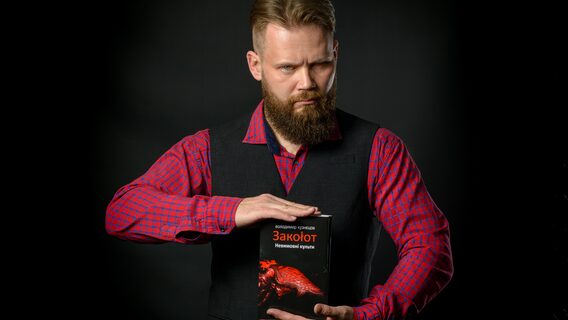
"We are ceasing to be a country of one or two authors." Fantasy writer Volodymyr Kuznetsov on breaking with the Russian market, working in game development, and the success of the book "Rebellion"
His novel "Rebellion" was a turning point in his career and marked a conscious break with the Russian book market. Today, Volodymyr Kuznetsov not only publishes successful science fiction, but also creates narratives for video games and conquers international platforms with tabletop projects. In an exclusive interview for dev.ua, we discuss why developing games about Russia is a cultural trap, how dangerous the nostalgic atmosphere of the Stalker Zone is, and how Ukrainian literature is gradually establishing itself in the world.
His novel "Rebellion" was a turning point in his career and marked a conscious break with the Russian book market. Today, Volodymyr Kuznetsov not only publishes successful science fiction, but also creates narratives for video games and conquers international platforms with tabletop projects. In an exclusive interview for dev.ua, we discuss why developing games about Russia is a cultural trap, how dangerous the nostalgic atmosphere of the Stalker Zone is, and how Ukrainian literature is gradually establishing itself in the world.
The Writing and Success of "Uprising"
— Let's talk about your writing career. Have you always written in Ukrainian or was there a transition period?
It was a kind of transitional period. Unfortunately, in the 2010s, despite all my efforts, there was still no full-fledged publishing market in Ukraine. The number of publishing houses was extremely limited, as was the range of what they produced. I had always written science fiction, fantasy, and horror, but in the zero years there was practically no demand for these genres — or it was minimal. At that time, the Russian market undoubtedly dominated, so I was forced to write partly in Russian.
In addition, the specifics of the region had an impact. Here I must make an important clarification: although Luhansk was considered Russian-speaking, Russification mainly concerned the cities. They were 100 percent Russified. For example, in Severodonetsk until 2014 there was not a single Ukrainian school. However, it was worth going outside the city — at least to the nearest village or a small town, such as Starobilsk — as people already spoke Ukrainian there. Of course, the influence of Surzhik was felt, because Russian-language TV channels were also broadcast there, but, naturally, people spoke Ukrainian. This was a truly Ukrainian-speaking region. I myself have always been bilingual and communicated in both languages.
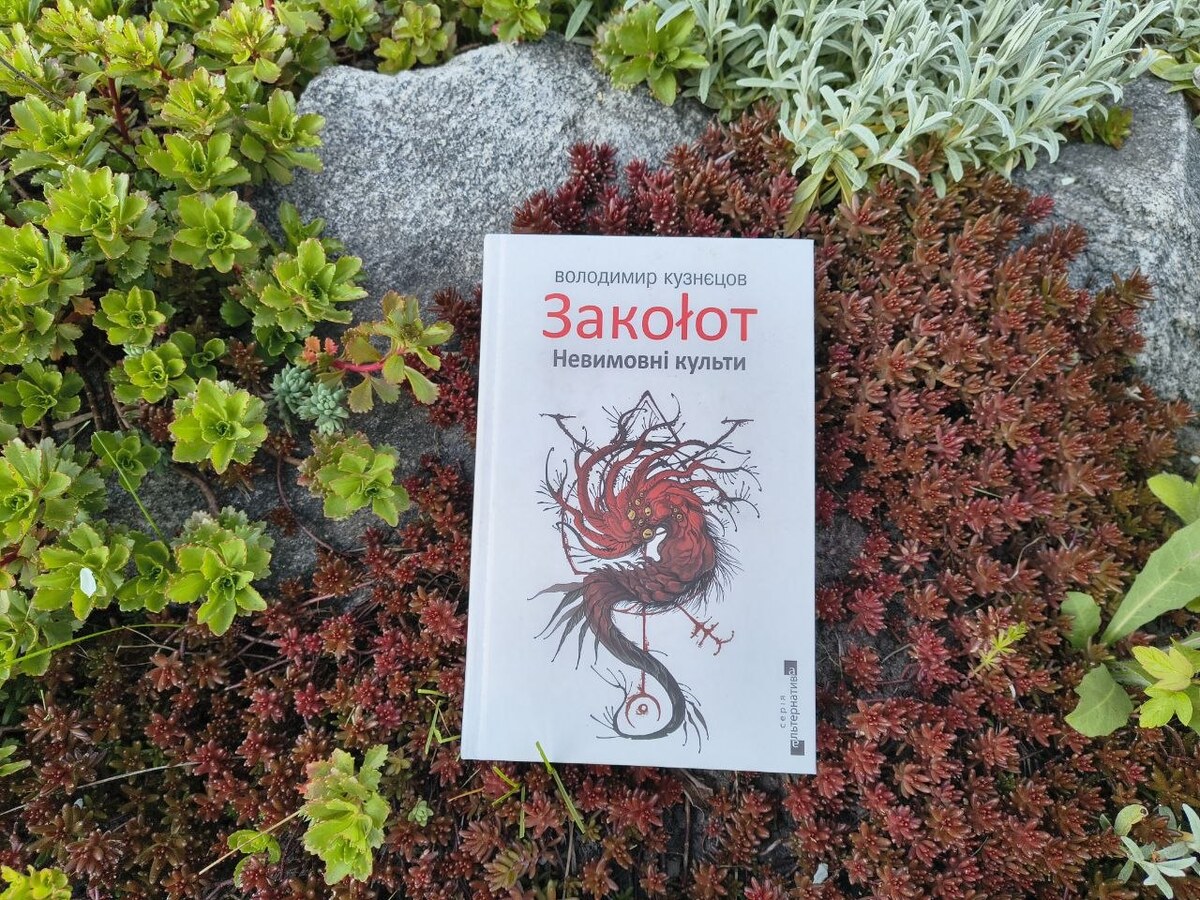
But I had to write in Russian simply because of the lack of Ukrainian publishers. Actually, I had been trying to write since school, but sometime in the late 2000s or early 2010s I decided to seriously focus my efforts on a professional writing career. It took a long time: my first publications appeared sometime in 2014, and in 2017 my first Ukrainian books were finally published. Then came 2020, and then my first two Ukrainian novels were published – “Rebellion: Unspeakable Cults” and “Firestorm.”
I've written about 80 stories, most of which are published, some of which have been republished. In addition, I currently have the two novels I mentioned earlier, my own short story collection, "The Chimorodas," and probably about 15 comic books.
— Tell us about your most popular book, “Rebellion.”
Yes, this book really caught my attention. It was longlisted for the Espresso Award and won the Chrysalis Award at Eurocon 2020, which is an award given to debutants. I think it was on a few other lists and nominations. It is currently my bestseller and continues to sell steadily.
I wrote it for a very long time, and it was a turning point for me. I started writing it in 2014, and I published it only in 2020. It was the very moment of my transition from Russian-language writing to Ukrainian-language writing. It was then that I broke with the Russian publishing house and discovered the Ukrainian book market and our community. At that time, it was a real breath of fresh air for me and brought a lot of relief, because I acutely felt the pressure during the period when I was published in Russia.
— How exactly did the pressure manifest itself?
In 2014, there was political upheaval, and we began to see the differences between us very clearly. But even before that, the Ukrainian community and Ukrainian book publishing were much less corporate and impersonal.
I have a great relationship with most of my publishers. We get along well, we know each other. And it's not some kind of nepotism, as if we knew each other before. No, we met while working and were able to find a common language. Whereas with Russian publishers I felt the boundaries very clearly: I knew exactly what I had to write to get published.
Attempts to experiment, break away from patterns, or show individuality were very often met with misunderstanding, and in some cases, literally with aggressive resistance.
Therefore, it was very unusual to realize that here you can come with your cool idea, and they will support you. That's exactly what happened with "Rebellion" - it's a very unusual book with an unconventional composition and setting. I'm not at all sure that anyone would have paid attention to it in the Russian literary space at that time. And in Ukraine it was published exactly as I wanted and as I saw it.
Therefore, I don't just think, but directly feel that I am easier here. I was able to write a non-commercial book, which I wanted to write first of all myself, and not one that would simply be mass-produced, sell well and appeal to a wide audience. And I am quite satisfied with that. Perhaps it does not have a very large circulation in Ukraine, and I understand that it is not designed for every reader. But I am glad, first of all, that I created this book exactly as I planned.
— If you can share the numbers, what was the circulation of "Uprising"? How many were sold?
The fourth edition is now being printed. In fact, it is small – about a thousand copies each. That is, in total, about 3,000+ copies have been sold. This is very few. Therefore, I am even surprised that with such a small circulation, the novel caused such informational noise and publicity.
Of course, these numbers seem a bit strange now, but when the book was published in 2020, they were not considered so small. Back then, a circulation of a thousand copies was quite natural and commonplace.
But after 2022, surprisingly, there was a colossal explosion of interest in Ukrainian authors. Now the normal basic starting circulation is considered to be 3,000 copies. Famous authors can start with 6,000 or even 10,000 copies at a time — not to mention literary stars, who have even larger circulations.
This is just wonderful! And if there are novice authors reading us now, I want to tell them: now is a great time to start writing and try your hand. After all, there is a demand for Ukrainian books, there are readers, and there are people who want to read you and hear your meanings — those meanings that are close and understandable to all of us here in Ukraine.
War, relocation and collaboration with a foreign audience
— You lived in Severodonetsk until 2022, how did the war begin for you?
In 2014, during the first attempted occupation, my family and I left for a short time. But on July 22, the city was liberated by the Armed Forces of Ukraine — then all the locals sincerely celebrated.
In early 2022, the enemy advanced very quickly through the Luhansk steppes due to the lack of natural obstacles. Already on the third or fourth day, Severodonetsk was under direct artillery fire. Later, we managed to evacuate, and on March 13 we arrived in Lviv.
There I was sheltered by the UA Comix publishing house, which at that time had suspended its main activity and completely refocused on volunteering. I also actively participated in this work. In 2022–2023, we recorded many events, publishing more than 12 volumes of comics about the war, based on real documentary stories.
— An anthology of Ukrainian fiction was published in Poland, which included one of your works. Can you tell us a little more about how you met her and what the terms of this collaboration were?
This book has come a long way. In fact, it was first published in Polish in 2022. Then, against the backdrop of these terrible, shocking events, there was a certain interest in Ukrainian authors. The editor of this collection, Volodymyr Ar'enev, had certain contacts in publishing circles and the fantasy community in Poland. He proposed creating such an anthology, which was called "The Language of Babylon" - in honor of the story of the same name by Svitlana Taratorina.
Volodymyr reached out to Ukrainian science fiction and fantasy authors he knew, whose books were already quite popular at the time, and invited us to join. When he reached out to me, I suggested a few stories. We analyzed them and eventually chose one that was truly part of the Uprising universe, not just a standalone work.
Initially, the collection was translated into Polish, and it was published in Poland. And then, it seems, a year later, Volodymyr Arenyev agreed to publish this anthology in the original Ukrainian language. It was published by the publishing house "Vivat". Currently, the first edition has already been sold out, and the second has been printed. If I am not mistaken, both were in circulation of 3,000 copies.
This history is interesting not only because it contains stories from contemporaries. It is a truly large-scale anthology, covering the period from the beginning of the 19th century to the present day. Each time period is preceded by a large overview article that describes this era, identifies the most significant works and authors of that period.
Of course, there was some controversy and criticism, as not all authors were happy with how and from what positions they were mentioned or presented in this anthology. But it seems to me that this is not so much a precedent – the creation of such a review anthology – as something else.
So it's really cool that it came out. The publication is beautifully designed, there are wonderful illustrations by Oleksandr Prodan, a very cool Ukrainian illustrator. So if you don't have this anthology yet, I highly recommend it. And not only because it contains my story: there's really something to read here and look at the path of development of Ukrainian fiction as such.
— In general, how would you assess the West's interest in Ukrainian science fiction or literature in general?
We need to understand: because of a certain inferiority complex, we sometimes feel that no one needs us, that something is cool somewhere, but not so much here. Of course, we can compare ourselves with the USA, Great Britain or France, but these are countries with a much higher standard of living and other opportunities. However, if we look at the Czech Republic, Slovakia, Romania or Bulgaria, we will be surprised and see that literature there should already be reaching out to us, and not us to them. Due to the smaller population, they do not have such a resource of readers and such a depth of the market. That is, no one will buy as many books as they buy even from us, despite the fact that people there earn better.
Therefore, there is interest. As for me, translations of my stories were published in the Polish magazine Nowa Fantastyka. Although I am not the most successful example here. There were a number of interviews with Ukrainian science fiction writers in the American magazine Locus - in 2022, and then, I think, in 2024. Interviews were given there by me, Max Kidruk, Daria Piskozub, Iryna Grabovska and others.
Or take Igor Antonyuk, the author of strange, mystical, and terrifying stories, whose collection “Everyone Flips a Coin” was published by Georges Publishing House. It seems to me that he is currently the absolute record holder among Ukrainians in the number of stories translated and published in foreign languages. It seems that every month he has another work published in some specialized fantasy magazine in another country.
It is also known that Max Kidruk is actively working on promotion. At one of the presentations, he shared that he has six signed contracts for the publication of the novel "Colony" in EU countries. It seems that he has already officially announced the Polish and Hungarian editions. "I See, You're Interested in Darkness" by Ilarion Pavlyuk was announced in Slovakia.
The process is underway, we are gradually starting to declare ourselves. It will not be a quick and easy path, but one way or another, Ukrainian works are being published in translations and are attracting attention. We will keep our fingers crossed that this continues. Because before, as the same Max Kidruk once rightly noted, every time he visited another country, he went to a bookstore to see what Ukrainian books were there. And until recently, it was exclusively Zhadan, Kurkov, Zabuzhko. And now the situation is gradually changing. We are ceasing to be a country of one or two authors, and that is wonderful.
From writer to narrative designer
— In addition to writing, you also work as a storyteller and game designer. Tell us how you got into game development.
Sometime between 2014 and 2022, a friend of mine, an indie developer, invited me to work on his game as a narrative designer. It was my first experience like that.
Conceptually, it was a pretty interesting and unusual game. Technically, it was almost a browser-based Tamagotchi with MMO elements, nothing complicated: players could find and raise all sorts of fantastic creatures. But the most interesting thing was the setting and idea itself.
In reality, for all the fantasy setting of unicorns, dragons, and basilisks, the events took place in the very distant future on the terraformed Europa, a moon of Jupiter. Due to some planetary, or even systemic, collapse, the connections were severed, and this planet found itself isolated from the rest of human civilization.
According to the plot, the future is so far away that the Sun has already expanded significantly, so it has become warmer on Europa, and the ice cap that now completely covers it has melted. With the help of terraforming, several archipelagos were raised there and, in essence, a giant amusement park was created, which was managed by a powerful artificial intelligence. But after the collapse, this AI lost touch and forgot its true purpose. And the people who live there have long forgotten that it is just an amusement park and that their world is "unreal." The plot was precisely to explore this world and gradually learn the truth.
I started by writing an in-game encyclopedia, then I described all the creatures that lived and existed there. Then I moved on to writing the quest lines and directly to the plot part.
I have been working as a narrative designer in one of the Ukrainian studios since 2024. I can't tell you much, but I will say that the game is in the science fiction genre.
— The book “Uprising” is often compared to Doom, Warhammer and noted for its Lovecraftian motifs. When you were writing it, did you imagine what a video game adaptation of this novel could be like?
The thing is, Uprising is very difficult to adapt to any one specific genre or form. The book consists of separate parts separated by colossal time gaps. So in one place it can be something like a conventional Souls, and in another - a real Bullet Hell in a space environment.
If I could choose, I would focus on NieR: Automata. For me, it is one of the pinnacle, most impressive works in the video game industry. I would like to create something similar: with a change in game mechanics, a strong emphasis on plot and lore, with a complex and ambiguous structure. This concept of three consecutive playthroughs, each time revealing the story more deeply, is especially attractive. Of course, this is a kind of blue dream, because you need to understand that such games do not appear just like that, a huge effort is spent on their creation.
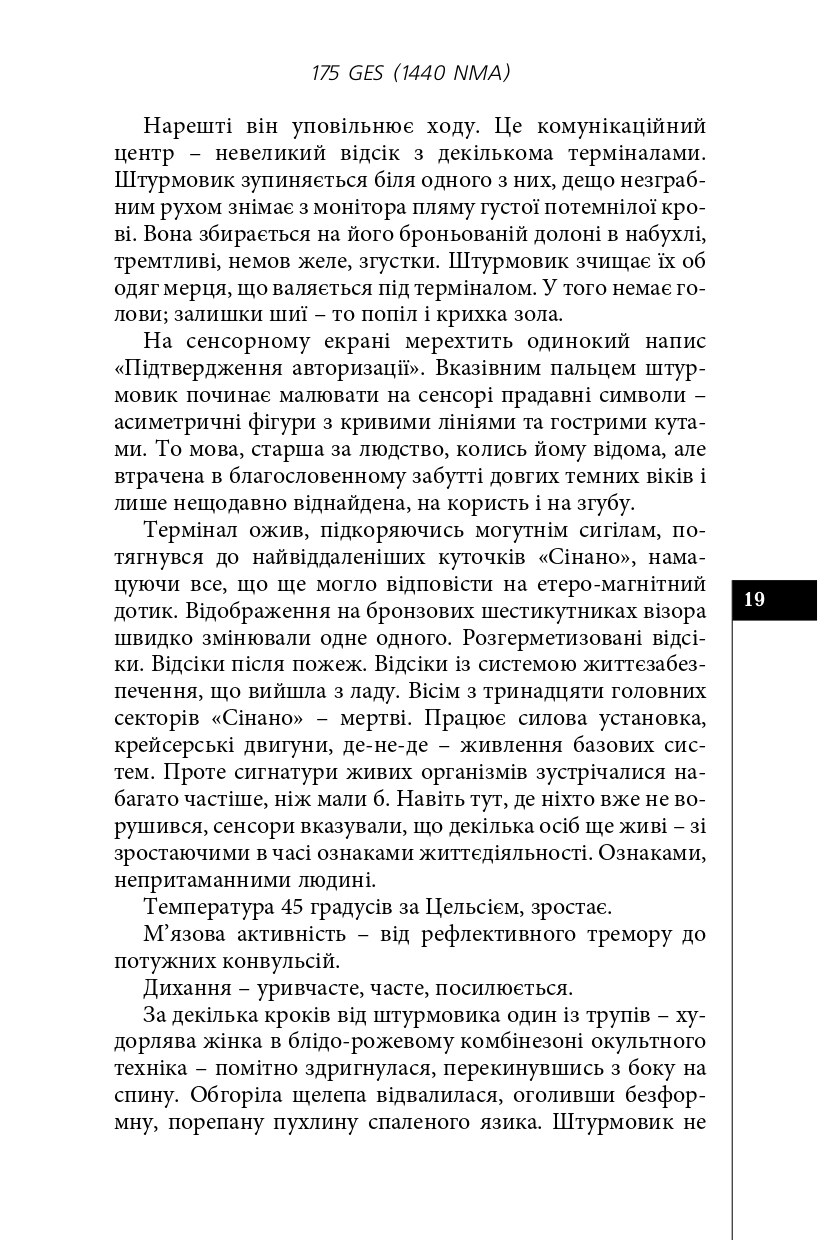
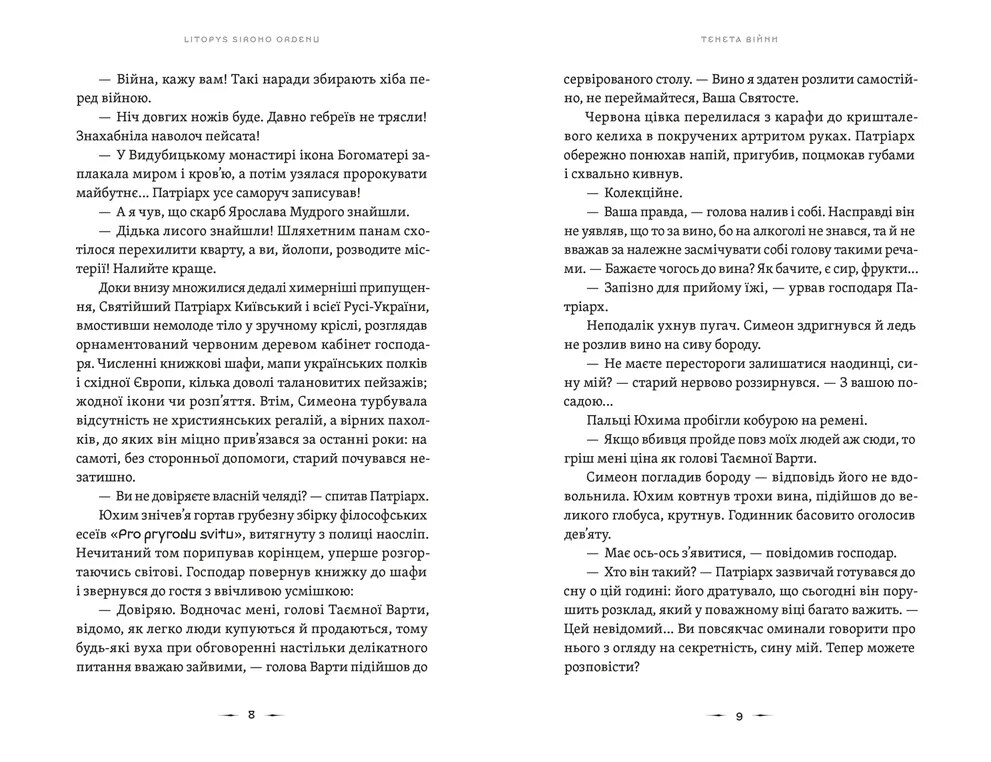
Excerpt from the book "Rebellion. Unspeakable Cults"
As for comparisons, Uprising has been compared to Doom, Warhammer, and many other things. It really has a Lovecraftian feel to it, and for me it was a natural step. If the genre that Lovecraft created is called space horror, then it makes perfect sense to take it to space, rather than confine it to 1920s Earth, as most works based on his motifs do. So for me it was a superficial decision.
There are undoubtedly other influences. We all live in a very dense information environment, we are constantly influenced by various sources. The more content you consume, the more conscious or unconscious influence it has on you.
— And in general, what games, besides NieR: Automata, do you play? Do you have a lot of free time for your favorite genres?
Unfortunately, there is much less time now. For the last two years I have had two full-time jobs. In addition, I am becoming more and more famous as a writer, and this takes time to attend festivals, clubs and other events. So now I have, you could say, two and a half jobs. Plus, when you spend up to 10 hours a day in front of the monitor, you just don't want to sit down at it again. That's why now I am switching more to board games, they also have incredible depth and cool plots.
Of the older games, my favorite, which shaped my vision of story creation, is Planescape: Torment.
FromSoftware games have had a huge influence on me. My favorite is Bloodborne, and I also really appreciate Sekiro. But I had to give up on Elden Ring purely due to lack of time, because it's just so huge.
I love indie games: Hollow Knight is a complete mess, I spent a lot of time on the Hades series (I admire the evolution of Supergiant Games games in general). I also really like the Dishonored series.
As an author, RPGs are the closest thing to me. Maybe I'm being sarcastic, but I'm not a fan of the third "Witcher" - it's too perfect and comfortable. I prefer the concept of an "Imperfect Masterpiece" - when a game is somehow inconvenient, annoying or delightful. Therefore, my choice is the incredible Disco Elysium and in general games with a deep, albeit not obvious, plot.
Board games as entertainment and business
— You also develop board games. Tell us about that journey.
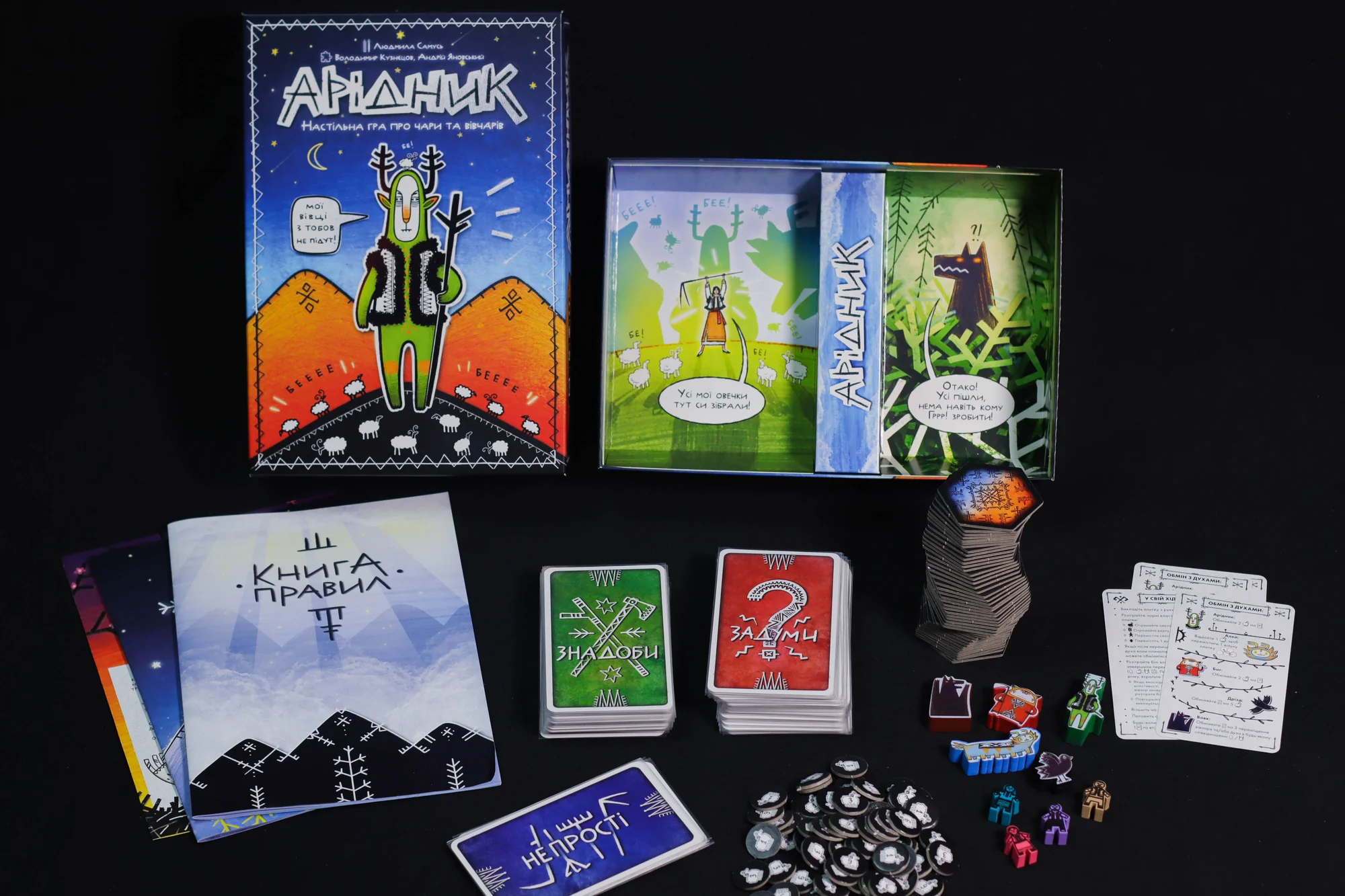
It all started at the UA Comix publishing house, when I was still a volunteer. There I met Zholud Dobrovolsky. He had wanted to create a board game development studio for a very long time and had assembled a certain team. I joined them, and in 2023 we released our first board game — “Aridnik”. Initially, in 2024, it was released in Ukraine, and in 2025 we launched it on the international Kickstarter platform.
For starters, we were raising quite well – about $150,000 per month. However, later we had some difficulties with the legal transfer of these funds. The thing is that Kickstarter does not work with Ukraine directly. You can’t just register as a Ukrainian company and log in to the platform, you need intermediaries. In fact, the list of countries that Kickstarter works with directly is very limited.
But, despite this, the game is already being printed. While we were working on these issues, we managed to find American and European partners for distribution. This means that now we are printing not only the print run that will go to Kickstarter backers, but also the copies that will appear on store shelves in the US, UK and EU countries.
Additionally, last year we attended Essen Spiel, the world's largest board game exhibition and festival, with an average attendance of 250,000. There we signed a contract for German localization, so "Aridnik" will also be released in German.
We are already preparing the next game for release. If all goes well, it should be ready for publication in June. It will be a game based on George Orwell's novel "1984" - a rather unusual theme for a board game. We have several other projects in active development. In general, the situation is that we are more short of time and production capacity than new ideas.
— What boards would you recommend our readers to play?
I can recommend some incredible board games. For example, Holy Grail: Avalon Fall has been released in Ukrainian. It is a powerful open-world role-playing game with a storyline from Poles who are now disrupting the board game market just as they once did with the video game market.
Another masterpiece from another Polish studio is Aeon Trespass: Odyssey. It's like Evangelion in the setting of an ancient Greek post-apocalypse. The world is destroyed, and you control giant titans in battles with giant bosses. A difficult but incredibly cool game. Also, a new dark fantasy Kingdoms Forlorn is coming out now.
Among the more accessible and dynamic ones is “Cthulhu: Death May Die.” This is a fast-paced cooperative game inspired by Lovecraft, where each scenario ends with an epic boss battle like Cthulhu or Hastur. It is also Ukrainian.
I also recommend Cyberpunk 2077: Gangs of Night City. It mechanically continues the well-known fantasy strategy line from CMON studio, which includes "Blood Rage" (Vikings), "Morning Sun" (Japan) and "Ankh" (Egypt). I recommend the entire series! However, the release of the next game, Mordred, is currently postponed due to the publisher's financial problems.
Overall, board games are a huge medium, no less profound than video games. There are story-driven role-playing games, strategies, calm family games, and intense conflict games for every taste and budget — from 100 UAH to 15,000. Don't be afraid to explore this world!
About Metro 2039 and the Russians
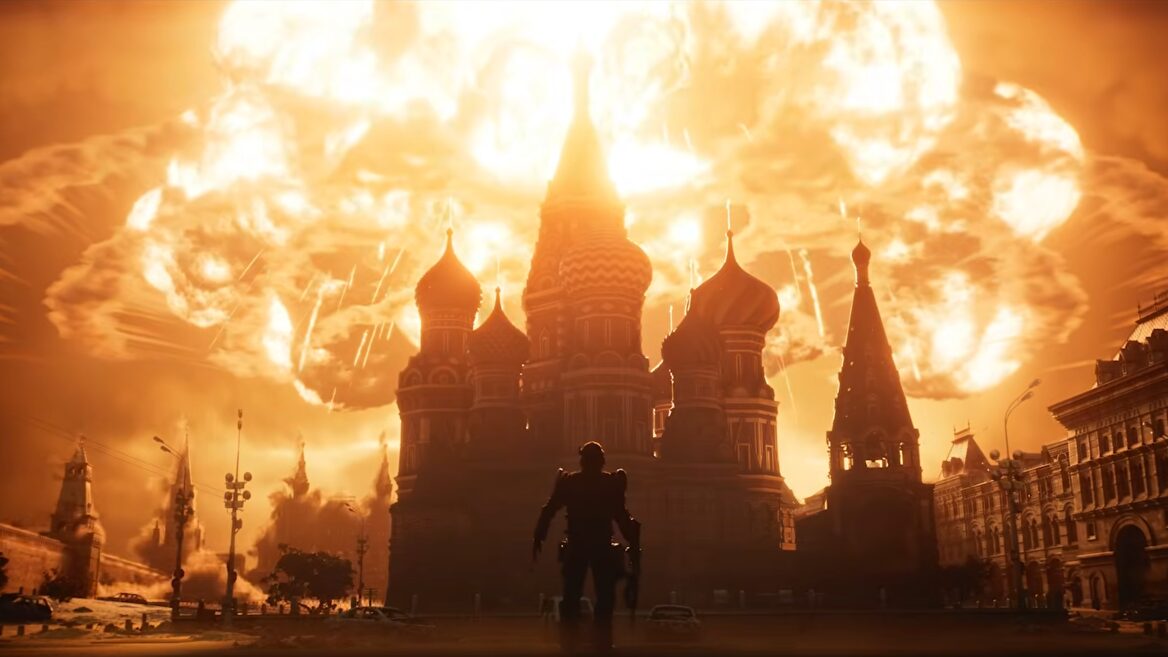
— I wanted to ask about the announcement of a new game in the Metro series. Most Ukrainian gamers are delighted, but there are some people who ask a reasonable question: making a game about Russians in Moscow in 2026 is somehow not very right. To what extent do you agree with this decision? Shouldn't Ukrainian studios pay more attention to domestic authors?
4A Games' decision is dictated by a literal commercial component. Their series has been going on since 2010. That is, 4A Games is Metro . It's very difficult to break that and come up with a new IP, although, in my opinion, it's a kind of trap. But I don't consider myself entitled to teach people who do their job well. That's their choice.
Does this personally suit me? No, it doesn't suit me. I'll say something that might be seditious. At one time, there was a little "crap" in the community on the eve of the release of STALKER 2. I was a little annoyed that we continue to promote post-Soviet aesthetics. What are Pripyat and the Zone? This is a canned Soviet post-apocalypse. Is it fundamentally very different from the same Russian "Atomic Heart"? Yes, the accents are very different, but the cultural layer and soil are common.
Of course, we can't just "cancel" STALKER. It's really cool that GSC was able to give the game a Ukrainian flavor in the second part. There was a big scandal when they refused to do a Russian localization, because the Russians always considered STALKER "their" game.
For us, it's the Zone in Pripyat, and for them, it's all over Russia.
GSC added an amazing soundtrack, discovered a bunch of Ukrainian post-punk bands. But what did the Russians do? They stupidly replaced the soundtrack with their own post-punk, and it sounds just as organic, because everything goes back to the roots.
Do I deny that STALKER or Metro are good games? No. But would I want to look for roots in something else? Definitely yes.
We have a great example of a book that would be great to adapt into a video game — the Chronicles of the Gray Order trilogy by Pavlo Derevyanko. This is a fantasy based on the history of the Ukrainian Hetmanate of the 19th century. An alternative story about how we would have developed if we had not lost our independence. Our historical roots are enough for us. Would I like to see a cool open-world role-playing game on the level of The Witcher in the Chronicles of the Gray Order universe? Yes, and it will not be worse!
Excerpt from the book "Chronicle of the Grey Order. The Web of War"
By the way, we are used to perceiving the game "The Witcher" as a standard of East Slavic fantasy. But it is worth noting that when you read Sapkowski, this "orientalism" is not felt so strongly there. He created a rather abstract European fantasy world with Italian, German and other roots. The visual design and Slavic vibe were largely created by the game itself. And the fact that a local story can become a global hit is perfectly proven by the Kingdom Come: Deliverance trilogy.
If we had a successful game based on "Chronicles of the Grey Order," it would start a chain reaction: the books would be translated abroad, Netflix or HBO would come and make a series. One industry would raise another. The Japanese have been doing this for years: if an anime comes out, manga, early access, games, merch would immediately follow.
We in Ukraine are just starting to get to this point. Max Kidruk created a board game based on his "Colony." It's really cool when a companion product appears: a book can lead a person to a table, and a table to a book.
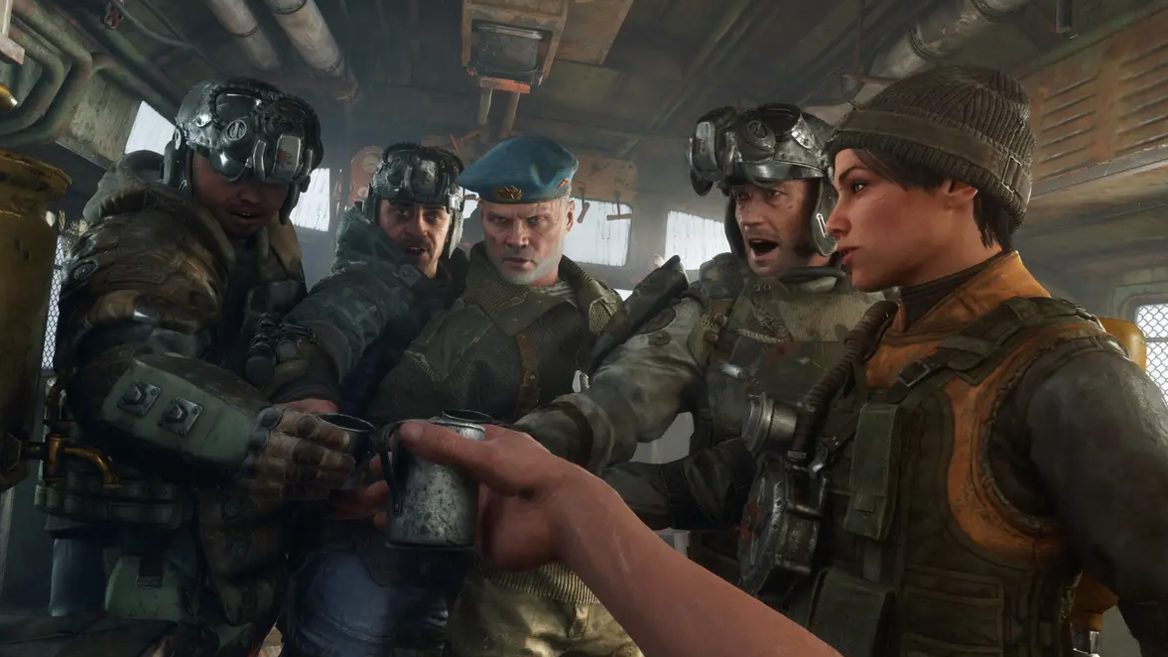
Post-apocalyptic Moscow Metro from a Ukrainian perspective. 4A Games presented Metro 2039
I'm sorry that 4A Games continues to promote Dmitry Glukhovsky's world, whatever his political position, this is a work about Russia and for Russians . But I understand what colossal budgets are invested in AAA games. You can't come to an investor and say: "Give me millions for an unknown setting with an unpredictable outcome."
That's why I love indie projects so much. They have the courage and space for experimentation. If we compare Metro and Hollow Knight, then my heart belongs to Hollow Knight. I love games like Dead Cells, Hades, Darkest Dungeon, which shoot and set precedents. I really hope that we will have such powerful indie projects that will be based on Ukrainian soil.
A Ukrainian couple launched a book flea market in Poland, where they sold almost 6,000 books in a year. How BookFlea helps save on books and unites book lovers abroad.
The Ukrainian team at 4A Games commented on their collaboration with Russian writer Glukhovsky and talked about how the war influenced the next part of Metro