Хочете будувати кар’єру в Data Science та AI? Vodafone Big Data Lab відкриває новий набір —>
Марія БровінськаWar
6 August 2026, 09:00
2026-08-06
“Deftech is a startup for the brave.” 7 questions for Tencore CEO about the pain of war, the future of war, and technological prospects
War is increasingly turning into a confrontation of autonomous systems. Ukrainian companies are already creating ground robots that can perform missions where the risk for the military is too high.
The guest of the new issue of «7 Questions for the DefTech CEO» is Maksym Vasylchenko, founder and CEO of Tencore. We talked about competition in the DefTech market, the pain points of the industry, and the future of war.
War is increasingly turning into a confrontation of autonomous systems. Ukrainian companies are already creating ground robots that can perform missions where the risk for the military is too high.
The guest of the new issue of «7 Questions for the DefTech CEO» is Maksym Vasylchenko, founder and CEO of Tencore. We talked about competition in the DefTech market, the pain points of the industry, and the future of war.
— What is the biggest problem facing Ukrainian softtech right now? What pain is bothering your business the most right now?
The biggest pain of the small tech industry right now, it is the same for everyone, is the lack of a sufficient number of qualified personnel, engineers, and mechanical engineers. This is a fact, and now we are already reaching the point where we are hiring people abroad, because salaries abroad are even lower than here. And this is a new level, so to speak, of the company’s progress and a step towards becoming international, because specialists from different parts of the world are already being attracted.
— What technology is most overrated today? And what, on the contrary, is underrated?
I would not overestimate any technology, because the war showed us that any technology, even the simplest one that exists today, can show very powerful results. And after the CEO of Rheinmetall said that housewives in our kitchens make drones, this is a big compliment for us, because we did not have to, like Rheinmetall, pour billions of money into it to make simple things very difficult for the enemy.
— Who is the most difficult person for you to hire and why? How do you solve this issue?
The hardest thing to hire, of course, is the management team, C-level people who can make decisions, people who have experience in building business processes, building teams. This is probably the most difficult thing. We are looking for people outside of Ukraine, this is the only option for now.
— What skill or skills are currently the most valuable for an engineer in defense tech? Why?
The most valuable skills for any engineer are understanding the use of technology today, it’s probably some kind of artistic vision, how simple things can be made effective, how we can make effective tools without using all the money in the world, because in our country we count everything: a kilogram of delivery on a NRK, a kilogram of delivery by bomber, and so on. And an engineer should not just come up with something, draw, model, program, he should think more strategically, a few steps ahead.
— What does civilian IT misunderstand about military technology? What are the specifics of the industry that those entering this field must know?
I can’t say anything about civilian IT, because in civilian life I only encountered it on very simple issues, so I can’t give a constructive answer. Technically, the industry is simpler than it seems, but operationally and regulatoryly it’s much more complex; most teams don’t die on engineering.
— What will war be like in 2–3 years from a technological point of view?
War is moving towards the point where everything will be controlled by drones, attacked by drones, defended by drones. We are all moving towards completely unmanned wars. Distances will increase. New technologies will be added that have not yet been used because they are resource-intensive or technologically difficult to use yet. But you have all seen the movie «Terminator», how humanoids go and fight, and this is also the future.
— What would you like to say to IT professionals who are hesitating whether or not to go to deftech?
I would like to say that if you want to build something unusual in your life, if you want to go down in history, then now it is possible, then you need to go and fully reveal yourself. Especially since there is no ceiling for development in mid-tech companies. You can endlessly fantasize and do everything that your skills allow. Therefore, this is a startup for the brave.
«I would advise those IT professionals who are hesitant to move into Defense Tech to change their mindset.» 7 questions for DefTech CEO: owner of SKIF NVK about industry problems, personnel, and product evolution
«Military companies today are like Ukrainian IT companies 15 years ago.» 7 questions for the CEO of Frontline Robotics — about the future of war, FPV, the shortage of engineers and more
«The biggest problem, as well as the biggest opportunity, of the deftech industry is the existence of Russia.» 7 questions for the CEO of HIMERA about technology, the talent shortage, AI and the future of war
«We once believed in drones. Now we have to believe in missiles.» BlueBird Tech co-founder on the new stage of Ukrainian miltech, dependence on China and the shortage of engineers — 7 questions for the CEO
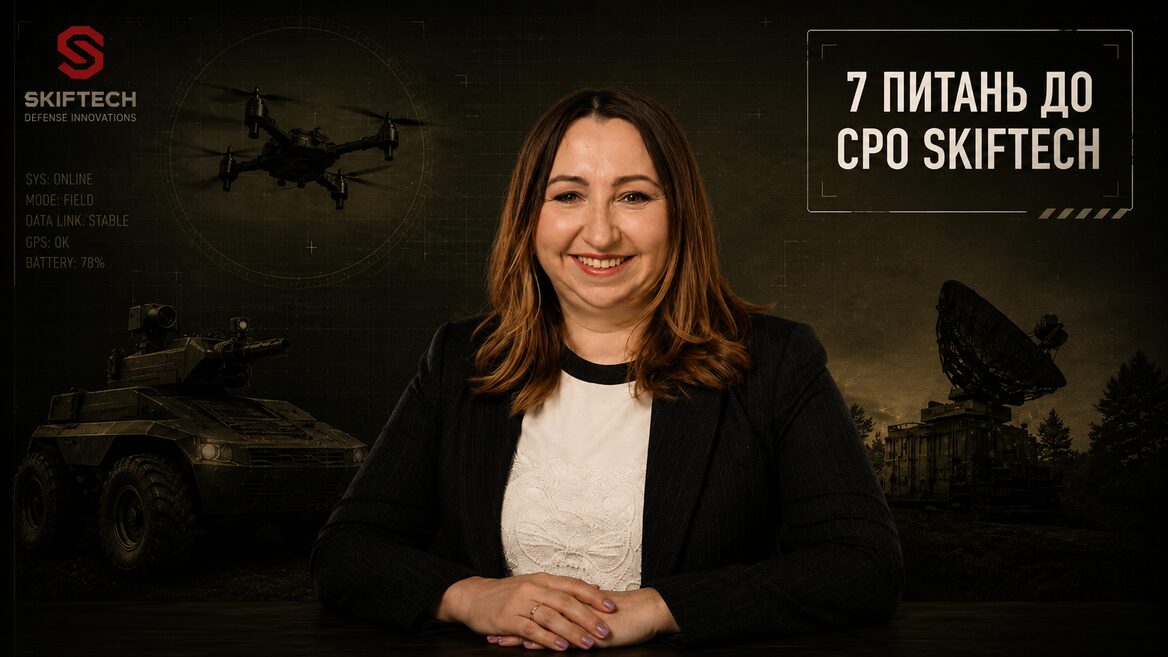
«The one who turns data into decisions and decisions into action faster will win.» 7 questions for SKIFTECH CPO about overrated AI, talent shortages, and the war of the future