Хочете будувати кар’єру в Data Science та AI? Vodafone Big Data Lab відкриває новий набір —>
Олег ОнопрієнкоAI Eng
4 June 2025, 09:00
2025-06-04
“We did something we never dreamed of in 2022.” How artificial intelligence is changing the state and the army from within — an interview with the creator of the Avengers AI solution that automatically identifies military equipment
Ukrainian developers are actively exploring the potential of artificial intelligence not only in business, but also in the public sector. One of the pioneers of this direction, Maksym Korzhenevsky, at the beginning of the full-scale invasion led the group to create the Avengers automatic identification system for military equipment. Read about how AI works in combat conditions, why Ukraine needs its own large language model, and whether the rollback of USAID threatens Ukraine's digital transformation in an interview with dev.ua with the founder and CTO of MK-Consulting, Maksym Korzhenevsky.
Ukrainian developers are actively exploring the potential of artificial intelligence not only in business, but also in the public sector. One of the pioneers of this direction, Maksym Korzhenevsky, at the beginning of the full-scale invasion led the group to create the Avengers automatic identification system for military equipment. Read about how AI works in combat conditions, why Ukraine needs its own large language model, and whether the rollback of USAID threatens Ukraine's digital transformation in an interview with dev.ua with the founder and CTO of MK-Consulting, Maksym Korzhenevsky.
— What's new in the implementation of AI in Govtech companies? What solutions has MK-Consulting already integrated into government projects?
The first case outside the Ministry of Defense we did for the Ministry of Digital on the platform "Diya.Engine" for the Ministry of Youth and Sports. In general, this is a classic Retrieval Augmented Generation, when a language model with the context owned by the organization itself, regulatory documents, internal sketches, instructions, and the like is used. And the prompt that the user enters is first enriched with internal context, documentation, and then sent to a large language model.
Basically, the goal of such cooperation is to help the state. One of the cool cases that I want to implement is to develop a platform for inclusive involvement of veterans in society and work. Currently, there is a problem that many veterans simply cannot write a resume. In this case, a large language model helps a lot. When the user is asked clarifying questions, the model gradually extracts the necessary data from the recipient piece by piece, in small steps, to create a CV, then gives him back an improved version of the resume, which the user can supplement.
That is, it is the automation of such routine tasks, which removes the human factor, bias, etc. In my opinion, it will be useful in the future for working with registers and applications.
More about the case for the Ministry of Youth and Sports
MK-Consulting has developed an artificial intelligence system on the “Diya.Engine” platform at the Ministry of Youth and Sports of Ukraine. The system simplifies the work of applicants for competitions and reduces the workload of employees who check applications. It operates in a Ukrainian data center, as data cannot be transferred outside Ukraine.
The system uses the JEMa 2 text processing model, deployed in Kubernetes using Helm. PostgreSQL is used to store data. The system breaks applications into logical blocks, discards irrelevant information, and uses JEMa to process each field. The analysis result is provided to the applicant and the official. MK Consulting also deployed and configured the service integration.
— What feedback did you receive from the Ministry of Digital Affairs after implementing your AI-based solutions?
Very positive. Since our company operates in the Govtech market, we are members of the Govtech Alliance. It was very painful for everyone when the USAID program stopped working, because many IT projects in the country were financed through this program.
We looked at the numbers and realized that in the current situation we would probably have to reduce our staff. Government officials asked us not to do this, as we have the expertise. They promised to cover the funding gap with the help of other donors, so we have great support from the state.
Now, the Ministry of Digital Affairs has created an AI Center of Excellence, recruited really great specialists who are well-versed in the domain field and have commercial experience, and we are communicating very closely and fruitfully with them on how to implement projects related to artificial intelligence and large language models in the country.
— Can we say that the shock from the suspension of USAID's activities has passed and other sources of funding have already been found?
That's right.
— In your opinion, what other AI projects that have already been implemented in Ukraine did you personally like and that you could pay attention to?
What I liked most was the military aspect, which I can't talk about because we all understand that our enemy is watching this closely. When something helps kill the enemy, I personally feel great, great satisfaction.
— You previously worked in the Ministry of Defense, in particular, you were responsible for the creation and launch of the Avengers system. Tell us more about your experience working on this system.
It wasn’t easy, if you look back and go back to the beginning of the full-scale invasion, I didn’t believe that the Avengers would shoot like that. When I read about Project Maven, a project in Silicon Valley, funded by the Pentagon for $ 100 million, I thought: “Well, they must have just space space.” It so happened that later I met my colleagues from Project Maven, they presented their work and we realized that our team was really good. The partners blinked their eyes from the impression that the Avengers had made on them.
The models created with Avengers are perhaps the best in the world today.
This project probably would not have been implemented without the help of the state, since it was developed within the army, and this requires funding, not everyone understood what it was for, what kind of field it was in. You can't sign up for some KPI, that give me so many people, so much money, keep it here for hosting, and I will make you such and such a system with such and such indicators - this is impossible. These are all hypotheses that need to be tested, this is, in fact, R&D, but we managed. At the beginning, the Ministry of Digital Affairs helped, to whom I managed to sell this idea the easiest way. They understood what this was and where it could lead. In April 2022, I told the First Deputy Minister of Digital Affairs, Oleksiy Vyskuba: "You understand that this is like a laba that can unite communities around itself and not only military projects can come out of this, but also civilian, educational, medical and any other."
The Ministry of Digital was the first to believe in it and helped promote the idea to military structures. It is easier to sell this solution to the Ministry of Digital than to the Ministry of Defense, and it is easier for the Ministry of Defense to sell it than to the General Staff. Now Avengers is an integral part of the DELTA ecosystem, which collects a lot of applause at all military conferences.
NATO colleagues are watching with admiration what we are doing. I think we can even say, not loudly, but quietly, that some of the models created with the help of Avengers are perhaps the best in the world today.
About Avengers
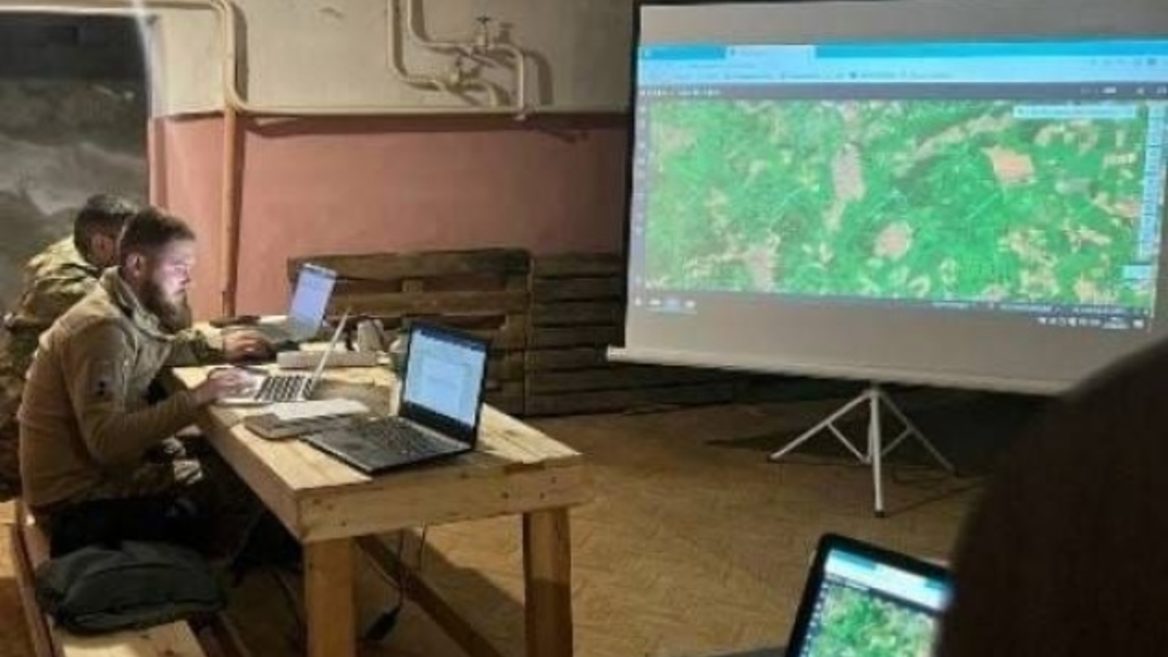
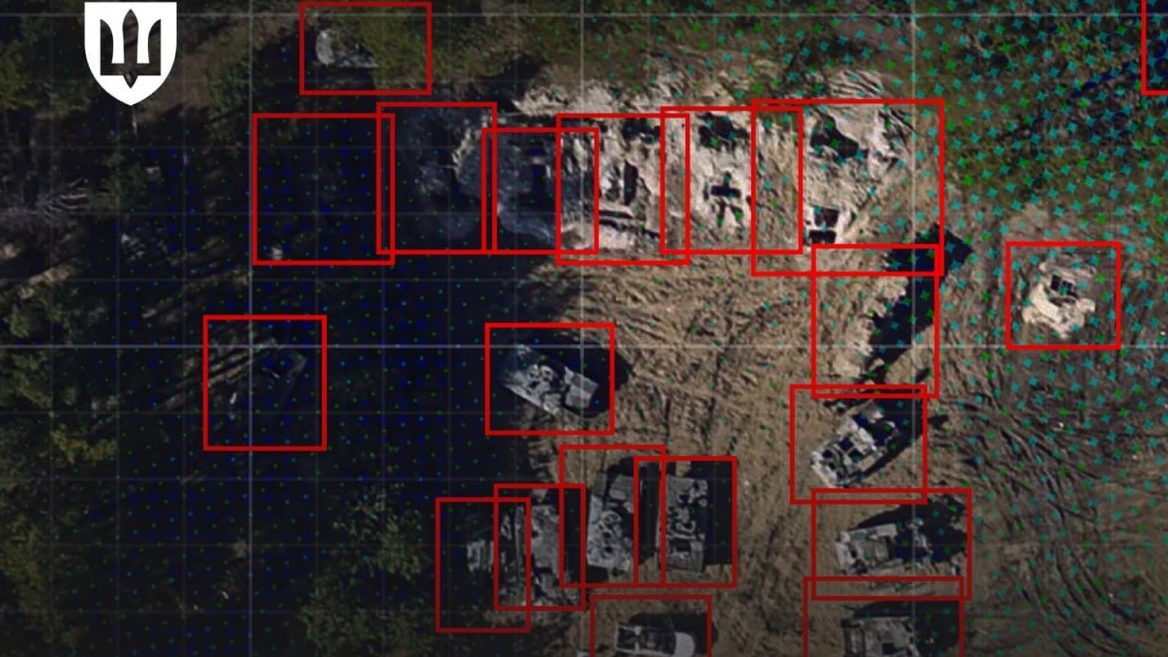
The Avengers AI platform was developed under the auspices of the Innovation Center of the Ministry of Defense of Ukraine. With its help, operators can make decisions faster and more efficiently, and the risk of errors due to fatigue is reduced. Ukrainian military detects 12,000 targets every week thanks to Avengers
— After 3.5 years of full-scale invasion, the Ministry of Defense is already better oriented, are they now more inclined to introduce technological solutions into the army?
Yes, of course. A new team came in in the direction of digital transformation, there was an understanding and most importantly - the technologies showed results. Now sometimes, on the contrary, you see a request from the military that "let me do all this with artificial intelligence", I say that AI is not needed, but they still insist on implementing AI.
We did several cases for neighboring security agencies. Not all of them have internal teams now, there are certain security restrictions, so this would move faster if there was a more developed market for specialists.
— How does the state legally protect the latest Ukrainian developments so that they are not copied by other countries without our knowledge?
I don't know all the legal subtleties, but once lawyers showed a patent certificate with my name on it to colleagues, saying that we patented this technology, and it is on the balance sheet of the Ministry of Defense, accordingly, it fully belongs to our state, the Ministry of Defense.
I know that partners are contacting the Ministry of Defense with a request to use our solutions. I think this is the first case in Ukraine where they are willing to pay just for access to the platform's data to train related data.
— Will it be difficult to integrate our systems, such as Avengers or DELTA, into NATO structures?
It's not difficult, because DELTA was built on NATO canons and standards from the very beginning. The Alliance has a TIDE Sprint event, where the Innovation Center specialists won twice and took another prize in a different direction. That is, first, at NATO conferences, they discuss the issues, generate ideas on how to solve these issues. Then the member states create functionality, and then at the new TIDE Sprint, everyone tests their solutions for interoperability. DELTA has followed this iterative path from the very beginning, and the Development Life Cycle has always assumed that there will be compatibility testing. DELTA always shows very high results, including compatibility with Link-16 , which was tested over a year ago. That is, we are always a little ahead.
The head of the Ministry of Defense revealed how many billions of dollars worth of enemy equipment the DELTA system destroyed
I was once involved in the creation of the Prozorro system, which began to receive international awards, such as Best Procurement System and the like. I always said at these conferences that this happened not because we are so smart, but because normal advanced countries created these public procurement systems 30 years ago. Of course, these systems are already outdated, adding new functionality is quite difficult. And our advantage is that Prozorro is a new and cool system.
A similar story is happening with DELTA - we are building it on modern technologies, we immediately went to the cloud, when in the States, the most leading technological country, they were thinking about whether it was possible and safe to run military systems in the cloud. Now I know that this issue has already been resolved.
— Now you can often hear the opinion that AI should be fully integrated into all spheres of the state apparatus. There are even calls for AI to be used to write draft laws, as, for example, is planned to be done in the UAE . What is your opinion on this?
Recently, there was a sensational post by Dmytro Dubilet, who wrote: “Let's replace all our judges with AI.” Well, first of all, AGI Artificial General Intelligence has not been invented yet, there is no such thing.
According to one study, there is not much room for generative in the medical and legal spheres. Yes, if there are countries with case law, where AI can help find similar cases in the practice of this country. If we are talking about legislative creativity, then AI can help find incompatible or mutually exclusive provisions in previous laws or legislative acts. This is where it can help. Writing beautiful laws from scratch is definitely not.
— Tell us more about MK-Consulting's use of large language models in state registries. How successful was this case?
The first case we submitted for the Ministry of Youth and Sports was successful. We are currently submitting another project at the request of the Ministry of Economy. I cannot disclose the details yet, as it has not been submitted yet, but the interim results demonstrate very high potential.
It's great that in Ukraine there are providers who can provide the necessary graphics cards for deploying LLM models within the country without the need to use third-party APIs and servers. This way we maintain a certain independence in building our solutions. This, by the way, even complies with NATO's provisions on digital sovereignty.
Digital sovereignty: How the struggle for data control has become a full-fledged geopolitical confrontation
— Do you have a positive attitude towards the intention to create a completely Ukrainian large language model in Ukraine?
Absolutely. I pitched the idea of creating a national language model to Mr. Fedorov and Mr. Vyskuba six months or a year ago, because it is very important. It is like preserving the soul of the nation. In the conditions of Russian aggression, this is extremely important. Yes, many models can already speak Ukrainian very well, but they are trained on open data, which is distorted, including Russia Today. When a new model comes out and you ask it about Crimea or what happened to the Malaysian Boeing MH 17, it will tell you that the flight “crashed”. That’s right, it just took it and crashed. Or what is the UPA? And the model answers: “This is an organization that tried to make Ukraine ethnically pure.”
Over time, more and more LLMs will participate in education. Many students already use them to solve homework and write term papers. And it is very important for us that they do not learn Russian narratives. I always associate this with the case of the pseudo-journalist Muntyan, who speaks fluent Ukrainian, but promotes completely Russian narratives.
Let's not forget about the economic component. The models that are currently available have a bad Ukrainian tokenizer. Roughly speaking, the same sentence in Ukrainian and English costs different money. Processing in English can be twice, and sometimes even three times cheaper than in Ukrainian, because there are more tokens. If we create our own model with our own tokenizer, we will be on the same level as the English language and it will be cheaper to simply spin and use these models.
— Does Ukraine currently have enough infrastructure for implementing AI, or is there still room for improvement?
There is room to move and there is definitely room to expand, both horizontally and vertically.
That is, horizontally - providers are expanding their range of solutions, their price list, what graphics cards they can offer, technologies. I am sure that this will encourage all players to improve the existing infrastructure. I hope that by expanding this market, local players will also appear who will provide the same service as in the West. Although you can expect anything from the modern world.
All of Europe is hosted there by Amazon, Google Cloud are American companies. Trump came here, and no one knows what is on his mind, what he will come up with tomorrow. I know that in Europe they began to perceive this threat very, very strongly, they came to understand that they did not invest enough in local players.
— There have recently been predictions that by the end of the year, AI could account for almost half of the energy consumption of data centers. In your opinion, will we have enough capacity to develop AI after the massive Russian shelling of Ukraine's energy sector?
We need to take away the largest nuclear power plant in Europe — Zaporizhzhia — and develop alternative power sources. This is a very noticeable trend now. Australia, the Philippines, Indonesia, many countries are creating solar and wind generation, the number of gigawatts in these countries is simply crazy. I believe in floating islands in the ocean, with solar stations. It seems to me that humanity will accept this challenge with a lack of power, and chip vendors, on the other hand, will go for energy saving. As it always has been.
"The game gave an understanding of what you will have to work with in reality." Interview with an artilleryman of the Armed Forces of Ukraine about gamification in the Defense Forces
«Чи є у мене талант, якщо комп’ютер може імітувати мене?». Штучний інтелект пише книги авторам Amazon Kindle. The Verge поспілкувався з авторами та виявив багато цікавого
Письменники-романісти використовують штучний інтелект для створення своїх творів. Видання про технології The Verge поспілкувалося з письменницею Дженніфер Лепп, яка випускає нову книгу кожні дев’ять тижнів, й дізналося про те, як працює штучний інтелект для написання романів. Наводимо адаптований переклад статті.
Have important news to share? Message our Telegram bot
Key events and useful links in our Telegram channel