Хочете будувати кар’єру в Data Science та AI? Vodafone Big Data Lab відкриває новий набір —>
Марія БровінськаWork
11 October 2025, 11:00
2025-10-11
From coffee and corporate parties to military leave. What benefits do specialists of Ukrainian IT companies currently receive?
A few years ago, the phrase «corporate benefits» was mostly associated with free coffee, holiday parties, and gym memberships. Today, that list looks completely different.
A few years ago, the phrase «corporate benefits» was mostly associated with free coffee, holiday parties, and gym memberships. Today, that list looks completely different.
In September, Employer Branding Community, Karpatia Benefits, and People First Club presented the results of the Benefits Research 2025 study. Both the numbers and the benefit formats themselves show that businesses in Ukraine are experiencing tectonic shifts in their attitude towards employees. To understand exactly how corporate care is changing and what this means for people and companies, we suggest taking a closer look at the key insights of the study.
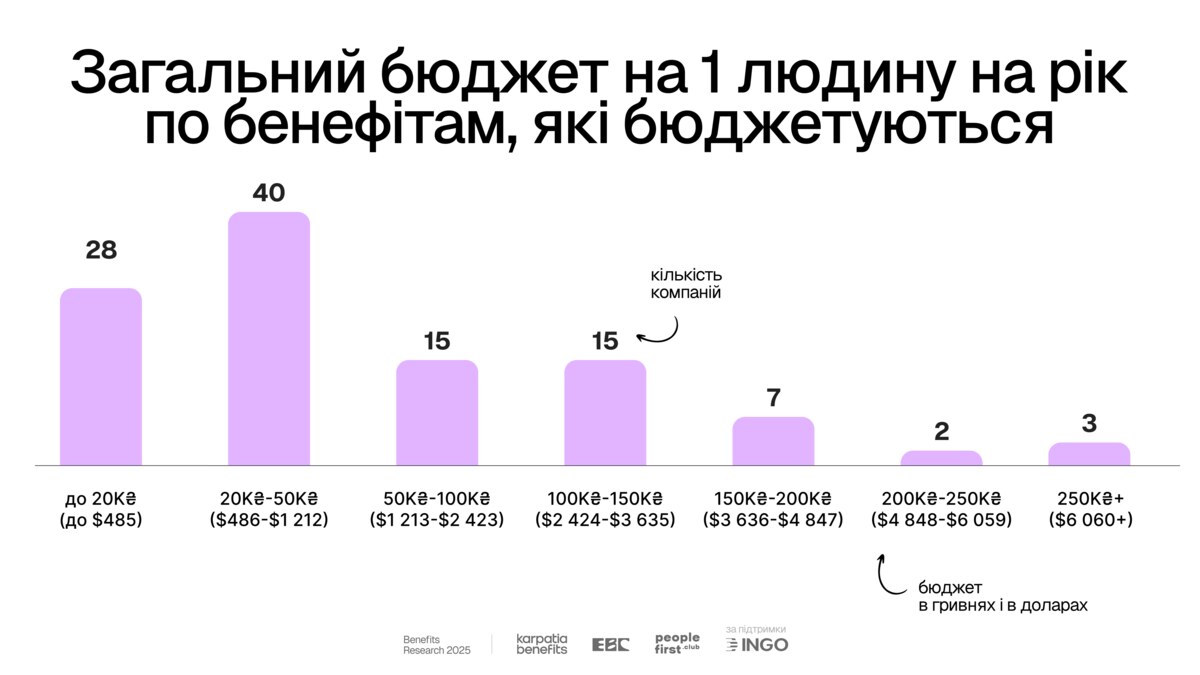
It turned out that Ukrainian companies invest considerable resources in their people. The average budget for benefits in 2025 was UAH 65,000 per employee per year, and the median figure was UAH 40,000. The largest recorded budget reached UAH 395,000 ($9,600) per person.
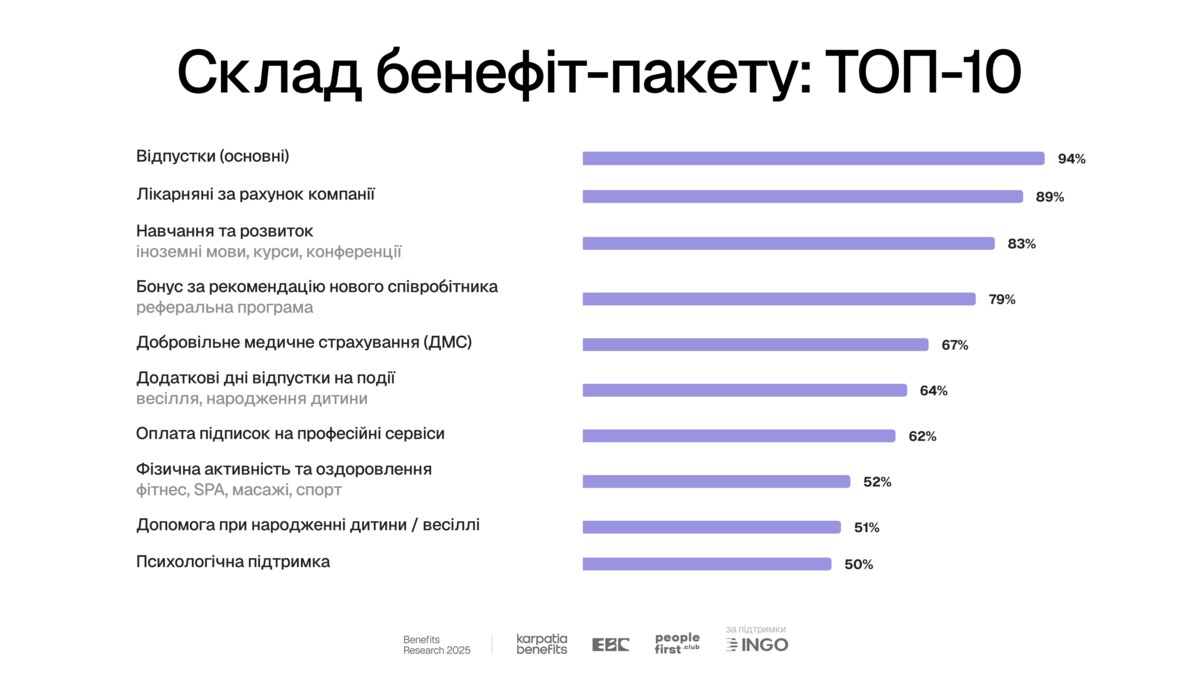
The leaders remain the classic options: basic vacation (94%), company-funded sick leave (89%), training and development (83%), referral bonuses (79%), and health insurance (67%). But along with them, less predictable formats have also appeared: compensation for daycare or nannying, budgets for generators and Starlink, microgrants for personal projects, veteran support programs, and even military leave.
Important note: most participants are IT companies that often work through a sole proprietorship or gig contract, which does not include the obligation to provide sick leave or vacation.
Voluntary health insurance (VHI) is available in most companies and is often fully covered. Life insurance is currently offered by less than 20% of employers.
A separate block is mental health. Companies are launching consultations with psychologists, crisis lines, and access to platforms like BetterMe. But there is a paradox: on average, only 5–15% of employees use these services. This indicates a still immature culture of seeking help, although the demand for such options is clearly growing.
83% of companies invest in employee development — paying for courses, conferences, and language learning. This is traditionally one of the most popular areas.
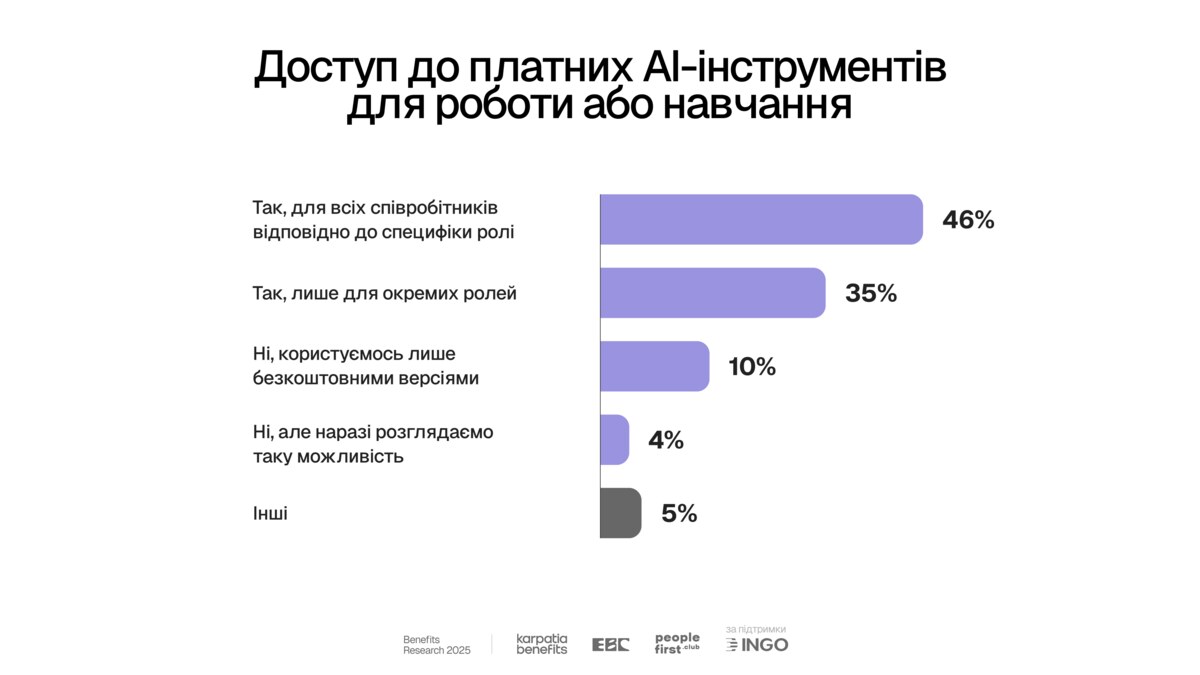
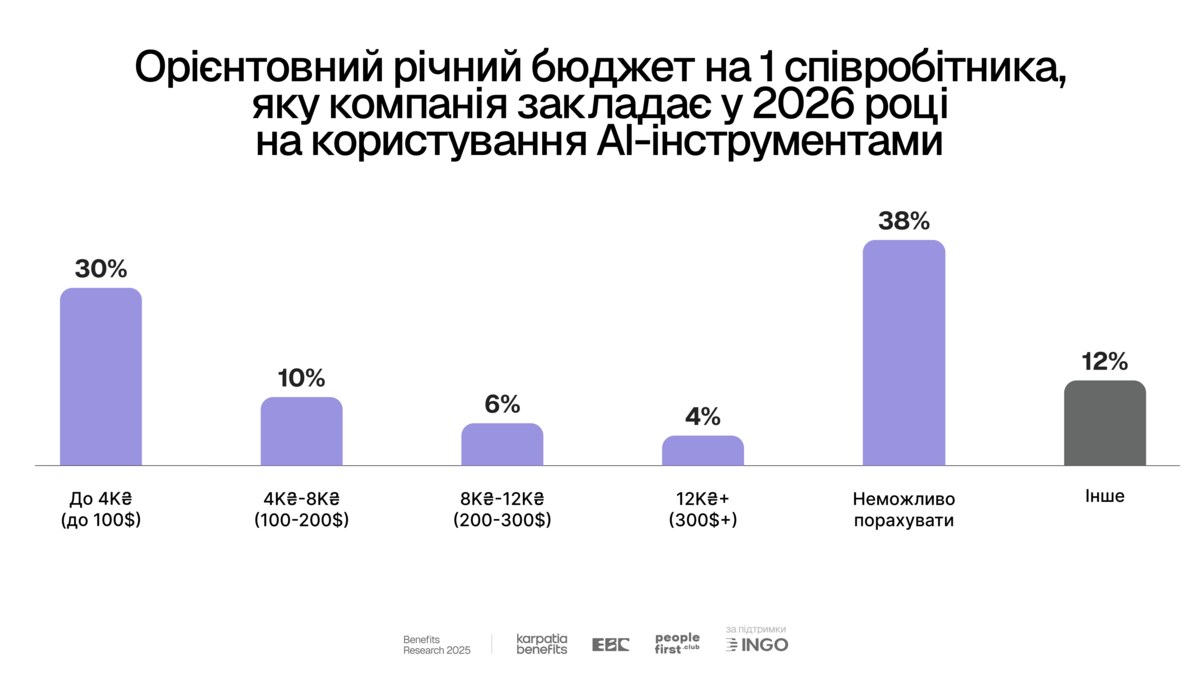
However, a new trend in recent years has been subscriptions to AI services. Almost half of companies already allocate a budget for AI tools for each employee, and 35% limit access to specific roles. This shows how quickly AI has become not a «geek option» but a basic work tool, on par with office software.
Only 18% of companies have implemented the cafeteria model, where each employee can create their own package within an allocated budget. However, 10% already plan to expand and automate this process in 2026.
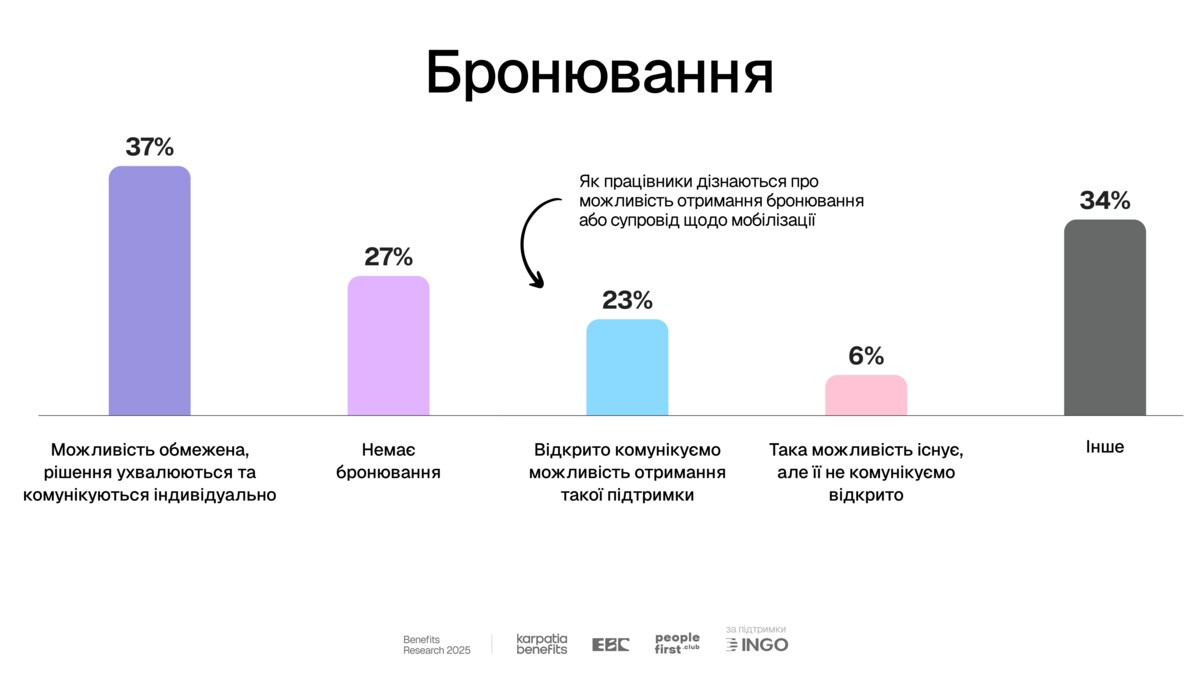
A separate section of the study is devoted to reservation from mobilization. Only 34% openly communicate that such a possibility exists. In other cases, decisions are made individually or are not voiced at all. This issue remains complex and sensitive, but it is already obvious: transparency in this area will become one of the challenges of the coming years.
At the same time, there are positive developments. Companies are increasingly looking for ways to support people with different life experiences. Already 38% of surveyed companies have special programs for military and veterans, which indicates a gradual expansion of team care practices and the willingness of employers to integrate this support into their strategy.
«Conventional 'coffee and cookies' are not a bonus.» The developer raised the topic of benefits among IT workers. What they actually consider to be «bonuses» from the company, and what is just a «patch»
«Sleeping at work, they pay, I’m in.» The recruiter asked IT professionals which corporate benefits impress them the most. A selection of creative options for HR