Хочете будувати кар’єру в Data Science та AI? Vodafone Big Data Lab відкриває новий набір —>
Олег ОнопрієнкоІсторії
26 January 2026, 09:00
2026-01-26
“I’m a programmer and I don’t want to just stand around in uniforms.” The story of an IT guy who created an automation system for the army
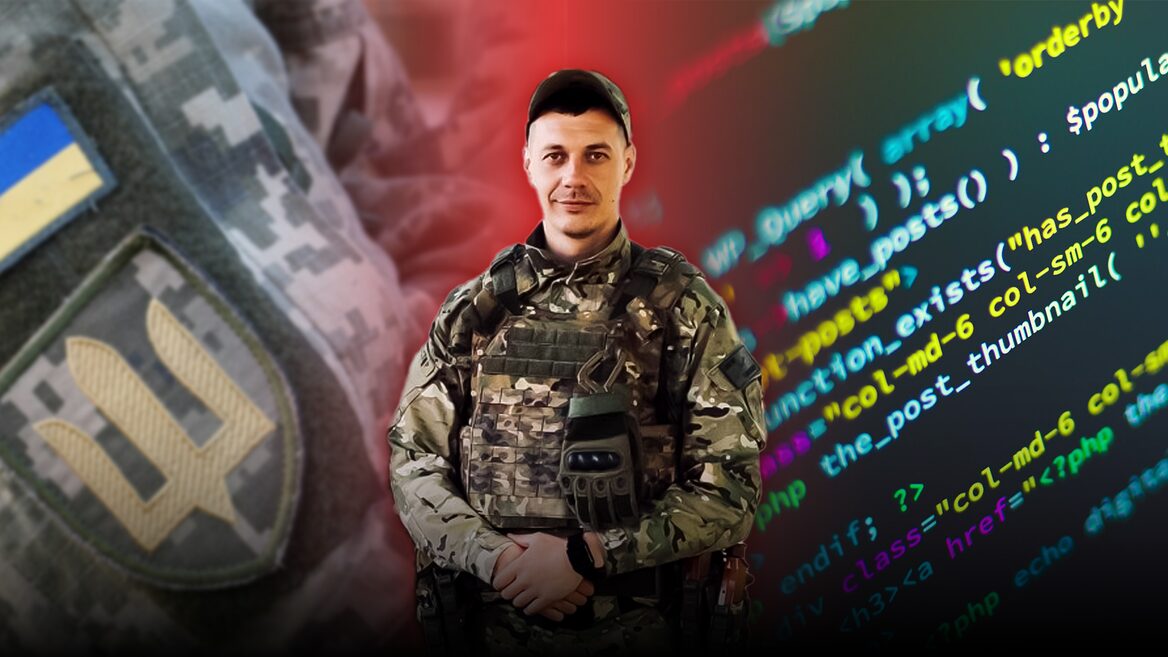
Yuriy Chlek went from chief engineer of a gas company to Magento developer, and with the start of a full-scale war he became an officer of the Armed Forces of Ukraine. In the service, he not only fought, but also created an internal data collection system that replaced paper reporting. After demobilization, Yuriy returned to the tough IT market and is now looking for his place in civilian life again. dev.ua talked to Yuriy about his dizzying path to IT through the war.
Yuriy Chlek went from chief engineer of a gas company to Magento developer, and with the start of a full-scale war he became an officer of the Armed Forces of Ukraine. In the service, he not only fought, but also created an internal data collection system that replaced paper reporting. After demobilization, Yuriy returned to the tough IT market and is now looking for his place in civilian life again. dev.ua talked to Yuriy about his dizzying path to IT through the war.
From gas networks to Magento 2
Yuriy Chlek's story begins in the city of Rivne, where he has been building a successful career in the energy sector for a long time. His professional path in the Rivnegaz company was an example of gradual growth. Yuriy started as an ordinary controller and, thanks to his perseverance, became the chief engineer of the Rivne branch. It was a responsible job with a large number of subordinates and specific challenges, but Yuriy's environment, consisting mainly of IT professionals, constantly pushed him to think about changing the vector of development.
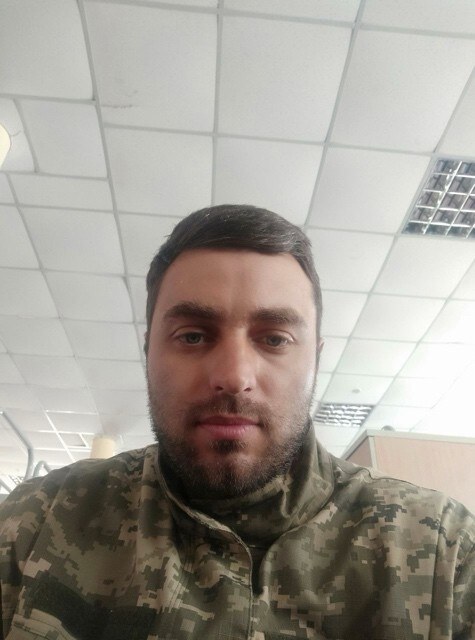
Yuriy Chlek, IT worker and veteran
Before IT, I worked at Rivnegaz. I went from an ordinary controller to the chief engineer of the Rivne branch. But the work, you understand, is like that there, perhaps very specific, there are many people under my command, I had many friends who were IT workers at the time, and they encouraged me, saying: "Come on, let's try."
In 2020, when the world was gripped by the Covid crisis, Yuriy finally decided to change his profession. His studies began at the “STEP” academy, but after six months of classes he realized that the material he had learned was not enough for real work in the industry. In search of deeper knowledge, Yuriy found a mentor among his friend’s acquaintances, who volunteered to help him improve his technical level. This was a period of intensive self-study, when Yuriy mastered the basics necessary for a professional start.
"I studied at "SHAG" for six months and realized that the material they were giving me was not enough. And I started looking for someone who would, so to speak, give me additional training. I found an employee of my good friend who volunteered to give me more knowledge," Yuriy said.
Later, there was an opportunity to take specialized courses directly at one of the IT companies with the prospect of further employment. Yuriy, in his own words, was ready for any challenge, so he successfully completed his studies. Although the pandemic put many processes in the company on hold, Yuriy did not waste time. In July 2020, thanks to a friend's recommendation and a successfully completed test task, he got his first job at Sam Solution. At that time, Yuriy was 30 years old.
"The instructor asked: 'Are you lying that you've never flown on wings?'" A native of Aiti and a veteran - about his journey in aerial reconnaissance, the liberation of the Kherson region, and how society deceives itself about the war
"I'm all for the "kipish", as they say. I went to those courses, finished the courses, Covid started. And accordingly, all these processes were put on hold. We were told: "Guys, you wait... we don't mind if you look for another company there, because we understand that the current situation is very uncertain," the IT worker explained.
Yuriy's main technological focus was the Magento 2 platform, which specializes in creating large e-commerce projects. Working on complex online stores allowed him to quickly gain experience as a Magento 2 developer and work stably in the company before the start of a full-scale invasion.
"I passed the interview, took a test task, and based on the results, I got into the company as a Magento 2 developer. There I worked on projects for large online stores."
From training centers to the front line
On March 21, 2022, Yuriy Chlek's life changed dramatically: after a call from the military registration and enlistment office, he, as a junior lieutenant after the military department, immediately went to serve. At 8 pm that same day, Yuriy was on the train to the training center. The transition from the comfortable life of a developer to military realities was a "quiet shock" for him. Instead of writing code, he found himself on advanced training courses for officers, where the conditions were as close as possible to field ones: constant being on his feet, exhausting training, and the lack of familiar comfort.
No one understood what would happen, what would happen. As a result, I ended up in a training center, took a refresher course, where we were assigned to military accounting specialties.
Yuri's first months of service were spent in the harsh conditions of training centers located in regions close to the enemy border. There, he had to literally "live in the ground," adhering to the rules of camouflage and light camouflage.
Yuriy recalls that just to wash up, he had to walk 4 kilometers one way. He had to sleep on homemade cots made from pallets, where the wide gaps between the boards made rest almost impossible, until he began to improve his own sleeping place.
"In the evening, I would simply come and lie down and switch off. Despite the fact that my cot had been knocked off the pallets, it was actually a 10-centimeter board and a 20-centimeter gap between the floors. That is, it was simply impossible to sleep. I was already sleeping as best I could," Yuriy recalls his first days at the primary center.
Despite his physical fatigue, Yuri's professional background was making itself felt. Not wanting to limit himself to just outfits, he began actively looking for opportunities to apply his programming skills.
The first important technical task was the restoration of specialized simulators for military training. At the beginning of the war, these expensive and complex systems were hastily dismantled: the cables were cut, the markings were missing. Yuriy, together with his comrade, with whom he mobilized, was able to set up and launch this equipment, which was his first contribution to the technological support of the troops.
“I was starting to get a little excited, so to speak, that I could do something, not just stand there in uniform. I started asking: ‘I’m a programmer, can I help? What do you need?’ As a result, it turned out that the training center had special simulators for training people, who at the beginning of the war were being dismantled in a very barbaric way,” Yuriy said about his first IT-related job in the army.
“When everyone in IT dreams of ‘remote work’ and ‘free schedule,’ I realized: I need a different type of freedom.” The story of a veteran who consciously chose the office format of work from 9 to 18 and does not regret it at all
In July 2022, Yuriy was transferred to another unit that dealt with combat support. Here, the service turned out to be much more “civilized”: an atmosphere of mutual respect prevailed, where hierarchy did not interfere with constructive communication between officers.
Although the unit was a rear-end unit, Yuriy regularly went on long missions to eastern Ukraine. While stationed 8–10 kilometers from the contact line, he continued to perform his duties, and saw firsthand how drones and new technologies were changing the nature of modern warfare.
"The army is actually like a society, to some extent more complicated, more bureaucratized. If you sit still and don't try to do anything, you'll stay where you are. As a result, I was transferred to another unit, where the service was much more interesting, the tasks were also much more interesting."
Development of an internal data collection system: Automation instead of paper
A real breakthrough in Yuriy's service came with the appointment of a new commander, who was a supporter of full automation of processes. The commander understood that the human factor in working with data should be minimized, so he initiated the creation of a development team. Yuriy, together with two other mobilized specialists, began work on a product that was to replace outdated paper reporting and chaotic Excel tables and Word files with a modern system.
"The commander also arrives mobilized with his vision, with his visions. He believed and believes that it is necessary to automate processes that can be automated. That is, in this way, to minimize human participation in these processes," the AIT member said about the beginning of a new direction in the army.
The implementation process of the first ready-made solution took about a year and a half of intensive work by a team of three people. It was not office programming - work on the code was interrupted by trips to the front and the performance of other military tasks. The system was designed as an internal web resource, working exclusively via VPN or in a local network to ensure maximum confidentiality. The main goal of the system is to collect, structure and facilitate the analysis of large amounts of information for the formation of reports and analytical conclusions.
The result of their work turned out to be so popular that the system continues to scale and be filled with new functionality even after Yuriy was fired. The unit commander insisted on creating a product that would benefit the unit for years, regardless of who would serve in it.
"Code Became My Therapy." The Story of a Veteran Who Recovered from a Serious Injury Thanks to His Dream of Becoming an IT Professional
In addition to software development, Yuriy was involved in supporting computer equipment and implementing cybersecurity standards, regularly attending trainings and explaining to colleagues the importance of data protection in wartime.
“The commander says: ‘We are making a product that people will use even when we are no longer serving here.’ This is a purely internal product to make the work of people serving in this unit easier. I talked to a friend and it is even being scaled now, there is quite an interesting functionality there,” Yuriy explained the commander’s approach to new technological solutions.
Returning to civilian life and finding a job in IT
In October 2024, Yuriy Chlek was discharged to the reserve. Returning home to Rivne was joyful - in July of the same year, Yuriy had a daughter, and he was finally able to devote time to his family. However, professional adaptation turned out to be difficult: the IT market had become much tougher, more demanding, and less stable during his years of service.
"When I started looking for a job in IT, I was somewhat surprised at how much the market had changed. It had become much more complicated. That is, there is not such a flow of messages from HR managers as, for example, in 22 or even 23."
Yuriy noted that the requirements for candidates in the market have increased significantly: what was previously considered a Senior level is now expected from a Middle developer. He faced the fact that Magento 2 projects are gradually leaving Ukraine due to security risks, and large e-commerce businesses are afraid to hire developers who may be mobilized again.
The job search became a full-fledged process for him: he sent over 70 applications and went through about 15 interviews, using his experience as a Full Stack Developer (Node.js, React, Vue).
Requirements for candidates are generally a very interesting aspect, because now the requirements that are being made for Middle, then, for example, in the 22nd year, you could be such a senior senior that you are just a slipper. One company gave me a list of requirements with 17 or 18 points. In my opinion, this is a little not entirely correct.
A separate challenge was the attitude of recruiters towards Yuriy's veteran status. Despite occasional instances of sincere gratitude, he often observed the confusion of HR managers who had no experience communicating with people who had returned from the army. Yuriy also took a principled position on ethics: despite the crisis in the market, he refuses to work with projects in the gambling sector, as it does not correspond to his values.
"I was rejected. We don't hire concussed people." The veteran was rejected because of a concussion. Recruiters say that in some places in the market there is an unspoken rule not to hire people after service.
Now Yuriy continues his search, actively updating his knowledge of AI in programming, and plans to support the Armed Forces of Ukraine with donations from every future salary.
"Prepare for the fact that you may be mobilized, prepare for blackouts, donate to the Armed Forces of Ukraine. When I find a job, I plan to donate every month, because war eats up resources very quickly. This is not because the guys are bad, but because war is a consumable, and it burns. God forbid, without a crew," Yuriy summed up his story and urged the AIT members to be ready for any scenarios.
"I'm bored at home. As long as my health, intelligence, and qualifications allow it, why not work?" A 66-year-old IT worker, upon learning that he was being laid off, sent out 700 resumes and received a new offer. How it was