“I had $500 and no clear plan.” The story of an IT guy from Melitopol who left the occupation at the age of 17, learned programming, and created a successful startup with over 150,000 users
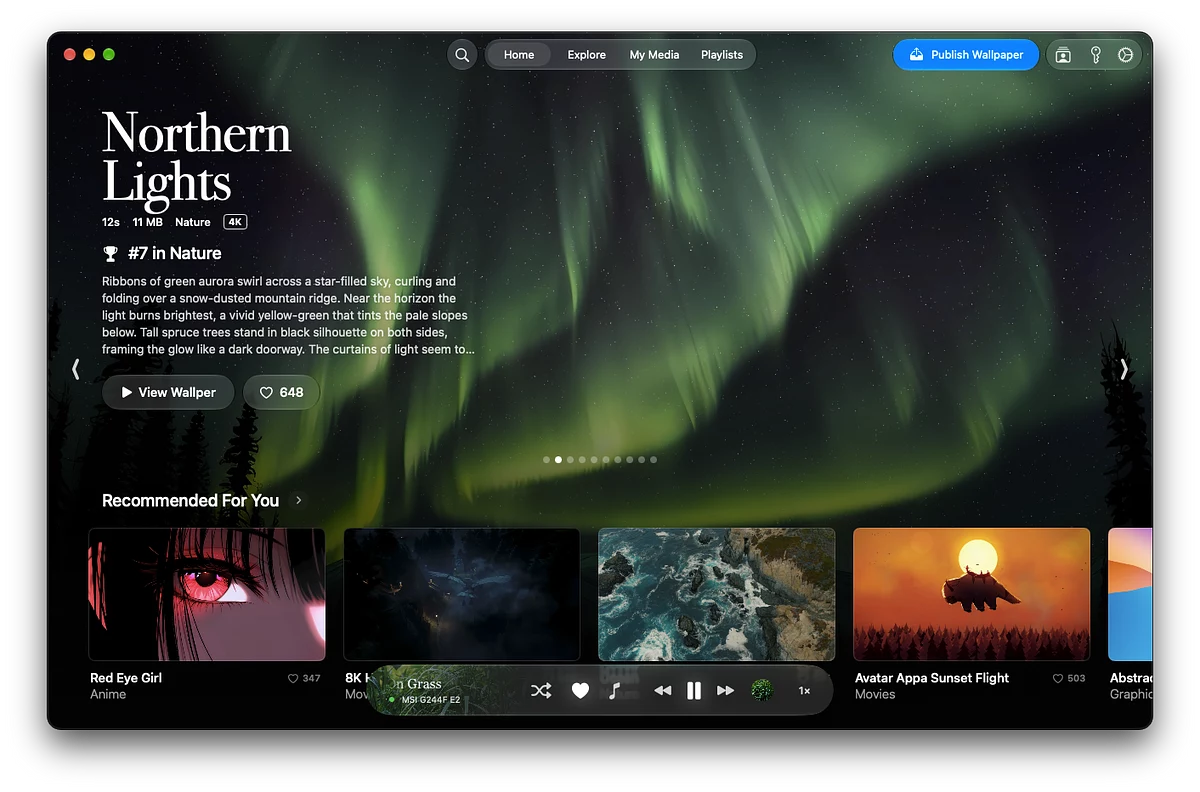
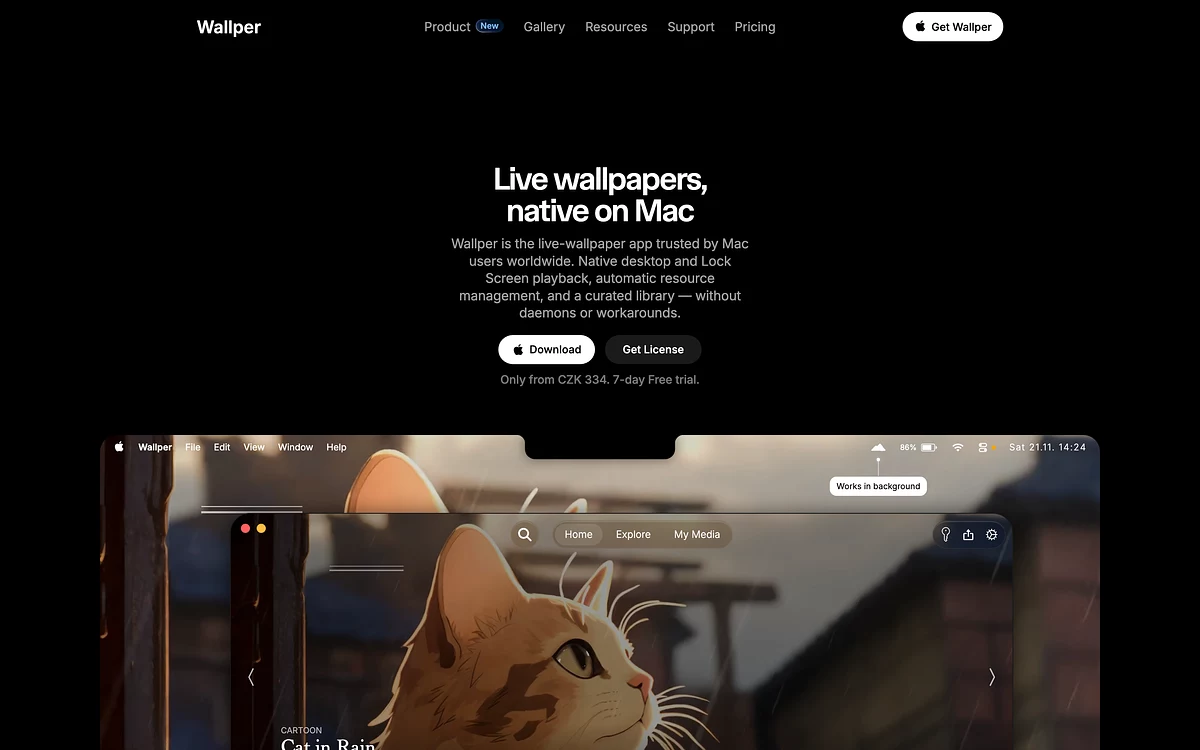
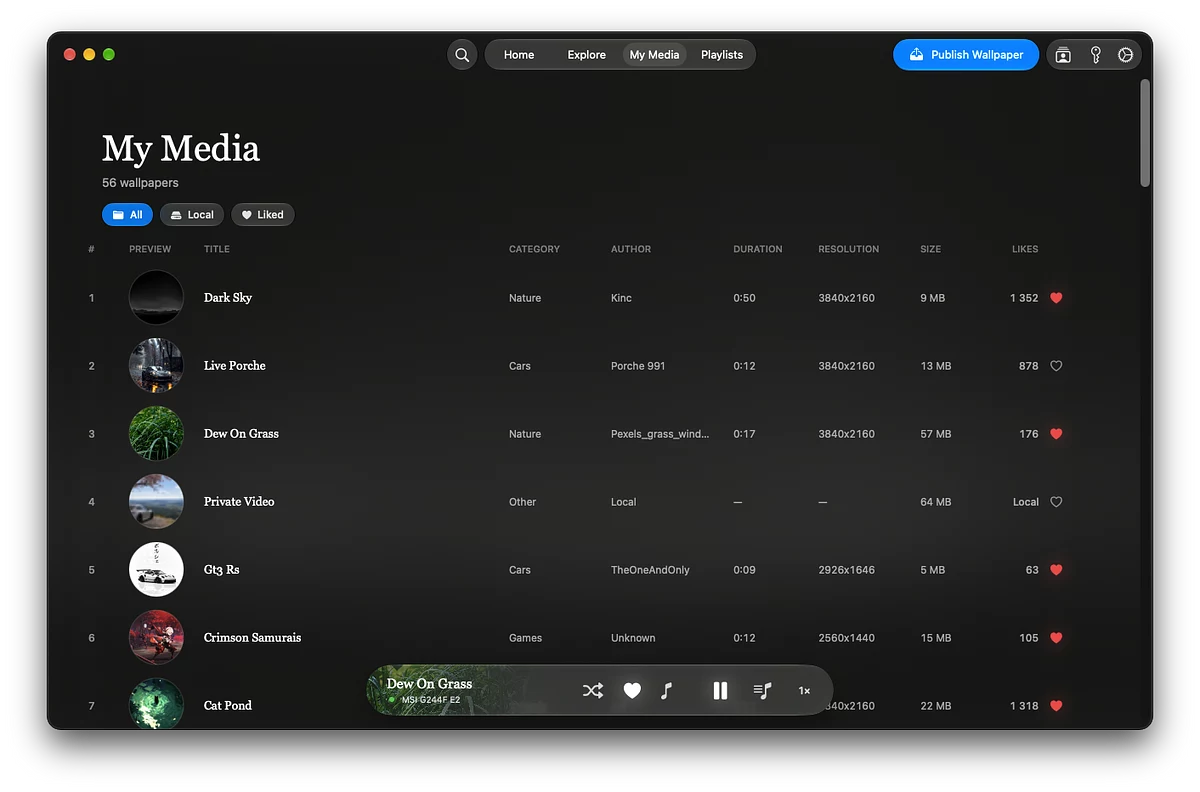
At the age of 17, Oleksandr Livyk left occupied Melitopol for Prague on his own, with only $500. He worked as a night administrator in a warehouse for 12–16 hours, and in his free time he taught himself to program. Later, he got a job at the international pharmaceutical company MSD, although a diploma was usually required for a developer position. But in parallel with working for a large corporation, Oleksandr decided to create his own product. Together with a childhood friend, he launched Wallper, an application for macOS with live wallpapers. In 16 months, the product received over 157,000 unique installations, sold 16,421 licenses, and brought in $170,000 in revenue. And all this without external investment.
At the age of 17, Oleksandr Livyk left occupied Melitopol for Prague on his own, with only $500. He worked as a night administrator in a warehouse for 12–16 hours, and in his free time he taught himself to program. Later, he got a job at the international pharmaceutical company MSD, although a diploma was usually required for a developer position. But in parallel with working for a large corporation, Oleksandr decided to create his own product. Together with a childhood friend, he launched Wallper, an application for macOS with live wallpapers. In 16 months, the product received over 157,000 unique installations, sold 16,421 licenses, and brought in $170,000 in revenue. And all this without external investment.
The IT guy shared his story with dev.ua.
From Melitopol to Prague: $500, night shifts and programming after work
Oleksandr Livyk is 21 years old. He comes from Melitopol, which was under Russian occupation at the beginning of the full-scale invasion. A little more than a month after the start of the Great War, the young man remained in the city. Living conditions gradually became more and more difficult: there was no electricity, no water, the shops were running out of food, the curfew began at 5:00 p.m., and public transport was almost non-existent.
Oleksandr made the decision to leave on his own. He told his mother about it only the day before his departure. The guy left via the green corridor towards Zaporizhzhia, and then moved to the Czech Republic.
“When I arrived in Prague, I had $500 and no clear plan, except for one: not to go back and build everything from scratch,” he says.
Alexander chose Prague not by chance. He liked the price-quality ratio, and he also knew that in the Czech Republic you can study at university for free. At that time, the guy even considered the possibility of admission. However, first he needed to provide for himself. Alexander got a job as a night administrator in a warehouse — work shifts lasted from 12 to 16 hours. After them, he would return home and sit down at the computer — to learn programming .
"I started from the basics, like everyone else, from the web. But that’s where you can learn a lot about programming in general. I never studied programming at university — everything I know, I learned on my own, in practice: videos, articles, documentation," the guy says.
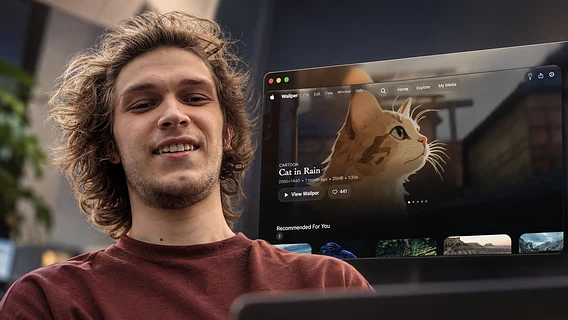
Oleksandr Livyk, photo — LinkedIn
At that time, AI assistants that can explain code today, help with errors, and speed up development did not yet exist, says Oleksandr. Therefore, training required a lot of independent work. He admits: not every day after a grueling shift he had enough strength to program, but knowledge gradually accumulated.
This eventually paid off. In September 2024, Oleksandr was offered an internship as a developer at the Prague office of MSD (Merck), an international pharmaceutical company. The position usually required a degree, which he did not have.
"I understood that the chances of getting into this company were few, so I consciously raised the bar for myself: I prepared for the interview on questions that were above my level at the time, and I learned everything about the company itself," says the self-taught IT professional.
He was hired through the Axial recruitment agency. But getting an offer was only half the battle. Oleksandr understood that he had to prove his qualifications in practice. “After I was hired, I studied and worked on weekends in my unpaid time to master everything and live up to what I promised,” the Ukrainian shares.
At MSD, he developed the backend and frontend of an internal service for monitoring approximately 1,700 company sites. It was used by site owners, DevOps engineers, SEO specialists, team leaders, and business analysts. In his work, the developer used TypeScript, React, Next.js, Prisma, AWS, and Terraform. Thus, Oleksandr worked at the company until February 2026, because in parallel with his corporate work, he gradually developed another interest — his own products.
From Minecraft servers to the idea of Wallper
Oleksandr got his first experience of entrepreneurship even before Wallper. While working at MSD, he noticed that he could complete work tasks quite quickly, and use his free time after work for his own projects. The first such project was Minecraft servers. For Oleksandr, it was primarily an opportunity to understand networks, servers, load balancing, and infrastructure security.
He wanted to make the service more user-friendly for players. According to him, the result was even better than he expected, and users liked what the team had created. However, there were difficulties with monetization. The servers were aimed at children from the countries of the former USSR, and the team did not accept payments from Russia and Belarus. Because of this, it was difficult to turn the project into a stable business.
“The server project hit my pocket, but it gave me a lot of experience, which later played a role in Wallper,” the developer admits.
In parallel, Oleksandr started working on another idea. He was 19 years old, there was no big money to launch a large-scale product, so the guy was simply looking for a problem that could be solved on his own. One day, looking at the screen of his MacBook, he wondered: why are there no full-fledged live wallpapers on the Mac?
Apps with similar functionality already existed, but, according to Oleksandr, none provided the experience users wanted. Some offered expensive subscriptions, others could not set videos on the lock screen, had a weak interface or limited functionality. Users even published instructions on how to set videos on the Mac desktop themselves via system folders and various workarounds. But such solutions were unstable: the wallpaper disappeared after reboot, loaded the system and quickly drained the battery.
Oleksandr turned his attention to Wallpaper Engine, a popular Windows application that allows you to use videos as wallpaper. He looked at the financial results of this product and decided that there might be a demand for a similar solution on the Mac.
“I thought that if we made it truly native, so that the wallpapers behaved like system wallpapers, people would be willing to pay for it,” the IT expert explains.
Oleksandr decided to discuss the idea with his childhood friend Dmytro Katyukha, whom he had known since first grade. Dmytro liked the idea, and the guys started working on Wallper.
The roles were fairly clearly divided. Oleksandr became responsible for the technical part: he wrote most of the code, the video playback engine, mechanisms for working with multiple monitors, energy saving, licenses and updates. He also developed the website, backend and payment system.
Dmytro took on marketing, brand development, finance, and user support. He collected audience requests and passed them on to Oleksandr, who turned them into new features.
Two months for the first version and half a year for the main technological advantage
The development of Wallper began in April 2025. The application was released in its first release in June.
“The interface was raw, there were bugs, but the application performed its main task, and everything worked,” recalls the startuper.
At the start, the team focused on the main thing — playing videos as macOS wallpapers. Later, the product was developed according to user requests.
In July 2025, a power saving mode was added, in August, a native screensaver, and in January 2026, Shuffle, which allows you to change wallpapers. Localization into 10 languages and Music Sync, a feature that makes wallpapers react to music playing on your computer, also appeared.
The team released 56 updates in the first 16 months. However, the biggest technical challenge was the ability to set live wallpapers not only on the desktop, but also on the macOS lock screen. The problem was that Apple does not provide a public API to implement such functionality.
“The main principle is not to overlay the system, but to integrate with it. We transfer the playback to the native macOS engine that Apple uses for its animated wallpapers,” notes Livik.
According to Oleksandr, this is what made it possible to make Wallper’s behavior as close as possible to the system’s: the wallpaper does not disappear after rebooting or waking the computer from sleep. At the same time, the developer does not disclose the specific implementation method. This is one of the main technological advantages of the product.
Livik confirms that Wallper uses Apple’s private APIs. Without them, the application would not be able to achieve the desired behavior. This also creates additional risks. There is no documentation for such mechanisms, so each major macOS update could potentially break some of the functionality.
This already happened with macOS 26 and 27. Apple changed the way animated wallpapers were set on the lock screen, which caused playback in third-party applications to stop working properly. The team had to rework the integration. In version Wallper 1.9, support for macOS 27 was restored.
The developer says that it took him about half a year to implement the live wallpapers for the lock screen alone. “We even looked for people on freelance exchanges to help. Even the most experienced developers tried, but they couldn’t,” he says.
Another important task is to make the user feel almost imperceptible to the application in the system. To do this, the team moved the video decoding to the GPU, using hardware decoding, and minimized the load on the processor. They took Apple’s own animated wallpapers as a reference point. Oleksandr measured how much resources they consumed and tried to achieve similar indicators.
According to him, playing 4K video on a 5K2K monitor consumes about 1,5% of a single CPU core and about 55MB of RAM. Wallper also automatically pauses videos when the wallpaper is covered by windows, the Mac is running on battery power, or the system is under load.
$200 to launch and $170,000 in sales without investors
Wallper was launched without venture funding or external investment. According to Oleksandr, the start-up costs were approximately $200. The main recurring costs are servers, website hosting, video storage, an Apple Developer account, and payments to blogger partners. Currently, the service costs approximately $500–600 per month to support.
As of November 21, 2026, the team provides the following application performance indicators:
over 157,000 unique installations — that many different Macs have run Wallper;
about 37,500 Macs used the app in the last 30 days;
16,421 licenses sold;
$170,000 in total sales on Stripe for all time — before deducting commissions and refunds.
The team chose a non-subscription monetization model. After installation, the user gets a seven-day free trial period, after which they must purchase a license.
Initially, the application allowed using some of the features for free, but after testing, the team abandoned this model. According to Oleksandr, switching to a seven-day trial period significantly increased conversion to purchase. The license costs from $14.99 and is purchased once.
"People are tired of subscriptions, especially for small utilities. Wallpaper is something you buy once and use for years, so a one-time purchase is more honest here," he explains.
Prices are also adjusted to the purchasing power of different countries. For example, in India a license costs 749 rupees, and in the Czech Republic it costs 324 crowns. According to Oleksandr, the team receives few requests for refunds: there have been 236 of them for over 16,000 licenses sold. This is about 1,4%.
Livyk says that the main source of new users has been organic Google search, which now brings in about 25,000 clicks per week. Over the past 12 months, the site has been visited more than 2.3 million times from 221 countries.
The second important channel is cooperation with technobloggers. The team created an affiliate program for them. Later, says Oleksandr, bloggers themselves began to contact Wallper with proposals for cooperation. There are also Mac user communities, Reddit, and publications in specialized media.
In particular, in July 2025, AppleInsider named Wallper the first Wallpaper Engine alternative for Mac. In October of the same year, Cult of Mac ranked the application in first place among Mac utilities. And the German publication Mac & i tested it in its print issue.
However, Oleksandr doesn’t see these posts as a source of an instant sales spike. In his opinion, their main value lies in the long-term impact on a product’s search visibility.
“I think such publications are more useful for SEO: each site has its own rating, and the more authoritative sites link to you, the better you rank in organic search,” he notes.
At the same time, sales were really growing. If in September 2025 the monthly revenue was $3,759, then in September 2026 it was already $14,787. That is, it increased almost fourfold in a year. According to the developer, Wallper’s income is enough to support the team, taking into account the small costs of product support. But the main value of the project for him is not only in money.
“Wallper gave us the opportunity to be independent from our employer, and that gives us a lot of free time. So we continue to make new products,” says Livyk. The project, according to him, is operated through the company Sandimax LLC.
Competitors copy ideas, and the team continues to develop the product
As Wallper’s popularity grew, more competitors emerged. Oleksandr attributes this, in particular, to the development of AI, which has simplified the creation of such applications. According to him, new products often repeat Wallper’s most successful ideas and designs. However, he does not perceive this as a threat that should stop development.
“For us, this is additional motivation to work further and harder: competition is not bad, but quite the opposite,” notes the IT expert.
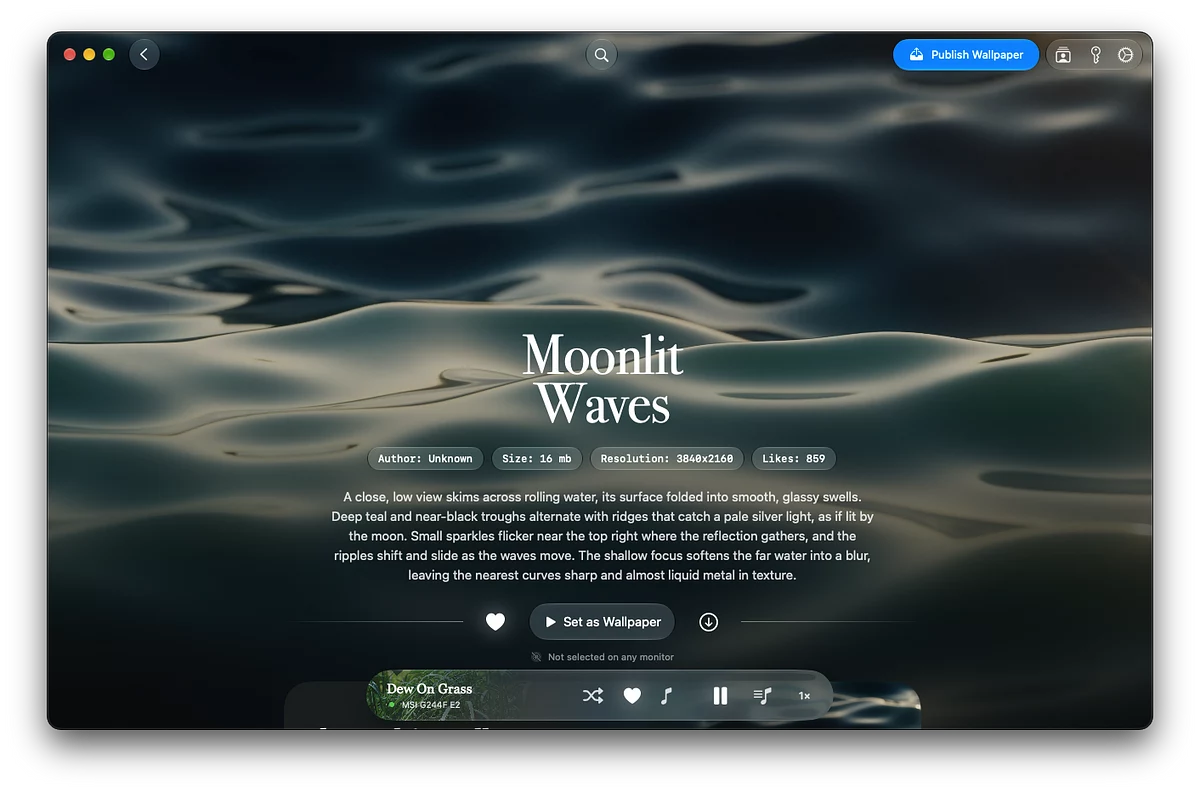
The developer considers Wallper’s main advantage to be its deep integration with macOS. The application works on the lock screen, does not disappear after a reboot, has almost no load on the system, and automatically stops playback when needed. Another component is the gallery, where the authors have already published thousands of wallpapers.
The team continues to add features based on user feedback, including power saving, native screensaver, Shuffle, and localization.
The story with Music Sync was illustrative. At first, Oleksandr said, he didn’t really like the idea of creating wallpapers that react to music playing on a computer: it seemed complicated. But the team still implemented it, and the function turned out to be successful. Wallper continues to develop: they are working on new features, a wallpaper library, and user convenience.
But now Oleksandr has another project.
Wallper funds Locora, a new app for travelers
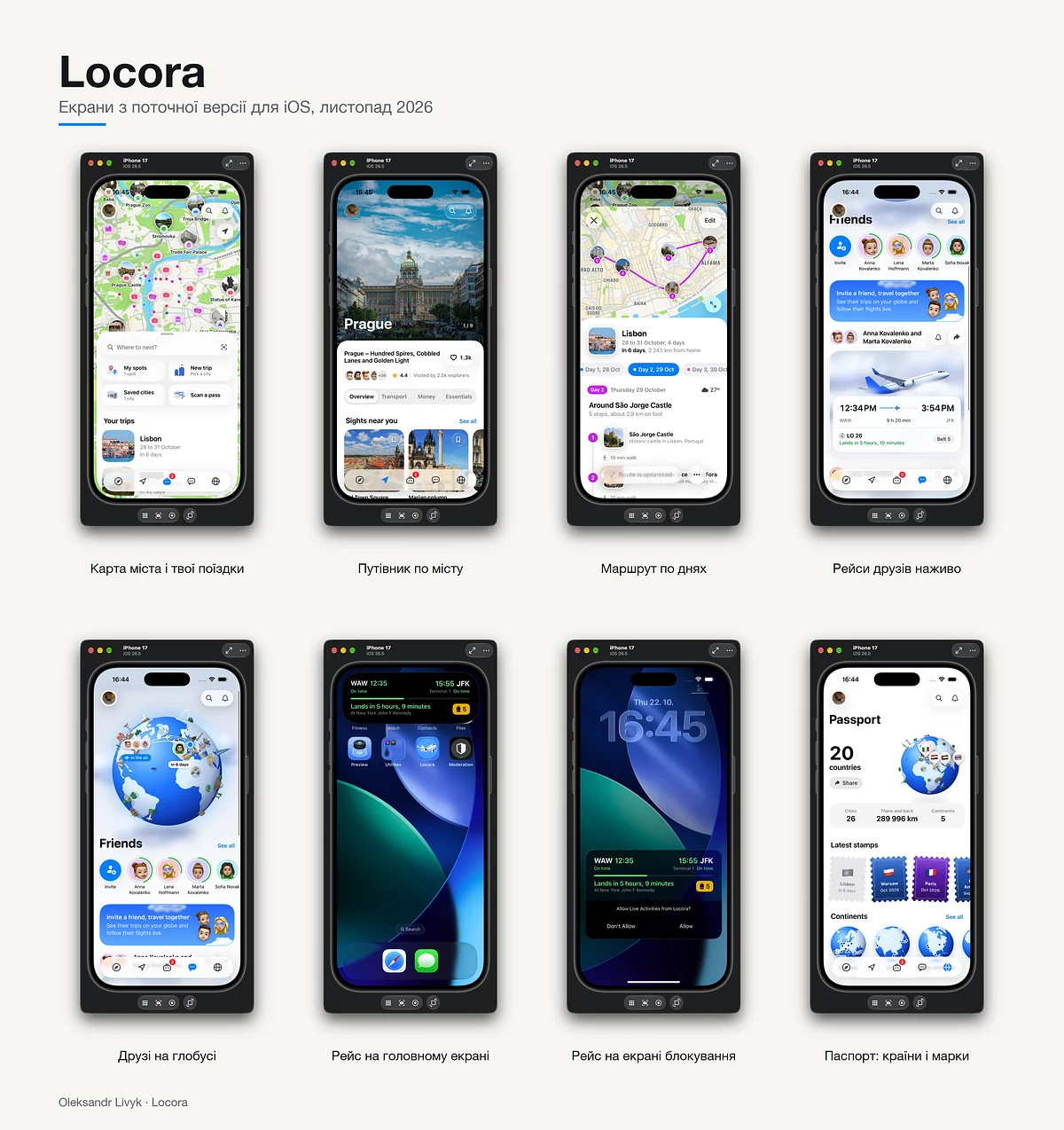
Back in 2024, Oleksandr came up with the idea for Locora, an iOS travel planning app. He started working on it in full force in August 2026. The developer describes the problem the product is supposed to solve simply: preparing for a trip often turns into twenty open tabs searching for information about transport, places, mobile communications, car rental, and other organizational issues. Locora is supposed to bring this all together in one app.
The service, according to Livyk, automatically understands when the user has arrived in another country, suggests how to get to the city, what applications are used there, where to buy a SIM card or rent a car. The application also generates routes by day on the map, shows information about flights in real time — in particular, gates, delays and baggage claim. This information should be displayed directly on the iPhone lock screen. Separate features in the app are provided for friends: they will be able to see where and when the user is flying.
At the time of the conversation with dev.ua, Locora already had a working version. It contained a guide to 236 cities with over 44,000 places, travel plans by day, flight information, a friends list, and a digital “passport” with the countries the user has visited. The startup plans to build monetization on subscriptions and commissions from partner services: eSIM, event tickets, car rentals, and housing.
This time, Oleksandr is not starting from scratch. During the development of Wallper, he formed his own Discord community, which already has over 2,000 members. He also has contacts of bloggers who are ready to collaborate with the new product. According to him, some of them have over 5 million followers on Instagram and are already waiting for the release of Locora.
"In general, I will do everything the same way, but now I already have a name among developers and my own Discord community with over 2,000 members — this will help a lot at the start," he says.
The developer is not going to abandon Wallper for the sake of a new startup. On the contrary, both products should develop in parallel. He emphasizes that Wallper has become the financial basis for the next stage. It is thanks to its income that Oleksandr can invest resources in Locora without looking for external financing at the start.
“Locora is a product that could not exist without funding from Wallper, so both projects are vital to me. I believe in Locora much more than I believed in Wallper at the start of development,” he notes.
“My job is to give Claude Code tasks, and he does everything himself.” An IT father created an AI service for his son over the weekend that invents new LEGO models. Now he gets organic traffic from Google and has Zelensky and Svitolina figurines in his collection
Вас також кусають комарі? Розповідаємо про пристрій від українських стартаперів, який може цьому зарадити
Як зауважив нещодавно один військовий, якой побажав залишитись невідомим, орки, може, й не поцілять, а комарі точно зʼїдять. І від них потерпають зараз багато українців.
Позбавитись від комарів назавжди ефективно й екологічно допоможе гаджет Mosqitter. Цей стартап заснували дві українки — Анастасія Романова та Ольга Дьячук.
Ми вирішили нагадати, що може Mosqitter, про принципи його роботи та особливості, на злобу дня.
(текст від 21 жовтня 2021 року)
Кнопка здоров'я. Українці розробили систему, яка рятує пацієнтів стаціонару від смерті. Вони - переможці IT Arena Lviv 2022
Медичний психолог, який переїхав в Україну з Москви в 2014 році, Іван Осадчий, придумав систему, яка допомагає медсестрі і пацієнтові не втратити один одного в стаціонарі. Його стартап knopka вже працює в декількох лікарнях понад три роки не лише в Україні, а й у Польщі.
Повторюємо історію стартапу-переможця IT Arena Lviv 2022. Текст від 28 вересня 2022 року.
"I was more afraid of the interview than the combat missions." How a veteran after the front masters Java and builds a new career
Vitaliy Shchyrsky, Junior Software Engineer at EPAM, managed to work as a cook, courier, and restaurant administrator before the Great War. On February 24, 2022, he joined the defense of Ukraine, and after demobilization due to health reasons, he had to look for a new professional path. During rehabilitation, Vitaliy began to study programming on his own, later joined the EPAM program "IT for Veterans" and chose Java. The transition to civilian life, training after injuries and concussions, difficulties with English, and the first professional challenges — he tells dev.ua about all this. Then — the direct language of an IT specialist.
#Vsrativakansii. Crossfit candidate, 9 months to respond to the candidate, work under supervision and discrimination of candidates from Kharkiv, Dnipro and Zaporizhia
Hello! It’s #vsrativakansii again. A new selection of trashy job offers as usual on Friday’s broadcast. Today’s episode features a company that doesn’t know what it’s looking for, geographic discrimination in hiring, a response to a candidate with a weighty response, a candidate with CrossFit, and others.
Have important news to share? Message our Telegram bot
Key events and useful links in our Telegram channel