Хочете будувати кар’єру в Data Science та AI? Vodafone Big Data Lab відкриває новий набір —>
Марія БровінськаІсторії
23 October 2025, 09:00
2025-10-23
“In the US, ideas have a chance to become large-scale products.” An engineer and researcher from Lviv is creating an AI platform to support teenagers, which is being prepared for testing in American schools
Lviv-based researcher and engineer Maria Giy, together with a professor at the University of California (CSUN), is developing the Early Insight & Engagement System (EIES) AI platform — an innovative solution at the intersection of engineering, behavioral sciences, and ethical artificial intelligence. The system detects signs of stress and isolation in adolescents and can reduce the number of students dropping out of school and criminalization of youth. The idea for such a platform was born from an academic study of the behavior of Ukrainian adolescents, which Maria conducted with Lviv National University, working with data from hundreds of children. Currently, the specialist lives in the USA, and her development is being prepared for testing in American schools in 2026. The EIES project is an example of an original contribution to the development of EdTech engineering and socially oriented AI, which has already attracted the attention of the academic and technological communities in the USA. Maria’s work demonstrates international leadership in the field of educational technology and artificial intelligence aimed at supporting youth.
dev.ua talked to the specialist and learned a lot of interesting things about the career and achievements of the graduate of the Ivan Franko National University of Lviv, who has been creating useful AI products overseas for several years. Below is a direct speech from the specialist.
Lviv-based researcher and engineer Maria Giy, together with a professor at the University of California (CSUN), is developing the Early Insight & Engagement System (EIES) AI platform — an innovative solution at the intersection of engineering, behavioral sciences, and ethical artificial intelligence. The system detects signs of stress and isolation in adolescents and can reduce the number of students dropping out of school and criminalization of youth. The idea for such a platform was born from an academic study of the behavior of Ukrainian adolescents, which Maria conducted with Lviv National University, working with data from hundreds of children. Currently, the specialist lives in the USA, and her development is being prepared for testing in American schools in 2026. The EIES project is an example of an original contribution to the development of EdTech engineering and socially oriented AI, which has already attracted the attention of the academic and technological communities in the USA. Maria’s work demonstrates international leadership in the field of educational technology and artificial intelligence aimed at supporting youth.
dev.ua talked to the specialist and learned a lot of interesting things about the career and achievements of the graduate of the Ivan Franko National University of Lviv, who has been creating useful AI products overseas for several years. Below is a direct speech from the specialist.
About Maria
Maria Giy was born in Lviv. She graduated from the Ivan Franko National University of Lviv with a degree in Empirical Sociology. She is currently an engineer at the edtech giant ParentSquare, a researcher of AI applications in the field of innovative educational solutions, and the founder of the Early Insight & Engagement System and Hackico.ai projects.
«For me, IT is not just a profession, but a tool of influence»
Since school, I have been interested in exact sciences — mathematics, physics, programming. I actively searched for myself in STEM-related fields, and considered computer science or applied mathematics for education. But during one of the career guidance events, I came across a presentation dedicated to modern empirical sociology. Then I saw for the first time how technical approaches and tools can be naturally applied not only to solve purely applied problems, but also for a deeper understanding of complex social processes. Modern empirical analysis is an engineering discipline based on Data Analytics and Data Science, focused on designing systems for receiving, processing and interpreting data. This became for me not so much a choice as a logical continuation of my interest in analytics — since 2012 I have led a series of academic research, where I actively used data extrapolation and engineering methods for researching human behavior and social patterns
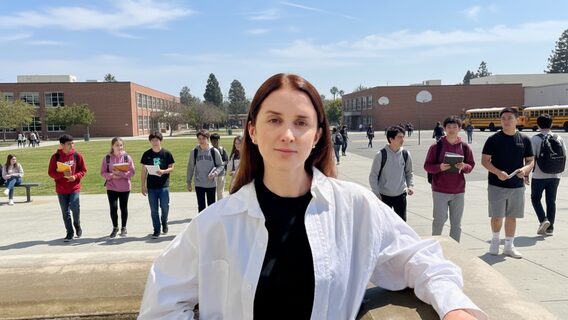
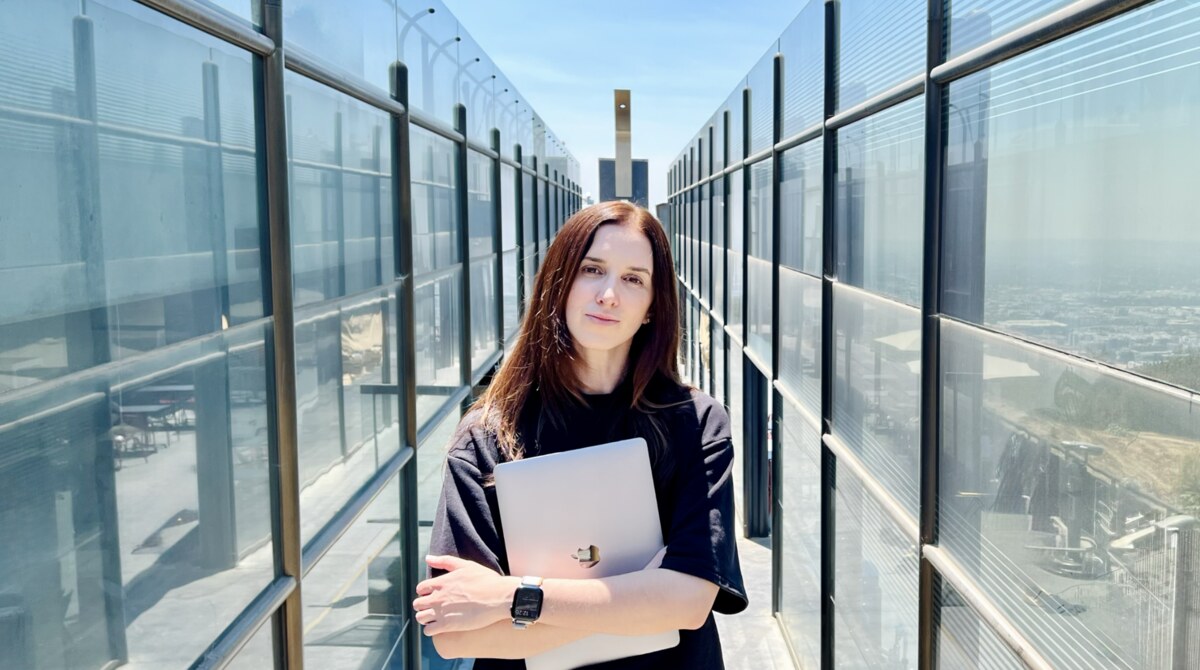
Maria Gui is an engineer and researcher in the field of artificial intelligence and educational technology.
For me, IT is not just a profession, but a tool of influence: through development, you can solve social problems.
Outside of academia, I have been building technical solutions for over 10 years of commercial development. Today, my main role is as a Software Engineer at ParentSquare (USA), the largest educational platform for school-family communication, used daily by over 20 million families and more than 40% of schools in the United States. My area of responsibility includes integrations with SIS (Student Information Systems), backend infrastructure and full stack development, as well as building systems for high-quality data validation and migration. It is a great honor for me to be part of the ParentSquare team as a Software Engineer. Creating real social impact is part of the company’s DNA, it is a business that supports the development of education and communities. The company encourages my initiatives and research, assessing the possibility of their practical application. I wish everyone to find a place where daily work is a support and a launch pad for ideas.
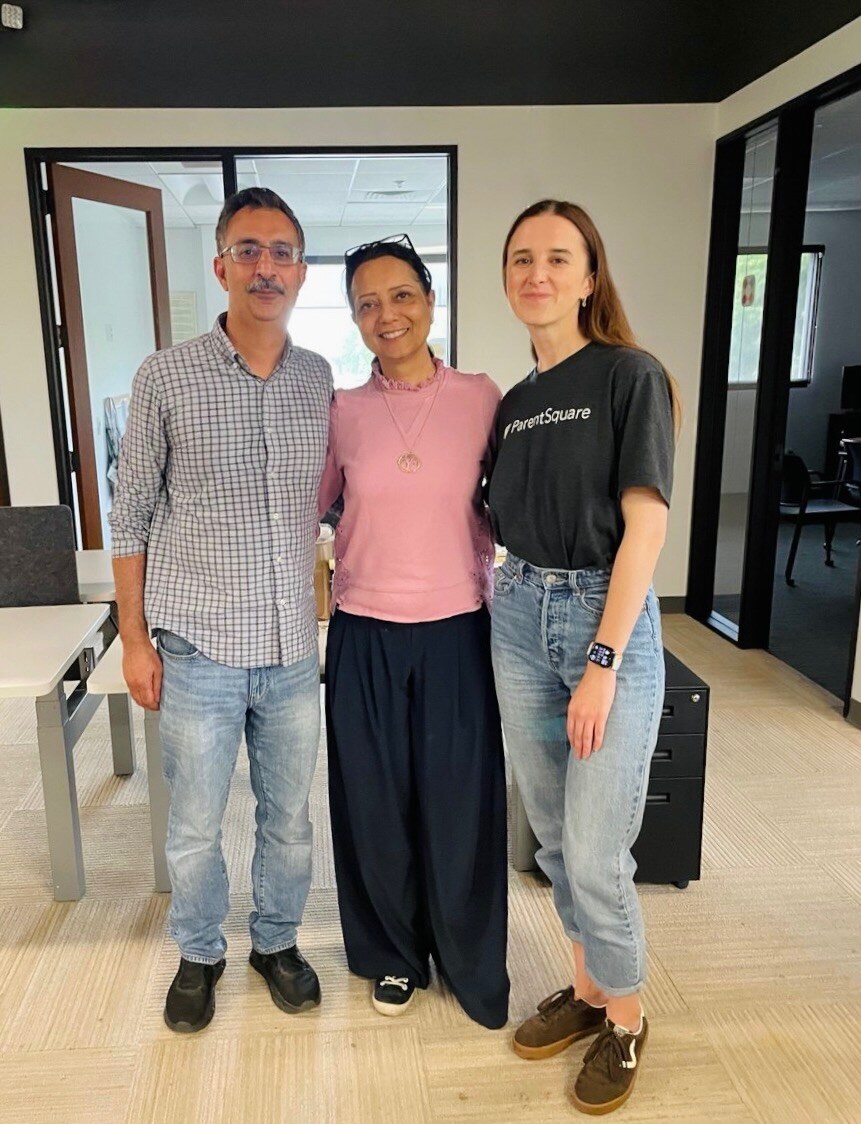
Sohit Wadhwa (CEO) and Anupama Vaid (President, CPO), founders of ParentSquare with Maria Gui in Santa Barbara, California
«For me, EdTech is an environment for engineering experiments and social innovation»
Working in global companies in Denmark, the Netherlands, and the UK, I gained deep experience in developing, scaling, and supporting high-load systems used by millions of people every day. My journey began in engineering teams, where it was important to master the entire development cycle — from testing and optimizing the backend to designing architecture and integrating with cloud services. Then there were European product projects, where I saw how technology combines with a culture of systematicity and user orientation — for example, at LEGO or Lenus, where the quality of the code can directly affect children’s development or the user experience of E-learning platforms.
I have been living and working in Los Angeles, California, for several years. I chose the US deliberately, here every idea has a chance to become a large-scale product. I have many academic contacts and colleagues here with whom I collaborate on research. In this ecosystem, you can test hypotheses not on dozens, but on thousands of users — and if your product really works, you will find out about it very quickly. For me, the US is an environment with a powerful infrastructure. Here every idea has a chance to become a large-scale product.
EdTech has always been the focus of my professional and academic work. I continue this path in the US, in the field of AI and educational research, where engineering is an integral part of scientific work.
Educational technology has always been at the heart of my professional and academic work. I continue this path in the US, in the field of artificial intelligence and educational research, where engineering is an integral part of scientific work.
Here I work on large-scale projects that become part of the educational infrastructure. Education in the US is part of a unique ecosystem: large companies, foundations, academic institutions, and markets are ready to implement new solutions on a large scale.
To me, EdTech is an environment for engineering experiments and social innovation, where research becomes products, and products become data for new research.
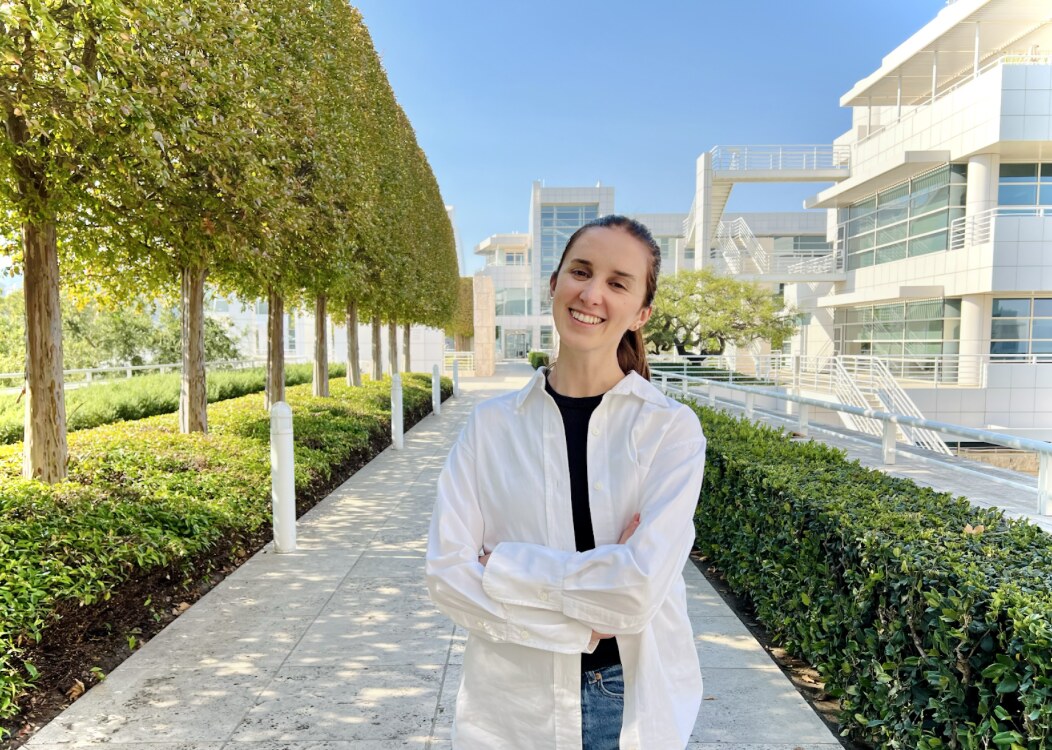
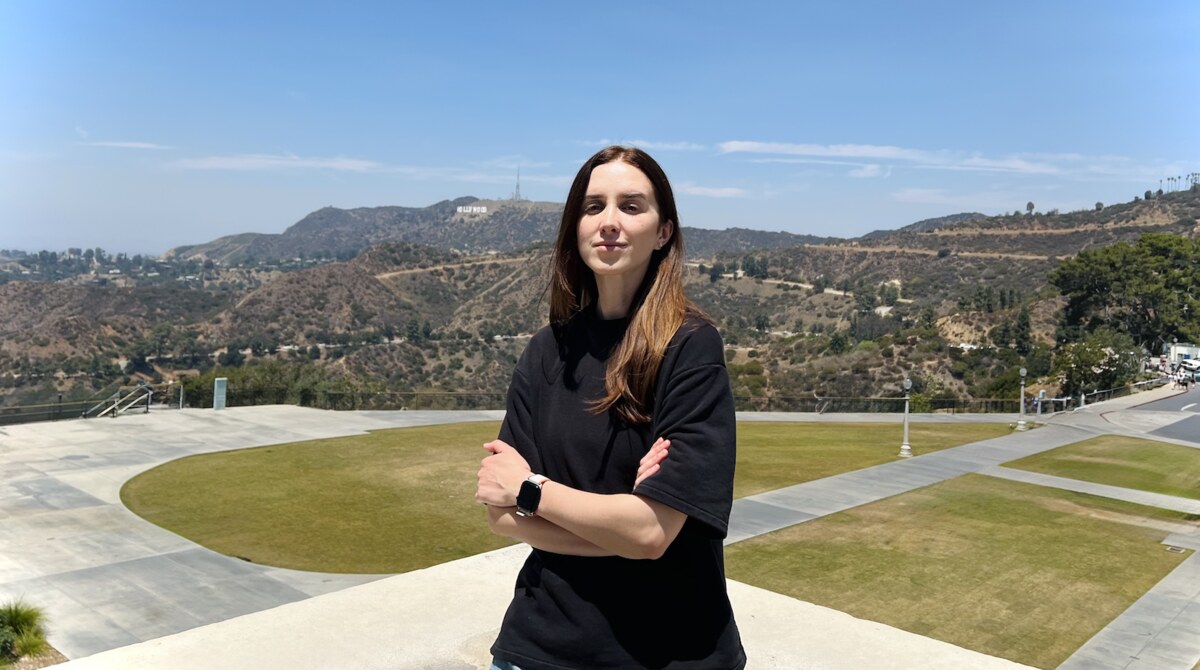
Los Angeles, California
Early Insight & Engagement System and AI as a teacher’s partner
I am not only an engineer, but also a researcher of the application of the latest technologies (AI/ML, Tutor, BigData) in the field of educational solutions. My main R&D project is Early Insight & Engagement System (EIES). Its roots are in my scientific background. For example, even earlier in Ukraine, I studied how the implementation of technological solutions can not only automate processes and scale research, but also solve social challenges .
Professor Anastasia Timmer (CSUN, LA, California) and I are developing a system that allows schools to see risks in time and help adolescents before a crisis occurs. Back in Ukraine, when I was leading the research as a social engineer, I focused on the importance of integrating technology in a preventive model — in order to create systems that can minimize and prevent risky behavior in adolescents. In particular, in one of the studies I described how the lack of computerized journals or attendance records increases the risks of deviance. Thus, educational institutions act reactively: they expel or punish adolescents when it is already too late. This is a direct path to the loss of quality education and criminalization. We offer a different approach: AI as a partner of the teacher, helping to support the child.
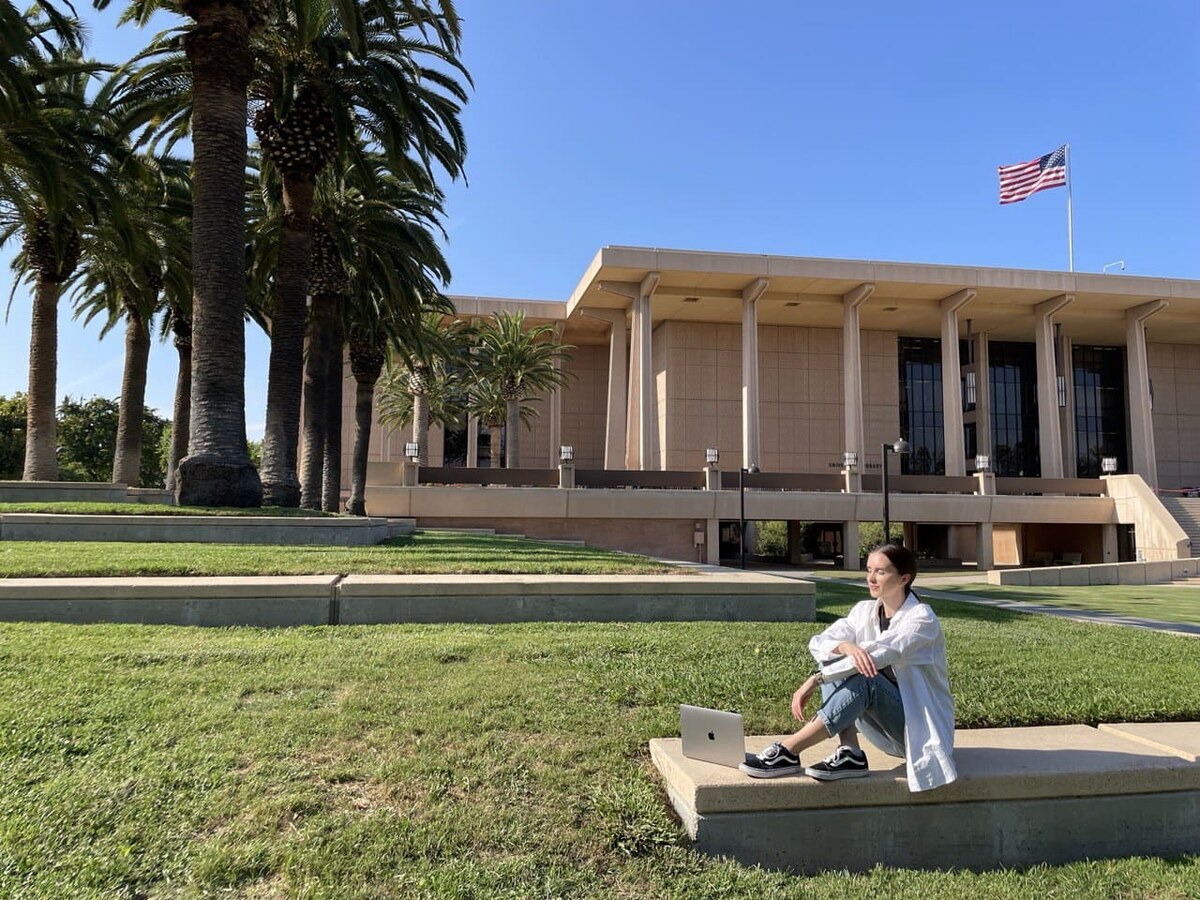
On the campus of California State University, Northridge (CSUN)
I am the leader of this R&D project, combining expertise in engineering, architecture and the application of educational technologies. As the technical leader of the project, I developed the data system architecture that allows analytics to be scaled to thousands of student records in real time. Anastasia Timmer from California State University Northridge (USA) combines academic depth in criminology with a practical understanding of disciplinary systems and adolescent psychology. We have formed a strong international multidisciplinary team that brings together experts in engineering, artificial intelligence, social sciences and research. Together we are creating a system where science and technology work in synergy. Regarding funding, it is private investment, own efforts and an inexhaustible desire to make the world safer.
EIES combines behavioral science and artificial intelligence to collect multi-channel data about a student’s life at school—attendance, engagement, and performance.
Algorithms analyze trends and turn them into actionable insights for teachers and parents, such as tips on when to talk to a student, what signals indicate a loss of motivation, or recommendations for improving group dynamics.
Among the principles of EIES: security, privacy and trust. It is not a control system, but a support system. It aims to reduce expulsions and prevent the criminalization of adolescents. Our target audience is school principals, administrators, teachers. For me, this is not just a product, but a mission: to make schools a place where children are understood.
Hackico.ai is an inspiring technology community
I founded the R&D project Hackico.ai, which grew out of the idea of making AI knowledge and tools accessible to anyone who wants to create technologies with real social impact. It was born naturally — from the belief that technology has value only when it benefits people. At first, it was a series of open tutorials and small libraries, and then it grew into a platform. Today, Hackico.ai is a community of people who believe in the power of technology for social change: from open AI tools and mentoring courses to applied research in the fields of EdTech, HealthTech and Cybercrime.
In addition to our academic, research focus and R&D, we create open-source solutions: libraries, data processing tools and workflow automation. One example: Ruby’s «hati gem suite», where downloads exceeded 1.5 million (as of October 20, 2025), and the gem hati-command was among the Ruby Toolbox trends in September and October 2025, showing a growth in downloads of over 550% in September and over 770% in October.
One of the projects that the Hackico.ai team is working on is the EIES — Early Insight & Engagement System I mentioned earlier. In parallel, the Hackico.ai team is developing several projects in the field of learning platforms (LMS) and Tutor solutions aimed at individualizing the educational experience. In addition to development, Hackico.ai conducts training programs and educational initiatives, helping specialists find development opportunities in IT.
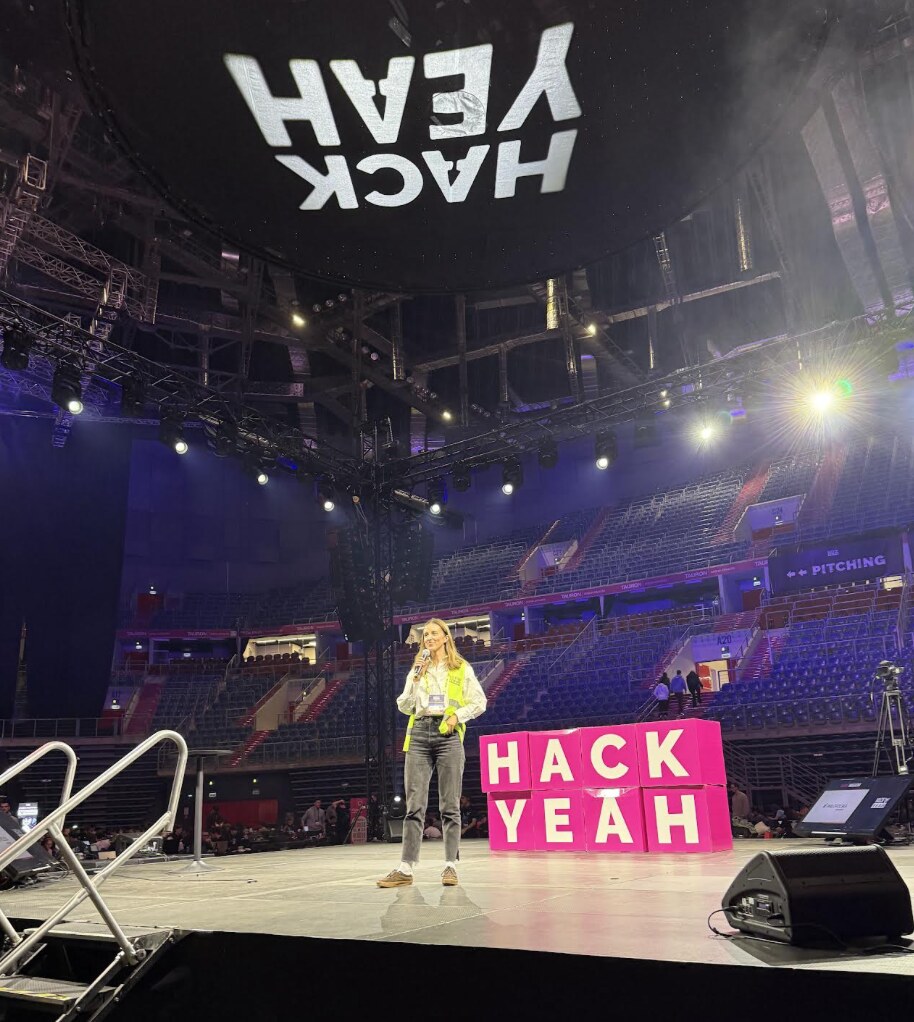
On stage at HackYeah 2025, Krakow, Poland
«America does not give advances — neither for a diploma nor for past experience»
Adapting to a new, faraway country is about waking up every morning and saying to yourself, «Okay, it didn’t work out yesterday, let’s try again.» America doesn’t give you any credit for your degree or past experience. While your background may add to the overall impression, you’re really being judged not for who you were, but for what you can do today. And that’s both scary and incredibly motivating. The hardest part is learning not to be afraid of failure.
Here, every «no» is just a stepping stone to «yes.» And if you learn not to perceive rejection as a defeat, you become stronger every day.
It helped me to stick to my roots: not to lose my Ukrainian stubbornness and faith. And most importantly, people around me who would say: «Try, you will succeed!».
America is not about a perfect life. It’s about being yourself to your fullest potential. And once you understand that, adaptation will happen by itself.
Maria Gui — initiator of socially oriented AI solutions
«We are a generation that creates now, but does it for those who come after us»
I always take the phrase «conquer global IT» with a grain of good humor. Frankly, I never had the goal of «taking a bite out of it.» I was always driven by a different motivation — to research, create, and implement products at the intersection of education, technology, and social impact. I remember that on one of ParentSquare’s business trips, we were asked to write our favorite quote on a badge. I chose the words of Boris Gudziak: «Stronger people will stand on our shoulders — and achieve more than we do.
«This is the formula of my work. We are a generation that creates now, but does it for those who come after us. And it depends on us what human and technological legacy we leave behind. Don’t wait for someone to notice you — create your own opportunities. Here, in the US, the ability to present yourself is instilled in schools: confidence, communication, the ability to show the value of your work — it’s part of the learning process.
Cherish the Ukrainian character. Ukrainian perseverance, deep meaning and talent are what the world wants to see. Our strength lies in endurance, intuition and the ability to create solutions, even without ideal conditions. Do not get lost in other people’s standards. Do not look for a formula for success, look for a reason why you care. When you have a «why» — any «how» will be found.
Don’t look for a formula for success, look for a reason why you care. When you have a «why,» any «how» will come to you.
Maria Gui is an engineer and researcher in the field of artificial intelligence and educational technology.
Here are three principles that helped me, and I believe will work in any IT sector, to make a name for myself in a new market.
First, prepare your brain, not your suitcase. America is a fast-paced place. It’s easy to burn out if you don’t know why you’re running. Save your focus and energy. The most valuable thing is the ability to think strategically.
Secondly, do, not imagine. Here, no one evaluates ideas — they evaluate actions. You can be a genius, but if you don’t push «prod» — you simply won’t be seen. Small steps, stability, specifics — that’s what works.
Third, stay human. No success is worth losing your humanity. Be grateful, admit mistakes, support others, look for like-minded people. Here, sincerity and kindness have equal weight, and sometimes you can find a potential project in a coffee queue.
Don’t expect opportunities to find you — create them yourself by presenting yourself and your ideas.
«I studied data science since I was 4 years old. Every math lesson was important.» The story of a math genius from a small village in Volyn, who is now creating Master of Laws programs for Lyft, Reface, and AppFlame.
Where to develop Manual QA when you have reached your professional ceiling? A great conversation with a tester from Lviv who conquered the US market and is moving towards the positions of Staff, Principal and Technology Leader
«Working with the Internet of Things is like playing God, but with code.» The chemist from Kharkiv «didn’t leave science, he just changed the formula,» having trained as a developer. He now optimizes services for the American Mercury Intermedia and has his own application.
The QA profession is gradually transforming into QE. Why is this happening and what testers should prepare for in the AI era: reflections of an experienced tester from Lviv, working in the USA
«Clients and project managers joked that I shouldn’t rush and relax a bit.» How a developer from Lviv is building an artificial intelligence system in healthcare in the US: an interview with a Ukrainian who conquered the world of IT
БОТ "увійшов" в чат, не ввійшовши в IT, КВЕДом "не перевіряється" нічого - це адміністративний запис, означає лише, що особа зареєструвала певний вид підприємницької діяльності, LLC чи бізнес
Met Marie in person during team building back in ’17, Rotterdam - an amazing person and researcher. She was an R&D engineer that designed a smart quantitative algorithm to gather and analyze user feedback for the product.
We sold the product to a major fitness player in Asia.
Congrats and all the best in the US!












В 2020 "увійшла" в ІТ мануал тестером, що легко перевіряється по КВЕДу, а тут вже відразу "вже більш ніж 10 років комерційної розробки" і створила ШІ.
Лол.
GG
WP
БОТ "увійшов" в чат, не ввійшовши в IT, КВЕДом "не перевіряється" нічого - це адміністративний запис, означає лише, що особа зареєструвала певний вид підприємницької діяльності, LLC чи бізнес
ROFL.
Little Timmy
Met Marie in person during team building back in ’17, Rotterdam - an amazing person and researcher. She was an R&D engineer that designed a smart quantitative algorithm to gather and analyze user feedback for the product.
We sold the product to a major fitness player in Asia.
Congrats and all the best in the US!
So inspiring....can't wait to see it progress!
Saw the EIES presentation at the conference - very cool, creative, and socially useful application of sophisticated LLMs!
Бажаю успіхів, Маріє - від твого тіммейта з чеського хакатону CzHack2013!