Хочете будувати кар’єру в Data Science та AI? Vodafone Big Data Lab відкриває новий набір —>
Ігор Вишневський Work
25 March 2026, 09:00
2026-03-25
“After IT, the solutions they work with now are space. This is the best thing they’ve ever had in their lives.” Recruiters from miltech explained to us why specialists come to them from regular IT
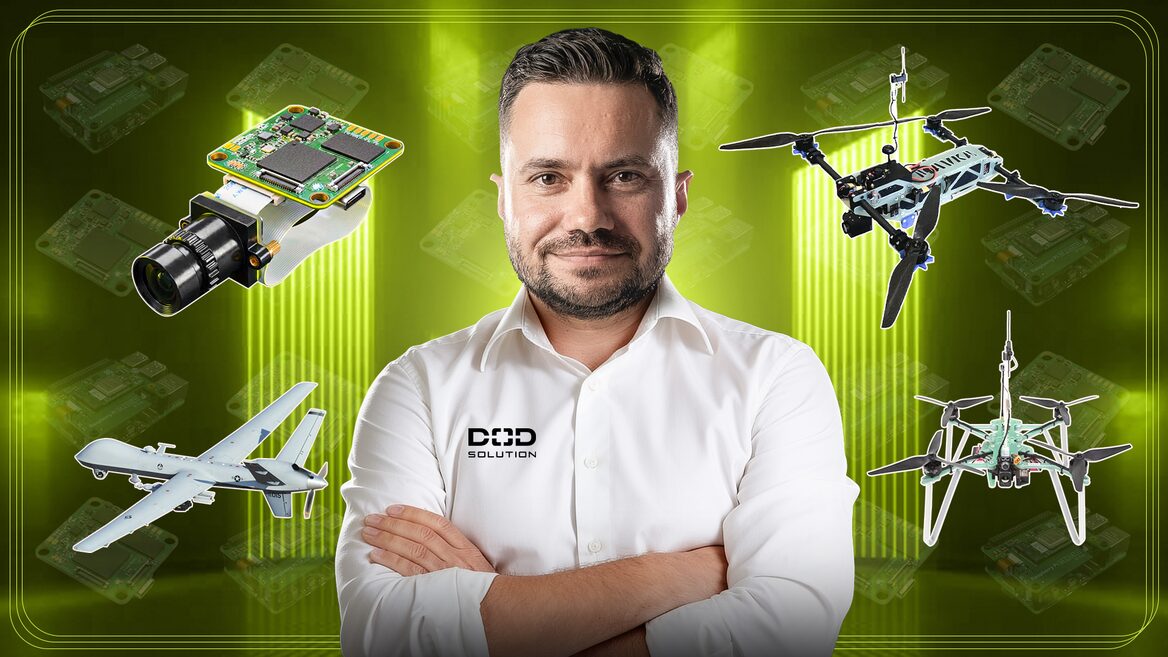
In the last month alone, the technology market has seen several high-profile transfers of top managers to the miltech sector. At the end of February, it became known that Head of AI Volodymyr Kubitsky was leaving MacPaw, who joined Yaroslav Azhnyuk’s The Fourth Law. In early March, everyone learned that a similar decision had been made by former Intellias Vice President of Talent Management Roman Hapachylo, who headed the defense startup DoD Solution, in which he has a stake. Around the same time, the former director of digital product development of the telecom operator Mykhailo Nestor also announced that he was leaving his established position at Kyivstar. After a long pause, he shared that he had joined the miltech startup Swarmer as an SRO.
In the last month alone, the technology market has seen several high-profile transfers of top managers to the miltech sector. At the end of February, it became known that Head of AI Volodymyr Kubitsky was leaving MacPaw, who joined Yaroslav Azhnyuk’s The Fourth Law. In early March, everyone learned that a similar decision had been made by former Intellias Vice President of Talent Management Roman Hapachylo, who headed the defense startup DoD Solution, in which he has a stake. Around the same time, the former director of digital product development of the telecom operator Mykhailo Nestor also announced that he was leaving his established position at Kyivstar. After a long pause, he shared that he had joined the miltech startup Swarmer as an SRO.
If such activity in joining the miltech sector was simultaneously demonstrated by the top IT and technology companies, then it goes without saying that hundreds or even thousands of ordinary IT workers during the years of full-scale invasion also made a similar decision or are on the verge of it, weighing the pros and cons.
dev.ua spoke with recruiters in the miltech sector about what they are willing to do to motivate and attract IT specialists, because salary alone is unlikely to be the main factor here. Here’s what they told us.
General situation «in the ward»
All the recruiters we spoke to were unanimous — miltech in Ukraine is showing tremendous growth, so companies in the sector tend to «pickle» less than traditional «IT» companies — simply because they need a lot of people, and not just now, but «for yesterday.» Miltech also never «pickles» its products with chains of approvals and refinements — if only because the situation on the battlefield depends on it and, no matter how pretentious it may sound, the fate of the country, and competitors in the market are constantly breathing down your neck. Therefore, everything happens much more dynamically, and refinements, as they say, occur «on the fly.»
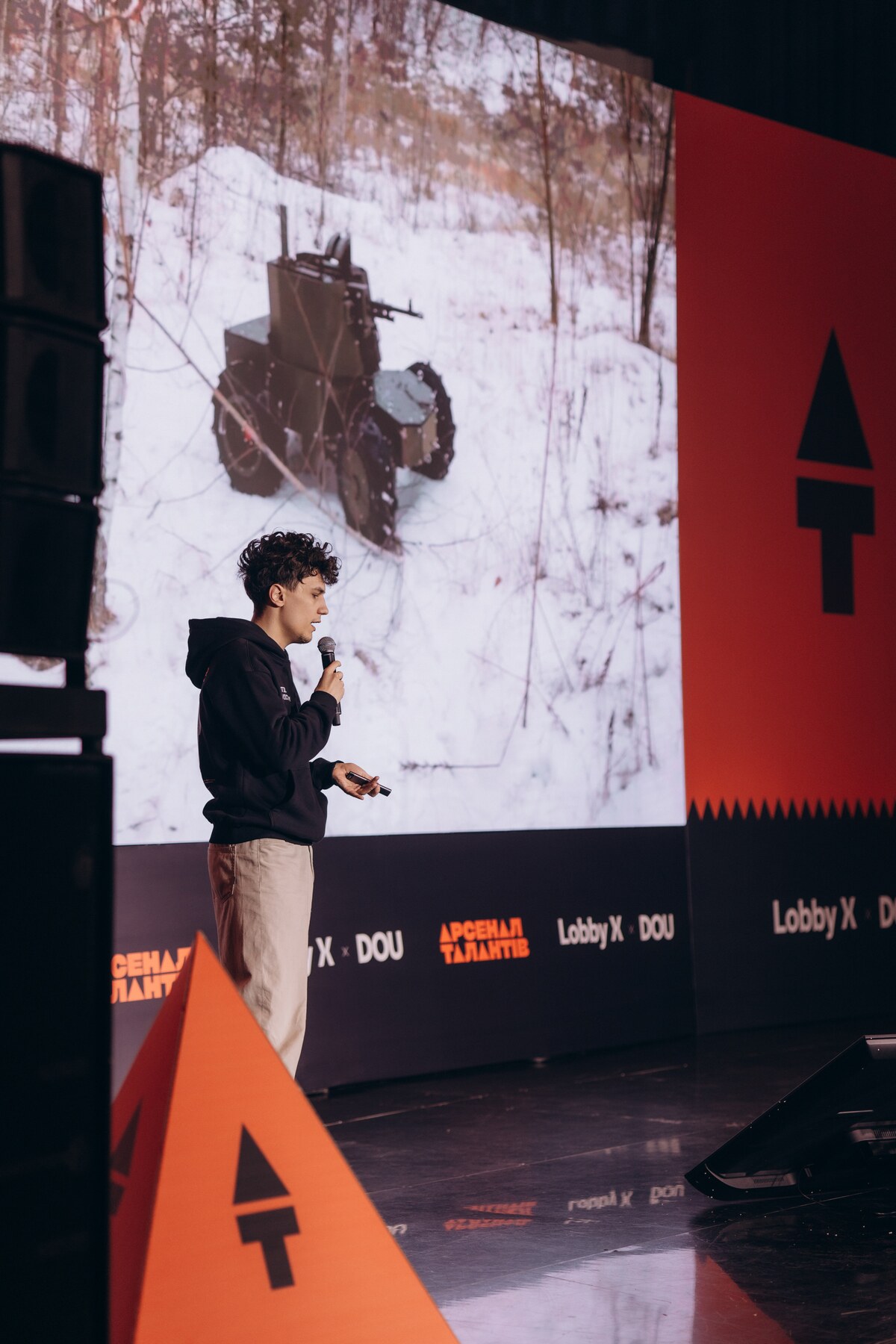
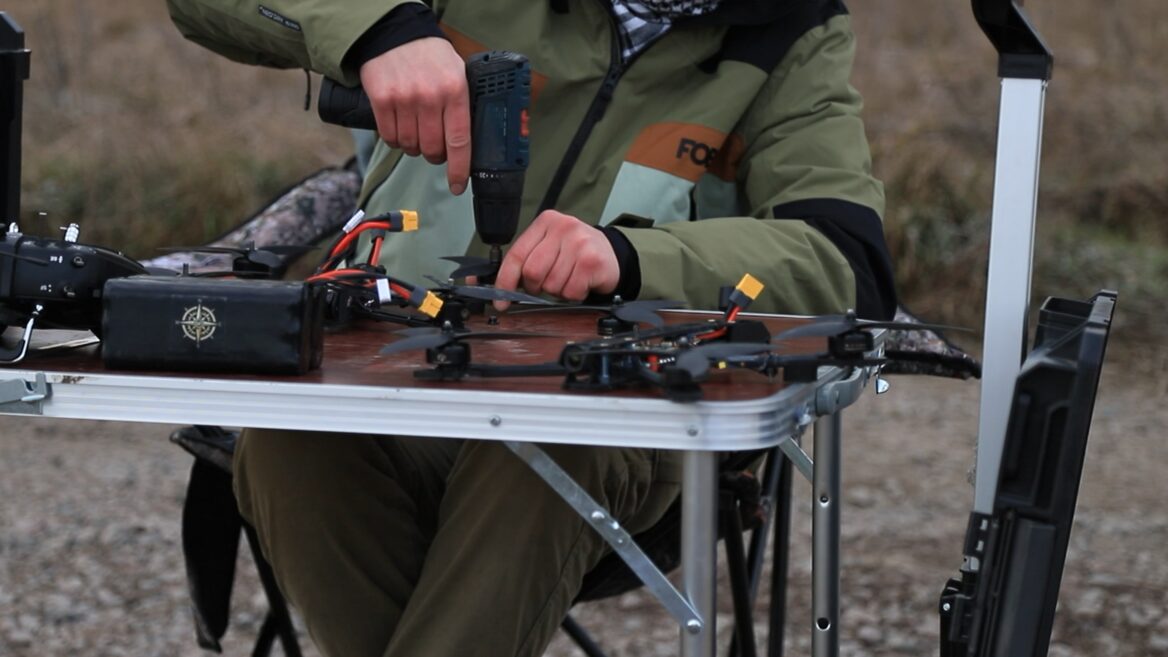
Photo in the article — Misha Zaitsev, «Arsenal of Talents»
In addition, recruiters from miltech say that the sector is not much inferior in terms of salaries to traditional «IT», and for many highly sought-after specialists it can offer even more money than in ordinary IT. A very important, and for some the main factor, of course, is reservation — if in IT companies this is a privilege for the chosen ones, then in the miltech sector you can count on reservation immediately and even at the lowest level of the «corporate hierarchy». And recruiters from miltech also claim that for ambitious people who want to grow, all doors are really open, and examples of specialists who came to the position of assembler or ordinary manager, and in a year or two headed an entire technological direction are not uncommon in every company. But let’s quote the representatives of the miltech market themselves.
Not just zeros in salary: conscious civic position as a marker of selection
Karina, a representative of the Ukrainian-Estonian miltech startup Farsight Vision, whom a dev.ua journalist spoke with during the defense job fair «Arsenal of Talents,» says that they are ready to offer the right specialists a salary of even $8,000-10,000, but they take into account not only the candidate’s technical skills and experience, but also his patriotic position and «understanding of the situation.» The topic of defense is sensitive, so they cannot afford to hire someone with a «what’s the difference» attitude here, at least at Farsight Vision.
«We can’t always lure someone with a salary, even if it reaches $8,000-10,000. In certain cases, we are ready to pay such amounts, but here in some places it’s not about salaries. We cooperate very closely with defense enterprises, so it’s a security issue. Plus, we speak Ukrainian in the workplace, and it’s important for us to preserve certain cultural values and identity,» explains Karina.
The Farsight Vision representative is surprised why some candidates don’t understand this in the fifth year of a full-scale invasion.
«We try to adapt to each person, because we care not only about the person’s position as a specialist, but also about their civic position. But sometimes we encounter the fact that when candidates see a desire to communicate in Ukrainian in the workplace, they say «no,» she wonders why this is still possible.
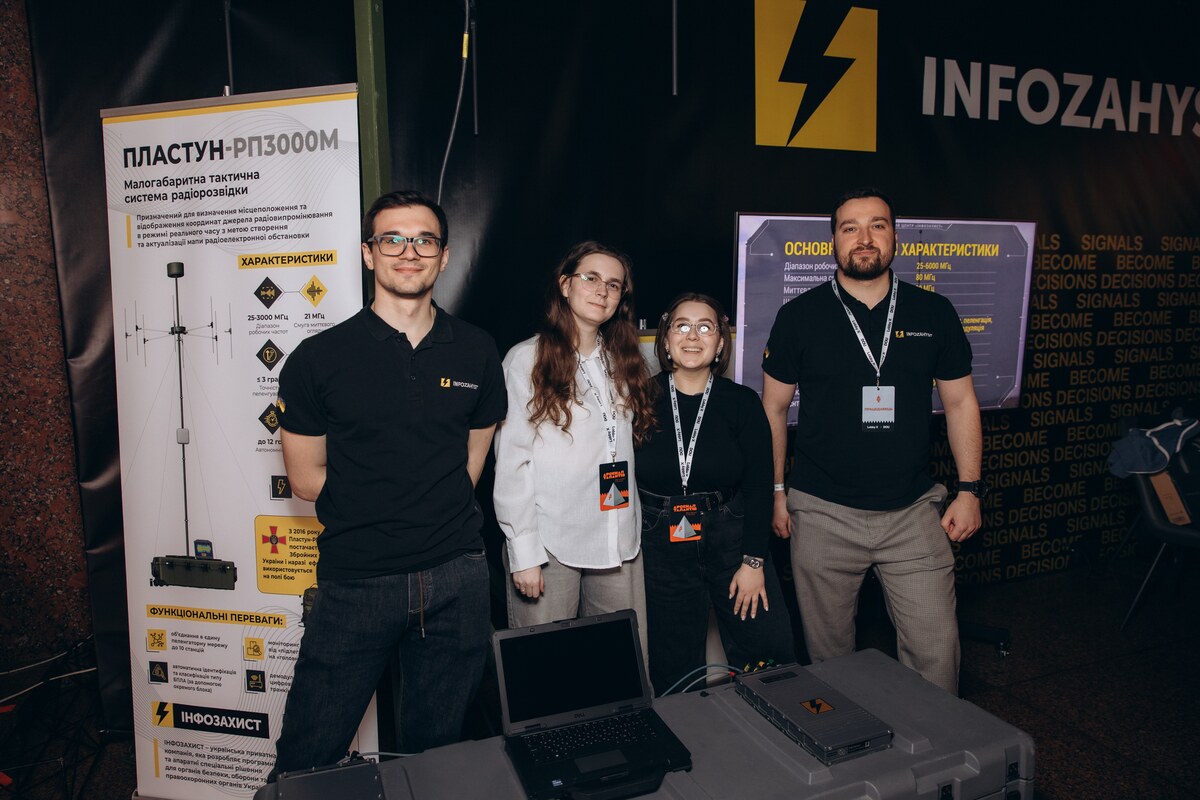
Mykola Andreyev, head of the recruiting team at Infozahyst, says that working at Miltech is a little more than just a job.
«These are really projects that are important for the entire country, and we are looking for people who will be like-minded and for whom this will not just be work, people who want to do better and are ready to apply their experience here,» says Roman Andreyev.
According to him, employees who come from traditional IT bring with them high-quality experience in organizing work processes and building a company.
«It’s really cool that people come and bring this experience, but, again, a person who is motivated to come to work for us must understand why they are joining the company. It’s not just about closing a task or fixing a bug, it’s a valuable thing that is important to us,» comments a representative of Infozahyst.
According to HRD at Kvertus Kateryna Kupchenko, the first factor that candidates pay attention to when considering a move from traditional IT to miltech is the opportunity to be involved in a market that is actively developing. «Ukraine is getting great developments and now is the era of the Ukrainian military product. Many people are interested in this, because finally Ukraine is known all over the world for its developments, even in such sad circumstances,» she says in a comment to dev.ua.
The second factor, in her opinion, is the opportunity to be involved in the fight against Russian aggression. «There are much fewer of us in Ukraine than the enemy has. Therefore, only with the help of technical superiority can we hold this line of confrontation,» she thinks. The third factor, she considers, is freedom of action and much more authority than in the traditional IT sphere.
«Here, everything is not so regulated by certain internal policies, procedures, and stable business processes. This sector is alive, it is developing, and every specialist who comes here has a lot of freedom. Sometimes he has the opportunity to build an end-to-end product, from start to finish. He also has the opportunity to grow faster than in IT — many times. You can go through even three stages of growth in a year,» says Kateryna Kupchenko.
Working with a product that increases the number of «good Russians»
According to HR Specialist at Norda dynamics Khrystyna Boyko, in addition to banal factors such as booking, specialists are forced to switch from traditional IT to miltech by the level of tasks and working with an interesting product that really «drives». After all, when you make a boring application for some company on the other side of the planet — it’s one thing, but when the solutions you participate in developing help turn living occupiers into «good Russians» — it’s a completely different story.
«As an HR manager at a company, I can say that I often spend one-on-one time with people, and they share that this is their dream job. After a short IT period where they sat on some project for a long time and were bored, the solutions they are working with now are space for them and the best thing they have ever had in their lives. In other words, this is actually one of the biggest motivations,» says Khrystyna Boyko.
As the Norda dynamics representative adds, over four years of full-scale operation, many have tried to find themselves in something useful in this war, and working on their product is just such a thing. «When a person understands that they can use their knowledge, their work, their skills for such a cause, this is one of the greatest motivations. Plus, we already have a working product — they send us videos of hits, and the person understands that they contributed to this,» comments Khrystyna Boyko.
Dmytro, a representative of UGV Robotics, also draws attention to the product that is interesting to work with as a motivator for transitioning to the miltech sphere. Their company produces NRC, which, in his opinion, is one of the most technologically advanced products in miltech.
«It is clear that you will receive a reservation, but for us the key thing is the innovativeness of the product and its future growth. Those companies that deal with drones, I would say, are already reaching their plateau, and the topic of NRC will still develop. Especially if it is a unique remotely controlled complex with artificial intelligence, which will determine the future of combat operations both in Ukraine and beyond,» says Dmytro, referring to the development of UGV Robotics — DCBM «Khyzhak».
According to Dmitry, the UGV Robotics team has grown about 10 times over the past year, from about 25 people to about 250, and the opportunity to work with such a product was not the last motivator.
«Our drone manufacturers will never export them abroad in very large quantities, because any contractors can assemble them from Chinese spare parts. But producing the Predator DCBM with AI, which is the only one in the world, is already interesting. Therefore, we encourage employees by saying that we have a unique product, we have development and scaling. This is really something cool, something that we have only seen in movies. It’s cool to be involved in something like this,» says Dmitry.
In turn, the head of recruitment at Blue Bird, Maria Onyshchenko, said that they are used to listening to their employees and implementing their ideas — this approach, in her opinion, is also motivating.
«We always listen to our colleagues, and if the idea is interesting, we are ready to implement it. Every specialist is very pleased to implement some of their ideas and see their results. We are also always ready to be flexible with the work schedule — offering both a remote format and an office or hybrid format,» she says.
According to Maria Onyshchenko, Blue Bird even has cases when a company location was opened in a new city for a specific specialist. «To make it convenient for a person, we are even ready to open a location in the place where our candidate is, who will be potentially interesting to us and with whom we want to work,» says the head of recruitment, adding that they had such cases with engineers, machine vision specialists, and representatives of the IT sector.
Salaries are not lower than in regular IT. Or are they higher?
Whatever the secondary motivators — patriotic stance, opportunity for development in the company, and work with an interesting product — the basic and main motivator remains salary. According to a February DOU study, developers in DefTech have on average slightly lower salaries than in IT in general — by 14%. However, recruiters from the companies we surveyed do not see much difference in salaries with the IT market as a whole.
«Salaries are not that low in miltech, and I can’t say that miltech is uncompetitive in terms of salary,» says HR Norda dynamics Khrystyna Boyko. She adds that in their company, when discussing a candidate’s salary, especially if it’s a narrow specialist for a non-commissioned position, recruiters focus not only on the market, but also on the wishes of the candidate himself.
As for salary statistics in the sector, Khrystyna Boyko is inclined to think that «in general, it is difficult to compile a salary picture in miltech, because there are many different studies on IT, but in the miltech sector, statistics are more chaotic.» In addition, many companies in miltech still adhere to a non-public line of conduct, so this information is not always publicly available.
Mykola Andreyev, head of the recruitment team at Infozahyst, commented on the working conditions in the miltech sector, expressing the opinion that, compared to IT, they are approximately on the same level. «We are trying to make our office a plus-minus, like the general IT sphere. It’s not that we say that we have better than a good outsourcing and a good IT product, but we say that we have a basic level that is a must have. And booking is an option that is currently only available to companies that do something useful for our state,» he commented.
In turn, regarding salaries in the sector, Mykola Andreyev believes that «there are a large number of areas where miltech currently pays more than anyone else.»
«Circuit engineering, FPGA, DSP, Embedded, mechanical designers are the areas where miltech pays more, and since the start of full-scale work in these areas, salaries could have increased many times over. Sometimes they reach tens of thousands of dollars. And general IT stuff is plus or minus, just like in the market,» says Andreev.
According to a representative of Infozahyst, candidates who have combined experience, that is, have already worked not only in IT, but also in miltech, can expect «a minimum of the third quartile or even more,» that is, a salary higher than 75% of other employees.
«That is, if we are talking about a .Net team leader who, it seems, has a purely IT background, but who has some background in electronics, understands, say, the domain industry, then he will receive a salary from us higher than he would receive, conditionally, in outsourcing with a probability of 60-70%,» notes Mykola Andreyev.
According to him, if we talk about classic Ukrainian outsourcing, the salary figures are quite competitive with him.
«Do or die. Either we create these technologies or we disappear as a nation.» DoD Solution CEO Roman Gapachilo on the transition from Intellias to defense, €1 million in investments, and «a computer in every drone»
1000 or more vacancies in the defense industry. What specialists are being sought in Ukrainian miltech — we talked to recruiters at the «Arsenal of Talents»
«A practical guide to stopping looking for unicorns and starting hiring and growing Junkies.» Mate academy and Dwarf Engineering launch first miltech recruiting training program
«We want people to choose Farsight Vision not because of the salary.» The CEO of a miltech startup explained why they don’t hunt down scarce specialists by raising salaries