Хочете будувати кар’єру в Data Science та AI? Vodafone Big Data Lab відкриває новий набір —>
Наталя ХандусенкоStartup
20 January 2025, 16:37
2025-01-20
The film "Brutalist" used technologies from Ukrainian startup Respeecher: how AI helped improve the Hungarian accent of the main characters
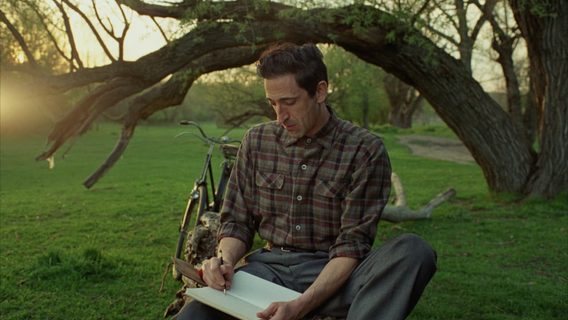
A significant portion of the dialogue in the film Brutalist, which won three Golden Globe Awards, is in Hungarian. To make it as close to native speaker as possible, AI from Ukrainian startup Respeecher was used.
A significant portion of the dialogue in the film Brutalist, which won three Golden Globe Awards, is in Hungarian. To make it as close to native speaker as possible, AI from Ukrainian startup Respeecher was used.
"The Brutalist" is an American-Anglo-Hungarian historical film directed by Brady Corbett, which premiered on September 1, 2024. It tells the story of Hungarian architect László Toté, who moves to the United States in the post-war years. The main role was played by Adrien Brody.
“I’m a native Hungarian speaker and I know it’s one of the most difficult languages to learn to pronounce. Even with Adrien’s Hungarian background (Brody’s mother is a Hungarian refugee who immigrated to the US in 1956), it’s not that easy. It’s a very unique language. We trained [Brody and Felicity Jones] and they did an incredible job, but we also wanted to perfect it so that even the locals wouldn’t notice any difference,” film editor David Janczo told RedShark News.
Adjustments were needed to improve specific letters of the voice sounds. "If you come from the Anglo-Saxon world, certain sounds can be particularly difficult to perceive. First we tried ADR these more complex elements with actors. Then we tried completely ADR them with other actors, but that just didn't work. So we looked for other options to improve it."
Brody and Jones were fully involved in the Respeecher-led process, which began with recording their voices to drive the Hungarian language AI. Jancsó also added his voice to the AI model to improve the complex dialect.
“Most of their Hungarian dialogue has a bit of my language in it. We were very careful about preserving their texts. It’s basically just replacing letters here and there. You can do that in ProTools yourself, but we had so much Hungarian dialogue that we really needed to speed up the process, otherwise we would still be writing letters.”
GenAI is also used at the end of the film in a scene at the Venice Biennale to create a series of architectural drawings and finished buildings in the style of a fictional architect. The overall effect is so impressive that you might want to look up on Wikipedia to see if Laszlo Toth existed.
“Talking about AI in the industry is controversial, but it shouldn’t be,” he admits. “We need to have a very open discussion about what tools AI can give us. There’s nothing in the film that hasn’t been done before. It just makes the process much faster. We’re using AI to create tiny details that we didn’t have the money or time to film.”