Хочете будувати кар’єру в Data Science та AI? Vodafone Big Data Lab відкриває новий набір —>
Наталя ХандусенкоAI Eng
5 August 2025, 09:00
2025-08-05
How vibe coding gives IT professionals the feeling that they can do more and think bigger. Insights from developers, a designer, a System Support Engineer, a PM, and a marketer.
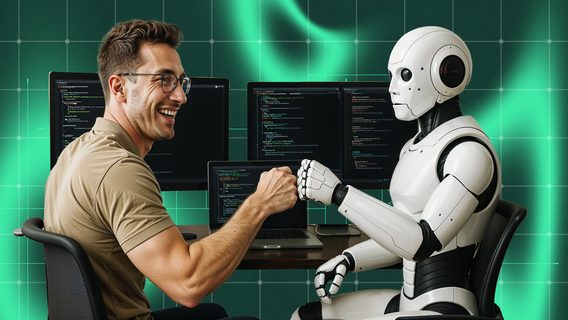
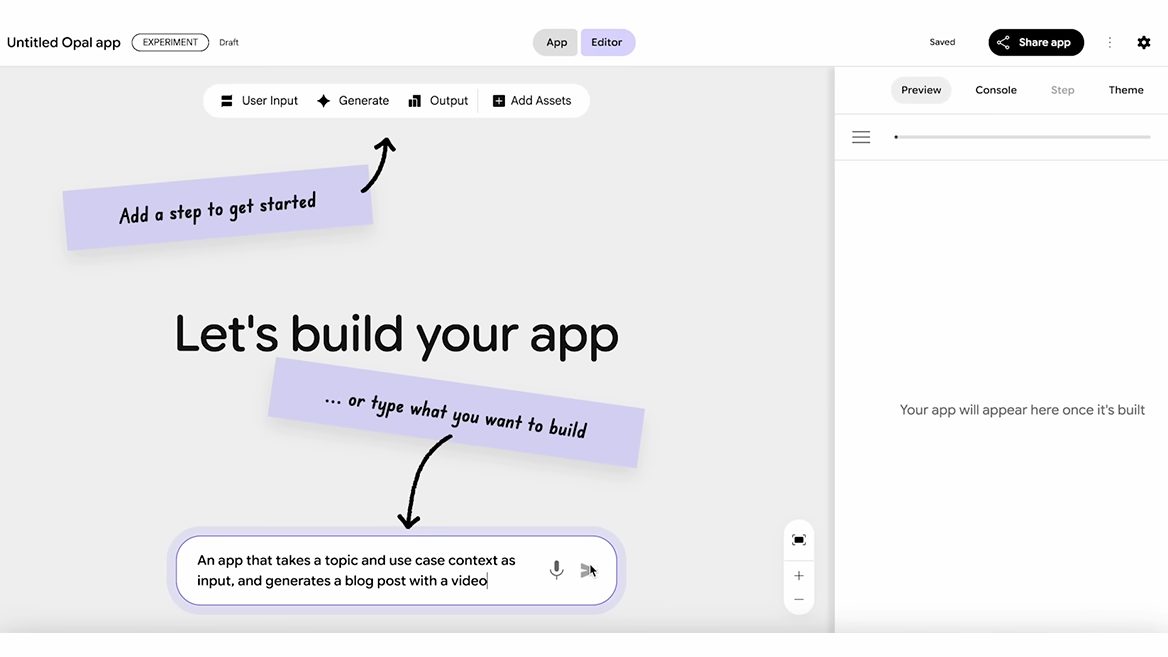
Programming with AI tools continues to conquer the world of information technology. It seems that anyone can write code today - you just need to master a tool that allows you to do so. The most common platforms that help those who do not know any programming language to code and significantly speed up the process for skilled IT professionals are Cursor, ChatGPT, Claude, and others.
And although Ukrainian IT professionals have not yet encountered the use of vibecoding in interviews on a large scale, some companies are already looking for specialists with such skills. And Meta will allow vibecoding in interviews.
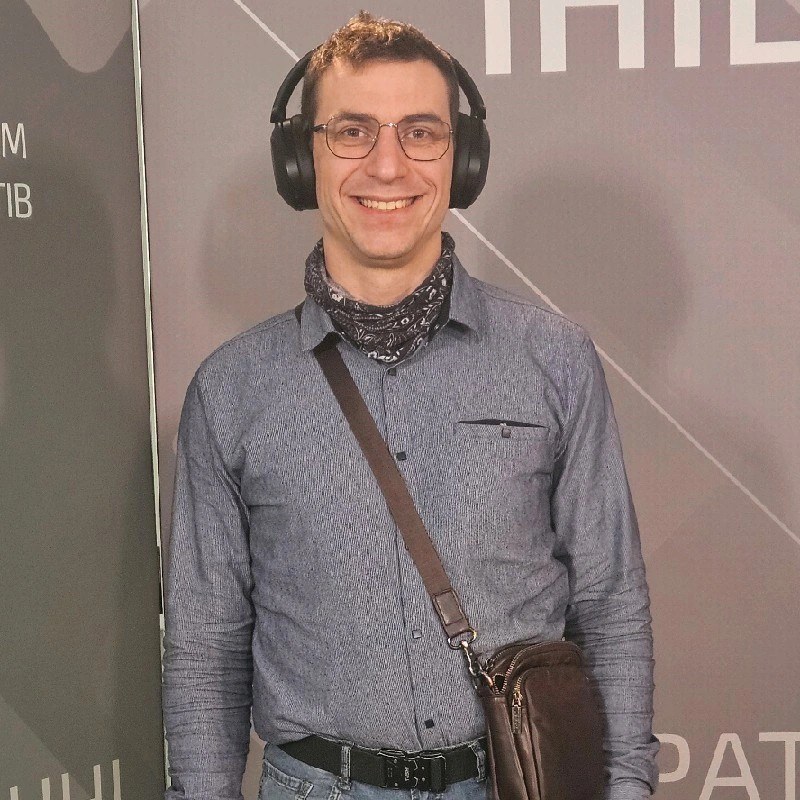
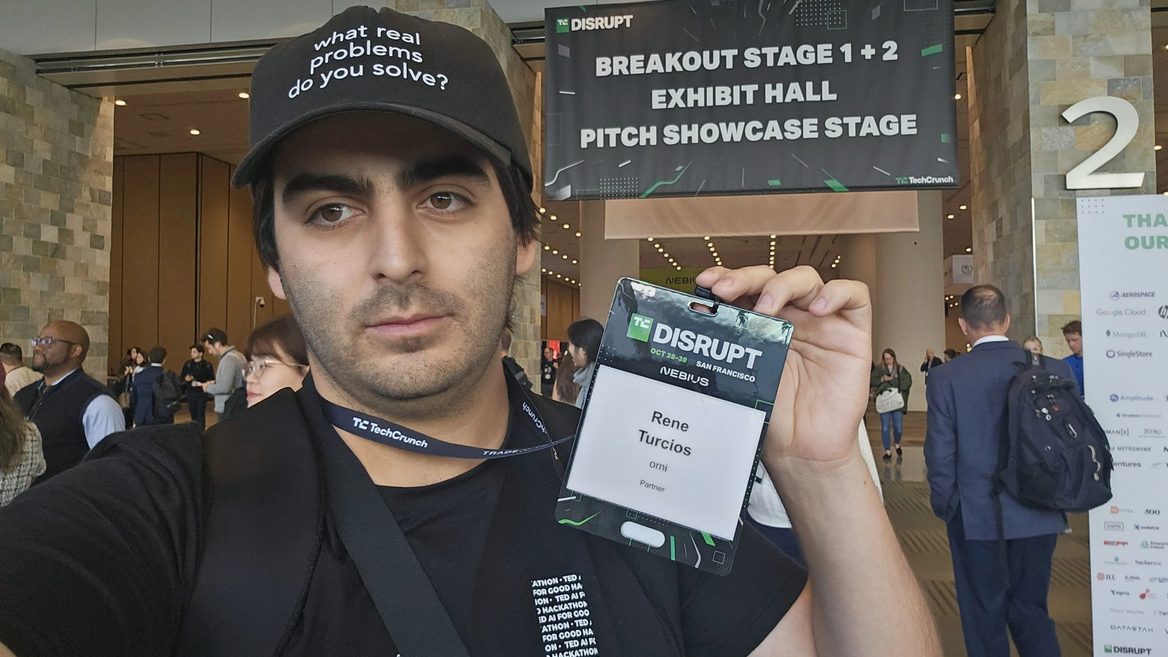
dev.ua asked six IT professionals and digital specialists working in different fields how they use vibecoding, what AI tools they use for this, and how it helps them in their work. Below are insights on the use of AI in their work from a Magento/Go Developer, UX Designer, Software Engineer, System Support Engineer, Project Manager, and Performance Marketing Manager.
Programming with AI tools continues to conquer the world of information technology. It seems that anyone can write code today - you just need to master a tool that allows you to do so. The most common platforms that help those who do not know any programming language to code and significantly speed up the process for skilled IT professionals are Cursor, ChatGPT, Claude, and others.
And although Ukrainian IT professionals have not yet encountered the use of vibecoding in interviews on a large scale, some companies are already looking for specialists with such skills. And Meta will allow vibecoding in interviews.
dev.ua asked six IT professionals and digital specialists working in different fields how they use vibecoding, what AI tools they use for this, and how it helps them in their work. Below are insights on the use of AI in their work from a Magento/Go Developer, UX Designer, Software Engineer, System Support Engineer, Project Manager, and Performance Marketing Manager.
What is vibecoding?
The term “vibecoding” was coined by Andrey Karpaty in early February 2025. At the time, Tesla’s director of artificial intelligence and computer vision for autopilot wrote in X: “There’s a new kind of coding that I call ‘vibecoding,’ where you completely give in to the vibe, accept the exponent, and forget that the code even exists. I just see something, say something, run something, copy and paste something, and it mostly works.”
That same month, Ukrainian Senior Engineering Manager and IT blogger Dima Maleev shared his predictions for vibecoding : “Coding will become even more accessible, and we will continue to prioritize speed over quality. In a few weeks, we will see more and more “vibecoders” launching startups and receiving millions in funding.”
And he was right. For example, in June it became known that Israeli developer Maor Shlomo, who founded the Base44 vibecoding startup six months ago, sold it to Wix for $80 million in cash .
Another vibecoding startup, Swedish Lovable, was valued at a whopping $1.5 billion , making it one of the largest new players in this space on the European market.
"Vibration coding speeds up the process of implementing an idea as much as possible"
Oleksiy Borovik , Magento/Go Developer and Architect Vibe Coder
I decided to use vibecoding when I had the idea to create my own mobile application, but I didn't yet have sufficient skills in specific programming languages.
I continue to develop this skill, trying different approaches to coding, different options for building prompts and communicating with AI. I haven't taken any courses, I get all the information from available profile chats and discussions on the Internet + my own trials and errors.
The main tool I use isCursor. I have also tried other IDEs, but Cursor currently covers everything I need for me. I use it to discuss functionality and write code for my own projects. At some points it turns out that I simply give a task (prompt) to write some part of the code, and at other points I communicate with AI on an equal footing, discussing how best to make this or that functionality, while analyzing how relevant and adequate the answers it gives me.
The impact of vibecoding on my main job is minimal at the moment, as I use vibecoding in my free time for my own projects. Also, this skill has not yet affected my income in any way, but I see great potential in it and am looking for ways to convert it into income. One thing I can say for sure is that vibecoding allows you to turn an idea in your head into working code as quickly as possible, which simplifies testing this idea with real users. I am convinced that such things are the future.
A programmer must first learn to quickly adapt to changes in programming and not be afraid to try new tools in their work.
It is important to learn architectural solutions, understand how to properly form and structure code to give the right prompts to AI. And in any case, try to work more with code and read the right books to see and understand how much the generated code complies with generally accepted rules.
"Vibration coding tools can help find solutions for problems where experience is lacking."
As soon as ChatGPT became popular, I started trying to give it some simple tasks. I developed the skill of vibecoding on my own and also practiced a lot.
I use Perplexity for information gathering. ChatGPT for strategizing, idea generation. Claude for creating MVPs. Cursor for minor changes.
Vibecoding speeds up the search for solutions in areas where there is no experience yet. To build your workflow more effectively, it is worth taking a look at what approaches other developers are using.
I decided to use AI tools for writing code sometime at the beginning of the year. I had already used Claude as an assistant for purely design tasks, for brainstorming. And then at the beginning of the year I came across a rather non-trivial design task that required programming skills to write a plugin for Figma that would solve this task. Yes, I could have involved someone from the team for this. But I decided to do it myself. It was difficult, I spent about a week on the correct description of the task, on debugging. At first it was Claude, then I switched to AIshka in VS Code. Cursor ended up being the one for which the company provided corporate access. And hooray, the plugin worked, the task was completed! Then I realized that I could use my vibecoding skills at work.
I like to dig on my own. Why take courses or the Internet when you can ask all your questions directly to AI. In addition, I already have programming experience from university. I am quite good at decomposing problems and building architecture. And the right prompt helps to complete the task quickly and efficiently. I just had to immerse myself in testing to accelerate the expected final result.
I'm all for using something simple and fast, interactive prototype — Claude. It's definitely number one for vibecoding. For complex things that require working with many files, setting up a web server — Cursor. It was in it that I made widgets for the Windows desktop. First in Python, then I converted it to Electron. I'm also familiar with Lovable, but I burned through all the tokens pretty quickly because of the desire to tune everything as much as possible for myself.
Biggest impact: This feeling that I can do more and think bigger.
Not just static pictures with designs, but instantly turning ideas into ready-made solutions that are as close to reality as possible. Yes, they are not perfect, but this is still a new level for me. I love to develop, learn something new all the time. Vibecoding is exactly the direction that greatly boosts design, allows you to better understand development, think more systematically and analytically.
I would advise the most patience. Vibecoding is difficult and easy at the same time. Especially for people who have little experience in programming. Beginners expect a quick correct result, but in reality everything is full of many iterations, problem analysis, correct prompting, and not a banal fix this. Vibecoding is not a panacea, it's just another tool. And I need to learn it with any new tool.
I have limited opportunities to apply AI automation in my current job. But I see that AI is a reality and the future, so I use all my free time for my health and studying AI tools.
I actively work every day on developing the infrastructure that will allow me to effectively apply artificial intelligence to my work, including. My partner and teacher is the same artificial intelligence (ChatGPT with a plus subscription).
For example, last week I managed to more or less stably "make friends" with local MCP servers with language models that I use via AI API. (These are Docker, Linux, Windows, VScode, WSL, YAML skills). But I ran into the problem of a huge context of commercial Git repositories. And now I'm dealing with the technology of "structure-oriented RAG architectures (like CGRAG)" (this is graphQL + vector databases). Vibecoding is not a skill, it's a goal.
I generally use AI API. At work too, but not much — for all sorts of routine: rewriting something, substituting literals instead of variables somewhere). I am also actively trying to implement MCP servers (Docker MCP Toolkit). I also do not forget about local deployment of small LLMs (quantized versions of 27B -32B models). I also experimented a little with fully automated development using tools like Codex CLI. I also cannot fail to mention ChatGPT and the o3 model for “brain storm” and research tasks, and not only.
Financial profit should come later, now I'm trying to keep up with the times. And do my job - CRI. I can advise everyone to integrate themselves with AI as much as possible.
"I have the opportunity to create my own projects that will later bring profit. And all this is free. I saved, so I earned."
In my profession, there is a constant need for programming. Automation tools, service connections, data feed generation, processing large amounts of information, analytics, etc. — all this is part of my work. Now I work with JavaScript, PHP, VBA. Previously, I always looked for ready-made solutions on the Internet and, as best I could, adapted them for myself. Sometimes I ordered scripts from freelancers. In extreme cases, I turned to the internal development team, but rarely — usually it takes a long time. So when ChatGPT appeared, the first thing that came to mind was to try it for coding. I think I started coding a year ago. I always start with ChatGPT, because it gives a lot of free requests. If it doesn't work out — I move on to DeepSeek or Gemini. When I already have a clear vision of the script, its functionality, and an understanding of how to implement it — I turn to Claude. He writes more adequate code, but he has fewer free requests, so I first "train" on others.
I haven't taken any courses. I read articles, posts on social media, and experiment myself. The more tasks, the more experience.
I write code, texts, make translations, generate and edit images and videos. I search for information based on text and visual queries. For example, in advertising, I need to exclude all cities with a population of over 100,000 people. Previously, I had to search for this data manually, now AI gives me an answer in 3 seconds — and in exactly the form I need. I study new areas and tools for myself. For example, I know that a task can be solved using Google Cloud, but I have never worked with it. I ask AI what and how to do — it gives a step-by-step guide. Yes, it often makes mistakes (because interfaces change faster than it learns), but it gives direction. Then I find a solution myself. I don't get attached to a specific AI. I look for a solution for the task I need. By the way, cabina.ai and similar tools are great. You top up a single account and you can use any modern AI. If you need texts this week and more images next week, you don't have to pay for each one separately. Get what you need and don't waste your money.
There hasn't been a direct impact on salary from AI yet. It hasn't happened that: "Oh, you can write code? Keep +$100 to your salary." But now most of my processes are faster, I can also implement more of my own ideas and expand the range of services.
I have the opportunity to create my own projects that will later bring profit. And all this is free or almost free. I saved, which means I earned.
If someone wants something, they will achieve it. Working with AI is much easier than with any other tool, because it will explain everything itself. You don't need to study tons of information, documentation, and manuals. If you don't know how to formulate a query, ask AI to formulate it for you. If you get the wrong result, tell it about it. It will explain why it happened and help you fix it.
"Vibecoding has significantly increased productivity. There is time not only for development, but also for understanding, improving and optimizing the product"
I completely switched to vibecoding in late winter 2025, when new AI tools appeared: Replit AI, Cursor, as well as updated Claude and Gemini models. The quality of their generated code and the amount of context were impressive: it became obvious that they could already be integrated into real projects, and not just tested on small fragments.
I developed mostly on my own: I read Telegram channels, watched videos on YouTube, experimented with different approaches to structuring queries. I didn’t take any specific courses, they don’t make sense, but here’s what you need to understand: vibecoding can be divided into 2 points: 1. You shouldn’t immediately ask “generate a website with a shopping cart and filters”. First, you should “talk” to AI: discuss the concept, data structure, UX, and API 2. You need to gradually increase the context, because when the tool receives the full context of the product, it generates code more accurately and faster. This saves tokens and time for editing.
Here are my top tools for vibecoding and more:
Wispr Flow — for voice dictation — AI transforms speech into text. It's convenient for creating long prompts, especially when I'm too lazy to write texts by hand, and after dictating, I just edit the finished text.
Gamma — I create presentations for internal courses in the company. Lovable — I generate front-end parts of projects quickly and without unnecessary costs, so as not to waste unnecessary tokens in Replit/Cursor, where each request has its own cost.
Replit and Cursor — generation of full-stack projects.
Gemini, Claude, ChatGPT — I use them for in-depth research, writing small functions, explanations, and generating code snippets.
Grok — works well with PDF files and data visualization: charts, flowcharts, etc.
Perplexity — on the market, it performs best in finding relevant information from articles, Reddit, and YouTube.
AI Studio — I use it to improve complex prompts.
Veo3 — video generation for content, promos or demos. n8n, Make.com, Zapier — help automate various manual and not-so-manual processes — from marketing to HR, in different departments. Almost all automation uses LLM for information processing.
In my case, vibecoding has significantly increased productivity. I have time not only for development, but also for understanding, improving, and optimizing the product. I have given routine tasks to AI agents that I have configured myself. For example, one agent collects all chat activity every day and generates a consolidated daily report for me. Overall, my work efficiency has increased, and with it my income. And this growth continues, because with each update, AI tools become better, and my expertise in using them deepens.
Want to vibecode? Start simple — learn to clearly formulate the task. AI doesn't read minds, it works with what you give it. First, give context — only then ask to complete the task.
Try to divide tasks into logical stages to avoid chaos in prompts. Be sure to check the generated code. It is important not only to use it, but also to understand what is written. Ask the AI to comment on its decisions - this helps to understand better, especially during the training stages. Do not limit yourself to one tool. Each model has its strengths and weaknesses. What the conventional Claude cannot handle, Manus or Perplexity can do and vice versa. And most importantly - constantly improve your prompts. This is a skill that over time turns into a superpower.
Як нейромережі бачать вільну та незалежну Україну? Тест dev.ua
Нейронні мережі для генерації зображень бачать світ по-своєму, їхню логіку зрозуміти часом зовсім неможливо. Але таки хочеться. На честь Дня Незалежності України редакція dev.ua вирішила провести невеликий експеримент.
Ми задали чотирьом різним нейронним мережам п’ять однакових запитів: «прапор України», «День Незалежності України», «український Крим», «перемога України» та «українці». Отриманими результатами ми ділимося з вами нижче.
У TikTok тепер можна генерувати фон за допомогою нейромережі. Ми протестували її та ділимося результатами
У TikTok з’явилася нова функція «Розумний фон». З її допомогою як фон для тіктоків можна підставляти згенеровані нейромережею зображення. Редакція dev.ua протестувала цю технологію і ділиться своїми враженнями.