Хочете будувати кар’єру в Data Science та AI? Vodafone Big Data Lab відкриває новий набір —>
Олег ОнопрієнкоІсторії
2 June 2026, 09:00
2026-06-02
"We are not developers - we are initiators of change." Interview with an IT professional about the realities of the IT vertical of the Armed Forces of Ukraine
Oleksiy Kuts, a resident of AIT, wrote on LinkedIn to reach the Ministry of Defense, called the academies of three cities, transferred from the rear to the combat unit after months of correspondence with the General Staff, and eventually managed to break through the wall of military bureaucracy and join the newly created IT vertical of the Armed Forces of Ukraine. We talked with Oleksiy about how the IT vertical works from the inside and which IT worker would be suitable for the position of army digitalizer.
Oleksiy Kuts, a resident of AIT, wrote on LinkedIn to reach the Ministry of Defense, called the academies of three cities, transferred from the rear to the combat unit after months of correspondence with the General Staff, and eventually managed to break through the wall of military bureaucracy and join the newly created IT vertical of the Armed Forces of Ukraine. We talked with Oleksiy about how the IT vertical works from the inside and which IT worker would be suitable for the position of army digitalizer.
Content
Life before the army
— Tell us about your experience in IT: how did you get into the industry and how many years have you worked there?
I graduated from the Zaporizhzhia State Engineering Academy in 2003 with honors. I received a degree in “Software Specialist for Automated Systems”. After graduation, I immediately got a job as a programmer, and later became the head of a department at Ukrtelecom — we worked in the payphone shop. I worked there for a year.
After getting married, I moved to my hometown, and my IT career was interrupted for a long time. In a town with a population of 16,000, there was simply no need for programmers. I worked as an accountant in the public sector, a communications officer, a private entrepreneur, etc., but I was not involved in programming.
I returned to the profession only in 2021. The guys with whom I lived in the dormitory during my student years called me back. In Zaporizhia, they had their own company, Face IT. I joined them in early 2022 as a Ruby developer. During the full-scale invasion, we collaborated for two years. For the most part, I was not engaged in web programming, but in Data Science: parsing websites, scraping, collecting information, analyzing it, and writing it into databases.
For the last six months before mobilization, I worked as an SQL developer for the Aurora multimarket chain.
Mobilization: VLK, security platoon and "Groundhog Day" at the CCC
— How exactly did you mobilize and when did it happen?
I am an immigrant, originally from the Kherson region. In addition, I have a serious incurable disease - arthritis. Due to my health, I did not plan at all to be mobilized. But there are not enough people, so more and more categories of the population are being involved, which were previously ignored.
In August 2025, police officers and representatives of the CCC simply approached me on the street and checked my documents. They said I was subject to mobilization. I passed the VLK and, according to my diagnosis, I was recognized as limitedly fit.
On August 24, 2025, I was assigned to the Kalusa RTCC and SP, to the security platoon. Despite the fact that I reported my higher education and that I was a programmer and could be more useful to the state, I was assigned to where they found a vacant position.
For six months I served in the security company: I went on duty, I just stood at the gate. My job was to open doors, let visitors in or out, direct them to the right offices or to the ASC. I just guarded the CCC building.
First attempts to change the system: selection for "Oberig" and polygraph
— Have you asked your managers to transfer you to a more suitable position? What was the reaction?
Yes, I applied and said so. Even in the military ID card that was issued to me upon mobilization, they took into account my profession and wrote down VOS — “special software operator.”
In December 2025, I saw a news item from the Defense forum, where the then leadership of the Ministry of Defense announced the creation of an IT vertical in the Armed Forces of Ukraine. I decided: since I was already in the army, my knowledge should be useful, and not just guarding premises in the western regions, where there was no obvious threat from the enemy.
In early 2026, I was sent to Lviv for courses for operators of the "Oberig" system. It was like a pre-screen interview. But from the new year, a rule was introduced: all new "Oberig" operators had to pass a polygraph, and they were allowed to take the polygraph only if they had a UBD status. 40 of us arrived, and four, including me, were without a UBD. We were simply told: "Sorry, thank you." Neither education nor skills mattered - two days later we were sent back to the unit.
The path to officer rank and bureaucratic deadlock
— How did you eventually find out about the position of digital officer?
I started posting on LinkedIn, trying to reach at least the press service of the Ministry of Defense to understand how to join the IT vertical. Artem Romanyukov (head of the Digital Transformation Directorate at that time) wrote to me in a private message. He said to wait, because the procedure for joining was still being prepared, but emphasized that an officer rank is mandatory for this position.
Since I only had a state diploma without a military department, I decided to get a primary officer rank. My commanders in the TCC did not object. I started calling academies in Lviv, Odessa, and Kyiv. It turned out that the Kyiv VITI (Military Institute of Telecommunications and Informatization) has a course L1A + L1B, where the age limit is up to 45 years. The training lasts 5 months.
In February 2026, I began taking an additional military service exam specifically for university studies. The Kaluga CCC personnel service and I collected all the documents. Since I had the rank of soldier, I would have been expelled from the unit and sent for training, and then the General Staff would decide where to distribute me.
But there was a problem - the institute could not admit me to the exams. The list of candidates had to be approved by the Main Directorate of Communications and Cybersecurity at the General Staff. And how to make them find out about me - no one knew. I wrote requests to the Ministry of Defense, the General Staff, but received standard bureaucratic replies. As a result, I did not make it to the March recruitment (documents were accepted until the 3rd), and the next one was supposed to be in June. The major from the admissions committee said: "You are 99.99% suitable for us according to the documents, but you need to get on those lists."
Search for alternatives: DSST, 3rd and 12th Army Corps
— What did you do during these three months of waiting?
The signalmen in my security company advised: "It's easier for you to transfer directly to a combat unit, that way you'll get an IT position faster."
In parallel, since January 2026, a pilot project of a digital vertical was underway in the State Special Service of Transport (SSST). I called the hotline there. There were vacancies there, and staff sergeant positions, that is, an officer rank was not required. But transferring from the Armed Forces of Ukraine to the SSST (which is a structural unit of the Ministry of Defense) turned out to be very bureaucratically problematic.
Then I found vacancies in the Third Army Corps. I went through an interview, where there were technical specialists and unit commanders. At first, I was considered for the technical support unit — conditionally, for the role of an “enkey”: setting up Wi-Fi, reinstalling drivers, checking 2FA on the phone. After a meeting, they decided to redirect me to the Information Protection Service group. We approached each other and were already preparing documents.
But just a couple of days later, my father sent me a WhatsApp message: the 12th Army Corps is looking for people specifically in the IT vertical! There was a clear list of positions: Project Manager, Product Manager, Product Support, Business Analyst, Data Analyst.
I wrote to them, sent my resume. The head of the digital transformation department contacted me. She looked at my resume and said, “Out of all the people I interviewed, you are the best fit in terms of skills.” I turned down the Third Army Corps and agreed to move here.
We formalized everything in a week through the Army+ application. Since I was being transferred from a rear unit to a combat unit, the approval of the commander of the unit I was serving in was not even required. That's how I became a 3rd-category staff sergeant in digital development at the headquarters level.
— And how was the issue with the officer rank resolved?
Our unit has three positions: one CDTO (digital officer) and two staff sergeants. Since I was promoted to staff sergeant, an officer rank was no longer required.
But in March, the President signed a decree on a special way of obtaining an officer rank for the IT vertical. The candidacy is considered and signed by the order directly by the Minister of Defense. Our staff is now full, and soon the question of recommending one of the three of us for an officer position will be raised. If it is me, great. If one of my colleagues who has more military experience, I will also be happy to serve alongside them as a staff sergeant.
Service realities in the IT vertical
— What exactly are you doing now and how much has it matched your expectations?
Honestly, I expected that there would be development, or at least data analysis (the requirements included Python and SQL). At the interview, they asked me: “Will you pull it?” I looked at the PDF document with the requirements from Artem Romanyukov and answered: “As a Business or Data Analyst, I will start 100% tomorrow. But as a Technical Writer, Project Manager or Product Support, I will have to learn 80-90%.”
I arrived at the unit on March 30, 2026. The service was newly created, and no one knew what we were supposed to do. At first, we took on everything one by one: someone's printer broke down - we ran to repair it; someone needed to install a program - we helped; someone needed to set up electronic document flow - we did the same.
Then we started studying a lot. I took all the courses at “Armia+”, courses on the portal “Diya.Osvita” (there was a course where Mykhailo Fedorov was the speaker, back when he was the Minister of Digital Transformation). I also took courses on cybersecurity from Cisco and CS50 from Harvard. At the end of April, “Armia+” released a special course on the digital vertical from Oleg Berestov and Artem Romanyukov, and additional instructions from the Ministry of Defense.
They clearly explained to us there: we are not developers, we are initiators of change. Developers are already at higher levels. Our task is to implement the already written code at the brigade, battalion and lower levels.
— How did you feel about not writing code?
I am flexible enough. Of course, I would like to code (I even applied for a job at the Defense AI Center when I saw the news). But I understand the position of the Ministry of Defense: there are tough security issues here. If my colleagues in the field see a problem, their first thought is to write code. But we may not take into account the requirements of information protection, the system will not be allowed into the Ministry of Defense, or its use will be at your own peril and risk.
Our task is different: we have to write technical requirements (user stories) for developers. We work as Product Managers and Business Analysts. The Armed Forces of Ukraine officially has over 20 information systems, but in fact there may be hundreds of different niche solutions. We need to understand all this. This is a completely new front of work, and I perceive it as a very valuable experience.
The workday and "managed chaos"
— Tell us more about your working day. What is your workload like now?
Since we are in the army, we work 7 days a week: from 8:00 to 18:00 at headquarters, and the rest of the time on the phone in case of emergencies.
The first thing we did (as instructed) was inspect all the services of the unit. For two weeks we traveled to the logistics, logistics, finance, and drill services. We sat with a notebook and wrote down: what do you use, what are the problems? I am a civilian, and for me it was a revelation to see how all these services interact as a single organism.
We are currently conducting a re-audit. The Ministry of Defense has a direct instruction: look for where information is duplicated or rewritten by hand. For example, when data is simply copied from an old Excel file to another. If parallel accounting is being conducted somewhere (for example, a new system has already been implemented, but the old Excel is still being maintained as primary documentation) - this is a problem. We are looking for the causes of these bottlenecks and trying to eliminate them.
Another problem is that since the service is new, we are often forgotten. A new information system (ICS) comes in, a telegram goes down to the unit, but we are not informed. Then they come running: “You are digitalizers, help, we need to deploy the system by tomorrow!”, and we hear about it for the first time.
That's why we attend all the seminars on new ICS. We need to understand: do we need a separate laptop, what are the security requirements, are the users technically savvy enough, and do they need additional training?
“I’d heard about ‘meat storms,’ but I didn’t really believe it until I saw them with my own eyes.” The honest story of an AIT veteran who managed to return to work in IT despite a serious injury
— What are the main priorities in your work now?
As Artem Romanyukov stated, there are three main priorities for 2026:
Personnel accounting (Impulse system): maximum accounting of up-to-date information about each serviceman. We constantly work with users of this system and help them fill the database.
Electronic document management (EDM): abandoning paper document management. We advise users, create new ones, and issue them physical access keys ("diamonds").
"Army+" application: The Ministry of Defense wants to make it the main application for military personnel. We do not work in it ourselves, but we monitor statistics at the unit level: how many reports were submitted and processed. If the indicators drop, we immediately find out the reason and help to adjust the process.
Tips for IT professionals and attitude towards mistakes
— If a programmer who is currently being mobilized wants to write code, shouldn't he go into the IT vertical?
It's definitely not worth it. Recently, Deputy Minister Oksana Ferchuk and Oleg Berestovy explained that the need for digital officers is huge. Initially, they planned to recruit 7,000–8,000 people, but now the plan has been reduced to 2,000, and only 800 of them have been closed.
But if you go there, you will be the "nervous and circulatory system" of the army - a change manager, not a programmer. If a person wants to code, they should look for vacancies on Lobby X (for example, Data Analyst, Machine Learning or Computer Vision in the relevant units).
— What should those who still want to become a digital officer pay attention to?
You need minimal IT experience and an extremely strong motivation to make changes. This motivation will help you not to give up when you encounter army specifics, subordination, or commanders who do not understand IT language at all.
If you come in thinking, “I see the problems, I’m going to break this system and do it my way,” it won’t work. It’s critical to be able to work in a team, not be a lone leader.
— Are there any bonuses for this position? Why is it worth going here?
First, the head of the digital transformation department at the unit level automatically receives the position of deputy chief of staff. This is a very high position. The Ministry of Defense did this intentionally to give this person weight and for commanders to listen to him. We feel under the special care of the digital transformation directorate.
Secondly, a unique atmosphere has been created here: they do not punish mistakes, but help to correct them. We are like pioneers. When the digitalization of medicine took place, digital officers were appointed only at the level of regional institutions, and we work directly in military units.
The Ministry is as interested as possible in making sure that everything works out for us. We were given a kind of carte blanche. Even the fact that a person can come from the start and receive an officer's rank without a military department and combat experience indicates how much the state values this work. Therefore, this is a real opportunity to become a driver of change and do something really useful for the country.
"The game gave an understanding of what you will have to work with in reality." Interview with an artilleryman of the Armed Forces of Ukraine about gamification in the Defense Forces
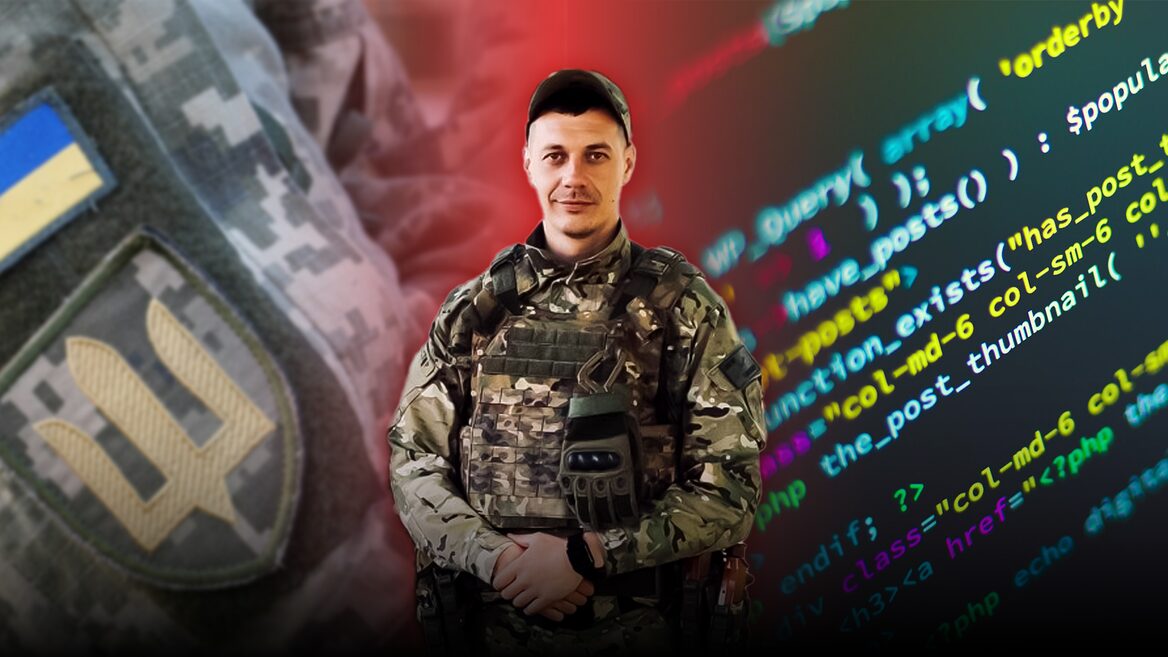
“The army is a discipline and a system of “shelving”. As in IT, in the army you are surrounded by constant changes, so there must be an alternative plan.” The story of a veteran who decided to radically change his life and became an IT worker
Тепер поясніть, яка людина з досвідом, яка отримує хоча б 4к добровільно піде безкоштовно перезаправляти принтери? Страшно уявити який рівень фаху в держструктурах. Мабуть, лише ті, хто не знайшов роботу









Тепер поясніть, яка людина з досвідом, яка отримує хоча б 4к добровільно піде безкоштовно перезаправляти принтери? Страшно уявити який рівень фаху в держструктурах. Мабуть, лише ті, хто не знайшов роботу
Comment hidden for violating commenting rules.
Comment hidden for violating commenting rules.
Comment hidden for violating commenting rules.