Хочете будувати кар’єру в Data Science та AI? Vodafone Big Data Lab відкриває новий набір —>
Олег ОнопрієнкоAI Eng
12 July 2025, 09:00
2025-07-12
Zuckerberg vs. Altman: How Meta is shaking up OpenAI's position in the artificial intelligence market
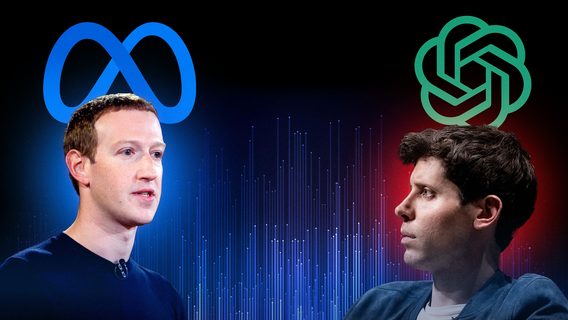
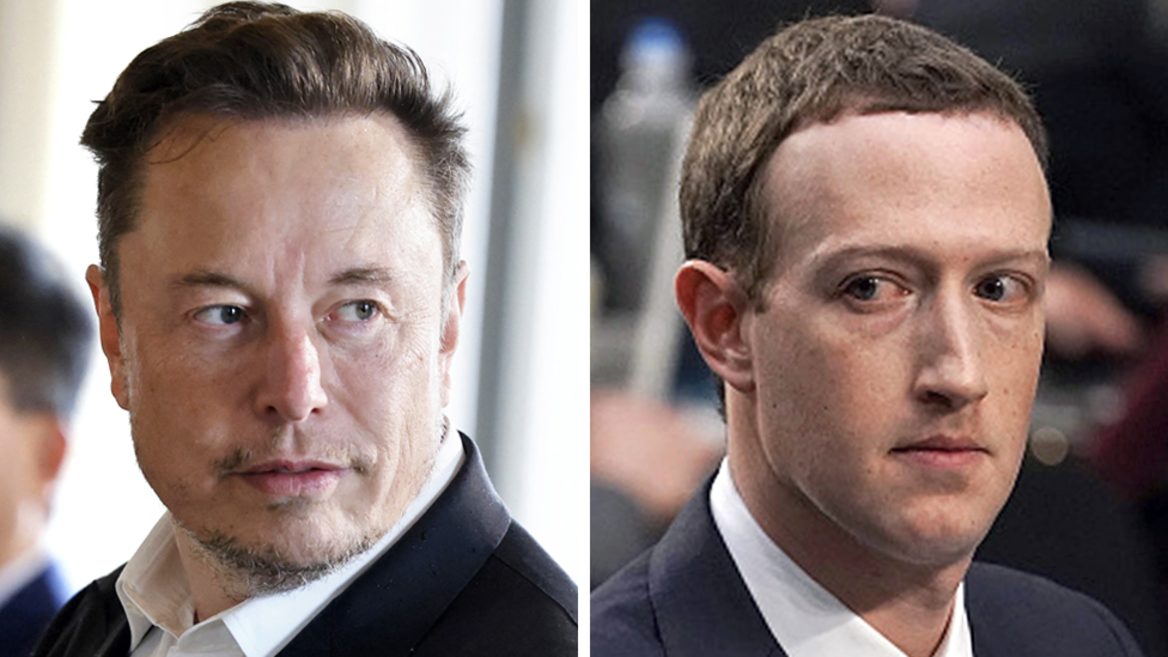
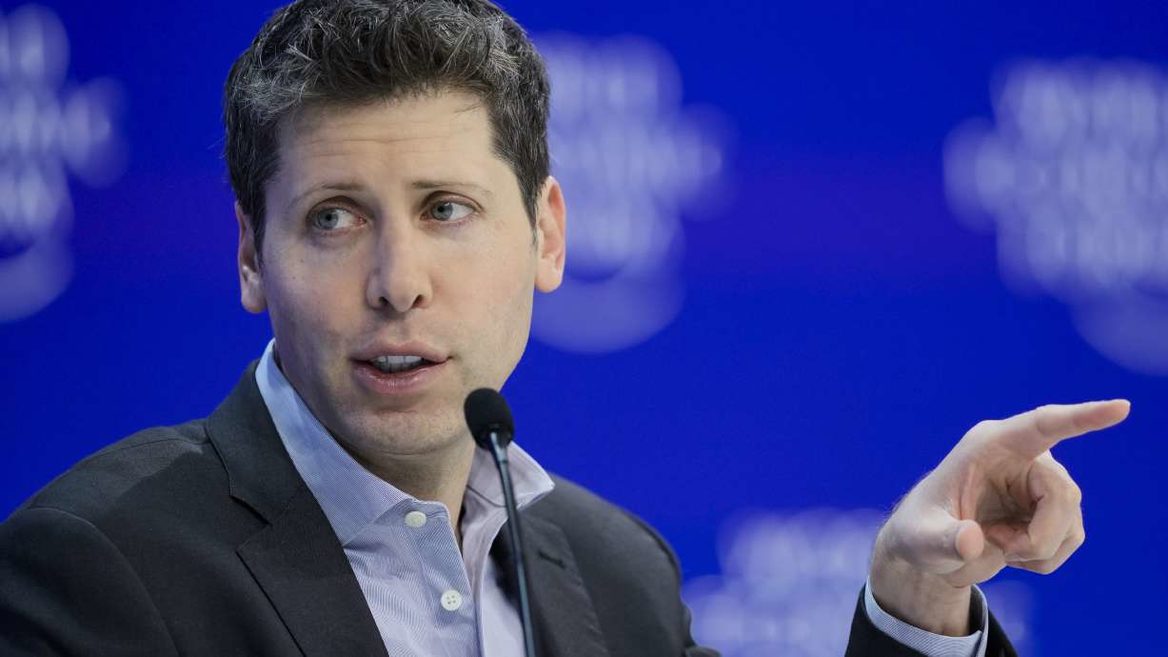
A few years ago, Sam Altman admired Mark Zuckerberg's managerial style in hiring employees, but now he has become a victim of Meta's predatory strategy. At the heart of this Silicon Valley technological drama are multimillion-dollar contracts, the fight for talent, lawsuits and ambitions to build a superintelligence. dev.ua tells how Meta is trying by all available means (including not entirely legal ones) to close the gap with OpenAI.
A few years ago, Sam Altman admired Mark Zuckerberg's managerial style in hiring employees, but now he has become a victim of Meta's predatory strategy. At the heart of this Silicon Valley technological drama are multimillion-dollar contracts, the fight for talent, lawsuits and ambitions to build a superintelligence. dev.ua tells how Meta is trying by all available means (including not entirely legal ones) to close the gap with OpenAI.
From underdog to main competitor
There is no personal history between the two leaders, as was the case with Altman and Musk, who were both involved in the founding of OpenAI, with their relationship deteriorating further and turning to personal insults due to differences in the company's direction. On the contrary, Altman praised Zuckerberg for his approach to managing the company and even interviewed him, where they politely and amicably talked about Facebook. Everything changed with the dawn of the AI era and the release of the first version of ChatGPT, which created a fundamental upheaval in Silicon Valley. Since then, the OpenAI leader has become, in Zuckerberg's eyes, a competitor and, most importantly, the leader of a company leading the race in a new field.
Previously calm Zuckerberg allowed himself to speak cautiously about the company OpenAI, which literally translates as “Open AI”, hinting that the company’s LLM model is closed, while the Meta Llama solution is open-source. Thus, the Meta chairman openly supported Elon Musk’s position in his dispute with Sam Altman.
This approach allows Meta to distribute its AI models as open source without harming the business. OpenAI’s entire business model is based on the fact that its models remain proprietary, that is, access to them is sold via API. That is why the decision to release Llama 3 as an open-source model was also dictated by an attempt to squeeze out a competitor.
Meta’s approach to AI is fundamentally different from OpenAI’s. Zuckerberg sees AI models not as stand-alone products, but as advanced software infrastructure that powers other systems. For Meta, AI is not an end in itself, but a tool to improve its core business of social media and content creation.
The copyright lawsuit involving Meta has shed light on some of the inside scoop on Mark Zuckerberg's company. In particular, Meta's vice president Ahmad Al-Dale wrote in a private message to Llama 3 AI model researcher Hugo Touvron in October 2023 that they needed to beat ChatGPT 4 at all costs. Meta even resorted to using copyrighted datasets to train its Llama language model, which became the reason for the legal hassle. This is despite the fact that the company mainly trains its LLM models on internal databases, including those obtained from Facebook.
Assembling a superteam at the expense of a competitor
In early 2025, Mark Zuckerberg told an internal meeting of 70,000 employees that this year would be a crazy one for Meta, and that the team needed the best people. Artificial intelligence was named one of Meta's priorities. Immediately after that, 5% of the employees were laid off because they did not meet the new quality standard.
Meta created a dedicated AI division, Superintelligence Labs, with a clear and ambitious goal: to develop superintelligent AI systems that are smarter than humans. However, the company needs experienced scientists with the right experience, which Meta clearly lacks. That is why Zuckerberg makes the most obvious decision that kills two birds with one stone: hire specialists from a competing company. This aggressive strategy has become the most dramatic manifestation of the rivalry between the two tech giants. Zuckerberg personally led the effort to lure the best AI researchers from OpenAI, offering compensation packages that stunned the industry.
According to multiple sources, Meta offered OpenAI employees signing bonuses of $100 million , with some contracts reaching as much as $300 million over four years. The offers have been described as “staggering” and are among the highest compensation packages in Silicon Valley history.
According to WIRED, OpenAI executives have called Meta’s hiring tactics “invasion.” After losing at least eight top researchers, including four in just one week, OpenAI’s research director Mark Chen reached out to the team with a promise that management is working around the clock to retain talent.
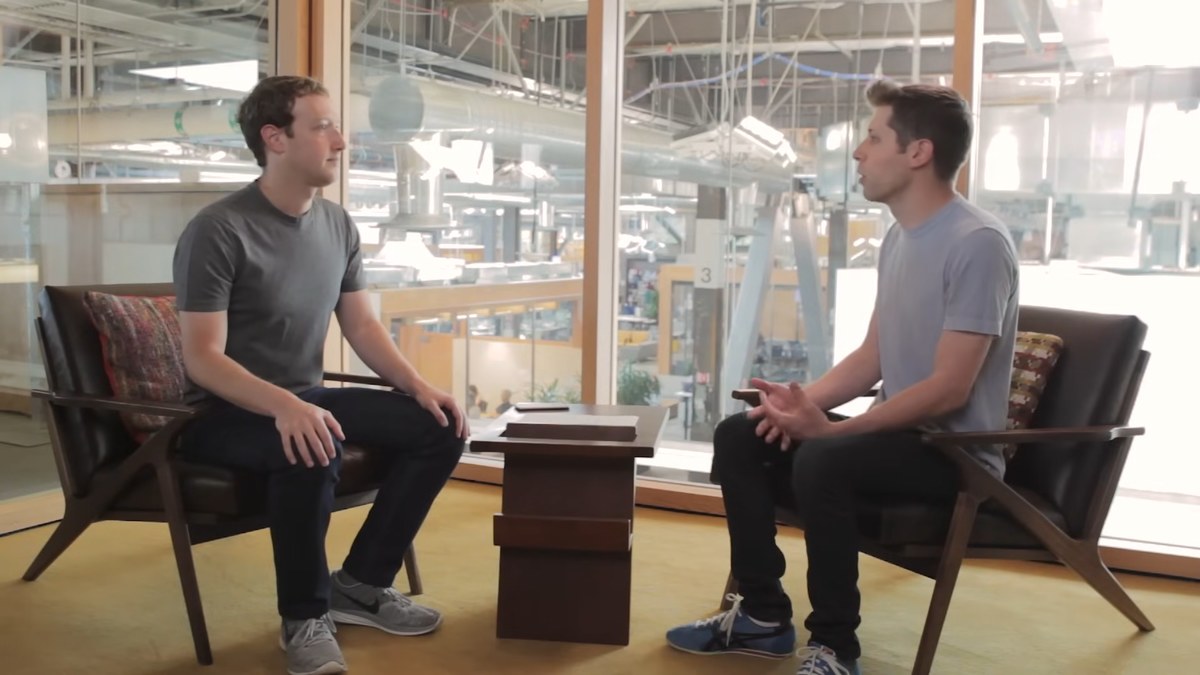
According to internal OpenAI reports, the company is working on creative ways to reward top talent, including by reviewing compensation, which is a priority. Ironically, in a 2016 interview , Altman, while president of YCombinator, interviewed Zuckerberg and openly admired the Facebook CEO's hiring style and approach.
Sam Altman interviews Mark Zuckerberg
“Facebook is exceptionally good at hiring people,” Sam Altman commented candidly.
This, of course, runs counter to Altman’s recent claims about Meta’s encroachment on talent at OpenAI. In leaked internal Slack messages, Altman compared Meta to mercenaries who have nothing better to offer than money, while OpenAI’s goal is missionary.
Former OpenAI employee Lucas Bayer, who was poached by Meta, said that neither he nor two other “defectors” received $100 million. The apparent discrepancy in the statements and figures suggests deliberate exaggeration or strategic purpose. Meta is sending a signal of aggressive intent, deep pockets, and a willingness to invest heavily to attract top-tier talent, potentially intimidating competitors. For Altman, these numbers are used to highlight Meta’s “unseemly” tactics, justify the necessary compensation adjustments to OpenAI, while simultaneously downplaying Meta’s actual success in poaching “the best people.”
Management approach
OpenAI has been facing a staffing shortage due to a brain drain, with some employees reporting that they are now working 80-hour weeks under constant stress. But is ineffective management really one of the reasons Meta’s strategy is working? Employee reviews of Altman and Zuckerberg’s direct management style from both companies lean more towards the former.
Altman maintains an open-door policy, with every OpenAI employee able to contact him directly via Slack. Business Insider reports that Altman is regularly seen working throughout the office, from couches to micro-kitchens, and is always ready for impromptu conversations.
This loyalty was clearly demonstrated during the firing of Sam Altman as CEO of OpenAI in November 2023, when over 95% of OpenAI’s 770 employees signed a letter demanding his reinstatement. This unprecedented show of support ultimately led to his reinstatement.
Also, Sam Altman constantly emphasizes OpenAI's mission to build general generative artificial intelligence, not to create AI as a tool for social networks. Perhaps that is why some key OpenAI employees stayed with the company despite the attractive offer from Meta.
Zuckerberg's management approach is results-oriented. He has earned a reputation for having a "hire fast, fire fast" mentality. Former Facebook employee Noah Kagan noted that Zuckerberg only hires people he would be happy to work for personally.
Some employees describe Zuckerberg as a direct, sometimes harsh leader. Interestingly, Zuckerberg has admitted that he does not like to manage people and prefers to work with a close circle of 25-30 senior managers than to have numerous direct reports.
Independent reports showed that by 2023, only about 26% of Meta employees had confidence in the company's senior management. The most common complaints employees made were about constant layoffs, changing strategies, and low morale.
Instead of a conclusion
The Zuckerberg-Altman rivalry is one of Silicon Valley’s major AI dramas. Over the past two years, they have gone from loosely connected technology colleagues to direct competitors in the AI race. The apparent lack of a deep personal connection suggests that the current competition is driven by purely strategic business goals and a desire to dominate the AI market.
Meta's aggressive tactics in poaching key employees and strategic gambits have drawn public criticism from Altman, and the fallout has been felt acutely at both companies. As Sam Altman says, Meta sees OpenAI as its biggest competitor at the moment.
“Every engineer will essentially become like a CTO, and have their own little army of AI agents.” Zuckerberg believes AI will write half of all code next year
«В жовтні випускаємо VR-шолом для аватарів, в «чіпування» Neuralink Маска вірю мало». Про що глава Meta Цукерберг 3 години говорив в подкасті Джо Рогана
25 серпня вийшла чергова серія популярного подкасту The Joe Rogan Experience, гостем якого став глава компанії Meta Марк Цукерберг. Розповідаємо про головне з майже 3-годинного інтерв’ю.