Хочете будувати кар’єру в Data Science та AI? Vodafone Big Data Lab відкриває новий набір —>
Марія БровінськаІсторії
11 October 2025, 09:00
2025-10-11
“Working with IoT is like playing God, but with code.” The chemist from Kharkiv “didn’t leave science, he just changed the formula” and self-taught himself to become a developer. He now optimizes the services of the American Mercury Intermedia and has his own app.
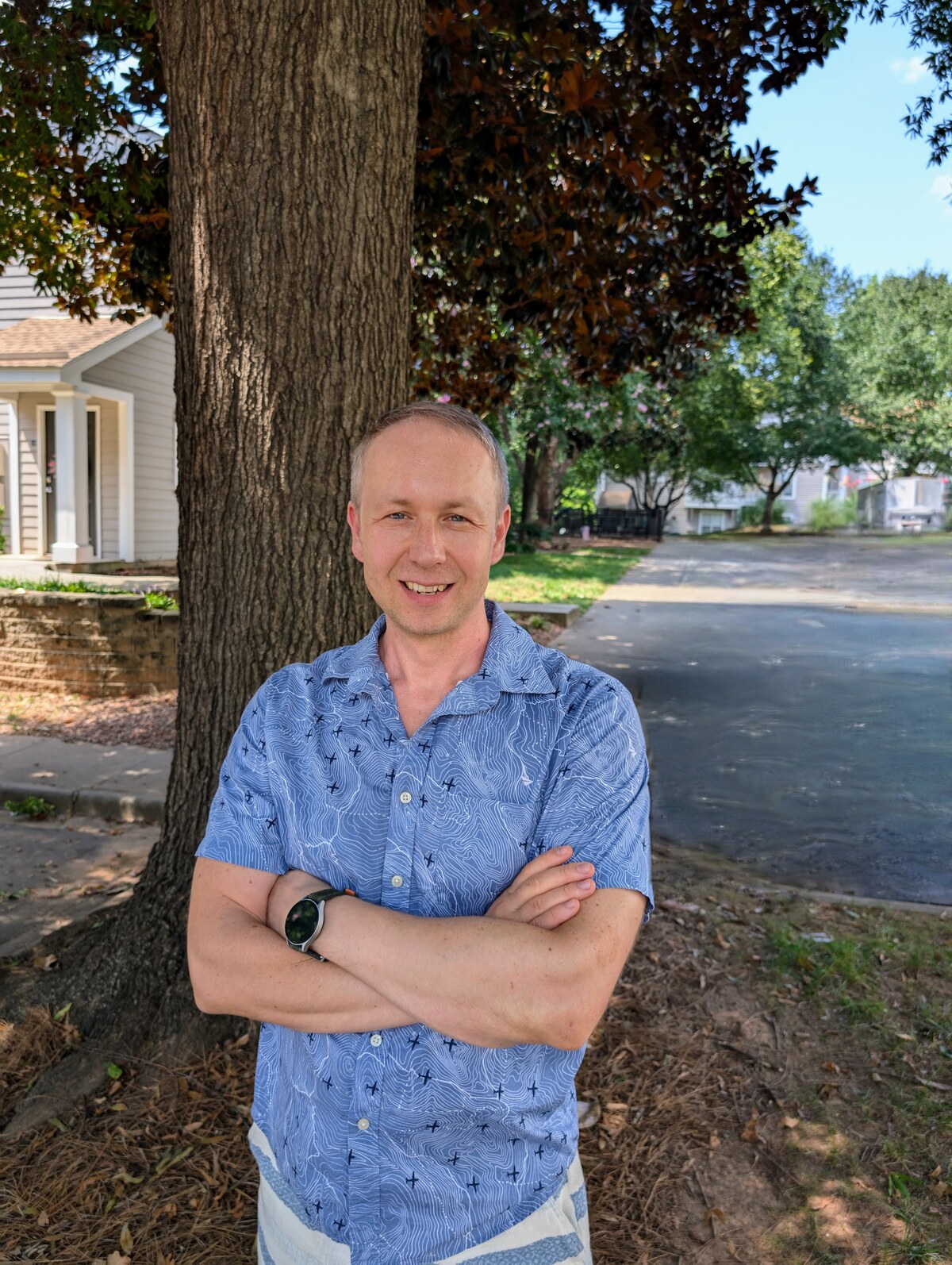
42-year-old Android developer Oleksandr Plekhov has been working in IT for 12 years. Not only years of experience in the industry led him to his current job at the American Mercury Intermedia, where the Ukrainian is engaged in the optimization of existing solutions and the integration of third-party services. The fact is that Oleksandr shone in IT, having a degree in chemistry, and he believes that it was his natural science background that helped him successfully build a career in IT. His path to the IT field began after receiving a master’s degree in chemistry at the V. N. Karazin Kharkiv National University, where he received thorough knowledge of research and finding solutions to complex problems. After practical experience in his specialty, in 2012 he independently retrained as an IT developer and began his career as a Mobile Developer. Throughout his career, Oleksandr has worked on projects in various domains, including IoT, Healthcare, e-commerce, and media, and is known for his leadership and effective team management. Oleksandr is also a Senior Member of IEEE.
dev.ua spoke with the developer, who currently lives in the US, about switching, ideal mobile apps, the benefits of mentoring, and the Internet of Things. Here’s what the IT guy has to say.
42-year-old Android developer Oleksandr Plekhov has been working in IT for 12 years. Not only years of experience in the industry led him to his current job at the American Mercury Intermedia, where the Ukrainian is engaged in the optimization of existing solutions and the integration of third-party services. The fact is that Oleksandr shone in IT, having a degree in chemistry, and he believes that it was his natural science background that helped him successfully build a career in IT. His path to the IT field began after receiving a master’s degree in chemistry at the V. N. Karazin Kharkiv National University, where he received thorough knowledge of research and finding solutions to complex problems. After practical experience in his specialty, in 2012 he independently retrained as an IT developer and began his career as a Mobile Developer. Throughout his career, Oleksandr has worked on projects in various domains, including IoT, Healthcare, e-commerce, and media, and is known for his leadership and effective team management. Oleksandr is also a Senior Member of IEEE.
dev.ua spoke with the developer, who currently lives in the US, about switching, ideal mobile apps, the benefits of mentoring, and the Internet of Things. Here’s what the IT guy has to say.
Content
About «chemistry» without chemistry, or switching in IT
I have never regretted leaving science. This question is perhaps one of the most important, because it allows me to show that my path was not a mistake, but a conscious choice. I have always seen this transition not as a rejection of science, but as its logical continuation. It was a step forward that gave me a new tool for the realization of my creative and analytical abilities.
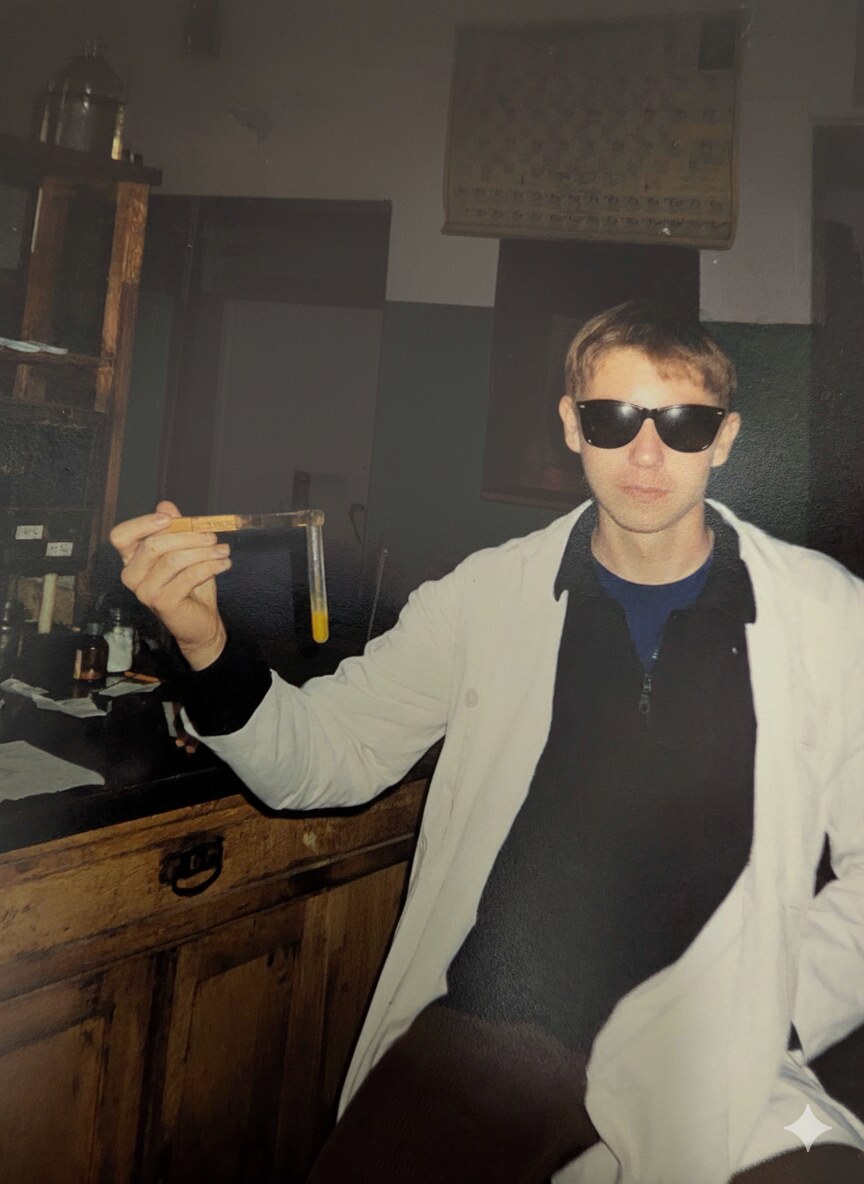
At first glance, chemistry and Android development are completely different worlds, but in fact there is an amazing parallel between them. My master’s degree in chemistry taught me not just to memorize formulas, but to think like a creator. In the laboratory, you take two compounds, mix them, and as a result you get a completely new substance with new properties. In programming, everything happens similarly: you take certain components (functions, classes, data), combine them according to the rules of the programming language, and at the end you get a ready-made application. Both fields require a creative approach, attention to detail, and problem-solving skills, so my chemistry background turned out to be the perfect foundation for a career in IT. It was not a transition, but rather an evolution of my approach to creation.
My scientific education is not just a diploma, it is a powerful set of skills that have proven to be critically important in programming. Among them, I would highlight:
Systems thinking: In science, especially research, you learn to break down complex problems into smaller, manageable pieces. This is a perfect fit for working on code, where you need to break down a large task into modules and functions.
Logical and analytical approach: Any scientific work requires analyzing data, making hypotheses, and testing them in practice. This is exactly what I do when writing code: analyzing requirements, writing algorithms, and testing them to make sure they work correctly.
Attention to detail: In experimental chemistry, one small mistake can ruin the entire result. This meticulousness is very helpful in programming, where even a missed comma or an incorrect symbol can cause the entire program to crash.
Perseverance and the ability to experiment: Sometimes scientific experiments don’t work the first time. The same goes for programming — code doesn’t always work as expected. I’ve learned not to give up after failures, but to keep experimenting, looking for new ways and solutions.
«I didn’t leave science, I just changed the formula»
At university I created new substances, and now I create new products and solutions in the digital world. The whole foundation that chemistry gave me — logic, systematicity, the ability to experiment — is what my career in IT is based on. This change was not just a new stage, but a real professional and personal development.
Moving to IT has given me more freedom. It’s the opportunity to work on a variety of projects, choose areas that interest me, and see the results of my work much faster. In science, research can take years to bear fruit. In app development, I can create something new and see how it helps people in just a few weeks. This dynamic and direct connection with the end user is what gives me the most satisfaction. It’s the freedom to create and see your ideas come to life.
When people ask me if I plan to return to science, it makes me think. I think about it often, and to be honest, the more time goes by, the more I realize that my expertise in chemistry as a science is gradually being lost.
I have no plans to return to science in its traditional sense — to the laboratory and test tubes. That would be unrealistic. However, I absolutely do not rule out the possibility of combining these two fields in the future, if the opportunity arises.
Today, chemistry and programming intersect in many exciting areas, from computational chemistry to drug discovery using machine learning algorithms to bioinformatics. My programming skills, especially in working with data and AI, could be an ideal tool for solving complex scientific problems.
For me, it’s not an either-or question, it’s a both-and question. My career is not about going from one to the other, but about constantly evolving my skills. So if a project comes along that crosses these two worlds, I’ll be ready. It would be the perfect way to combine my first passion with my current profession.
IoT as a special love
Of all the domains I have worked in, including IoT, e-commerce, healthcare, and media, I can confidently say that IoT (Internet of Things) was both the most challenging and the most exciting. It was an experience like no other.
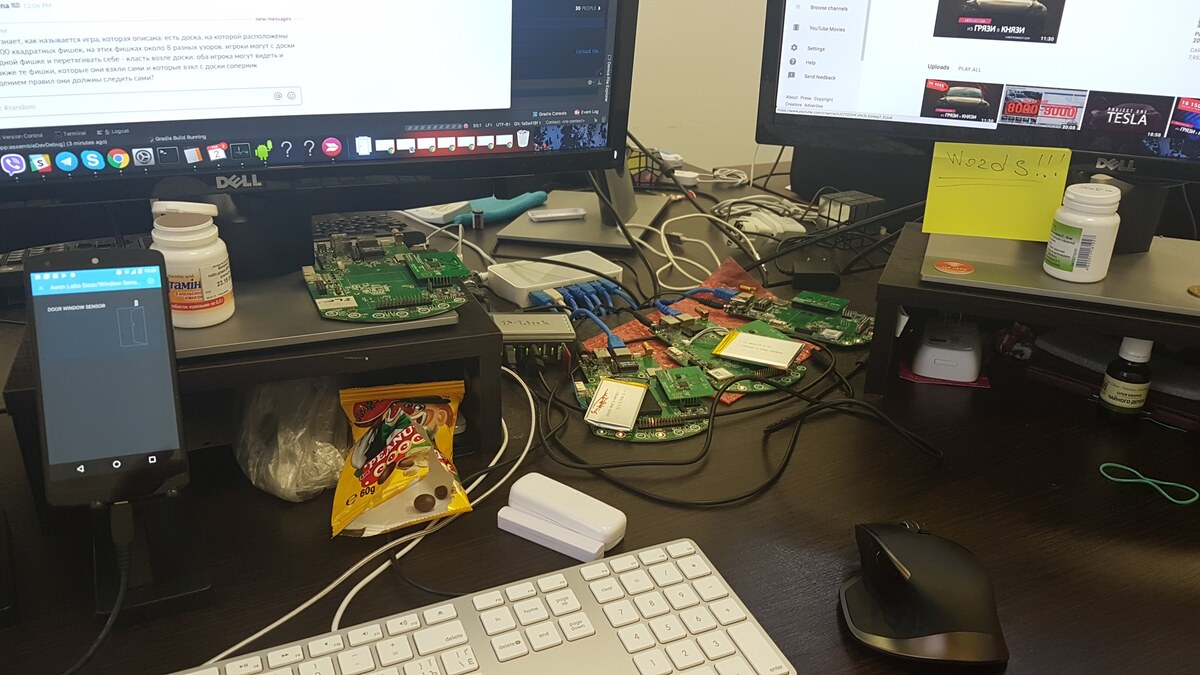
Working with IoT is like playing God, but with code. The biggest drive for me was being able to see the physical result of my work. Whereas in a regular app you see changes on the screen, in IoT you write code, and in an instant a light bulb lights up, a robot starts, or a door opens. It’s the magic that turns abstract lines of code into tangible interaction with the real world. This field requires outside-the-box thinking, and it’s a constant stream of new ideas and opportunities.
This was especially evident during my time at Ezlo, where I led Android development. I wasn’t just writing code, I was constantly looking for new, optimal approaches to improving the product. These efforts were not in vain, as our product, Atom, was recognized as the IoT Innovation Award Consumer Product of the Year by IoT Breakthrough. This was a clear confirmation that we had achieved our goals, and it was certainly an incredible drive.
At the same time, IoT is the height of complexity. You’re not just writing code for an application; you’re working in an ecosystem with many moving parts. Add hardware limitations, network issues, security issues, and unstable connections. Sometimes the code is perfect, but the device doesn’t work due to a loss of Wi-Fi signal, a dead battery, or some other physical obstacle. This requires the developer not only to have deep programming knowledge, but also to understand the hardware, network architecture, and the ability to solve problems that can’t always be reproduced on a computer screen.
My interest in complex technical solutions and desire to share my findings go beyond commercial development. I recently published a scientific article on this topic, demonstrating my desire to transform practical experience into knowledge accessible to the scientific community. In particular, in the article «Wi-Fi Direct on Android: Creating Seamless Connectivity between Devices,» I explored key aspects of device communication, which is fundamental to the IoT ecosystem. This publication confirmed that my deep knowledge and innovative approaches are actively used not only in commercial products, but also contribute to the development of the industry through scientific publications.
I have the Innovation in E-Commerce Software Development award. And it has become a confirmation that we are moving in the right direction. I believe that the e-commerce sector is currently undergoing a revolution, and the biggest breakthrough here can be provided by IoT (Internet of Things).
IoT is transforming online commerce from virtual to physical. Imagine your refrigerator ordering groceries when you run out. This is not fantasy—it’s reality, where IoT devices are becoming the new point of sale, and shopping is no longer a choice but an automated process.
The most important advantage of IoT is the ability to collect data about user behavior in the real world. This data allows you to create hyper-personalized offers and optimize supply chains, ensuring complete transparency. Thus, IoT is not just a technology, but a key factor in transforming e-commerce into an integrated, intelligent and truly customer-centric ecosystem.
One of the latest projects I’m currently working on at Mercury Intermedia is a streaming service for watching sports games. At first glance, it may seem simple — just a regular video player. However, there are many interesting and challenging challenges hidden «under the hood.»
What fascinates me the most is this complex logic and the constant work on optimizing the player. To ensure perfect viewing without delays and buffering, you need to take into account many factors: from the quality of the network connection to the power of the user’s device. It’s like a game where you fight for every millisecond to ensure the user experience is flawless.
It also takes a lot of time to integrate and configure third-party libraries. You need to make sure they work efficiently and stably in our ecosystem. This is work that requires a deep understanding of the system and allows me to constantly learn. So, as you can guess, there is definitely no need to be sad.
About applications and unpopular solutions
The world of Android development is changing rapidly, and what was a «must-have» yesterday is now standard or even obsolete. For modern and high-quality mobile development, I would highlight a few key trends that relate to both technologies and approaches.
The main trend in recent years that is transforming the approach to UI development is Jetpack Compose. It is a modern declarative UI framework that replaces the outdated XML layout.
It significantly speeds up the development process, makes the code cleaner and more intuitive. Another important step is Kotlin Multiplatform, which allows you to use a single code base for business logic for both Android and iOS, which saves time and resources.
It is clear that a modern application must be fast, reliable and work even without the Internet. Therefore, the use of offline persistence (for example, using Room) and communication with the backend via coroutines and flows, which simplifies working with asynchronous operations, is a must-have. The use of Unidirectional Data Flow (UDF) and a clean architecture are key to creating scalable and easily maintainable applications.
In addition, modern applications must be not only functional, but also intuitive. Particular attention is paid to:
Responsive UI: Apps should work perfectly on all devices — from smartphones to tablets, and even foldable devices.
AI/ML integrations: Using artificial intelligence to personalize, predict, and automate tasks (e.g., chatbots or recommendation systems) is becoming standard.
Performance optimizations: apps should be lightweight, load quickly, and consume minimal battery resources.
The increase in attacks on mobile devices also makes security a key consideration. Data encryption, two-factor authentication, and regular updates are essential. Also, keeping up with innovations such as augmented reality (AR) or integration with 5G networks and IoT allows you to create applications that meet the requirements of the future.
Oleksandr has his own project «Clients&Visits», which was born to solve a real problem that a beauty specialist wife faces every day: how much time and inconvenience it takes to record clients in a regular paper notebook. Therefore, the application helps freelancers and small entrepreneurs automate the most important aspects of their work: client accounting, visit planning and their history. It is a solution that allows you to move from manual recording to an effective digital system.
He is now strategically reviewing the project: he has disabled monetization to gain a wider audience and collect more feedback that will help me make the app even better. In addition, the developer is actively integrating new AI tools and working on a complete design update. Although there is not much free time, I am persistently moving forward because I believe in the potential of this project.
App developer satisfaction
The greatest satisfaction for a developer when their personal project finds its niche is the feeling of self-fulfillment and validation. It’s not just a «commissioned» job, but the coming to life of their own idea. When you see that your app really solves someone’s problem, that feeling is incomparable.
This is a unique kind of motivation. You write code not for a paycheck, but because you deeply care about your product. Every feedback from a user, even critical, is perceived as valuable information that helps make the project better. This work on the application is a true reflection of my passion for creating something new, useful, and unique.
Refactoring instead of «patching holes»
Optimization and refactoring are always a sore subject.
Understanding that a project requires a complete architectural overhaul, not just «patching holes,» is a daunting task. It is truly one of the most painful, yet most important, decisions.
I myself faced a similar situation when I first worked on a large, legacy project at Ezlo Innovation. The need for refactoring was obvious, but I didn’t know where to start. At that time, I was very helped by the book «Refactoring. Improving Existing Code» by Martin Fowler. It was a real lifesaver, as it gave me a clear understanding of how to approach this complex process without breaking anything existing. This book is a great resource for anyone facing a similar challenge.
«Patching holes» becomes impossible under several conditions.
Development speed drops dramatically. If adding a new feature, even a small one, takes an abnormally long time due to confusing code, this is the first and most important wake-up call. It is a signal that technical debt has reached a critical point.
Fixing one bug creates new ones. When the code is so tangled that a change in one part breaks another, it is a sign of a highly coupled component. In this state, fighting bugs becomes fighting a «hydra.»
The project cannot scale. If the system cannot cope with the growth of the number of users or data, and any attempt to expand it requires enormous effort, then its architecture is fundamentally flawed.
New developers can’t get started quickly. If it takes an experienced developer months to understand the codebase, it indicates that it is completely unstructured.
If you notice two or more of these symptoms in your project, it means it’s time to stop and completely review the architecture, rather than wasting resources on fruitless «patching holes.»
About leadership and mentoring
Managing a team is a completely different ball game than developing individually. It’s a shift in mindset from «what do I do» to «how do we succeed.» I would highlight three key things that differentiate a strong Android leader from an average developer.
Strategic vision, not just completing tasks. A typical developer gets a task and completes it. A strong leader sees how the task fits into the bigger picture of the product and business. He doesn’t just write code, he builds architecture for the future, anticipating future needs and potential problems. His goal is not just to close the task, but to ensure that the solution is scalable, maintainable, and meets the long-term goals of the project.
Mentoring and team development. A developer focuses on his own growth. A leader focuses on the growth of the entire team. He invests his time in mentoring, helping junior colleagues solve difficult problems, sharing knowledge, and creating an environment where everyone feels confident. For a strong leader, the success of the team is a priority. He understands that his role is not to be the smartest, but to make every team member better than him.
Effective communication and prioritization. A typical developer communicates mostly about technical details. A leader is a bridge between development, management, designers, and other departments. He translates business requirements into technical language for the team and, conversely, explains technical limitations and progress to the business. He is a master of prioritization, able to cut out the unnecessary and focus the team on the most important tasks that bring the most value.
I often act as a mentor for startups. Participating in a hackathon is not just a speed competition, but an intensive course in problem solving.
My role as a mentor and judge is not to give the team a ready-made answer that will lead them to first place. That would be unfair and pointless. Instead, I try to teach them to find their own path to victory.
I focus on aspects such as clear problem definition and prioritization. Is the team really solving the problem that is most important? What are the «must-haves» and what can be postponed for later? Also important is the aspect of value creation: how can they show that their project does not just work, but brings real benefits?
Quickly generating innovative technical solutions was clearly demonstrated during my recent participation in the large-scale hackathon «Shipaton 2025». I led the development of the Snovyda project, an application that interprets dreams using artificial intelligence. This project was a great opportunity to combine my technical experience, particularly in the field of mobile platforms and AI integrations, with leadership skills. I hope our team will be a winner.
The hackathon prize is a temporary joy. But the skills of strategic thinking, teamwork, effective time management, and making difficult decisions are tools that will stay with them for life. They will be able to apply them to any future project, startup, or main job.
So when I mentor, my main goal is to give the team a «fish» rather than a «rod» so they can build successful projects long after the hackathon is over. For me, that’s a much bigger victory than any prize.
About the mistakes of the Juns
In my experience mentoring, I see the same mistake juniors make over and over again. It’s not technical, but rather mental. The biggest mistake is focusing solely on the «happy path.»
When a junior gets a task, the first thing he thinks is: «How do I make this code perform its function?» And he does a great job — he writes a function that performs the task when everything goes perfectly.
But the real world is far from ideal. A user can lose their internet connection, forget to enter data, press the wrong button, or try to use the app on a device with a bad battery. And that’s where an app written with a focus solely on the «happy path» will start to crash or behave unpredictably.
An experienced developer always asks himself the question: «What if the user doesn’t have a network connection?», «What happens if the data from the server arrives in the wrong format?», «How will the application behave on a small screen or when the orientation changes?»
This difference in thinking is key. It involves thinking not only about how the code performs a task, but also about how it behaves in real, often less than ideal, conditions. This skill comes with experience and is one of the most important for growth in the profession.
Is there life after the Senior title?
I am a Senior Member of IEEE (Institute of Electrical and Electronics Engineers). I became an IEEE Member in 2024, and in 2025, having collected all the necessary evidence of experience and achievements, I applied for Senior Member status. After a thorough review, my candidacy was approved. This proves once again that professional growth is not an accident, but the result of purposeful work and recognition by the community.
Membership gives you access to a vast knowledge base. It’s an opportunity to stay up to date with the latest research, publications, and technical standards before they become publicly available. For me, it’s a constant source of innovation and ideas that I can incorporate into my projects. In fact, I’m currently writing a technical paper for IEEE, which gives me a unique opportunity to not only consume knowledge, but also actively participate in its creation. It’s a unique tool that allows me to stay on the cutting edge of technology.
In my opinion, the glass ceiling for Android developers only exists in the sense that the nature of growth changes. It’s no longer about learning new frameworks or programming languages, but about moving to a completely new level of thinking. Once you reach the Senior level, the path to development branches into several directions, and each of them requires a new set of skills.
Technical Leadership: Becoming an Architect Engineer. This path is for those who want to stay closer to the code, but at a different level. You move from asking «how do I write this feature?» to «how do I build the entire platform?» You become a Principal or Staff Engineer. Your role is to develop an architecture that will be stable and scalable for years to come, solve the most difficult technical problems, and mentor other teams. It’s about influencing the company’s technical strategy.
Leadership over people: become a manager. If you prefer to develop people rather than code, then the next step is Team Lead or Engineering Manager. Here you move from individual work to team management. Your tasks are not to write code, but to help the team be productive, resolve conflicts, hire new people and develop their careers. This is a transition from purely technical skills to Soft Skills: communication, empathy and strategic planning.
Entrepreneurship: creating your own product. This is the most daring path. It’s about taking full responsibility for the product, from idea to monetization. Here you don’t just write code, but also become a designer, marketer, financier, and project leader all in one. My app «Clients&Visits» is a perfect example of such development. This is not only an opportunity to test all your skills, but also a chance to create something that has real value in the market.
The glass ceiling disappears when you realize that the ultimate goal is not status, but influence. You can influence architecture, people, the market. The main thing is to find the direction where you can bring the most benefit, and continue to learn from there.
Where to develop Manual QA when you hit a professional ceiling? A big conversation with a tester from Lviv who conquered the US market and is moving towards the positions of Staff, Principal and Technology Leader
«I studied Data Science since I was 4 years old. Every math lesson was important.» The story of a math genius from a small village in Volyn, who is now creating LLMs for Lyft, Reface, and AppFlame
«I resigned from an American company for the sake of a Ukrainian miltech project.» The story of a KPI graduate who saved an American healthtech startup from collapse, created a mini-competitor to Netflix, and is now preparing an AI defense system against Russian FPV
«Customers and PMs joked that I shouldn’t rush and relax a bit.» How a developer from Lviv is building an AI-Healthcare system in the US: an interview with a Ukrainian who conquered global IT