Хочете будувати кар’єру в Data Science та AI? Vodafone Big Data Lab відкриває новий набір —>
Олег ОнопрієнкоWar
13 August 2025, 09:00
2025-08-13
The war for the sky begins in school. How Ukraine is losing the edge over the enemy in training children to pilot drones
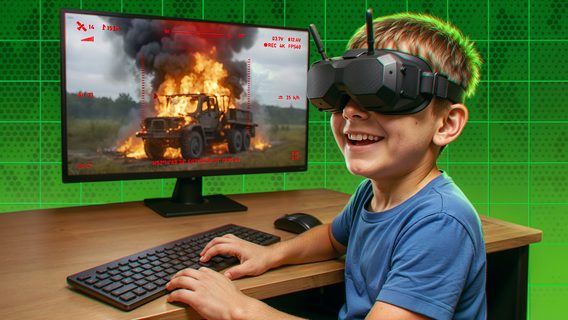
While the Ukrainian Ministry of Education is reforming the subject "Defense of Ukraine", Russian schoolchildren are already massively learning to fly drones using state textbooks. In the occupied territories, Ukrainian children are forced to assemble FPV drones for the aggressor's army, and in Russia 240,000 students have been trained in drone piloting. Ukrainian schools for training UAV pilots are sounding the alarm and reducing operator training programs. We analyze the state of school education, which is not keeping up with the realities of war.
While the Ukrainian Ministry of Education is reforming the subject "Defense of Ukraine", Russian schoolchildren are already massively learning to fly drones using state textbooks. In the occupied territories, Ukrainian children are forced to assemble FPV drones for the aggressor's army, and in Russia 240,000 students have been trained in drone piloting. Ukrainian schools for training UAV pilots are sounding the alarm and reducing operator training programs. We analyze the state of school education, which is not keeping up with the realities of war.
The scale of Russian militarization of children has reached the level of the Third Reich. Since September 2024, a mandatory subject "Fundamentals of Security and Defense of the Fatherland" has been in effect in Russian schools, which includes methods of combat use of drones. A special textbook on UAVs for 34 academic hours has been released for students in grades 8-9. As of now, a general textbook for the updated subject "Defense of Ukraine" has not yet been created in Ukraine.
The numbers speak for themselves: 240,000 Russian schoolchildren have been trained in the so-called “Drone Academy”, organized by the “Berloga” platform, which is overseen by the Putin administration. Schoolchildren are encouraged to participate in the “academy” through gamification of the process and additional points for the “EDE” (an analogue of the NMT). In the pursuit of dominance in the sky, the aggressor state plans to involve children from seven years old in UAV piloting competitions from 2026.
The situation is even more dramatic in the occupied Ukrainian territories. According to the Center for National Resistance, children from temporarily occupied territories are being forcibly assembled FPV drones for the Russian army in Russian summer camps.
Viktor Taran, head of the Kruk UAV Operator Training Center, in a comment to dev.ua emphasizes the scale of the threat: "Russia is preparing for a total war, for the destruction of the last Ukrainian."
In his opinion, in 2023, Ukraine had an advantage over the enemy in the field of pilot training, but now we are significantly lagging behind, in particular due to the lack of strategic planning and funding from the state.
What is Ukraine's response?
In Ukraine, children are being trained to fly drones as part of the updated “Defense of Ukraine” course. Minister of Education and veteran Oksen Lisovyi emphasized a radically different approach to preparing children for the realities of life in times of full-scale war.
"We are not militarizing children at all, but rather forming a defensive consciousness in them," the Minister of Education emphasized during the presentation of the updated program.
The Ministry of Education and Science of Ukraine allocated UAH 1.74 billion for the reform of the subject "Defense of Ukraine", which was used to purchase teaching aids and computer equipment for classrooms. For comparison, it is known from open sources that Russia spent almost 540 million rubles (280 million hryvnias) on UAV programs in educational institutions in 2024 alone.
To date, Ukrainian communities have spent 507 million hryvnias on purchasing modern equipment for training centers. This money has been used to purchase approximately 2,000 drone flight simulators.
Since September 2024, the subject "Defense of Ukraine" has been taught in the format of full-day training sessions once a month for students in grades 10 and 11. The program includes six modules, including drone control skills, along with first aid, topography, and rifle training.
Already in the first month of the updated program, there was confusion when in one of the Kyiv schools, a picture of a soldier in a Russian uniform was found in the textbook "Defense of the Fatherland." The textbook was quickly removed, and new ones have not yet been printed, so children are learning according to the textbooks.
According to the Ministry of Education and Science, as of the end of the academic year, the updated "Defense of Ukraine" was studied by 64% of students in 965 centers in schools (1,200 were predicted), where there is the necessary equipment and teachers. The ministry notes that in order to achieve 100% coverage by 2027, another 500 such centers need to be opened. The fact that only one center operates in Kyiv, based on the State University "Kyiv Aviation Institute", is alarming.
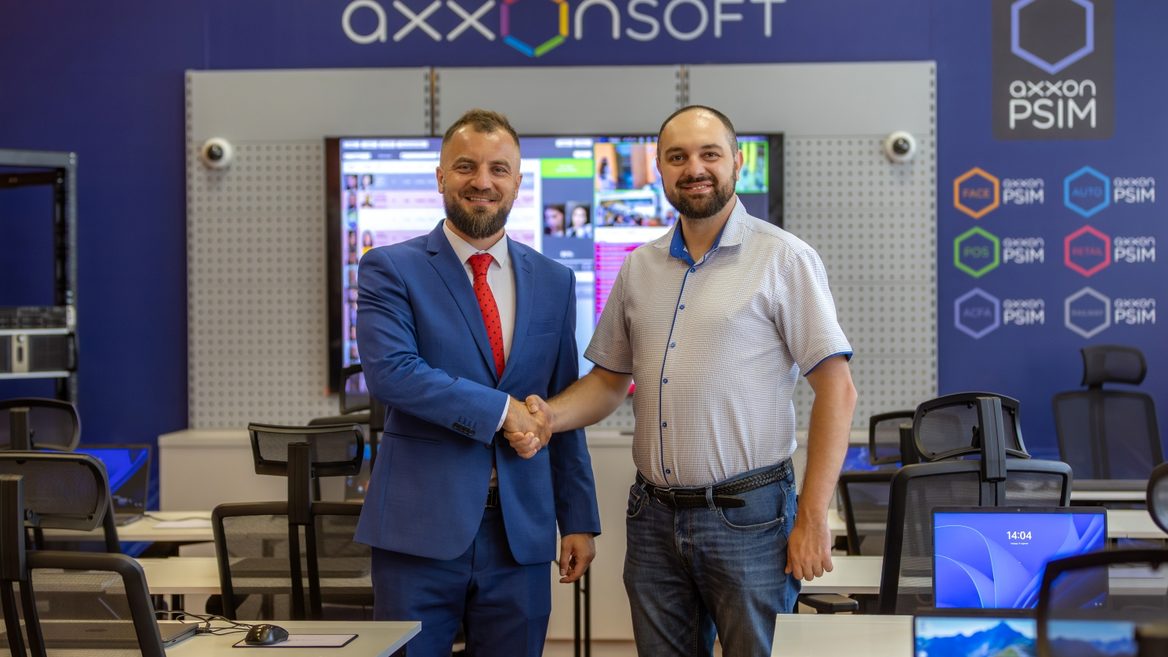
KAI and AxxonSoft launched the first AI security laboratory in Ukraine worth over 5 million hryvnias
Challenges and systemic problems
Despite ambitious plans, the Ukrainian education system faces serious obstacles. Drone school representatives identify three key problems:
The first is the lack of government funding. Representatives of drone schools we spoke with are sounding the alarm that they are being forced to cut back on their training programs. In their opinion, the government has done almost nothing to improve the situation.
"There are about 20 schools for training drone pilots and operators in Ukraine, and all of them have a complete lack of state funding. The Russians, on the contrary, finance the training of their pilots at the federal and local levels," Taran noted.
We do not have any government program that would support private schools and training centers for UAV operators.
Taran said that due to lack of funding, the Kruk school alone had to reduce the curriculum by 3.5 times. If earlier the school graduated an average of 250 operators, now it is around 60-70 people.
"Unfortunately, the "Drone Army" has not been systematically training military personnel for the front for more than a year and a half," added Roman Korzh from Global Drone Academy.
The second problem is the lack of qualified personnel in public schools. The Ministry of Education and Science has allocated 100 million hryvnias for the professional development of teachers for the subject "Defense of Ukraine". Within the framework of the allocated funds, the "Supervision" program was launched, and teachers who passed it accordingly became "supervisors". As of the end of the last academic year, 80 supervisors had been graduated. Victory Drones was engaged in the training of supervisors in the field of unmanned systems.
Despite the fact that Ukraine has enough UAV piloting instructors, it will be quite difficult to encourage them to go and teach in schools with the current level of wages.
"If the approach to financing does not change, I do not believe that a veteran who has a family will go to work for the rates paid in schools. 6,000, 8,000, 10,000 hryvnias is not serious. A veteran who has a certain specific specialization would rather go to work for a business," emphasized the head of the Kruk school.
Global Drone Academy notes that cooperation with pilot schools that train military personnel is needed. Head of Global Drone Academy Anton Veklenko noted that their training center has a special advanced training program for teachers of schools and colleges. In cooperation with the Research Institute of the Ministry of Education and Science, they provide teachers with didactic materials, certify them at the qualification center, and provide the opportunity for practical training at training grounds outside the city.
"Systematic training and certification of teachers should be a priority for the state," added Roman Korzh.
Private drone schools are on the verge. There is not enough funding to train the military. Here's what's happening and whether certification will help solve the difficulties. Analysis
The third is the lack of practical places for piloting. Experts note that despite the large number of training grounds for operators, state schools do not have access to them, and simply flying drones in places not designated for this is prohibited due to martial law, and a special permit is required. Some schools "circumvent" the ban by training children in indoor pavilions, however, according to specialists, these conditions are insufficient for acquiring practical skills.
"If children learn to fly, at most in the gym with a small drone — what has he learned? This is not flying," criticizes Viktor Taran.
Taran spoke about the significant difference between indoor training and flying in real-world conditions. In reality, he said, the wind affects the aerodynamics, which is a fundamentally different experience compared to static indoor flight. He emphasized that controlling a drone at a distance of 5–10 km from the operator in windy conditions is “a completely different feeling” and much more difficult than flying when the drone is 10–15 meters away.
Which schools prepare children for piloting?
Despite the fact that the situation with adult education is not the best right now, some private initiatives are still trying to invest in the development of children's piloting. The Dronarium Academy conducts training at the Ivan Bohun Kyiv Lyceum and the Heroiv Krut Lviv Lyceum.
"So far, these are isolated projects. And I really want this cooperation to be not a one-time "on call" but a systemic one," Ruslan Belyaev from Dronarium told dev.ua.
According to Belyaev, the main goal is not to “teach children to fly quadcopters,” but to raise a new generation that is not afraid of technology, knows how to use it, create it, scale it, and launch it into mass production. In civilized countries, such projects are part of state policy, not just an initiative of volunteers.
In Obukhiv, veteran Khariton Glinyanov and his wife started a school for piloting FPV drones for children, DroneUP School . The school was opened thanks to a grant provided by the Ukrainian Veterans Fund, which confirms private, not state, initiative. Currently, the school has over 50 children aged 8 to 17.
In the nationalist cells of "Century" , they conduct spot training on FPV drone simulators, but there is no full-fledged course. That is, this is a basic theoretical basis for the principles of FPV operation with the possibility of practical control on simulators, which, of course, cannot compete with flights in field conditions.
An interesting example of state funding for children's piloting is the DronLad AVEA Junior pilot school in Vinnytsia. The training drones were obtained thanks to a victory in the "Public Budget" competition, from which 100,000 hryvnias were allocated for the purchase of equipment and the course. The training itself is carried out by the DronLad AVEA NGO. The first group trained 12 children for a month.
The full-time engineering school for children #brobots devotes 30% of its educational program to technical subjects. Students learn to solder, assemble, and program FPV drones, assembling up to 20 drones per semester.
Of course, this is not a complete list of schools where children can learn drone piloting skills, but the trend is clear - there are few of them and it is mainly a private initiative.
Epilogue
While Ukraine is reforming one subject, Russian schoolchildren are massively mastering skills that could turn against us on the battlefield tomorrow. As military expert Sergey "Flash" Beskrestnov notes, Russians have already demonstrated the ability to control FPV drones at the front remotely via the Internet. According to the expert, the development of technology is going in such a way that Russian children and schoolchildren may not fight directly at the front, but remotely control drones from home.
"Children will sit somewhere at home, eat porridge and remotely play the "game" of killing someone with a drone. Young people have excellent reaction, learning ability and motor skills. In a few years, everyone will fly like this: experienced pilots who need to be protected will control drones remotely," warns Serhiy "Flash" in his Telegram channel.
"Drones are not about 'toys for IT guys' - they are about a real revolution in military affairs. While Russia has been training 'drone special forces' since the age of 14, we sometimes can't even decide who should bring drones to class," Ruslan Belyaev concluded.