Наталя ХандусенкоStartup
3 January 2025, 09:00
2025-01-03
GitHub on a shoestring: a Ukrainian developer created an open web platform called SplineCloud for knowledge exchange and management in engineering and science. How the service works
Engineer, and eventually software developer, Vadim Pasko launched the SplineCloud web platform for knowledge exchange and management in engineering and science. The idea, which was born in 2015, has come a long way. Currently, the platform is used by about 500 engineers and scientists from different parts of the world, who, with the help of free repositories, can facilitate the process of implementing engineering projects without spending months on rediscovering and rethinking existing knowledge and data. Vadim told dev.ua about the development of the startup despite all the challenges: from the birth of the idea to cooperation with NAU and participation in WebSummit 2024, as well as about the investments attracted.
Engineer, and eventually software developer, Vadim Pasko launched the SplineCloud web platform for knowledge exchange and management in engineering and science. The idea, which was born in 2015, has come a long way. Currently, the platform is used by about 500 engineers and scientists from different parts of the world, who, with the help of free repositories, can facilitate the process of implementing engineering projects without spending months on rediscovering and rethinking existing knowledge and data. Vadim told dev.ua about the development of the startup despite all the challenges: from the birth of the idea to cooperation with NAU and participation in WebSummit 2024, as well as about the investments attracted.
Vadim Pasko, an engineer with many years of experience, noticed one trend — his colleagues can spend months or even years rediscovering and rethinking existing knowledge and data due to lack of access to them or the inconvenient form in which they are presented. For example, in order to design a rocket, its mathematical model is built taking into account the laws of physics, empirical and statistical data. In the absence of access to such knowledge, engineers often rely on outdated incomplete data that does not take into account new materials and production technologies, which leads to the design of uncompetitive products. Or another situation — you need to design a UAV, but the available data on the flow around the wings and other elements of the airframe are presented in the form of physical albums, the digitization of which takes a lot of time. In such cases, engineers can be helped by the SplineCloud web service, which will simplify their path from idea to validation using mathematical modeling methods and contains formalized knowledge that is convenient to use in calculations.
Vadym’s idea to create a platform for sharing knowledge and data from engineers from all over the world has gone through many years of development from concept to MVP service development at the end of 2021. Despite the war that hindered the development of the project, it is now used by specialists from the USA and Europe.
Vadym Pasko, founder of SplineCloud
In a sense, the Exosphere bootcamp that I attended in Hungary in 2015, which was dedicated to the topic of a space elevator, pushed me to take active steps towards creating SplineCloud. During those years, I was engaged in research aimed at finding solutions and technologies to enable the creation of a space elevator — a massive spatial orbital structure that could radically change and reduce the cost of delivering cargo to low-Earth orbit and interplanetary trajectories. Participation in the bootcamp motivated me to change my focus from solving technical problems to finding opportunities to implement my ideas. There, I first practiced an elevator pitch with the idea of creating a platform for exchanging formalized knowledge in engineering and science. Since then, in my free time, I have been analyzing, validating, and testing various solutions to create a prototype of the platform.
In 2019, Vadym Pasko changed his career from an aerospace engineer to a software developer. That same year, he began developing the service in his free time. In 2021, he found a co-founder, Denis Babak, with whom he participated in various business programs to implement the project. Among them was the Virtual Incubation Program from Ukrainian HUB, which gave impetus to the development of the project. The startup received a CRDF Global grant, which allowed it to bring the development of the platform to the release of the alpha version. In September 2021, they performed at the Pitch contest as part of the U Tomorrow Summit, where they attracted the attention of investors.
«A trip to StartupGrind was planned for spring 2022 with the assistance of CRDF Global, but due to the full-scale invasion of racists, it did not take place for me. Denys and I also had to part ways due to a number of misunderstandings. Negotiations with potential investors also stopped, and it became clear that the project would have to be put on hold or switched to bootstrapping,» said Vadim.
Experience working at the Finnish startup Equel as a backend developer forced Vadim to reconsider his views on a marketing company, strategy, and approaches to team formation and management.
«In the summer of 2022, I started looking for engineers to work on content and develop demo projects. My cooperation with Equel ended in May 2023, and since then my team and I have focused on working on SplineCloud,» Vadim added.
Demo project, collaboration with NAU and WebSummit 2024
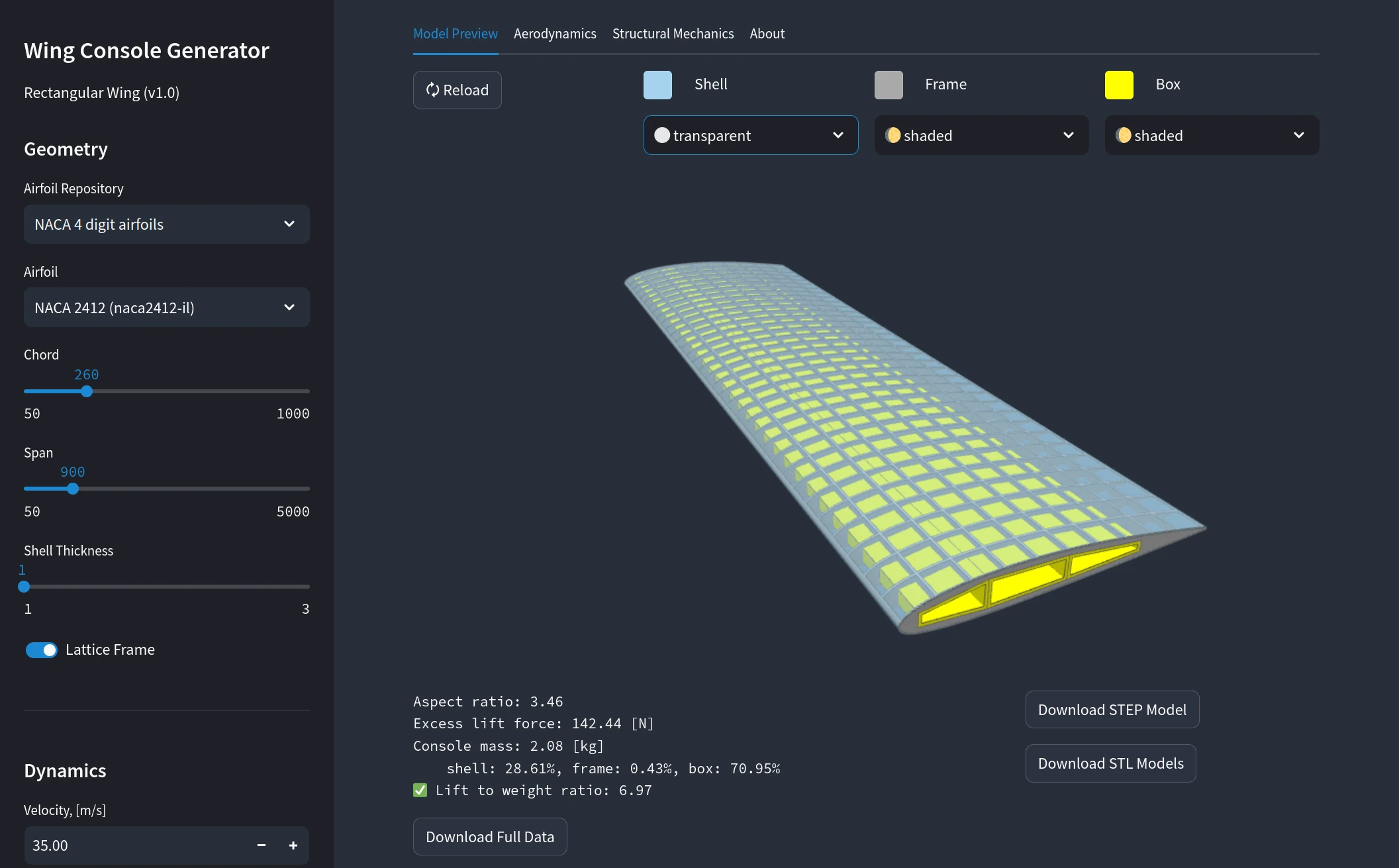
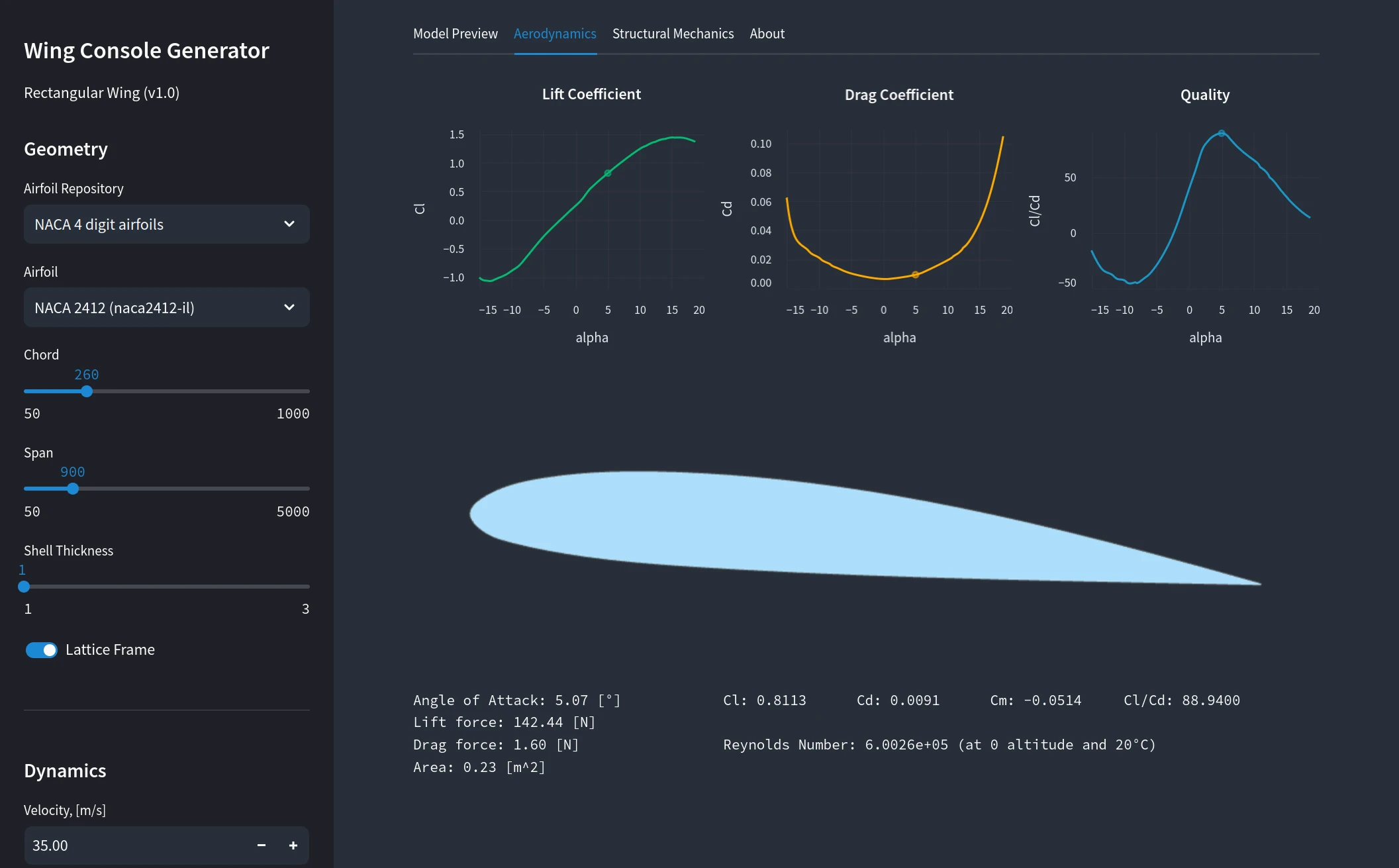
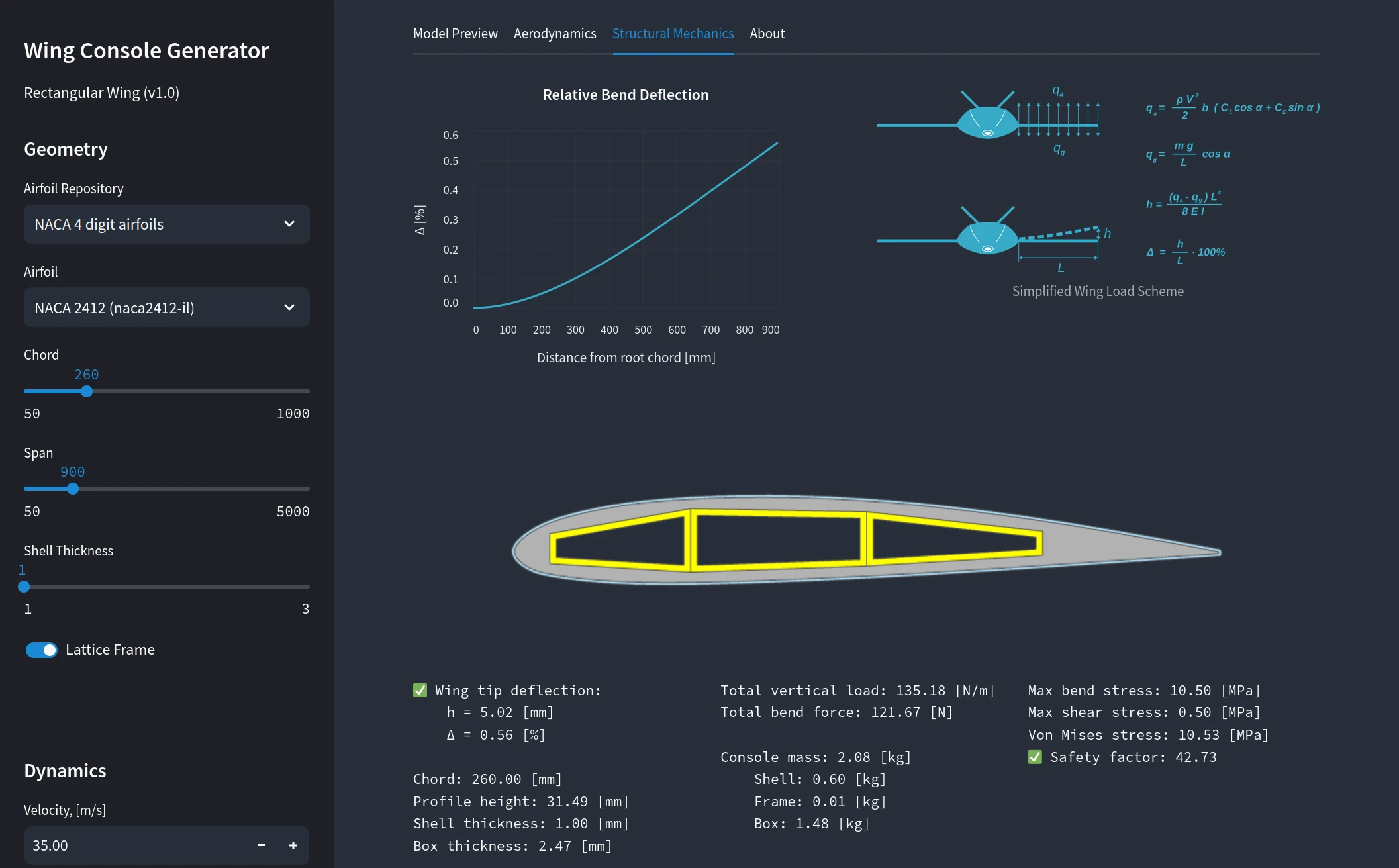
In the fall of 2023, the team developed a demo project — an open-source web application for generating a 3D model of a drone wing. The main task was to test new and promising technologies in combination with SplineCloud — a high-level CAD framework CadQuery and the Python library for generating web applications Streamlit. The result was the Wing Console Generator application, thanks to which the user can specify the type of aerodynamic profile and the size of the console of a rectangular wing, and the application will generate a 3D model of the frame (caisson type) and the shell, calculate the aerodynamic characteristics (lift force and drag), the mass of the structural elements, and estimate the strength and stiffness of the wing. All data on which the calculations are based is pulled from SplineCloud via the platform’s open API.
SplineCloud has attracted attention: the team has started participating in various programs and events, received its first investment since the beginning of the Great War (from Seeds of Bravery), and signed a memorandum of cooperation with the National Aviation University. This year, SplineCloud was selected to participate in the Ukrainian delegation at WebSummit 2024. Team members Daria Prokaza and Maksym Valyn presented the platform at the world’s largest IT conference on November 13 in Lisbon, Portugal.
What is SplineCloud and how does the platform benefit engineers and scientists?
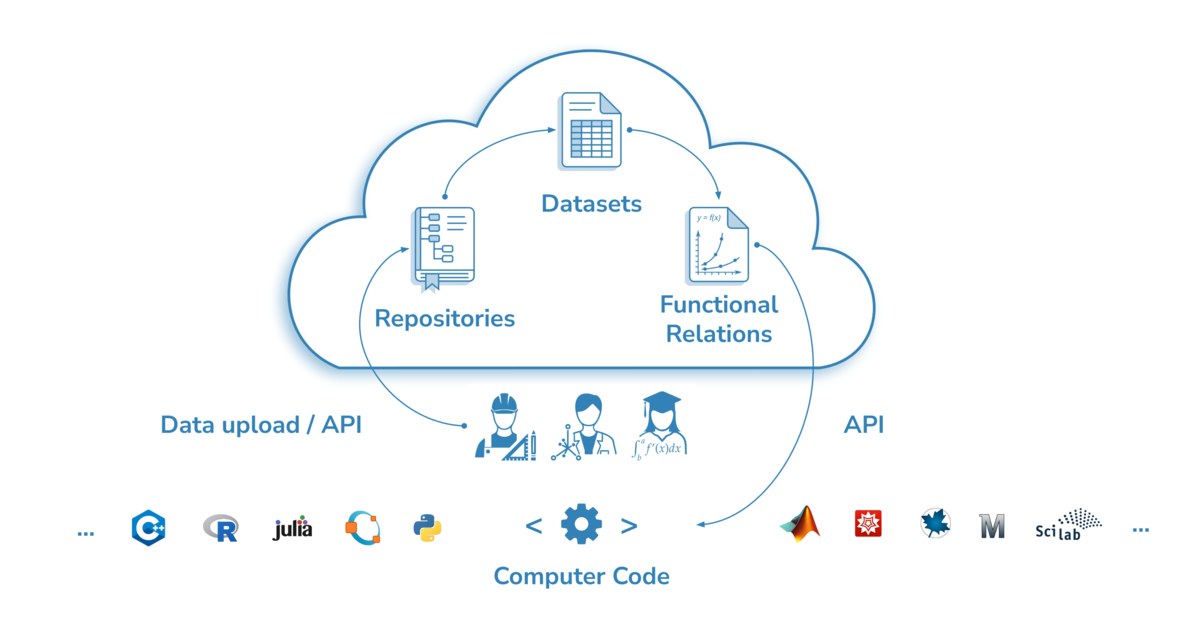
SplineCloud is an open web platform for knowledge exchange and management in engineering and science. It is based on open repositories created by users (individuals or organizations) and containing technical data and descriptions of the methods by which they were obtained: numerical modeling, experiment, etc. At the same time, SplineCloud has a certain hierarchical data structure, which allows for detailed search of specific parameters or dependencies.
Unlike the typical approach used by many open scientific data platforms, the SplineCloud repository is not just a directory in the cloud. When uploading data to the SplineCloud repository, the user is expected to take certain actions: extracting datasets, dependent data series, building functional dependencies, adding topics, descriptions, and wikis. Taken together, when these actions are performed and with a conscious approach, the repository becomes a formalized unit of knowledge that reflects the intent and outcome of the research.
Thanks to topics, description and Wiki, it becomes easy to find and understand how the data was obtained, under what conditions and for what tasks it should be used. At the same time, the data itself and functional dependencies become available for reuse in the program code thanks to the platform API. Parametric splines are used as functional dependencies. Their flexibility and universal representation allows you to approximate dependencies of arbitrary complexity. Hence the name of the service.
To transform raw data into reusable data, the user is provided with several tools built into our cloud service. Currently, these are a graph digitization tool and a curve-fitting tool. Thanks to an open API and client libraries, SplineCloud significantly simplifies the process of data reuse in mathematical models written in different programming languages.
Vadim Pasko describes one of the examples of using the platform as follows: «When preparing for a workshop on aircraft design, I was looking for an empirical dependence of the distribution of the increase in the wing lift coefficient along its length for different geometries. As it turned out, such dependences were built back in the 60s-80s based on the processing of experimental data, but only for a limited set of geometries. Therefore, instead of using inappropriate models, I decided to build my own dependences based on the numerical analysis method: using the open-source program OpenVSP, I conducted numerical experiments and obtained the values of the increase in the wing lift coefficient for different wing geometries along its length. I uploaded this data to a separate SplineCloud repository and built functional dependences there, which anyone can now use to design swept wings without conducting repeated numerical experiments.»
A similar approach can be used for many other problems. In fact, SplineCloud allows you to formalize and make publicly available (or limitedly available when using private repositories) the results of numerical or physical experiments in the form of so-called metamodels.
«I am currently conducting research into the possibilities that metamodels provide when building generative algorithms for aerospace engineering design. The results of this research will help expand the functionality of SplineCloud and improve approaches to design automation,» added Vadim Pasko.
Thanks to SplineCloud, universities, research centers, and laboratories can simplify and accelerate research work, improve knowledge exchange processes, and enhance learning processes.
Component and parts manufacturers can consider SplineCloud as a marketing platform and create repositories with product technical data to replace inconvenient datasheets.
Scientists and engineers will be able to create private repositories to work with sensitive data that they do not want to share publicly (private repositories in development).
All public repositories are free
«We are not making money at the moment. Our strategy involves primarily increasing the audience of free users. We plan to introduce paid repositories for personal use or for research teams. Such repositories can be used by temporary working groups within the framework of university-industry interaction, inter-institutional research groups to improve knowledge exchange and management. In addition, we are considering the possibility of introducing B2B subscriptions for organizations, as well as Promo subscriptions for manufacturers of component parts. The costs of subscriptions are not yet valid, so I will not announce them,» the founder of the startup noted.
As of today, the platform has about 100 repositories and almost 500 users, most of whom are from the US and Europe.
The SplineCloud community is made up of scientists and engineers who are committed to openly publishing the results of their research, simulations, or calculations. SplineCloud has no requirements for its audience and has an inclusive policy. A content quality rating system is implemented to rank repositories, but this rating does not depend on the status of the authors or their affiliation.
Currently, the startup is targeting graduate students and students in technical fields, such as aerospace engineering, robotics, energy, etc., who are working on innovative approaches to solving non-trivial problems and understand the importance of opening access to their work.
«Also, among our core community, we see professional research engineers working on the development of science-intensive products. These can be both members of hardware startup teams and enthusiasts. Also among our users are employees of larger companies and enterprises who are motivated and have the opportunity to openly share their developments,» Pasco added.
The startup’s geography is the entire civilized part of the planet, as the founder says, but the primary focus is the EU countries, the USA, Canada, Australia, and New Zealand.
«The thing is that in developed countries the problem of knowledge openness is well-covered. And it is precisely because it is heating up in academic circles in these countries that we consider their students, graduate students, and engineers as the primary users of SplineCloud,» explains the founder of the startup.
What are the advantages of the Ukrainian platform over foreign competitors?
There are several platforms for open access to academic works in the FAIR format (which stands for Findable, Accessible, Interoperable, Reusable), such as EOSC, Dimensions, Zenodo, Figshare, Open Science Framework, and others. However, these platforms are not specialized (they are about science in general), and therefore do not solve the problem of sharing, managing, and reusing data in any particular field properly. They lack data processing tools, integration with other systems, etc. Moreover, the architecture of these services is built around scientific publications, which is a certain barrier for users who do not want or are not able to write articles.
About the team
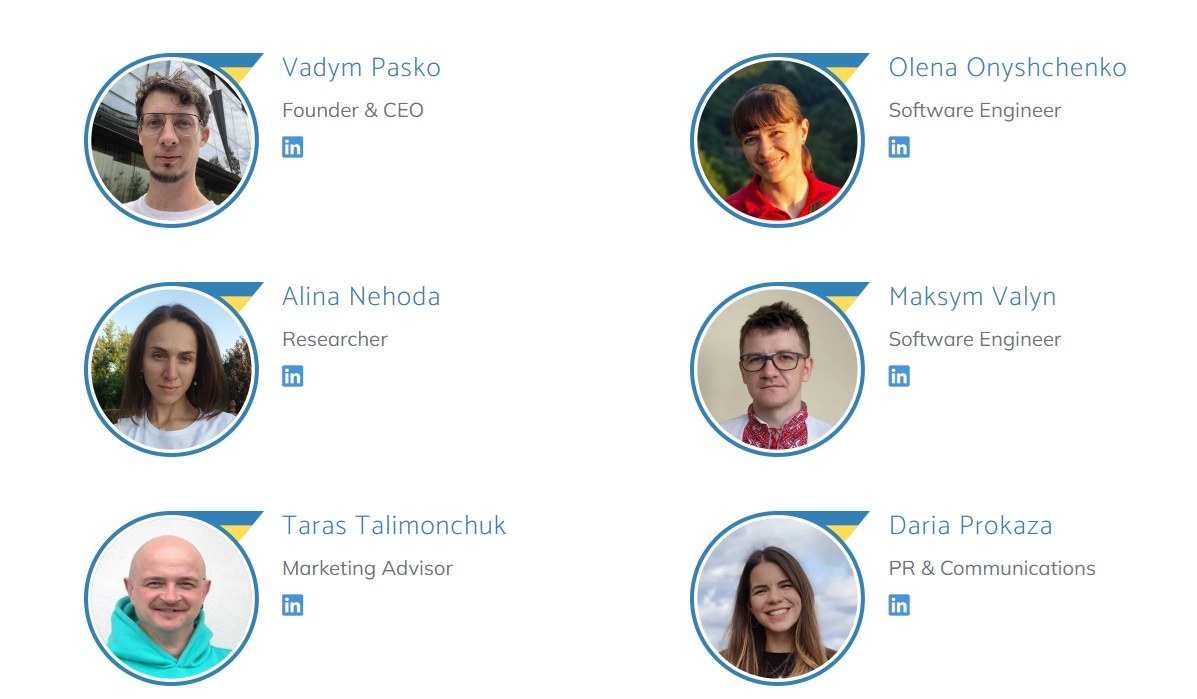
The team was formed gradually. Currently, it consists of 6 people: in addition to the founder, full-stack developer Olena, engineers and content developers Alina and Maksym, communications specialist Daria, and marketing leader Taras.
«Alina joined SplineCloud in the fall of 2022. She is responsible for developing initial content, testing new features, and writing articles. She also participates in developing usage scenarios and marketing materials. Olena has been developing the platform since 2023. Taras is the CMO at the Claspo startup, and helps as an advisor, analyzing and adjusting our marketing strategy. The grant assistance from Seeds of Bravery allowed us to attract new team members — Maksym and Darʼya, as well as hire SEO specialists. The team is not currently expanding, although we hope that this will change after the grant program is completed,» Vadim says about the team.
The platform has already attracted investments, but the majority of the invested resources and funds are the team’s time and the founder’s own savings.
In 2021, the startup received a $10,000 grant from CRDF Global, which helped complete the development of the MVP.
«We spent the bootstrapping period at my own expense. During this time, the main focus was on developing and improving the service, developing initial content, optimizing, and establishing communication with the first users,» says Vadim.
The €50,000 grant from Seeds of Bravery, received in October of this year, and the Booster acceleration programs will help the startup strengthen marketing activities and focus efforts on attracting new customers, establish contacts with the European academic environment, prepare for an investment round, and, under favorable conditions, acquire the first B2B customers.
«During the period from 2022 to now (end of 2024), we received several different proposals for raising finance — from private investments from an American venture fund, to participation in acceleration programs for a share of the company, and offers to buy it from another startup. Participation in the EO incubator gave a clear understanding of the quality of investments and the potential impact on the future of the startup, so I refused unprofitable and risky offers,» noted the founder of SplineCloud.
Future plans
The plans include finding investors and applying to the EIC accelerator, which will allow the startup to scale, expand functionality, and introduce new business models.
«We are attentive to the role of an investor in the future of SplineCloud, so we are interested in funds that already cooperate with impact startups, understand and share our values and our vision, and, ideally, are related to the engineering industry, or cooperate with European scientific institutions,» notes Vadim Pasko.
The startup also plans to expand cooperation with Ukrainian technical universities. Currently, the first partner is the National Aviation University, with whom the team has a clear plan for cooperation to expand educational programs and use advanced approaches in design automation.