Хочете будувати кар’єру в Data Science та AI? Vodafone Big Data Lab відкриває новий набір —>
Марія БровінськаІсторії
27 April 2026, 09:00
2026-04-27
“A strong engineer doesn’t ask if it’s possible. He asks how long it will take.” The story of an IT guy from Chernihiv region who builds products for a Silicon Valley company and heads the engineering of an American startup
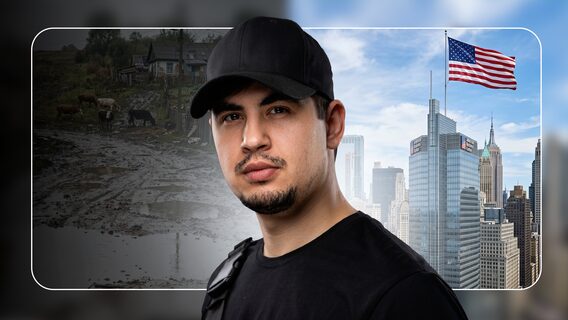
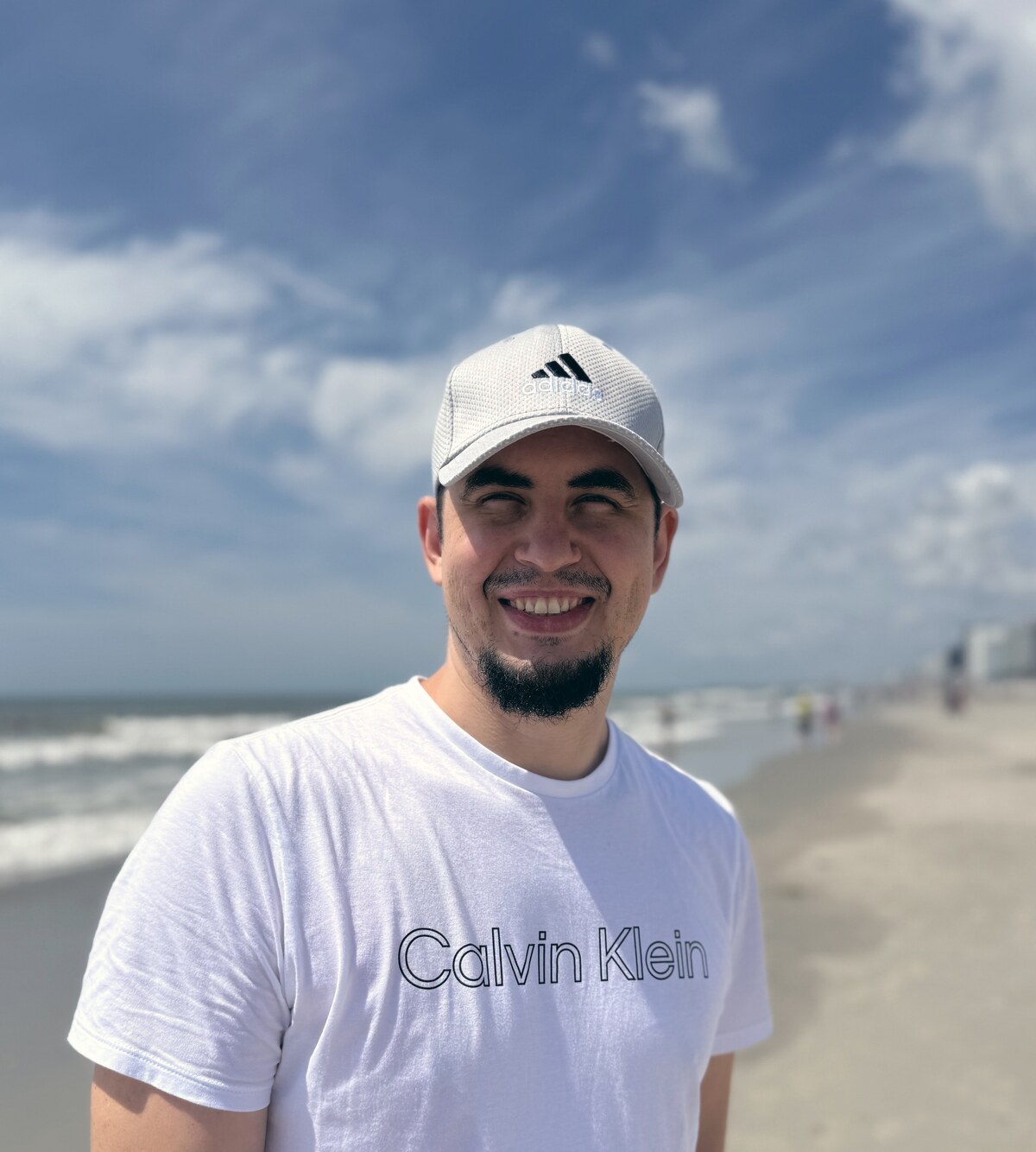
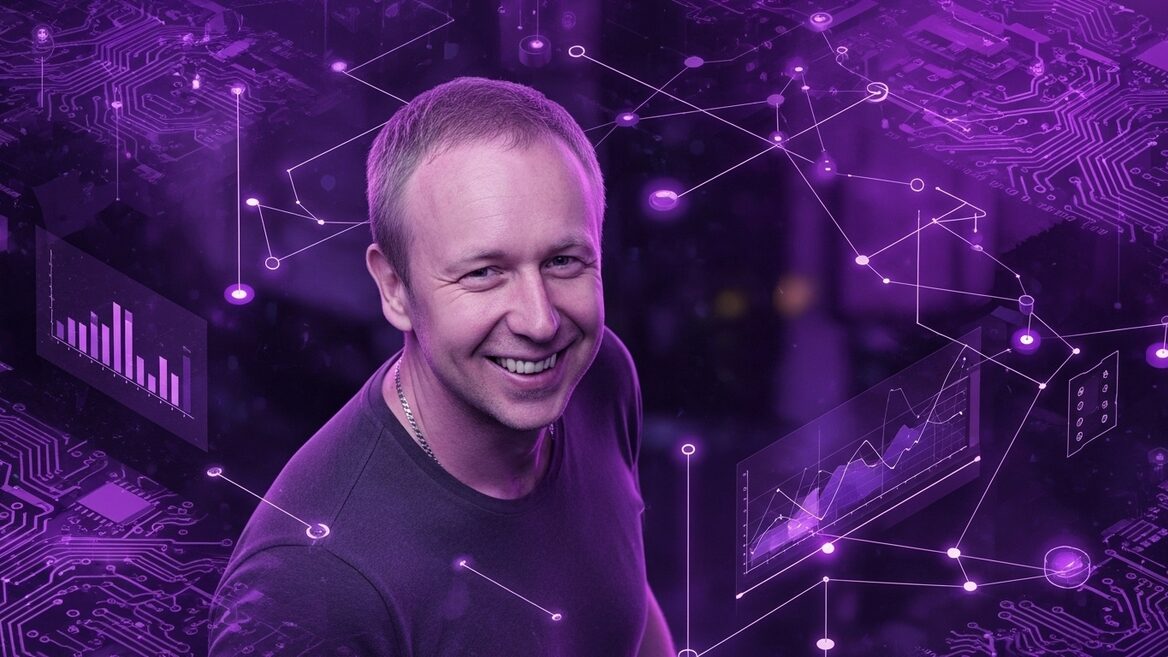
36-year-old IT professional Oleksandr Vakhovsky works for two American companies at once. During the day, he is a Senior Software Engineer at SolidProfessor, an educational platform from Mountain View, where more than 300,000 mechanical and design engineers are trained. The rest of his time he devotes to the Travel Risk Group startup in North Carolina, which collects real-time data on travel risks in more than 90 countries around the world. The Ukrainian is a co-founder and Head of Engineering of the service.
Oleksandr has what the IT community calls “the road through all doors.” He started with a business card website for $200, grew to become an expert consultant for over 250 clients in the USA, Norway, Switzerland, and the Baltic countries. He also ran his own online store and doubled the revenue of the company he was hired to work for for years.
36-year-old IT professional Oleksandr Vakhovsky works for two American companies at once. During the day, he is a Senior Software Engineer at SolidProfessor, an educational platform from Mountain View, where more than 300,000 mechanical and design engineers are trained. The rest of his time he devotes to the Travel Risk Group startup in North Carolina, which collects real-time data on travel risks in more than 90 countries around the world. The Ukrainian is a co-founder and Head of Engineering of the service.
Oleksandr has what the IT community calls “the road through all doors.” He started with a business card website for $200, grew to become an expert consultant for over 250 clients in the USA, Norway, Switzerland, and the Baltic countries. He also ran his own online store and doubled the revenue of the company he was hired to work for for years.
In 2022, the IT professional moved to the USA. And now he is already a Senior Member of the international association ECDMA, nominated for Senior Member in IEEE. Oleksandr also acts as a judge at technology hackathons and recently published a scientific paper on the application of large language models in e-commerce.
dev.ua talked to Oleksandr about how he manages to keep his finger on the pulse of several roles at once, why the engineering profession is changing faster than we can update our resumes, and what the word "expert" really means.
Content
How a village boy found his profession
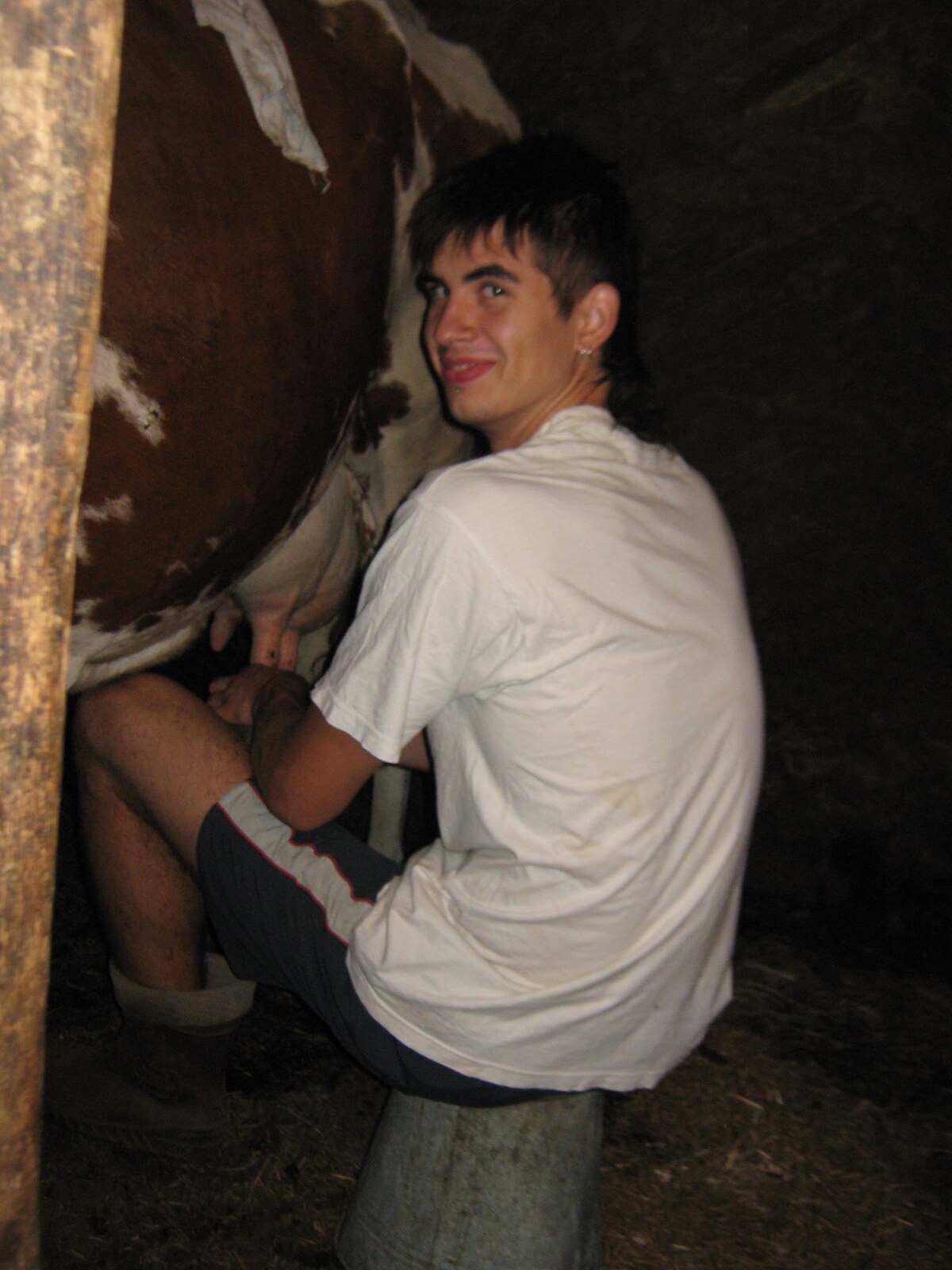
Oleksandr grew up in the village of Svarychivka in the Chernihiv region in an ordinary family of farmers who went bankrupt in the 90s. Therefore, the family did not have great wealth, they lived quite modestly. The boy got his first computer while studying at school - a Pentium I with Windows 95 was given to him by his uncle. Oleksandr admits: for a child from the village, it was a portal to a completely different world.
"At that time, I didn't understand anything about computers at all. But it was just interesting to click on absolutely everything in it," he recalls. However, later working with computers fascinated the guy.
The then school principal played a big role in Oleksandr's passion. In the summer, he allowed the boy to come to the computer class, where two new computers had just appeared. Oleksandr then had the opportunity to practice: he typed documents, set up something, gradually understood how this technology generally works, and he had no idea that this would grow into his profession.
After graduating from school, Oleksandr entered the Chernihiv Polytechnic Institute at the Faculty of Finance. There, in parallel with his studies in his specialty, the guy became interested in creating websites. He often asked senior students how they find orders, how much they earn. Meanwhile, in parallel with his studies, he worked as a loader and with this money he assembled his first personal computer, which became the start for entering real IT. It was on the computer he assembled himself that the future engineer began to learn HTML, CSS and popular CMS such as Joomla.
First IT money
Oleksandr received his first commercial order from friends - a business card website, its design and content on a turnkey basis. The fee was $200. “These were my two monthly salaries as a loader. Probably the easiest and fastest money in my life,” Oleksandr laughs.
He calls that moment a turning point. Not because he got a lot of money, but because he realized that what was an interesting hobby for him was something the market was willing to pay ten times more than physical labor. Within a year, he completed several more projects for real estate agencies and never considered another profession.
Inspired by the success of the first projects, Oleksandr registered on the Freelancehunt platform, collected a portfolio, made a personal website and began to actively respond to orders. The first large commercial project came from Kyiv. The online store Babymarket, which, by the way, is still operating today, became Oleksandr's first serious experience with a real sustainable business.
"I received both money and invaluable experience. And I realized that this was not just a one-time job, but a direction in which I wanted to go deeper," he recalls.
“I resigned from an American company for the sake of a Ukrainian miltech project.” The story of a KPI graduate who saved an American healthtech startup from collapse, created a mini-competitor to Netflix, and is now preparing an AI defense system against Russian FPV
250 clients and authority that can't be bought
From 2015 to 2020, Oleksandr worked with over 250 clients, including customers from the CIS, the USA, Norway, Switzerland, and the Baltic countries. He focused on e-commerce, especially on the OpenCart platform, where almost all small and medium-sized businesses in Eastern Europe worked at the time. In the professional community, he began to be known under the brand name OCDEV.pro.
It was during this period that Oleksandr did what, in one of the letters of recommendation for his immigration application, the head of a large Eastern European e-commerce studio, who has been working with the OpenCart ecosystem for over fifteen years, called “the formation of an entire generation of industry specialists.” These are dozens of extensions that Oleksandr created for OpenCart and distributed through the platform’s largest specialized community. Many of them are still in thousands of online stores. In 2022, one of his developments had over fifteen thousand installations.
A separate role in the Ukrainian's career was played by the OpenCart Extension Bundle, a collection of extensions that Oleksandr published on GitHub under the free GPL-3.0 license and gave to the community for free. It included modules for optimization, order processing, analytics via Google Analytics 4, integration with trading platforms, SMS notifications, and others. Such a move lowered the threshold for entry into e-commerce for hundreds of entrepreneurs, Oleksandr notes.
E-commerce owner
Understanding how e-com services work from the inside, in 2015 Oleksandr became a co-founder of his own online sportswear store ActiveWear and Sunfit. At the invitation of one of his clients, he became a partner and saw the business not from the developer's side, but from the inside.
"Most developers simply don't see how business processes actually work internally. What happens from the moment an order is created to its shipment, how calculations are made, how inventory accounting is kept. And there are really a lot of problems there," explains Oleksandr.
Over the three years of entrepreneurship, IT guy I've seen dozens of pain points that engineers usually overlook. These include SEO issues, unnecessary costs for customer communication, inconvenient UX that cuts off sales, the invisible cost of phone calls, and more.
"I realized for myself that it is much easier for both the customer and the store owner to receive an SMS about an accepted order than to try to call. It seemed like a small thing, but in fact it covered a big business problem," says the IT specialist.
This prompted the specialist to create a universal SMS notification plugin for OpenCart. Through the community, it was distributed to thousands of stores. And other developments followed. In particular, a multilingual module that solved the problem of a quick transition to the Ukrainian language for thousands of Ukrainian stores in response to the new language law. Dozens of other extensions created by Oleksandr covered the specific pain of real business.
Where to develop Manual QA when you hit a professional ceiling? A big conversation with a tester from Lviv who conquered the US market and is moving towards the positions of Staff, Principal and Technology Leader
Hiring as a growth point
In 2020, Oleksandr, despite his success in freelancing and his own business, decides to go for a job - it was at this time that the IT market was booming, and big money was promised there. However, he positioned himself on the market not as an ordinary developer, but with an expert grade and a high range. He actively collaborated with the founders of the site and participated in the implementation of other projects of Expert Pro LLC, which saw a good specialist in Oleksandr.
“I came to the project not as just a developer, but as an expert in the industry, with recommendations and an understanding of how everything works from the inside,” he explains.
Focusing on one project allowed the specialist to delve deeper, see the long-term consequences of decisions, and work with scale. From 2020 to 2022, the company where Oleksandr led development and was responsible for growth doubled its revenue year after year. “Back then, I thought that this was where I had discovered my potential. But the reality turned out to be that everything had changed in the US, and I had to start my journey again,” he says.
A broken contract for Malta and a new career geography
In early 2022, having received an offer from an international employer, Oleksandr was preparing to relocate to Malta under a contract. Everything came to an end in one day, February 24. The war crossed out the plans, but not the goals.
After much deliberation, Oleksandr and his wife decided to move to the USA. Having settled in Kansas thanks to the support of volunteers, Oleksandr joined the volunteer movement himself. Aityvets got a job in the district's IT department. Later, having already had experience working in the USA, the man received an offer from the Silicon Valley company SolidProfessor.
“Professionally, I didn’t experience any difficulties. All the processes were familiar. But personally, it was difficult to understand where to go and how to feel the ground under my feet again,” he smiles, recalling those times.
In the American corporate culture, Oleksandr was struck by the combination of intensity and a healthy balance. Unlike the pace he was used to, work for work's sake was not valued here. Here, results were valued, but without burnout.
“I even had to consciously learn to slow down to be on the same wavelength as the team. Because burnout is a risk not only for me, but also for the entire company,” says Oleksandr. However, despite the new pace, he did not abandon his research activities and his own projects.
Become a key engineer in a company with 300,000 users
Oleksandr proudly says that, starting with the backend, he quickly became one of the key technical figures in the company.
The first major project in which Oleksandr played a critical role was SolidProfessor Portfolio. This new product gave platform users the opportunity to showcase their experience and achievements, effectively expanding the company’s value proposition beyond traditional training.
Oleksandr says that he was the main contributor to this project, was involved from the early stages, developed the entire architecture, formed the technical approach, participated in discussions about the composition of the functionality, and took responsibility for most of the main parts of the system.
In the same project, Oleksandr acted as a leading backend expert and proposed a modular monolith architectural approach for other parts of the company's products. This approach, the IT specialist says, provided the platform with the possibility of future scaling and a clear separation of functionality.
In the last six months alone, Oleksandr has been involved in a new project, started evaluating the work of other developers, conducted interviews for hiring new employees, and led a new project. In addition, he continued to contribute to the company's core products in parallel.
“In the US, ideas have a chance to become large-scale products.” An engineer and researcher from Lviv is creating an AI platform to support teenagers, which is being prepared for testing in American schools
AI revolution in an American company by a Ukrainian
Oleksandr calls himself one of the first at SolidProfessor to begin systematically exploring how AI can be built into development itself - not as a toy, but as a full-fledged part of the process.
“Since AI came into our lives, a lot of the approaches to development we are used to have changed. So for my work, AI is now tightly integrated into all processes. This allows us to move quickly and create products that significantly impact the development of the company,” he explains.
Based on Claude Code, Oleksandr built a full-fledged agent workflow - a system in which AI agents are integrated into the processes of code delivery, review, and project management. He also wrote technical documentation and training materials so that this system could be scaled to all development teams.
Thanks to deep knowledge of modern AI and ML tools, such as large language models and vector databases, the IT professional quickly prototypes solutions and helps colleagues avoid technical dead ends.
Currently, Oleksandr is focused on the next big direction - researching the use of AI to build a system for assessing technical skills and validating candidates' experience. "In parallel with it, I am developing a hybrid system for recommending educational materials for students based on testing results," the engineer shares. This topic formed the basis of his scientific publication "Methods for automatic verification of technical compatibility of products in cross-selling systems using hybrid search and LLM" , which was published this year in the peer-reviewed publication "Science and Technology Today" (category B).
Having introduced this direction to the company, Oleksandr led the team developing it. Now he not only conducts research, but also deals with hiring, architectural decisions, and team management.
Startup as a parallel attempt at realization in the profession
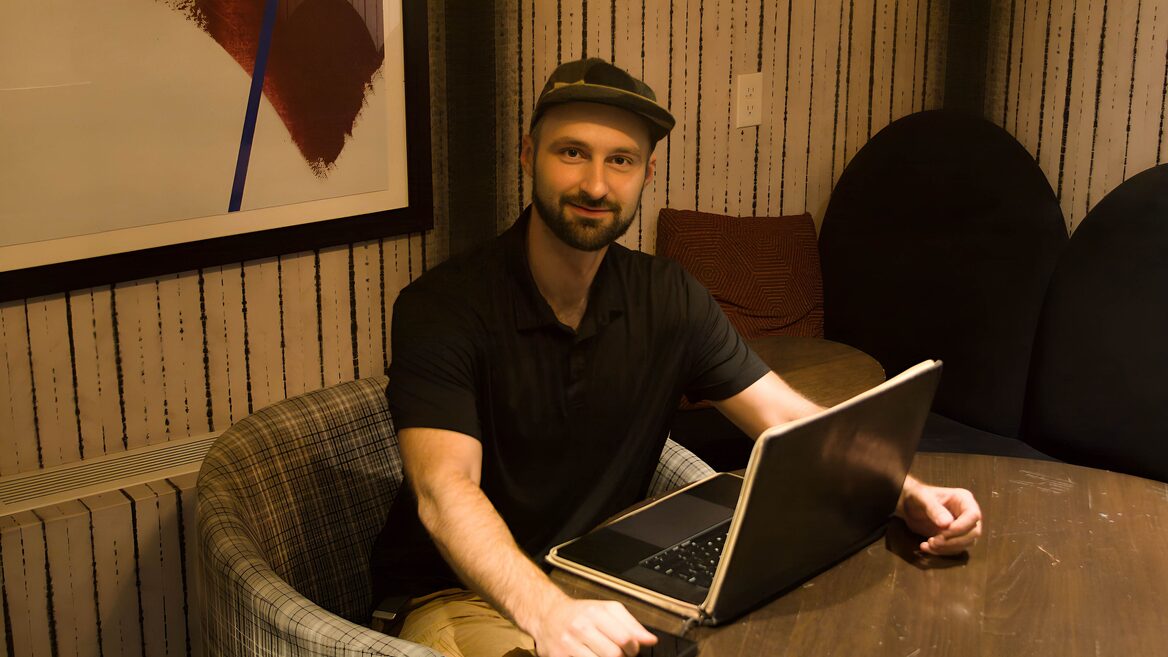
In parallel with SolidProfessor, Alexander has a second big story - the startup Travel Risk Group in Charlotte, North Carolina, where he is a co-founder and Head of Engineering.
"It all started in a normal way. I received a message on LinkedIn from the founder, who was looking for a strong engineer to build the technological foundation of the product," says the Ukrainian.
At that time, Oleksandr was hesitant about joining a new large-scale project, since he had a full-time job. The key factor in the decision was the geography - the founder of the startup also lived in Charlotte, which allowed potential partners to meet in person and agree on cooperation.
“At first, I worked on the project on a contract basis, although the offer to lead the development came immediately. I wanted to see the prospects first. After some time, the founder re-offered me the role of Head of Engineering with a high stake in the company, and I agreed,” recalls Oleksandr.
Travel Risk Group is developing a travel risk monitoring platform. The product collects real-time incident data from over 90 countries — from crime and conflict to epidemics and natural disasters — and presents it to users in the form of maps, risk assessments, and expert analytics. The target audience is corporate clients whose employees frequently travel, as well as insurance companies and concierge services.
In addition to the platform architecture, Oleksandr personally developed the backend infrastructure, frontend, and API layer. He built an internal service that collects, analyzes, and publishes incident data from multiple sources in real time using AI and machine learning. The Ukrainian also independently recruits engineers, sets code standards, and optimizes processes.
Interestingly, the startup does not require external investment. The team is developing on its own and is moving towards launch.
How the industry recognizes an expert
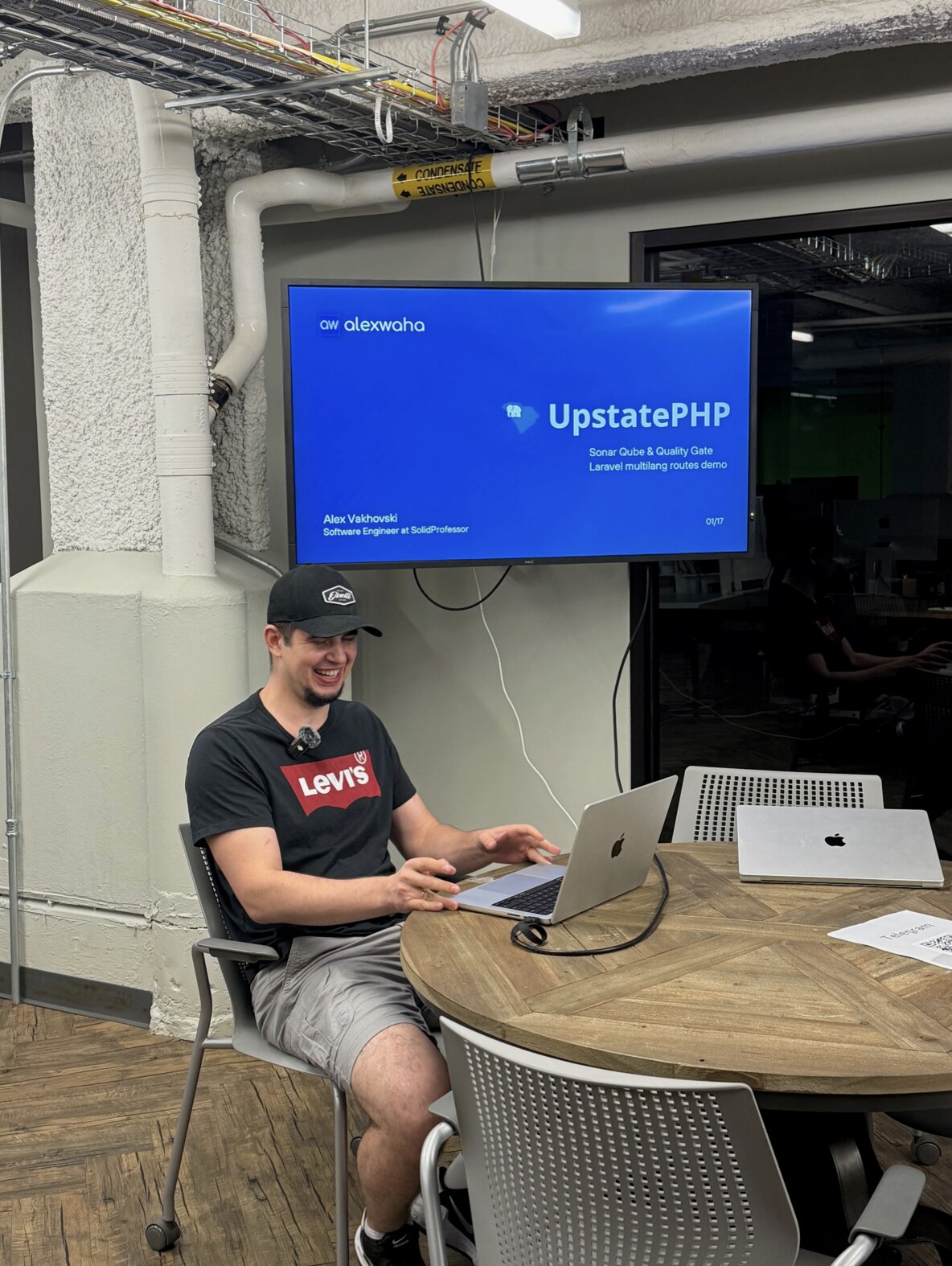
Outside of commercial work, Oleksandr is engaged in what is called peer recognition in the industry. Oleksandr serves as a judge at technology hackathons and startup competitions. Among them are the DXRay hackathon by Raptors.dev, the ECDMA Global Award competition, and the Kharkiv IT Cluster Bootcamp 2025. This is a format in which experienced experts evaluate the engineering solutions of young teams and help them reach the next level.
“When I’m invited to judge, I don’t see my role as handing out grades. Rather, it’s about helping people see what solutions in their architecture are strong and where they’re limiting themselves,” he explains.
In addition, he has been nominated for Senior Member in IEEE, one of the most prestigious technical organizations in the world.
The Ukrainian was also a member of the international association ECDMA, which unites specialists in the field of e-commerce and digital marketing. He received and confirmed the status of Senior Member in 2023 and remained a member of the association until 2026. After the expiration of his membership, the specialist shifted his focus to the technological direction and AI.
A Ukrainian developer published a React manual in the US. Why he chose self-publishing on Amazon and what you need to know to become an author
Not the finish line yet, but an inspired journey
Despite his successes, Alexander is confident that he still has a long way to go.
"I wouldn't say that this is a point that can be reached and fixed. Rather, it is a constant movement. Some of the goals that I set at the beginning have already been realized: technical level, work in strong teams, participation in complex products. But with experience, the very vision of the next step changes," he says.
The next level for him is moving from implementation to strategy. He is considering the roles of Solution Architect and Director of Product, where he can influence not only technical solutions, but also the product, business, and long-term systems architecture.
"It's about the scale of thinking. About responsibility for direction. About creating solutions that determine product development, not just cover individual tasks," the specialist notes.
What sets a strong engineer apart from the masses?
Oleksandr convinces: the value of a strong engineer is not in knowledge of programming languages or frameworks. The way of thinking plays a decisive role here.
“A strong engineer approaches the issue systematically, sees it from different angles, understands the essence. For him, the implementation itself is already details. The average engineer often sees the solution only in a limited field of vision, does what is written in the task, without asking unnecessary questions,” notes the IT specialist. In short: a strong engineer does not ask if it is possible; he asks how much time it will take
To formulate this principle, the specialist needed 13 years of work, hundreds of implemented projects, and challenges when he had to understand things that he didn't understand before. It is the ability to immerse himself in the unknown and emerge with a ready-made solution that allowed the IT specialist to achieve success, says Oleksandr.
AI transformation as a new challenge for engineers
With experience working in a large company, a startup, and experience judging hackathons, the IT professional captures how dynamically the engineering profession is changing.
“AI is already significantly changing the work of engineers. It shifts the focus from writing code to designing solutions and managing systems. In my experience, especially when working with large datasets and recommendation systems, AI is good at closing the routine and accelerating development. At the same time, the requirements for the quality of engineering thinking are increasing,” he explains.
According to him, skills that were previously considered auxiliary are becoming critical today: task decomposition, data understanding, architecture construction, and the ability to critically evaluate the results generated by AI.
"Today, an engineer is no longer an executor. He is the one responsible for the final logic, scalability, and reliability of the solution. AI can offer ten options. The engineer chooses the right one. And is responsible for it," he says.
This shift, warns Oleksandr, poses a serious challenge for new generations.
The threshold for entry into the profession, he said, is rising.
"Now it is important not only to write code, but also to understand architecture, approaches, and data. In the long term, this may lead to a shortage of truly qualified personnel. The industry is actually going through another stage of transformation," explains Oleksandr.
How to get into and grow in IT: practical tips
Oleksandr gave some specific advice to young developers who want to reach the international level.
First , don't just focus on the code. Think bigger — as an engineer, not an implementer. It's easy to get stuck on small tasks early in your career, so it's important to consciously develop systems thinking. Understand architecture, data management, scaling, and tradeoffs in solutions."
Secondly, learn English. Without it, it's difficult to reach the international level, because all the industrial discussion takes place there.
Third , maintain a public professional profile. LinkedIn, GitHub, open-source, technical articles, speaking engagements - all of these build a reputation much faster than just commercial experience.
Fourth , look for quality networking. We must not forget about the environment. We need to reach out to the best, communicate with industry experts, and learn from their experience. Because we are those who surround us.
And for those who want to move from "just a coder" to an engineer who really impacts the product, he advises starting simple - stop doing tasks and start asking questions about why they are being done at all.
"An engineer suggests approaches, evaluates trade-offs, thinks about scaling and support. And not just fulfills the requirements. And one more thing. The ability to argue technical solutions, explain them to the business, and participate in discussions. This is what makes an engineer someone who really influences the product, not just the code," argues Oleksandr.
“Customers and PMs joked that I shouldn’t rush and relax a bit.” How a developer from Lviv is building an AI-Healthcare system in the US: an interview with a Ukrainian who conquered global IT
“I studied Data Science since I was 4 years old. Every math lesson was important.” The story of a mathematical genius from a small village in Volyn, who is now creating LLMs for Lyft, Reface, and AppFlame
The QA profession is gradually transforming into QE. Why is this happening and what should testers prepare for in the AI era: reflections of an experienced tester from Lviv working in the USA
“Working with IoT is like playing God, but with code.” The chemist from Kharkiv “didn’t leave science, he just changed the formula,” having trained himself to be a developer. He now optimizes the services of the American Mercury Intermedia and has his own app.