Хочете будувати кар’єру в Data Science та AI? Vodafone Big Data Lab відкриває новий набір —>
Марія БровінськаWork
18 October 2025, 09:00
2025-10-18
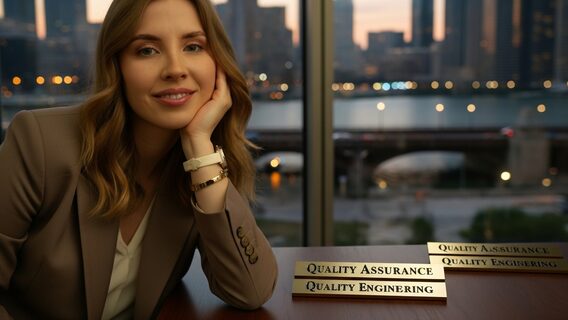
The QA profession is gradually transforming into QE. Why is this happening and what should testers prepare for in the AI era: reflections of an experienced tester from Lviv working in the USA
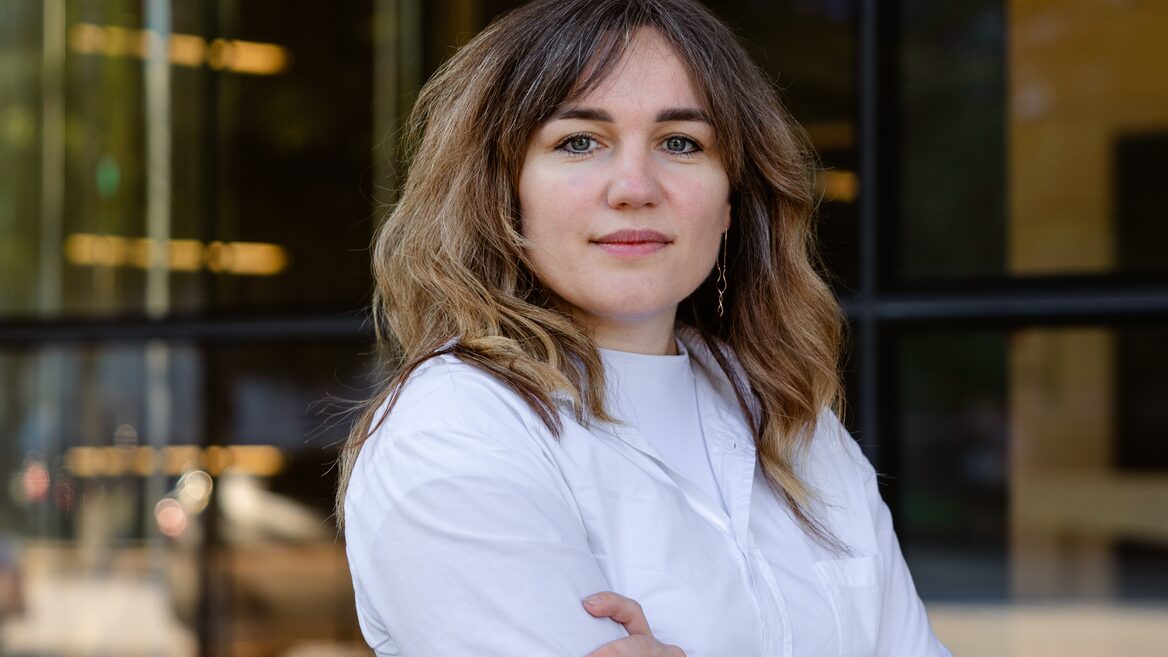
Olena Onishchenko, an experienced software quality engineer from Lviv, moved to the USA with her family 4 years ago. Such a relocation became a challenge for her — finding a job in America was not easy, and the requirements for specialists there are somewhat different than in Lviv. Currently, Olena works at Doximity — the leading digital health platform in the USA, which is used by over 80% of American doctors. dev.ua talked to the IT professional about what it’s like to build a career in a foreign country in the era of the heyday of artificial intelligence, why technical knowledge is not enough for a tester today, and how the profession of a bug hunter is transforming, requiring more involvement, flexibility, and creativity from specialists.
Olena Onishchenko, an experienced software quality engineer from Lviv, moved to the USA with her family 4 years ago. Such a relocation became a challenge for her — finding a job in America was not easy, and the requirements for specialists there are somewhat different than in Lviv. Currently, Olena works at Doximity — the leading digital health platform in the USA, which is used by over 80% of American doctors. dev.ua talked to the IT professional about what it’s like to build a career in a foreign country in the era of the heyday of artificial intelligence, why technical knowledge is not enough for a tester today, and how the profession of a bug hunter is transforming, requiring more involvement, flexibility, and creativity from specialists.
About Elena
Olena Onishchenko studied at the Lviv Polytechnic National University, received a master’s degree in telecommunications and radio engineering, as well as a bachelor’s degree in computer science and IT.
She is currently a Senior QA Engineer / SDET (Software Development Engineer in Test) with over 9 years of experience in software testing, automation, QA process building, and technical leadership. Her professional journey began at Gameloft in 2016. She subsequently worked at leading IT companies, including ABTO Software, N-iX, Fond, Doximity, gradually moving from manual testing to building complex automation systems from scratch.
Career and moving to the USA
— How did you realize that QA was your profession?
While studying at Lviv Polytechnic, I tried myself in different roles to better understand how certain areas of IT work. After that, I decided to start from the position of QA Engineer. Already while working at Gameloft, I felt that testing allows me to combine both the technical and creative sides — and I also really liked the teamwork and the process of finding bugs, in which I found a lot of drive and even an element of play.
— Tell me, was it easy to build a career in Ukraine, and why did you ultimately decide to go to the USA?
My career path began at Gameloft, an international company with an office in Lviv. There I quickly grew from a manual QA to a confident specialist, and received the «Employee of the Month» award. Then I joined ABTO Software, a Ukrainian product and outsourcing company, where I worked as a QA Lead. It was there that I first delved deeper into automated testing, took responsibility for building QA processes in the team, and began to form my vision of effective quality control in projects.
The next stage was N-iX, one of the largest Ukrainian IT companies. There I worked on complex enterprise projects, interacted with large international teams, and had the opportunity to see what the architecture of large-scale systems looks like, how to build it from scratch, and integrate it with other services and platforms. This experience significantly expanded my technical understanding and skills in a strategic approach to QA.
Overall, building a career in Ukraine was interesting and dynamic. If you are proactive, constantly learning, and taking initiative, opportunities open up very quickly.
At the same time, the most common are outsourcing and outstaffing models, which, unfortunately, rarely allow you to fully experience the vision of the product, immerse yourself in the business context and understand your role as part of a holistic system. Only with experience did I begin to realize how important it is to see not only technical tasks, but also how your work affects the end user, the development of the product and the business as a whole. It is this approach that gives a real sense of involvement and the opportunity to create value, not just perform tasks.
— You moved to the US four years ago. Why and how was that? What were the biggest challenges after the relocation?
I moved with my husband — we are both in IT, and we wanted new challenges and experience in global companies. First I worked at Fond, and then I joined Doximity. The most difficult thing after moving was finding my first job in the US. The interview process here is significantly different from what I was used to in Ukraine. It is not only the technical level that is important, but also how much you approach the company in terms of values, how you behave in difficult or stressful situations, how you work in a team.
Interviews focus a lot on soft skills — communication, the ability to accept feedback, be flexible, and take initiative. This forced me to rethink my approaches and learn not only «technical answers,» but also to present myself as a team player who can effectively collaborate in any environment.
We currently live in Chicago, there are many Ukrainian IT professionals here, there are mentoring initiatives and local communities. However, my main team is American, and I am already actively participating in local IT life, mentoring younger colleagues, and joining internal technical events in the company.
Professional achievements and motivation
— Tell me, how can a tester best be realized? A developer can create a portfolio of sites, a designer — of interfaces. And QA?
I believe that a tester is no longer a «button-pressing person.» Modern QA is an analyst, engineer, and communicator in one. This is when you don’t just catch bugs, but influence the development process even at the stage of discussing requirements, suggesting where there may be risks, and offering optimal solutions.
In addition, a good QA always keeps its finger on the pulse of technology — looking for new tools, approaches, and frameworks that are best suited for a specific project.
It’s about the ability to adapt, think strategically, and constantly improve quality processes within the team. This approach allows us to ensure not just testing, but stable development and maturity of the product.
For me, self-realization is when I see that the system I created works, saves team resources, allows for fast delivery of updates, and at the same time ensures high quality. This is my «visible part of the portfolio» — frameworks, processes, quality documentation, automated checks, and the team’s confidence in the stability of the product.
— What achievements can you boast of as a QA?
One of the most significant moments for me is the «From 0 to 100» award, which I received during my first year at Doximity in the US. It is awarded for rapid professional growth, initiative, and significant contribution to the development of internal processes. I managed to build an automated testing system virtually from scratch, which significantly improved product quality and accelerated releases. For me, this award is not just a symbol of personal growth, but also a recognition of the impact I was able to make on the project and the team. This is recognition of exceptional efficiency, deep understanding of the product and processes, and the ability to quickly integrate into the product and processes.
Another important achievement for me was the «Employee of the Month» award at Gameloft early in my career — in 2017. This was my first experience in large teams, and I quickly established myself as a responsible and proactive specialist.
Among the technical achievements that I am truly proud of is not just the implementation of individual tasks, but the creation of a systematic approach to quality that works «to its fullest» precisely in the context of a specific project.
Specifically, optimizing regression testing time by 85% is not just a number for me. It’s about having a deep understanding of what to test, when, and with what tools, so that the team doesn’t waste time and can move faster with full confidence in the stability of the product. It’s about a balance between technical efficiency and healthy perfectionism.
Building automated testing frameworks from scratch is not just about «taking a ready-made one,» but creating a solution that fits this particular project: its architecture, release pace, team size. I’ve worked with different tools — Cypress, Playwright, Appium, Karate — and I’ve always chosen the stack that gives the best result here and now.
Integrating automated tests into CI/CD processes, taking into account the specifics of DevOps infrastructure, is not about «making it work,» but about making it work intelligently, stably, and scalable. So that quality is not a separate stage, but is naturally built into the product lifecycle — automatically, at every step.
My goal is not only to identify errors, but also to build processes that minimize their likelihood.
With strong analytical skills, technical expertise, and leadership experience, I help teams build reliable and high-quality software.
— What domains do you like the most — in which industries have you already worked and where would you like to further develop your career?
I gained the most experience in the field of digital health — (Doximity), which serves over 80% of doctors in the US. This is an extremely responsible domain, where it is important to think systematically, to deeply understand the logic of the product and the needs of users — and this is very close to me.
I also worked with gaming (Gameloft), outsourcing/outstaffing in various industries (ABTO Software, N-iX), including fintech solutions, CRM systems, and large enterprise platforms. This experience taught me how to quickly adapt to new domains and work with different types of clients and teams.
In the future, I am interested in developing in FinTech and AI domains. FinTech attracts me with the complexity of business logic, high requirements for accuracy and security — it is in such projects that QA can be of great importance. Every mistake here can cost the user money or trust, so building reliable automation, competent transaction verification, working with APIs and integrations is what interests me professionally. In the AI sphere, I am interested in the challenge from a quality perspective: how to test systems that do not always give expected results?
This is a new level of complexity that requires both analytical thinking and the ability to adapt approaches to non-standard situations. And I see a lot of room for growth here.
— There is a common belief that often no one reads documentation and it is created for the sake of being seen. Is this true? How can we prevent this and make the documentation truly useful?
It’s a really common problem that documentation is often created «for reporting» rather than for the people who will work with it. To avoid this, I always approach documentation as a living tool that should help the team make decisions, not just «lay in Confluence.»
I create the most understandable, structured and practical materials with examples, scenarios, real status of functionality. If the documentation corresponds to what really happens in the product, it is read. And I also involve the team in its discussion, which makes it a valuable resource, not a bureaucracy.
― And what «human» qualities help you the most in your work?
Flexibility, openness to feedback, and proactivity are the most helpful things in my work.
Flexibility is important because project realities often change priorities, features, and approaches. It is important to be able to adapt quickly without losing focus on quality.
Openness helps build healthy communication in the team: I am always willing to listen to other points of view, accept new ideas, or admit if there are better solutions. This builds trust and team dynamics.
And proactivity is probably one of the main qualities in QA: I don’t wait for a problem to appear, but try to predict it a few steps ahead. It is this approach that allows us to build effective processes, rather than just reacting to errors.
― What motivates you to build processes, not just «catch bugs»?
For me, QA is not about control, it’s about trust. I see my role as allowing the team to work confidently, knowing that the system is tested, the processes are working, and the risks are considered.
«Catching bugs» is treating symptoms. Building processes is making sure that diseases don’t occur.
I am motivated to see how a properly built system makes a team work faster, calmer, and with better quality. This has a real impact on the product, the business, and the people.
Trends and industry
― How has the QA field changed in the 9 years you have been working in it?
Previously, fewer technical requirements were placed on a QA engineer, there was a clear separation between manual testing and automation, but now a Quality Engineer is expected to have both manual and automated testing skills, and a deeper understanding of DevOps and the backend.
Positions exclusively for manual QA are almost impossible to find in the US market, as employers are looking for multi-tool engineers who are flexible and have a wide range of skills.
Tools have also changed significantly: new automation frameworks, APIs, mobile apps, and more recently, AI have emerged. This requires QA to constantly evolve, embrace new technologies, and be flexible.
― In your opinion, will AI replace testers, or vice versa — make them even more necessary?
The testing world is gradually moving from a traditional QA approach to a more comprehensive one — Quality Engineering (QE), and in this process the role of artificial intelligence (AI) is only growing. This is changing both the expectations from specialists and the very essence of quality work.
AI will not replace testers, but it will significantly transform their role. Routine tasks such as test generation, automated test support, or bug analysis are automated, freeing up more space for analytics, strategic thinking, and risk management.
Modern QA must understand not only testing, but also automation, CI/CD, cloud technologies, DevOps, new tools — while remaining flexible, involved in the process, and focused on the end user.
It is important to be able not only to «catch bugs», but also to engineer quality: to build it into every stage of development.
On the other hand, there is a growing need to test AI solutions themselves — checking for bias, reproducibility of results, and explainability of models. This requires new skills: knowledge of data science, model validation, MLOps.
So, AI will not replace testers, but will enhance their value — freeing up time for deeper work and analytics, allowing them to focus on what remains uniquely human: critical thinking, creativity, a research approach, and understanding user needs.
― What tools or approaches would you call «must-have» for modern QA?
A modern QA engineer is someone who works at the intersection of testing, development, DevOps, and analytics. Therefore, today’s «must-have» is not just individual tools, but a whole set of technical and system skills.
Programming language: Proficiency in at least one language is required, such as JavaScript or Java. They are widely used in automation and allow you to build flexible frameworks.
Testing frameworks: knowledge of several modern solutions
Playwright, Cypress, Selenium, Appium (for mobile applications) — allows you to choose the optimal tool for a specific project.
DevOps component: integration of automated tests into CI/CD pipelines (e.g., Jenkins, GitHub Actions, CircleCI), ability to work with logging, alerting, reporting, and analytics systems.
Understanding of automation architecture: ability to design test structures, maintain scalability, execution speed, and stability. Knowledge of automation best practices (e.g., page object pattern, separation of test data, parameterization, etc.) is also important.
Analytical thinking and a systems approach: even the best framework will not be effective without understanding what, why and when to test, and how it affects the product.
― What advice would you give to Ukrainian IT professionals who dream of a career in the USA?
First, it is worth realizing that the US market is very competitive, and technical skills are scarce.
You need to be able to present yourself, demonstrate value to the team and business, work with feedback, and be flexible in your approaches.
It is also important to know English not only technically, but also at the level of live communication — this greatly simplifies building trust.
Plus: be prepared for a different interview process — in the USA, they evaluate not only your technical level, but also your soft skills, the ability to work under stress, make decisions, and take responsibility.
And, of course, believe in yourself and don’t stop after the first few failures — the path may be long, but it’s absolutely real.
― What helps you maintain a balance between work in a high-load field and your personal life?
First of all, clear personal boundaries and priorities. I learned not to participate in «productivity races» and to plan my day better. And also the ability to delegate, not to try to control everything myself. This is not weakness, but maturity.
«I studied Data Science since I was 4 years old. Every math lesson was important.» The story of a mathematical genius from a small village in Volyn, who is now creating LLMs for Lyft, Reface, and AppFlame
«I resigned from an American company for the sake of a Ukrainian miltech project.» The story of a KPI graduate who saved an American healthtech startup from collapse, created a mini-competitor to Netflix, and is now preparing an AI defense system against Russian FPV
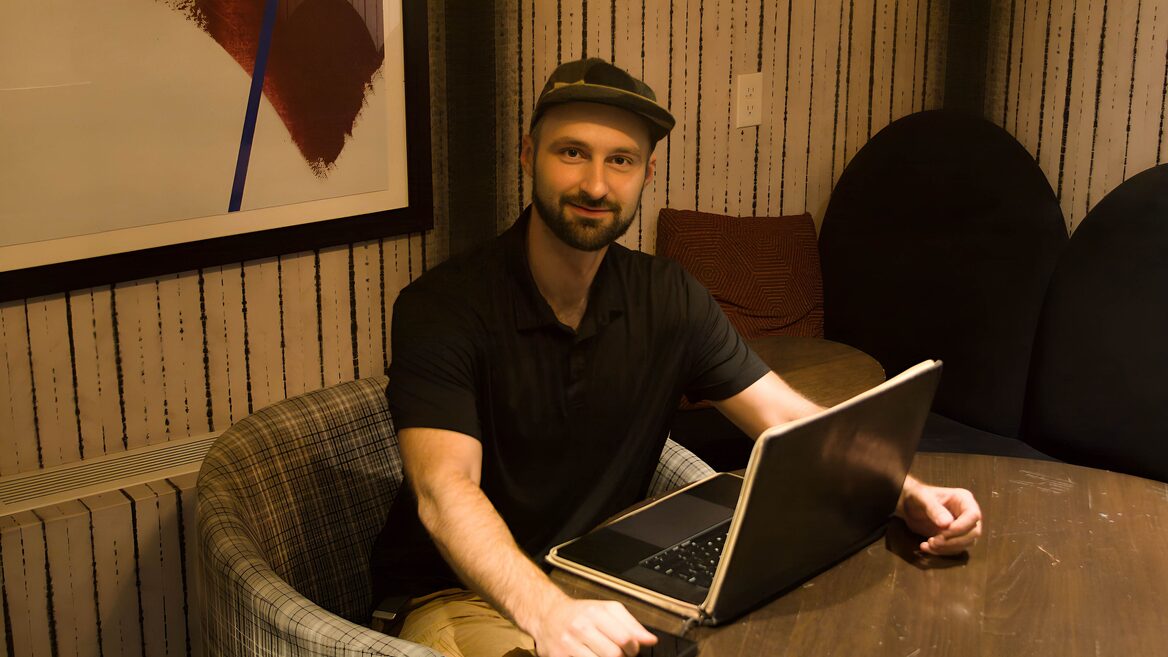
Where to develop Manual QA when you hit a professional ceiling? A big conversation with a tester from Lviv who conquered the US market and is moving towards the positions of Staff, Principal and Technology Leader
«Customers and PMs joked that I shouldn’t rush and relax a bit.» How a developer from Lviv is building an AI-Healthcare system in the US: an interview with a Ukrainian who conquered global IT
«Навіть для виробників трун і пам’ятників я писав тексти». Як стати game-тестувальником під час війни: історія колишнього металурга, страховика, копірайтера
34-річний Андрій Зубков під час війни увійшов в IT, докорінно змінивши свою кар'єру і буденне життя. Тепер він QA Engineer у компанії Pingle Game Studio — тестує ігри. А до цього працював на металургійному комбінаті, в страхуванні та навіть копірайтером. Свою історію про вхід в нове життя Андрій розповів dev.ua.
«Я вигоріла настільки, що вже не могла дивитися на комп'ютер». Історія QA-інженерки про великі гроші, безглузді купівлі, вигорання та дауншифтинг
Хмельничанка Олена Шеліна ― айтішниця, яка настільки вигоріла на роботі, що вирішила покинути IT-сферу та докорінно змінити своє життя. За 9 років роботи в IT дівчина пройшла всі ступені кар’єрного зростання, змінила кілька компаній і навіть напрямів. Та прокинувшись одного ранку, вирішила, що більше не зможе виконувати свою роботу якісно. Дівчина переїхала в село, завела господарство та повністю змінила професію. Розповідаємо її історію.
Manual QA з Luxoft Ukraine вже три роки приборкує вітер на воді та кайфує від цього. Ось його історія та поради для тих, хто мріє про море та віндсерфінг
«Навколо IT» — нова рубрика, в якій ми збиратимемо все корисне для життя айтішника, яке не стосується його роботи. Виявляється, у айтішників найрізноманітніші хобі. Ми вже писали про айтішників-бігунів, плавців, художників, музикантів, танцівників, і навіть заводчика собак. Сьогодні розповідаємо про програміста, який навчився приборкувати вітер. 39-річний Сергій Костюченко — Manual QA у Luxoft Ukraine — розповів про своє захоплення віндсерфінгом та можливості займатися цим видом спорту для всіх бажаючих.
«Щойно я почув про тестування, усередині щось йойкнуло». Увійти в IT після першої співбесіди можливо: історія QA-інженера, яка це доводить
30-річний Руслан Долиненко — молодий айтішник, який пишається тим, що знайшов роботу з першого разу. Він отримав офер після першої співбесіди, бо, як вважає сам хлопець, ретельно до неї підготувався. Як увійти в IT, минаючи десятки відгуків на вакансії, і в чому секрет Руслана — у матеріалі.
Have important news to share? Message our Telegram bot
Key events and useful links in our Telegram channel
"Професія QA поступово трансформується в QE" - і тут ми доходимо до того, що автори статті абсолютно не розуміють значення терміну "quality assurance", і продовжують називати усіх тестувальників QA.
Сумні реалії вітчізняного IT-ринку...
















"Професія QA поступово трансформується в QE" - і тут ми доходимо до того, що автори статті абсолютно не розуміють значення терміну "quality assurance", і продовжують називати усіх тестувальників QA.
Сумні реалії вітчізняного IT-ринку...