A solo developer with no experience coded the game Slotbound, which earned $1.3 million in a week
Indie developer Min Kim, aka Optima Arch, earned $1,332,409 in the first week of sales on Steam for his debut game Slotbound, which he created most of the code and visuals using generative AI tools.
Indie developer Min Kim, aka Optima Arch, earned $1,332,409 in the first week of sales on Steam for his debut game Slotbound, which he created most of the code and visuals using generative AI tools.
The game was released on November 13, received 91% positive reviews, and sold over 200,000 copies in six days. As Kim, 28, himself admitted in an interview with Inven Global, he had no prior experience in game development, a publisher, or outside investment, and released the project on his own.
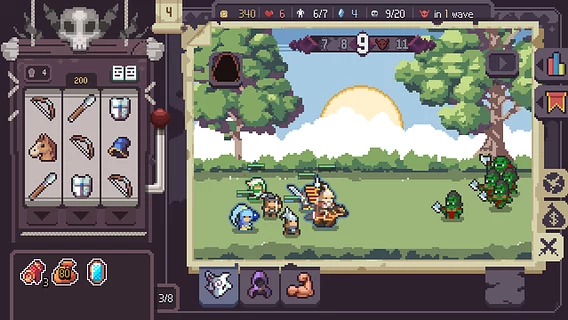
Slotbound combines defense, roguelike, and autobattler mechanics. The player spins a 3x3 slot machine to summon units, absorb or upgrade them in class, and assemble an army against waves of enemies. The idea was born after the game CloverPit, when the developer thought about how three identical symbols on the reels would unleash a spearman or other fighters onto the battlefield — and noticed that there wasn’t a similar combination of slots and autobattler on the market yet.
Kim began development on October 17, 2025 on the LÖVE (LÖVE2D) engine using the Lua language. Within eight months, he released a demo that peaked at 447 players online on the first day, rose from 29th to 2nd in the Steam real-time demo rankings, and within 11 months, the number of wishlist additions exceeded 100,000.
The turning point for Kim was vibecoding, which his older brother, who studies computer science, introduced him to. At first, he was even afraid of the word “coding,” but after the first request, “Make me a game with a square that moves using WASD,” and the instant working result, he realized that he could bring his own idea to life without any artistic skills or previous experience.
He initially used Copilot, which cost about 50,000 won ($37), and later switched to two Codex accounts from OpenAI, each costing 30,000 won ($22), alternating between them due to usage limits. Development costs were mostly subscriptions to AI tools, asset purchases, and Steam registration fees, while Kim lived off his savings from his military service.
“Back then, AI wasn’t as smart as it is now, so fixing one bug often led to another, or the AI would report that everything was ‘done’ when in fact the game wasn’t working,” Kim said.
To curb the chain of errors, he wrote automated tests, created a tool to inspect screenshots pixel by pixel, and maintained a rules file to prevent the models from repeating the same glitches. In a statement about the use of AI on the game's Steam page, the developer noted that the generated visuals and promotional materials were manually reviewed and refined by the author to meet the project's artistic direction and quality standards.
Upon release, the game significantly exceeded the developer's expectations: revenue exceeded 470 million won within 48 hours of release, and within a week reached approximately 1.8 billion won ($1,332,409).
“Honestly, I expected about 100 million won in 24 hours and 500 million won in a week. I had no idea that so many people would play the game,” Kim shared. The game has been most successful in China, with Chinese reviews accounting for about half of the total, followed by English and Korean.
With the influx of players, technical issues came flooding in, and in the ten days since launch, Kim has released over 10 updates. These include crashes on select Intel processors, launch errors on older Steam clients, Windows Protection blocking the executable, performance drops in the later stages of endless mode, issues with leaderboards in mainland China, ranking cheating, and hotkey failures due to IME input methods.
“It all starts with the first step. I also started with ‘a square moving with WASD’. Thanks to artificial intelligence, the barrier to entry into game development today is incredibly low,” Kim noted. He added that the final result still depends on the author’s vision, daily play of their own project, and perseverance.
«Навіть для виробників трун і пам’ятників я писав тексти». Як стати game-тестувальником під час війни: історія колишнього металурга, страховика, копірайтера
34-річний Андрій Зубков під час війни увійшов в IT, докорінно змінивши свою кар'єру і буденне життя. Тепер він QA Engineer у компанії Pingle Game Studio — тестує ігри. А до цього працював на металургійному комбінаті, в страхуванні та навіть копірайтером. Свою історію про вхід в нове життя Андрій розповів dev.ua.
Хто такий Unity Developer: основні задачі, обов’язки та зона відповідальності. Огляд професії від Team Lead Unity у Pingle Game Studio
Продовжуємо цикл матеріалів про ІТ-спеціальності. Кожну описує «типовий представник» — досвідчений фахівець і просто авторитетний колега, та сама людина, яка знає всі таємні куточки своєї професії. Ми сподіваємося, ці матеріали допоможуть школярам, студентам, перекваліфікантам, студентам і всім тим, хто зацікавлений у виборі ІТ-спеціальності. Цикл не тільки допоможе оцінити перспективи, а й дасть можливість краще зрозуміти індустрію і особливості професії зсередини. Обговорюйте і доповнюйте матеріал в коментарях, щоб зробити його ще корисніше.
Про професію Unity Developer розповідає Володимир Мельничук, Team Lead Unity у Pingle Game Studio.