Хочете будувати кар’єру в Data Science та AI? Vodafone Big Data Lab відкриває новий набір —>
Олег ОнопрієнкоGameDev Eng
4 April 2025, 09:00
2025-04-04
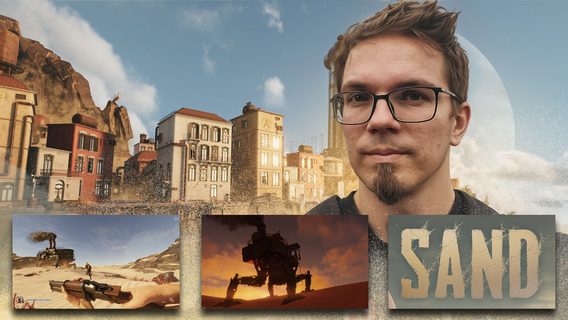
"Releasing the game in its current state is a big risk that could bury the project." Interview with Sand developers about porting the game and next steps
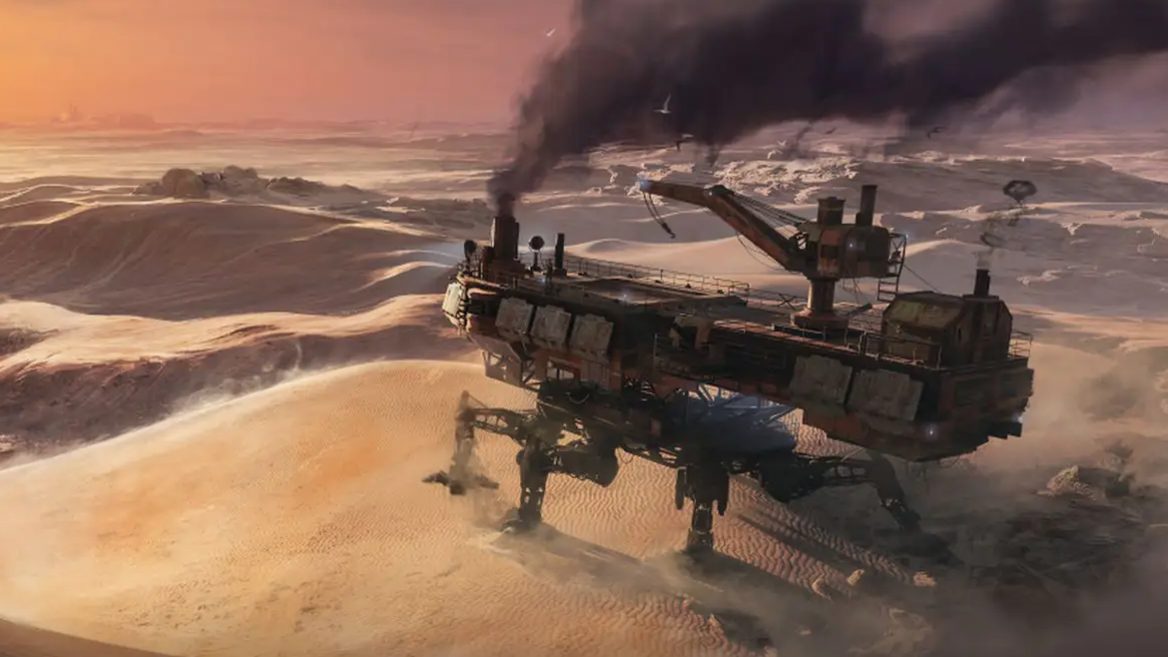
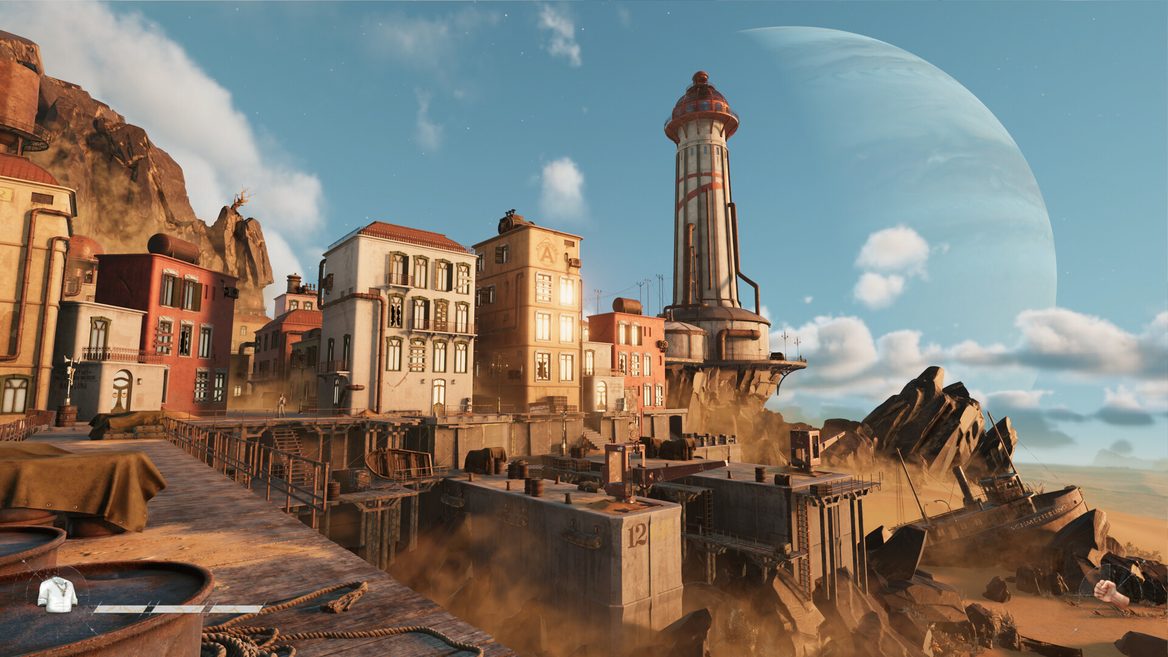
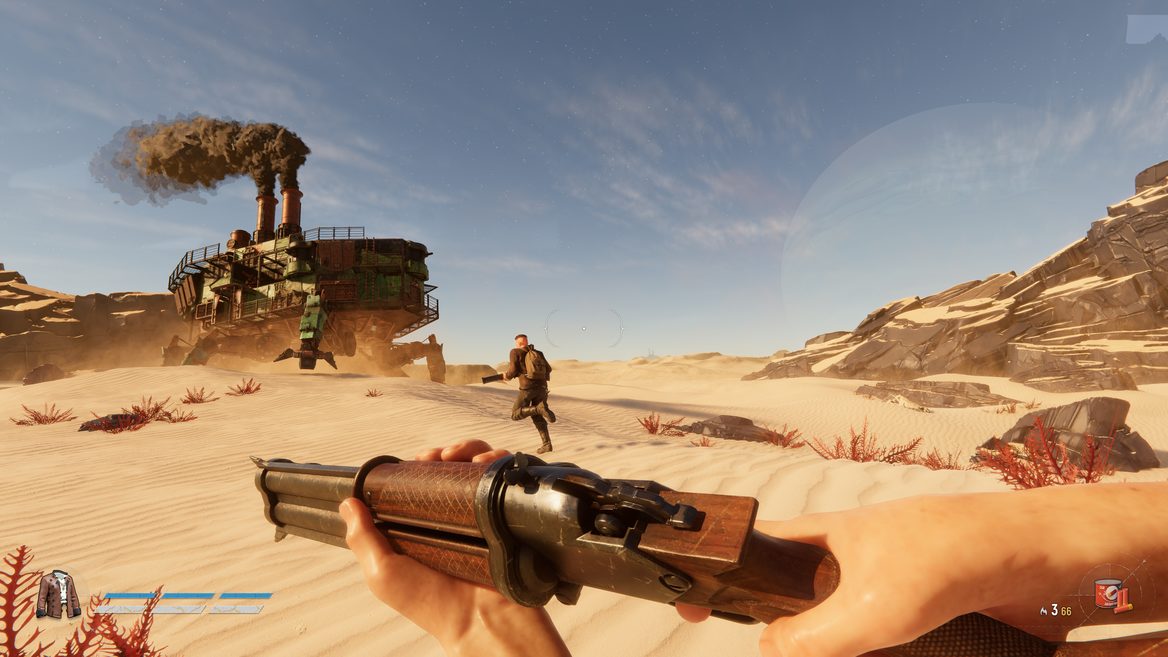
While fans of dieselpunk and survival co-op await the release of Sand, developers at Hologryph continue to refine their ambitious project. The game, which takes players to the brutal world of an alternative 1910s on the desert planet of Sofia, has already attracted community interest and gone through several stages of testing.
dev.ua spoke with Hologryph studio head Maksym Khrapai about development challenges, the delayed release, gameplay features, and how the team is preparing for the game's early access release.
While fans of dieselpunk and survival co-op await the release of Sand, developers at Hologryph continue to refine their ambitious project. The game, which takes players to the brutal world of an alternative 1910s on the desert planet of Sofia, has already attracted community interest and gone through several stages of testing.
dev.ua spoke with Hologryph studio head Maksym Khrapai about development challenges, the delayed release, gameplay features, and how the team is preparing for the game's early access release.
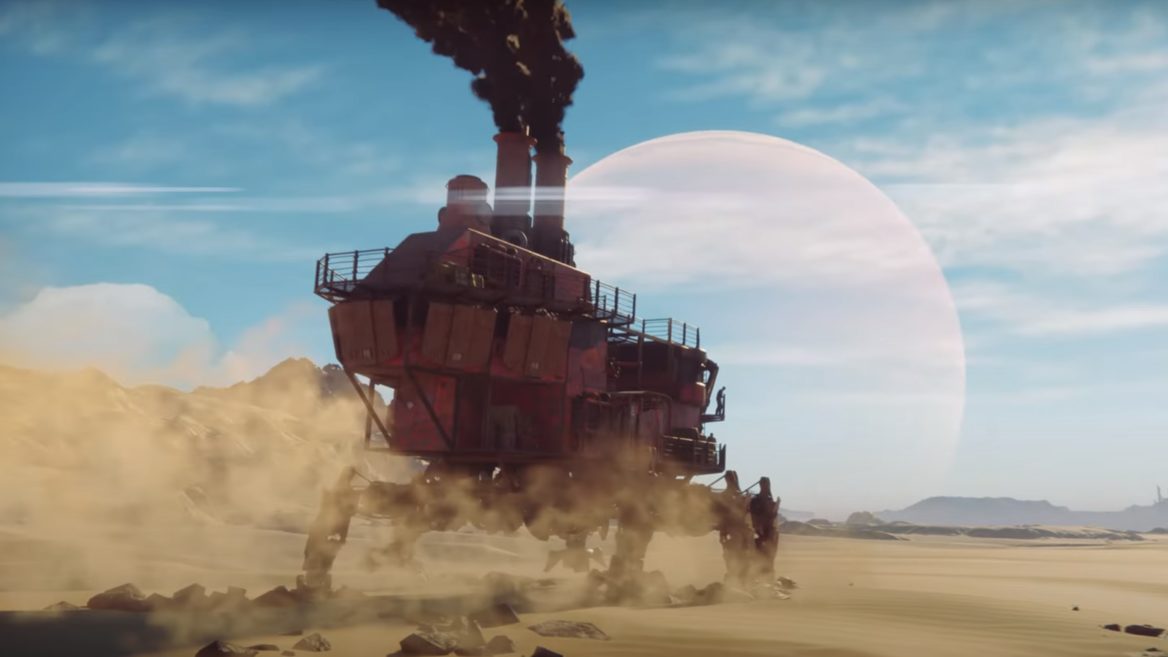
Sand is an ambitious dieselpunk co-op action game that takes players to the desert planet of Sofia, where survival depends on giant tramplers and interaction between explorers. It's been almost 2 years since dev.ua last spoke with Hologryph, and the game was supposed to be released in Steam Early Access on April 3, but at the last minute, the developers at Hologryph decided to postpone the release.
About the current state of the game
— You first postponed the playtest, and then, based on its results, postponed the release date of the game in early access. What exactly was the key factor for this decision?
After the closed beta, we saw that we still needed to improve some aspects of the game. Currently, we have three main areas for improvement: optimization, problem solving based on player feedback, and gameplay elements.
Optimization is a complex and non-linear process that should not be started in advance, since in the early stages of development it is difficult to predict where problems may arise. No matter how much you optimize the model, some problem with some unnecessary calculations will appear later. When it comes to the entire zoo of computers that players have, people with RTX 4080 video cards will have different problems with the game than people with 1660 ti. You need to look carefully, collect profiles and actually choose directions, where and what to optimize.
Based on the results of the playtest, we made a huge list of Quality of Life items. Some solutions that we thought might be interesting for players were actually inconvenient. Something is complicated, something doesn't work the way players are used to, you have to relearn it. There are dozens of such wishes, so we are working on them.
The overall challenge, more game design-wise, that we need to address before we go into Early Access is finding a solution that would allow us to better control the rhythm and dynamics of the game during an expedition. We saw that we had some really cool things working, like the trampler battle, but there were also elements that were sapping the dynamics and interest. For example, there are empty areas on the map where the player spends 5-15 minutes actually waiting for something interesting to happen. So our team is currently actively looking for a solution that would help us increase the number of interesting moments and reduce the number of less interesting episodes.
— Have you considered the option of releasing it with further refinement based on player feedback?
We need to consider that better is better for the project. Extending development without a release is just a waste of money and losing the attention of people who saw the game a year ago, added it to their wishlist, but their initial excitement has already passed and they have forgotten about the game. Yes, they can have the game in their wishlist on Steam, which is good for statistics, but if people lose interest, it is difficult to convert them into our players later.
If we release the game in the state it is in now, it creates other risks. First of all, it will receive negative feedback. Already at the playtest, we saw that people had already started criticizing us for not having time to optimize, not adding some conveniences, not fixing things that obviously interfere with playing. Before the start of each playtest, we try to give a list of changes so that people understand how the game is changing, and if they are missing something, so that they do not come to the playtest in vain. Unfortunately, it does not work that way, not all people have the time to read and follow the project very closely.
From the publisher's experience, we saw what it's like to release a game in an unfinished state. Last year, two similar projects were released - Level Zero: Extraction from Ukrainian developers and DUCKSIDE from a studio in Riga, where many Ukrainians work. The games received a very high percentage of negative reviews and many refunds. Players came, saw that they couldn't play normally and simply returned their money. And if something similar happened to Sand, we would have lost the entire launch boost that Steam offers, all that marketing would simply be eaten to zero. This is a big risk that could bury the project. Having weighed all the risks, the publisher decided that we would postpone the launch.
— How big is the creditworthiness of the publisher? Delaying a game is usually not very well received by investors. Are there any conditions when the game must be released no later than a certain date?
When we worked with tinyBuild on PartyHard 2 and Secret Neighbor, we saw how they work and what kind of people they are. And if problems arise during the development of the game, they can be solved through conversations, new plans taking into account force majeure. This attitude is very winning and supportive. Alex (the head of tinyBuild) helped us move the team to Western Ukraine at the beginning of the full-scale Russian invasion. He got involved because he values the people and teams he has been working with for a long time. It's just a human attitude. Yes, no one likes postponements, budget increases, changes in plans, but we sat down, talked, came up with a new plan and are moving on it.
The attention to the project convinced the publisher to allocate even more budget.
The publisher saw that there was interest from players in Sand. When there is, attention, a large amount of time that people spent on playtests, feedback, active community interaction on our Discord and on social networks - this was the reason why the publisher decided to allocate even more budget. It was the support and attention of the players to the project that gave us the opportunity to buy a little more time to bring it to a good state.
— How did the Azure lockout situation affect the further deployment of the online infrastructure for the game? Could this situation happen again in the future or have you switched to an alternative?
"Technical Troubles on Planet Sophia" - a demo version of the Ukrainian multiplayer shooter SAND was unavailable for 3 days due to a Microsoft Azure account lock. The developers finally managed to restore access
Some of our game servers will be running on Nitrado hardware. We still use Azure as a solution for scaling capacity in case the number of online players is much higher than we calculated. Solving the previous problem took a lot of time, we got through to people in support who were able to properly advise us on that situation: what happened, why, and how to prevent it. When you cooperate with such a large company as Azure, the problem is to get through to a live person, through all these AI chats. And then, to get through to a person who can help you with a non-standard situation, you spend twice as much time. The first line of support is usually people who answer very typical problems, and ours was not typical. Therefore, no one can be 100% insured against this. It was painful, we drew conclusions, we insured the basic online a little, that is, it will be on our hardware. We have once again gone through all the guidelines that Azure provides on cybersecurity. We hope that a similar situation will not happen again.
Maximize your gaming experience
— How do you approach optimizing the game for different systems, given feedback on the demo's performance on different hardware configurations?
For the last four weeks we have been fully focused on optimization. That is, all the people who can benefit from this process are doing it. We are currently optimizing all aspects of the game: art, development, server, client, etc. Last week we did an experiment in which we created a kind of Frankenstein from four different branches. From the players' point of view, it can be considered non-working, but we needed to do a technical test to see what all our existing optimizations would give in total when we finished them. That is, there are still technical problems, some things disappear in front of our noses, or at the wrong moment, but we checked and it worked. On the target machine, with the lowest settings, you can play at 60 fps. That's it. Now we are working to ensure that all of this is bug-free.
— How do you plan to make Sofia's world more rich and dynamic to avoid the feeling of loneliness and monotonous wandering through the desert that players noted during the closed beta test?
We are currently working not only to have a lot of regular interesting events that would entertain the player, but also to make this journey somewhat conscious, and players can easily figure out where to go. It should be as easy as possible to do, like the start of the first level in Super Mario, when you just go right and everything happens from there. This is a difficult task, like any auto-tutorial.
We plan to add new biomes, maybe not right at the start of early access, but we already have concept art and even some textures and ideas for mechanics for new biomes. It will also be more or less a desert, but with some of its own tricks. We are also gradually filling the game with content: new islands, new points of interest that can be found in the desert. We are balancing the game map: how many, how often people will encounter each other and interact, negotiate, fight, disperse, and so on.
— Sand is positioned as a cooperative open-world game, but how do you plan to make entering the world of Sand comfortable for those who start playing alone?
The last patch test was a server split where solo players played against each other. So all players are in the same conditions, so the question is how to interact with the world and confront possible threats. Currently, we see that when a person plays alone, it is more difficult to figure out the trampler, especially for a beginner. To control, shoot a cannon, control whether the trampler is in a safe place when you run to the island to pick up loot.
When you are already familiar with the game mechanics, this is not a problem. The problem is how to give beginners such a space, such a sequence of events, so that they can figure it out. It is also all around the tutorial tasks. For now, we have made hints that can be seen when you press the F1 key. A full tutorial is necessary, but first it is necessary that the game is fixed, at least in some aspects, and build the tutorial around this, because now many elements are changing.
"Sand is about the fact that it is possible to make a game where there are no Russians at all." Interview with the creators of a shooter about Galicians in space
— A unique feature of Sand is the presence of its own trampler, which players can modify at their discretion before each game session. How did you come up with this idea?
When we were working on Secret Neighbor in 2019, our CTO Serhiy Hrynets left and started prototyping the next project. During a discussion with the publisher about the plans for the project, Sea of Thieves came out. We played it for several dozen hours and the game lacked the ability to significantly change the layout of what was where on the ship. We didn't have a cannon in front of the ship's bow or a cannon in the back. We were like: "Well, damn, why? It's like just rearrange it and so on." And this desire to build something merged with the publisher's desire to create games like Rust, where the player thinks about how to build, how to raid, how to defend their base. We wanted to combine all these things in a trampler. And the mood we wanted to convey is the feeling of adventure when you go somewhere as a team.
— Can you tell us more about the weather conditions in the game? We know that Sand will have heat, which will negatively affect players. Such mechanics are quite interesting in extraction shooters and add atmosphere, let's think, for example, of the survival mode in The Division and the constant blizzard.
Currently, we have the heat turned off, because this mechanic at the gameplay level is implemented like this: the sun is just shining, your head is burning, you can lose a life, if you hide in the shadows - you cool down. In fact, it's just annoying when you're playing, because you can't stand behind the turret or the steering wheel for a long time. When the sun is overhead, you can stand under a small awning and hide, but it doesn't work at other times of the day. You just need to make a slot for a hat that you can put on and the player already has shade, or drink water. All last year we had a super huge long race, to conduct a playtest it took almost the whole year. We constantly had a lot of more important tasks, without which the game simply didn't work properly. So all this was postponed, and then we turned off the heat and will return to it when there is time to make this mechanic at a good level, so that it would be interesting, and not annoying like now. Currently, all that is in the gameplay from this mechanic is that when the player opens the refrigerator, he starts to freeze.
About the everyday lives of developers
— Were there any ideas that you really liked, but which you had to abandon due to lack of resources and time?
This is our entire backlog in the "gyre" (laughs). One of the ideas that we would like to implement, but refused, is a full-fledged opportunity to walk around the orbital station that hangs above the surface of Sofia. So that there would be your hangar, in which your trampler is located, so that you could go to the commandant of this station, take some quest from him, go to the bar and also take some task. I would really like it, very cool. But in our conditions, even if we implemented it, it would be like in Starfield, when at some point in development, we played the demo and there you could take a glass of whiskey and spin it in your hand. And there the liquid would splash. But at the same time, all the NPCs in the bar stood in a T-pose. Before that, we took two quests, we couldn't pass one, the other we simply lost a box from the cargo hold. And we went in, spun the whiskey at the station and left.
— Currently, the world and especially the Ukrainian game dev is going through difficult times. And have you encountered a shortage of personnel? Is there a shortage of personnel now or vice versa, people are unemployed and there are many good candidates and there is something to choose from?
Before we started making Sand, we didn't have any problems, we didn't interact much with the labor market, because we were a small studio. We had five to seven people, so we just hired acquaintances and that was it. When we started making Sand, there was just a period of super-optimism, an infusion of money into game dev at the beginning of the COVID pandemic. It was a period when people dictated their own terms. Very high salary increases that people were willing to agree to. It was difficult to find many people. When it became necessary to expand the team, we left the state of an indie studio looking for indie developers and began to be forced to consider the candidacies of people who work for large companies. And this is a different mentality, these are different approaches to work, these are different expectations from how work will be organized. Some people appreciated how we work and stayed with us, some moved on because our approach was not for them.
We are not hiring right now, and it is with great sadness that I turn down people who contact me with questions about vacancies.
For the past year and a half, we have only been downsizing, almost not hiring. One of our QA specialists was mobilized into the army, and we hired another to replace him, since it is important to have a tester for a multiplayer project. The art director also went to serve, but his position was no longer being hired. He laid a very good foundation and we are now using his work. That is why we are not hiring now, I am very sad to say no to people who contact me with questions about vacancies. When the project is released, it will find its audience, pay off the development, maybe then we will start thinking about hiring someone else.
And if we compare it to June 2023, when we last spoke with you, you said that you had 52 people on your team. Is this number more or less now?
Now it's about 30. This is a painful moment. If we knew that we would have 30 people at the start of early access, we would have made a different game four years ago. But no one could have known that. In the future, we will have this experience, but not for this project. A much larger project has been laid, more ambitious than we can currently implement given the budget.
— Many studios that support Ukraine are currently facing review bombing from Russians. For small teams, this can be a serious problem at release, because gamers, not knowing the context, may see mixed reviews and decide that the game is not worth paying attention to. In addition, Steam algorithms may promote it worse in the tops. Are you prepared for such a scenario, and what steps do you plan to take to counter biased reviews?
Sand will not be sold in Russia. That is, all players who want to leave a review for it will have to go to some other region, buy it there, pay into the local budget and leave a review. I think this will cut off a certain number of people who will not want to bother with it. What can be done about review bombing in general? Nothing. Just as nothing can be done about, for example, Chinese players who leave negative reviews for many games because there is no Chinese localization. This is their way of interacting. The fact that the project can be sunk due to the number of negative reviews they have is probably not important to them. I can only ask players who like our game to leave a good review. That is all we can do.
I think that Steam will at some point, albeit belatedly, figure out how to deal with this. Because it really doesn't concern the quality of the product, but some external factors - politics, language issues, etc. The Level Zero project had a lot of Chinese accounts that left negative reviews due to the lack of Chinese localization. And then, when Chinese was added a month later, they didn't change their reviews. So sit and think, were these real people who really wanted to play this game, or was it some kind of bot farm named after a party leader that has this kind of cultural influence for money.
— You often talk about drawing inspiration from Ukrainian culture, but it's hard to emphasize such things in an online game without a plot. How do you plan to emphasize Ukrainian identity?
Right now we have, well, a few colorful characters that we plan to develop through their clothing and decor. In the last playtests, players could see that there is a captain's cabin in the game, it is decorated and more elaborate than other compartments in the trampler. I hope that we will have time during early access to bring the quality of other cabins to such a level of saturation with objects with various references, Easter eggs to Ukrainian culture.
We currently have a technology tree — a way to unlock new compartments. It consists of three separate lines of factions operating on Sofia: scientists from the expedition of Tadeusz Godlewski, who was involved with the Lviv Polytechnic Institute, the military, and smugglers. The player will encounter these three factions, and they will be revealed little by little in the descriptions of items, compartments of the trampler, and will give a little history of the world, how it works, who operates in it.
— Was there any comical story that happened during the development of the game that later influenced the game?
When we were preparing for the first announcement with that video clip where the members of the trampler team are going somewhere and talking to each other. We were looking for voices for the voiceover. At first, everyone on the team tried it in turn, but you need to have different skills for voiceover. One day, our art director comes running with a coffee with big eyes. We asked what happened, and he said: "I found it. I go in to get a coffee and the barista answers me in such a voice that my knees trembled: "Your coffee." We were like: "Maybe he just has that voice?" And he answers: "No, I asked him directly: "Do you, by any chance, do you do voiceover?" And he answers: "I'm a professional voiceover actor." This person comes into the office, I'm sitting in a small corner where we have a room for recording sounds. And he just says: "Good evening." And everyone in the room is sweating, goosebumps on their skin, "Oh, God, what a voice!". We recorded a voiceover with him and he's one of the voices of the three friends you saw in the first Sand trailer.
I like this story because it's so startup-like and Californian, when you go in to buy coffee, you meet a person who helps you voice a video that is getting a lot of attention in Ukraine and around the world.
— Will we still be able to hear this voice in the game?
Right now we have almost no voice acting in the game, except for the sounds of falling and gunshots. So no, we are not working on it yet, but when it becomes relevant, we will definitely do it, we have the contacts of this actor.
Our last video had an announcer — we invited him to play the role of the dropship pilot who drops off the character and picks up the tram. He is a friend of ours, he works as a tour guide in Lviv and speaks five languages fluently, including Polish and a little German. For us, this is a very important set of skills, because we want to convey the atmosphere of life in the empire.
As is often the case in large multinational states, there is the language of the metropolis, but there are also languages that the population communicates in. People can speak their own language, understanding each other, or switch to another, although they do not always speak it perfectly. This ability to freely switch between languages, to insert words or specific terms from other languages is something that we would like to convey when we work on the voice acting of the characters.
— Let's imagine a situation. You have an investor with money, no time limit. What dream game would you create for yourself? Daniel Vavra once dreamed of creating a game about medieval Bohemia and his dream came true. So what was this game like for you?
There's one interesting topic that's sometimes brought up in games, but no one seems to have built an entire game around it. It's smuggling.
For Lviv and Transcarpathian regions, this topic is much closer than for the central regions of Ukraine. It is a separate world with its own culture, way of life, and challenges faced by people who choose smuggling as a means of earning a living.
We've been thinking about making a game around this idea, but it's just a thought for now.
Another point worth noting is that an unlimited budget is often not beneficial. If you don’t have a clear framework, it’s hard to know when to stop. You want to add everything at once, and there’s simply no upper limit to what can still be implemented. But in a good work, cutting out the unnecessary is always important.
— What would you like to wish to the players who were waiting for the early access release on April 3rd and now have to wait even longer?
I would like to wish to have God in my heart and not be too strict with us when they see that we haven't fixed all the bugs.
«Навіть для виробників трун і пам’ятників я писав тексти». Як стати game-тестувальником під час війни: історія колишнього металурга, страховика, копірайтера
34-річний Андрій Зубков під час війни увійшов в IT, докорінно змінивши свою кар'єру і буденне життя. Тепер він QA Engineer у компанії Pingle Game Studio — тестує ігри. А до цього працював на металургійному комбінаті, в страхуванні та навіть копірайтером. Свою історію про вхід в нове життя Андрій розповів dev.ua.
Краса та меланхолія кінця світу. За що світ полюбив The Last of Us?
2 вересня 2022 — дата виходу ремейку The Last of Us, який отримав назву The Last of Us Part I. Доцільність випуску повного ремейку, який робили з нуля для не настільки старої гри ще стоїть під питанням. Але заслуг першоджерела він не зменшує.
Адже 2013 року The Last of Us стала справжнім одкровенням для ігрової індустрії. Один із останніх ексклюзивів для PlayStation 3 остаточно вивів студію Naughty Dog у «вищу лігу», заодно продемонструвавши всьому світу, як можна робити ігри з акцентом на наратив. І на честь релізу рімейку ми вирішили згадати оригінал, який назавжди залишив слід у ігровій індустрії.
Професії у геймдеві. Хто такий левел-дизайнер і як ним стати?
Ми продовжуємо нашу рубрику, присвячену професіям у геймдеві. Тема нового матеріалу в ній — левел-дизайн. Його вважають підвидом геймдизайну, але все-таки практично кожна студія хоче окрему людину на позицію левел-дизайнера. Адже у цій спеціальності вистачає своїх нюансів та особливостей.
Розібратися з ними всіма нам допоміг досвідчений левел-дизайнер зі студії Fractured Byte Дмитро Нестеренко. Також він веде свій блог Game Designer Notes про геймдизайн в цілому, в якому розбирає багато цікавих нюансів розробки ігор.










Іноді починаєш із побутової проблеми, а потім знаходиш ще кілька корисних тем. Таке часто трапляється на цьому сайті https://poradka.com.ua/ .