Хочете будувати кар’єру в Data Science та AI? Vodafone Big Data Lab відкриває новий набір —>
Олег ОнопрієнкоGameDev Eng
16 September 2026, 09:00
2026-09-16
"It didn't get any easier for us, but we don't want it to." How the Ukrainian Games Festival gathered 73 announcements of Ukrainian games and why the current format has exhausted itself — an interview with Stepan Prokhorenko
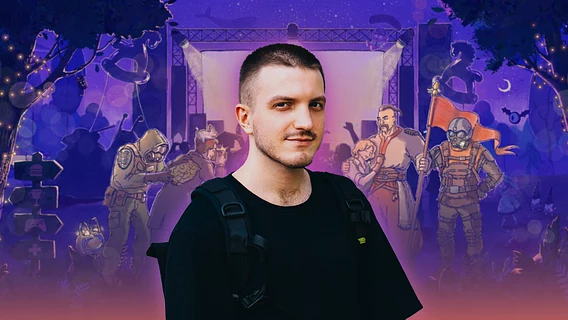
This year's Ukrainian Games Festival showed serious numbers: 73 new announcements of Ukrainian games and 1.9 million visits to the festival page, and Ukrainian indie hit Tulpa the Unseen Lover gathered a phenomenal 100,000 wishlist members. We spoke with UGF organizer Stepan Prokhorenko about how such results were achieved, the behind-the-scenes of the collaboration with Steam, the fight for players' attention, and why the current festival format has already reached its limits.
This year's Ukrainian Games Festival showed serious numbers: 73 new announcements of Ukrainian games and 1.9 million visits to the festival page, and Ukrainian indie hit Tulpa the Unseen Lover gathered a phenomenal 100,000 wishlist members. We spoke with UGF organizer Stepan Prokhorenko about how such results were achieved, the behind-the-scenes of the collaboration with Steam, the fight for players' attention, and why the current festival format has already reached its limits.
— This year's festival caused a sensation with the number of announcements. How many new projects were shown in total (last year there were 23)?
— This year we had a record number of participants, news, demos, and announcements of new games. By all criteria of developer involvement, we surpassed our previous festivals. In total, 73 announcements took place. This became possible because developers saw a real case: an announcement at a festival brings significantly more wishlists than an independent release.
However, I think there will be fewer announcements next year. We will most likely change the approach to selecting and highlighting games, because the current format has already reached the limit of its usefulness for visitors. When up to 100 games are announced on the first day, it is very difficult for players who came to find something interesting to navigate.
We tried to balance this from the very beginning: we formed the shelves algorithmically, randomly and manually. Throughout the week of the festival, the order of games on the main page was constantly changing. We always emphasized high-quality and interesting projects, as well as games from developers with a proven background. Therefore, next year the format will definitely be transformed somewhat, but I will not reveal the details yet.
Telepathic Chumaks, NRK simulator and cooperative in Chernobyl: the latest announcements of Ukrainian Games Festival 2026
— Some might not have noticed the festival banner on the Steam homepage and thought you were left without a feature this year. Tell us what the official support from the platform actually looked like and how their display algorithms work?
— Ukrainian Games Festival 2026 was on the Steam homepage for the whole world for four days, from August 17 to 20. The festival itself lasted longer — we specially added a few more days to end it on August 24.
The part about the whole world is important. Valve often highlights regional events only for local markets. For example, a Scandinavian games festival can only be shown in Scandinavian countries. We had a Global Feature, meaning the whole world saw our festival.
We have been using Valve's support since 2023. In general, we have been holding the festival since 2022, but the first edition took place without official platform support and, accordingly, collected significantly fewer views. However, Valve knew us before that: in 2020, we were one of the first in Eastern Europe to start organizing festivals as third-party organizers (not the Steam team) with our Indie Cup competition.
When we came to Valve in 2023, they showed us the results of the previous year and said: we can bring STALKER, Metro, Sherlock Holmes and several hundred other indie projects to the festival. Since then, they have provided us with official support every year.
This support consists in the fact that a banner appears on the Steam homepage, leading to the festival. When you organize an event, you set its total duration, but Steam independently chooses the time period for highlighting on the homepage. That is, theoretically, the event can last two weeks (and the banner will hang on the pages of participating games all this time), but it will only appear on the platform homepage for a day.
2.4 million users. Ukrainian Games Festival sets attendance record
— Last year, the Ukrainian Games Festival attracted 2.4 million users. What are our engagement figures this year?
-This year, the festival page was visited 1.9 million times. This is our second result in terms of number of visits.
For comparison, we received 1.4 million visits in 2024 and 1.3 million in 2023. The jump to 2.4 million in 2025 was a pleasant, but anomalous surprise - the main thing is that the festival's growth trend continues.
Ukrainian Games Festival 2026 also set a record for the number of views of banners and other materials — five million, a million more than last year. Significantly more people around the world learned about the Ukrainian Games Festival brand.
— Many Ukrainian games were released during the festival. Whose initiative was it, and did it justify itself, or, on the contrary, did it create unnecessary competition for the audience's attention among your own?
During the week of the Ukrainian Games Festival, 23 games were released.
-The format of releases during the festival debuted this year. There were participants who had previously chosen to release on the days of the event, but without support, such games did not gain results. We received feedback from developers who wanted a tool to increase visibility right at the start of sales.
This year we did it, with 23 games released during the week of the event. We put the release shelf one of the first on the page, and it was seen by a lot of people. To give everyone a chance to show off, we manually changed the order of the games throughout the festival, with an emphasis on the best projects.
Some of the games were released on the first day, along with the start of the main Steam feature, others were released over the course of a week. Tukoni was released on the first day, The Sinking City 2 was released on the second day, and STALKER 2: Cost of Hope followed later. I won't confirm or deny how much of these dates were planned in advance, but it worked out well.
As for the results: I know for sure that Tukoni sold great, and the developers are completely satisfied. As a publisher, we released PROFITS 2167, a new game from Marevo Collective (authors of No one lives under the lighthouse), and sales there also exceeded our expectations. I think The Sinking City 2 and Cost of Hope are also doing great, and the festival only added visibility to them.
As for other games, there are both positive and not-so-positive stories. It all depended on how much the game itself was able to attract attention. The festival could have been a great additional platform, but it certainly didn’t guarantee 10,000 copies of every game released these days. Overall, we are satisfied with the results — players saw new Ukrainian projects that could be bought here and now. This is a success for everyone.
“You need to come to publishers now in the middle of production.” Oleksiy Furman on the development of the game “Tukoni: Guardians of the Forest,” an Asian publisher, and 75,000 wishlist members
— Which projects have garnered the most likes and views? You mentioned the success of Tulpa the Unseen Lover (over 100,000 likes in a week) — who else is in the lead?
— Yes, Tulpa the Unseen Lover was the biggest surprise of the festival in terms of wishlists. I talked to the developers back in the spring, knew that the game looked cool and would be a cool announcement, but I didn’t expect it to take off so quickly. The festival became a kind of catalyst: they showed the debut trailer on our Direct video, after which it went viral on social networks. The cool animation and the idea with an imaginary girlfriend really resonated with the online community.
100,000 wishlist members is an absolute record among all participants who have ever been announced at our festival. I don't think such stories will be repeated often, but without the festival's launch pad it would have been much more difficult for them to achieve such a result.
As for the other participants, the average number of wishlists for major new announcements was about 5,000, sometimes significantly more. The new game from Andriy Bychkovsky — Saturn 94 — went down very well. The announcement of Fog'n'Silence from the Hello Andromeda team showed itself perfectly — Western media started writing about them during the festival, and they also collected thousands of likes. We also announced a project that we publish ourselves — Steel Core, and it received a good starting player base.
The average number of wishlisters per game this year turned out to be lower than last year. This is logical, because there were fewer announcements before, they did not compete with high-profile releases, so visitors paid more attention to them. However, the global total number of new wishlisters for Ukrainian games has increased significantly. Roughly speaking, if in previous years we had 5 games that received 8,000 wishlisters each, then this year we had 20 games that collected 3,000. That is, the overall result for the industry is higher, although the indicator per participant has become somewhat blurred.
— How did you build your work with foreign content creators? I've seen streams where creators are genuinely surprised to learn that the games they know are actually Ukrainian. Was this your targeted promotional campaign or organic reach?
— We always send materials to Western and Ukrainian media and English-speaking streamers. However, more substantial, targeted work with content makers is planned for the coming years. We want to scale up the involvement of both Western and local bloggers in covering our announcements and participants' games in general.
As for the videos where foreigners are genuinely surprised by the origin of the games, this is a completely organic story. We didn’t buy integrations from bloggers specifically for such reactions. People simply saw the festival banner on Steam or read the news, went to the page and made discoveries. And so every year: players around the world are genuinely surprised to learn that Metro, Sherlock Holmes or The Sinking City are, it turns out, Ukrainian games.
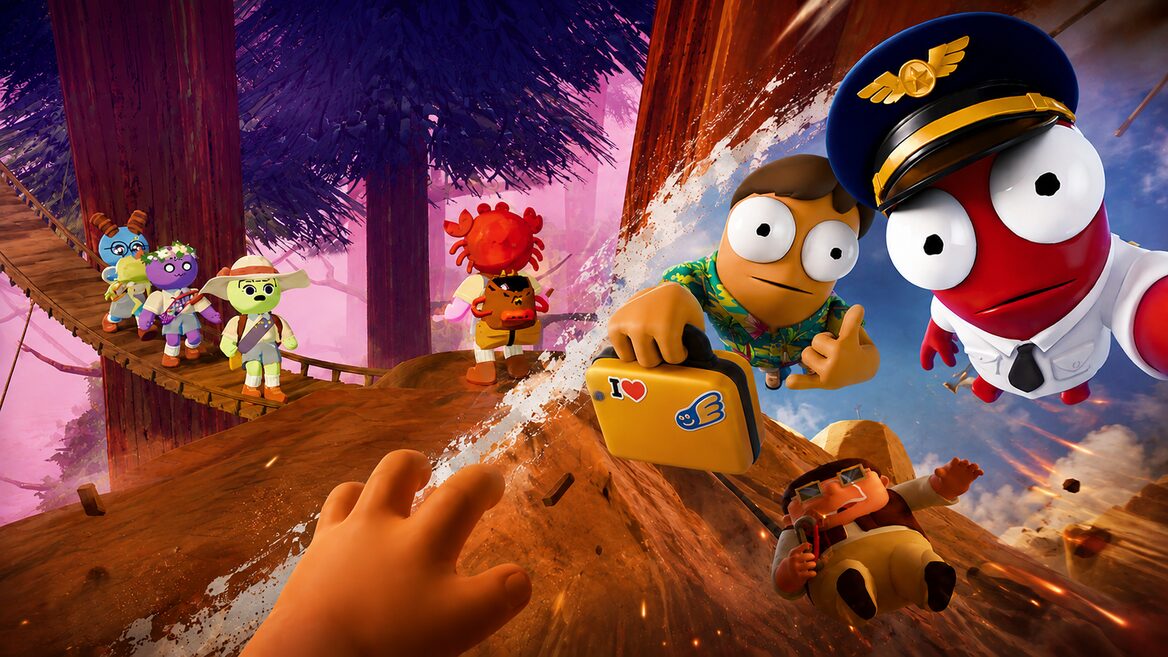
This year, there were many similar reactions to Dear Passengers , as it was fresh in our minds after collecting a bunch of wishlists at previous announcements. Players would go to the page and see original indie projects standing next to the new Metro. It clearly demonstrates the diversity that currently exists and is developing in our gaming industry.
— There is a lot of controversy in the industry right now around the use of neural networks. What is the festival's policy regarding projects that actively use artificial intelligence, and have there been any conflicts around their participation this year?
— This year, we did not impose restrictions on whether AI projects could participate in the festival. At the same time, we significantly limited their participation in curated selections: they were less likely to be in the top positions, and only a few trailers made it to UGF Direct.
We tried not to impose any restrictions on participation, as the goal of the Ukrainian Games Festival was to provide a platform for all developers and become a cross-section of the industry. However, the issue of AI still became the hottest topic of discussion among the participants - many believed that such projects should not be accepted at all.
I think next year our approach will change a bit. This year we did have participants whose marketing materials were largely generated by neural networks and did not meet our quality criteria - we would like to avoid that.
— Did it become easier to organize the event thanks to previous experience, or did the scaling of the festival bring new challenges?
— It would be easy to repeat what we did a year or two ago, but we always set a higher bar for ourselves.
To make the festival interesting and bring maximum benefit to developers, we have to experiment, look for new approaches and tools on Steam. For example, this year we made a Direct video presentation for the first time with new trailers of participants, and this was a layer of additional work. Next year we will definitely come up with something new. Add to this the fact that the number of participants this year has increased significantly compared to last year.
Organizing a festival is always interesting, it takes a lot of time and it is always a big challenge. But we do not give up on it. Therefore, to answer briefly: no, it has not become easier for us, but we do not want it to be.
— You also organized an offline presence in Malmö and San Francisco. Is the feedback and perception of the audience different in Europe and the US?
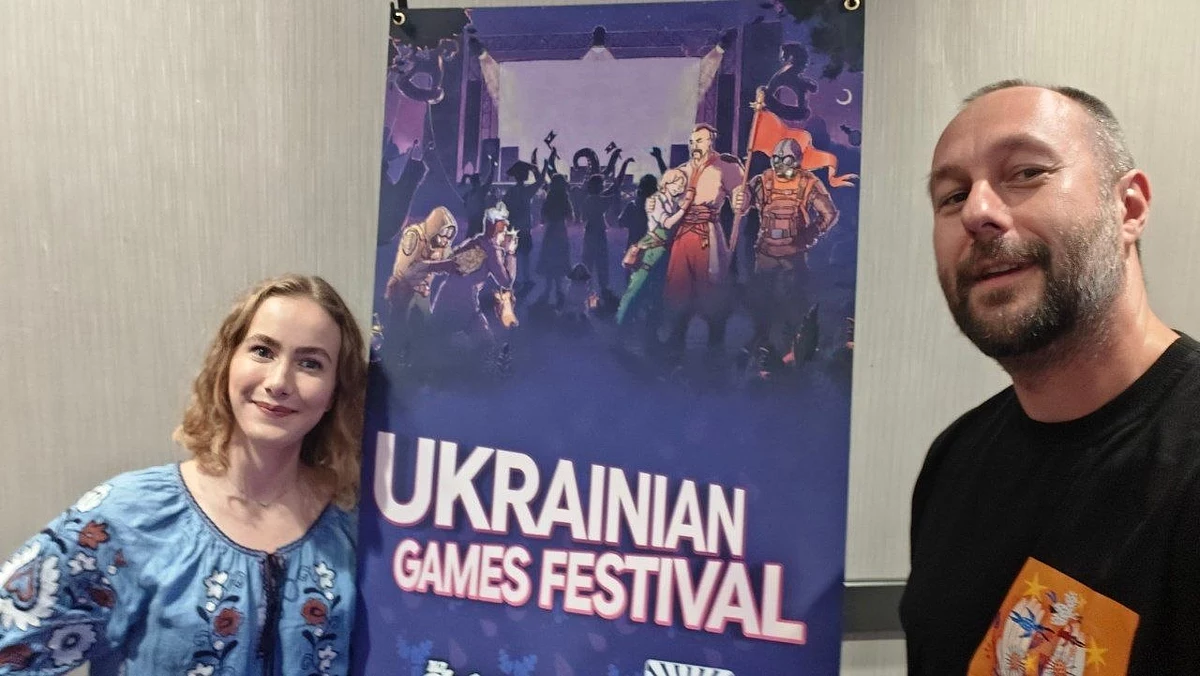
— We have a pop-up festival format. They are held under the Ukrainian Games Festival brand, but they are significantly different from what we do on Steam. It's not a large-scale event with 700 participants — we select five to eight interesting projects, usually those that are still in development, and set up stands at international conferences to give people the opportunity to play them. This year we organized such showcases at GDC in San Francisco, Nordic Game in Malmö, and recently another one at the Seattle Indies Expo in Seattle. This is a cool tool that allows you to bring games to the conference that most likely would not have been presented there on their own.
Ukrainian Games Festival at Seattle Indies Expo
As for the audience reaction, it is more or less the same everywhere and can be divided into two aspects. The first is the direct reaction to the games themselves. People sit down, play demos, share their impressions, and we pass this feedback on to the developers. In this regard, it is a regular demo showcase that brings the authors standard, but very important results from showing at a large conference.
The second aspect, useful for the entire industry as a whole: we represent Ukrainian game development and do not let the world forget about us. We strive to have a pop-up with Ukrainian games at any international conference. This clearly demonstrates to foreigners that the development of new projects in Ukraine continues. They form an understanding that our industry is alive, developing and becoming more and more interesting for both players and investors.
— What are the global plans for the Ukrainian Games Festival next year?
— We plan to make the festival longer. There is a certain conceptual problem: we use the standard Steam sales tool to hold announcements, releases, show demos and new trailers. When all this is squeezed into one week, it is impossible to give enough attention to each activity.
Next year, the festival will definitely take place, and we will continue to make announcements of new games. We will definitely return and develop the video showcase format with new trailers. This year we did it for the first time, and it received exceptionally positive feedback. At the same time, we plan to change the approach to selection: to slightly raise the quality bar to better represent our industry and so that the audience's attention is not spread over hundreds of new games.
The main priority for next year is to give players more convenient tools to get acquainted with projects. We want to provide more curated selections, better involve the press, streamers and bloggers in covering games. But all the details and announcements will come next year.
Without leveling, but with spatial puzzles. Stas Shostak about the new game Hear My Light, everyday life in the Armed Forces of Ukraine and the perfect development "under the palm tree"
Понад половина геймерів страждають на напади неконтрольованого гніву. Які причини агресії та яка консоль дратує найсильніше
Реалістичні та захопливі ефекти у відеоіграх стають причиною глибокого розчарування, коли гравці не можуть пройти боса або побити свій рекорд, ідеться у статті Daily Mail.
Hollow Knight — інді-пригода про жуків, яка за якістю перевершує майже всі ААА-ігри
Hollow Knight Silksong — це одна з найочікуваніших інді-ігор на поточний момент. Її розробкою займається студія Team Cherry, яка раніше випустила лише одну гру — Hollow Knight. Але й цього виявилося достатньо, щоб розробники назавжди увійшли в історію ігрової індустрії. Адже Hollow Knight за якістю не поступається дорогим ААА-іграм, а місцями навіть перевершує їх.
Розповідаємо про цю незвичайну пригоду з жуками в головних ролях, яка обов’язково має залишитися у ваших серцях.
Celeste – чарівна історія про прийняття себе і водночас нереально складна гра
На перший погляд Celeste може здатися стандартним ретро-платформером, мода на які не вщухає із середини «нульових». Певною мірою так і є, чого приховувати. Але насправді ця відеогра дарує набагато більше, ніж може здатися, якщо судити про неї поверхнево.
Адже Celeste чудово працює і як метафорична історія про прийняття себе, і як надмірно хардкорний спосіб випробувати свої нерви та ігрові вміння на міцність. Розповідаємо про цю чарівну пригоду, яка зовсім недарма отримала нагороду за найкращу інді-гру 2018 року (і яка допомогла головному розробнику прийняти себе як трансжінку).
Have important news to share? Message our Telegram bot
Key events and useful links in our Telegram channel