


Two graduate students in leather jackets and the first contracts with the defense industry
Two graduate students in leather jackets and the first contracts with the defense industry

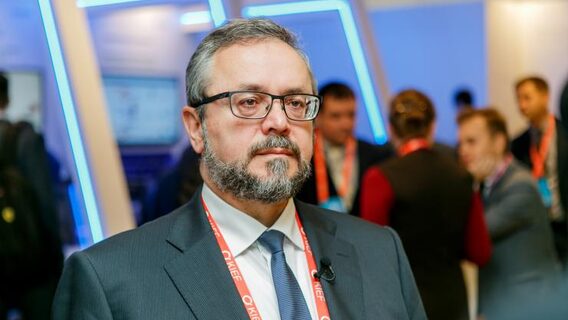
How to make gigabit internet at home truly gigabit. Interview with a Vega expert
How to make gigabit internet at home truly gigabit. Interview with a Vega expert
Igor Hrynevych, Head of the Vega Primary Network Planning Department (responsible for the development of fixed communications at Vodafone Ukraine), has been working at the company for over 15 years. During this time, the company has gone from the first research into GPON technologies in 2017 to the modern gigabit network Vodafone Gigabit Net . We talked to Igor and he gave practical recommendations on how to improve the quality of the Internet at home. There are many nuances that affect the data transfer speed, signal quality, which can ultimately make the gigabit Internet declared by the provider not quite gigabit. So how to avoid this?

"I spend no more than 5 euros a day. That's including gasoline." The story of an IT guy who has been living in a tent on an island in the middle of the ocean for over six months and is building his dream house with his own hands
"I spend no more than 5 euros a day. That's including gasoline." The story of an IT guy who has been living in a tent on an island in the middle of the ocean for over six months and is building his dream house with his own hands
Serhiy Aityvets celebrated Christmas 5,000 km from Kyiv, on an island where he is building a house with his own hands. He previously worked in a number of technical positions, at the mobile operator Kyivstar, the global technology company Dreamscape Networks, and several Ukrainian government agencies, while also working on freelance projects in the IT sector.
But now the IT guy is implementing the most unusual personal life project — without outside help, he is trying to restore the ruins of a house on an island in the Atlantic Ocean. São Miguel is one of the Azores islands with the capital Ponta Delgada, and the hero of this article has been living in a village about 30 km from the capital since April of this year.
KPI, Professor Pavlov and the first encounter with what today would be called APS/ERP
KPI, Professor Pavlov and the first encounter with what today would be called APS/ERP
IT Enterprise would not exist without the lectures of Professors Pavlov, Grisha, Tomashevsky… libraries where I spent weeks, and problems that cannot be solved «head-on» even by modern computers…
Kyiv in the 1970s: How the Soviet “Silicon Valley” Grown Ukrainian IT
Kyiv in the 1970s: How the Soviet “Silicon Valley” Grown Ukrainian IT
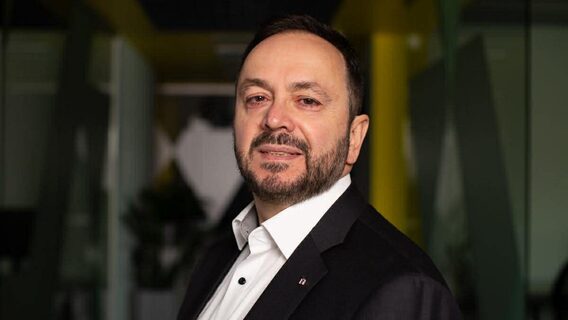
Perhaps every professional programmer's story begins long before a person sits down at a computer for the first time or writes the first line of code. The story of IT-Enterprise co-founder Volodymyr Mikhailov began in Kyiv in the 1970s, in a city that would have had every chance of becoming the Soviet Silicon Valley if not for the imperial realities of that era. It was an environment where children's games were intertwined with adult engineering conversations, and the words "computer", "ASUV" and "Institute of Cybernetics" sounded not like science fiction, but as part of everyday life...

Jobs instead of routine: how Kredobank saves employees' time
Jobs instead of routine: how Kredobank saves employees' time
In the financial industry, automation has long ceased to be exclusively an IT sphere. At Kredobank, this transition came naturally: after the large-scale implementation of RPA (Robotic Process Automation), the bank faced another challenge — how to get rid of hundreds of small routine actions that take up employees' time every day.
This is how RDA (Robotic Desktop Automation) appeared in the bank — automation at the workplace level. And with it — the Robotics Academy, where employees learn to create their own robots.
dev.ua continues the story started in a conversation with Oleg Noga, COO (Chief Operating Officer) of Kredobank, and talks about the robotization model that combines technology and human development.
“I regret not starting my business right after university.” Ukrainian created fintech startup for sailors Kadmos and sold it to the Japanese: how it was
“I regret not starting my business right after university.” Ukrainian created fintech startup for sailors Kadmos and sold it to the Japanese: how it was
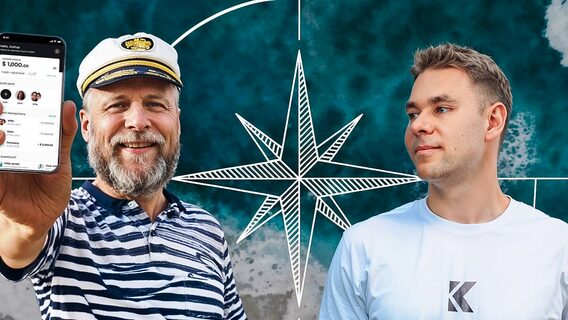
How many Ukrainian startups are bought in the Far East? Units. And today’s hero of the interview is Sasha Makarovych, the founder of the Kadmos startup, which he sold to a Japanese company last year. His service simplified salary payments to sailors and became one of the few global solutions in this industry. dev.ua asked Sasha about his childhood and youth, his first business attempts, the creation of Kadmos, and the sale of the service to the Japanese. The entrepreneur also gave advice to Ukrainian startup founders based on his own experience. What follows is his direct speech.
How I Lost My Website on Black Friday Over One Letter (and What Happened)
Blogs
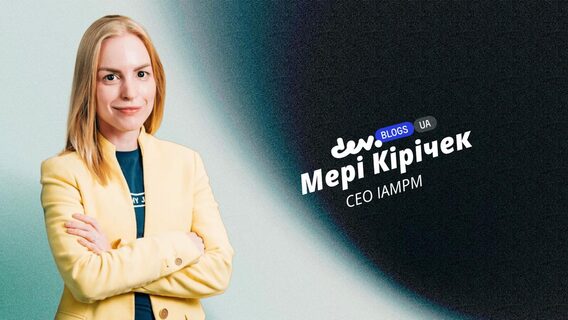
How I Lost My Website on Black Friday Over One Letter (and What Happened)
History lesson on why the CEO of an EdTech company is not immune to epic fuckups.
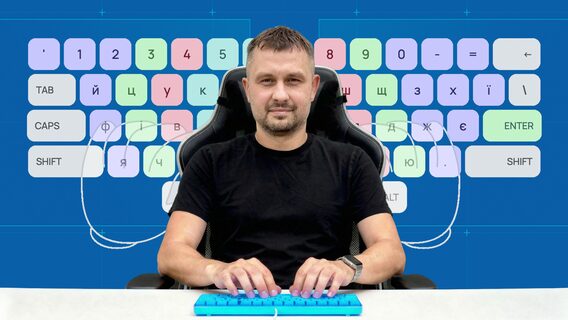
“I don’t want to contribute to the development of the Russian language even for money.” How Work.ua co-founder Andriy Borovyk is developing his own product — the Ratatype speed typing simulator — and why he focused on the educational domain
“I don’t want to contribute to the development of the Russian language even for money.” How Work.ua co-founder Andriy Borovyk is developing his own product — the Ratatype speed typing simulator — and why he focused on the educational domain
Last year, Work.ua co-founder Andriy Borovyk sold his stake to partners — another co-founder of the job search platform, Artur Mikhn, as well as Polish Grupa Pracuj and Jooble co-founder Roman Prokofiev. Since then, he has focused exclusively on the development of two of his own projects — the keyboard simulator for speed typing Ratatype and the Education.ua platform.
We talked to Andriy Borovyk about how the idea of Ratatype came about, where the touch typing simulator has already conquered the market, and where it is just getting there, and why in some countries speed typing is taught to children in schools. Andriy Borovyk also told dev.ua whether it is difficult for the project team to deal with unusual language layouts and why the task now is not only to add new layouts, but also to remove an existing one. And most importantly, why he, as a techno-businessman, believes in the educational domain despite the lack of large funds in it.

A Ukrainian developer published a React manual in the US. Why he chose self-publishing on Amazon and what you need to know to become an author
A Ukrainian developer published a React manual in the US. Why he chose self-publishing on Amazon and what you need to know to become an author
Ukrainian developer Serhii Onishchenko never dreamed of becoming a programmer. It all started unexpectedly — with his first job as a system administrator, where he first touched on commercial web development. «I was just drawn in,» he says.
Today, the IT professional lives and works in the US, has 10 years of experience in frontend and mobile development, and recently published his own technical book on Amazon. It contains concentrated experience working with large projects and a systematic approach to building scalable React applications.
dev.ua tells why Ukrainian developers are able to create world-class content.
3 comments
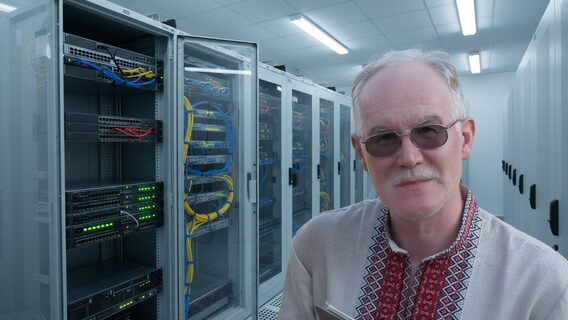
"I'm bored at home. As long as my health, intelligence, and qualifications allow it, why not work?" A 66-year-old IT worker, upon learning that he was being laid off, sent out 700 resumes and received a new offer. How it was
"I'm bored at home. As long as my health, intelligence, and qualifications allow it, why not work?" A 66-year-old IT worker, upon learning that he was being laid off, sent out 700 resumes and received a new offer. How it was
This is a story about how IT has no age limits. Our hero today is a retired engineer from Rivne, Serhiy Henzel. The 66-year-old from Aityte, upon learning of his dismissal, began to look for and finally found a new job in his specialty. This was preceded by 700 responses to vacancies, ignoring recruiters, several interviews and test tasks. In the end, the specialist received an offer and has already started working. Serhiy shared his story with dev.ua.
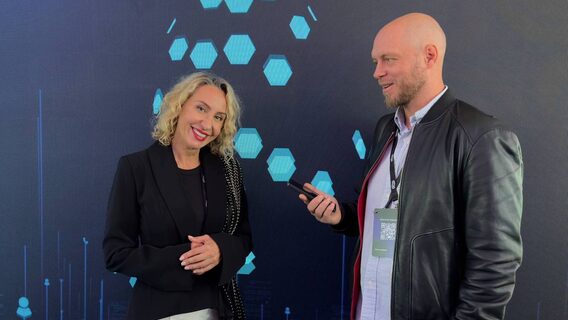
One signature instead of a ton of papers: how a Ukrainian family created a digital ecosystem that almost all businesses use
One signature instead of a ton of papers: how a Ukrainian family created a digital ecosystem that almost all businesses use
Linkos Group has been creating digital services for reporting, document management, and business process automation for over 25 years. In an exclusive interview, Olesya Linnyk, the company’s managing partner, told how the company’s history began, which products bring the most revenue, how the war changed demand, and what awaits Ukrainian digital services in the future.
1 comment
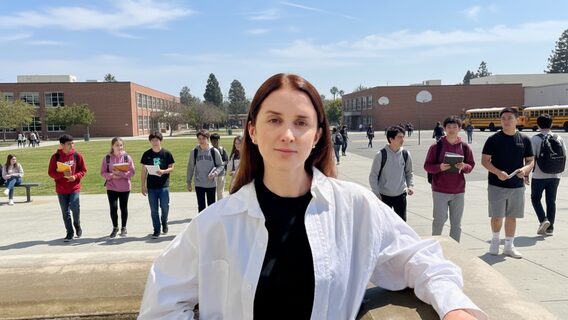
“In the US, ideas have a chance to become large-scale products.” An engineer and researcher from Lviv is creating an AI platform to support teenagers, which is being prepared for testing in American schools
“In the US, ideas have a chance to become large-scale products.” An engineer and researcher from Lviv is creating an AI platform to support teenagers, which is being prepared for testing in American schools
Lviv-based researcher and engineer Maria Giy, together with a professor at the University of California (CSUN), is developing the Early Insight & Engagement System (EIES) AI platform — an innovative solution at the intersection of engineering, behavioral sciences, and ethical artificial intelligence. The system detects signs of stress and isolation in adolescents and can reduce the number of students dropping out of school and criminalization of youth. The idea for such a platform was born from an academic study of the behavior of Ukrainian adolescents, which Maria conducted with Lviv National University, working with data from hundreds of children. Currently, the specialist lives in the USA, and her development is being prepared for testing in American schools in 2026. The EIES project is an example of an original contribution to the development of EdTech engineering and socially oriented AI, which has already attracted the attention of the academic and technological communities in the USA. Maria’s work demonstrates international leadership in the field of educational technology and artificial intelligence aimed at supporting youth.
dev.ua talked to the specialist and learned a lot of interesting things about the career and achievements of the graduate of the Ivan Franko National University of Lviv, who has been creating useful AI products overseas for several years. Below is a direct speech from the specialist.
6
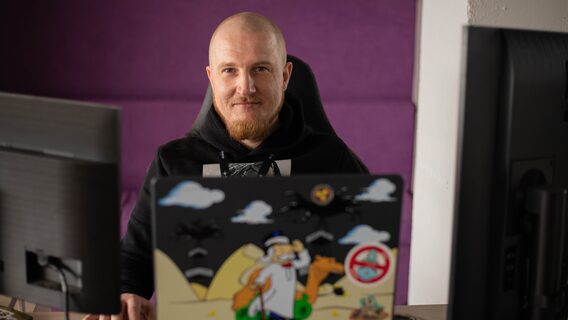
"When everyone in IT dreams of 'remote' and 'free schedule', I realized: I need a different type of freedom." The story of a veteran who consciously chose the office format of work from 9 to 18, and does not regret it at all
"When everyone in IT dreams of 'remote' and 'free schedule', I realized: I need a different type of freedom." The story of a veteran who consciously chose the office format of work from 9 to 18, and does not regret it at all
Software Developer at Sigma Software Group Alexander Filippov is a veteran who managed to return to IT after demobilization. He returned to IT for the third time — before the war he had a break in his profession, trying to create a business. Unlike many IT workers, he chose an office format of work, because he believes that «frames remove noise.»
dev.ua talked to Oleksandr about what it’s like to return from the army to civilian life, to work in an office when most professionals are looking for complete remote work, and about the importance of freedom in the life of a former military man.

“I drink coffee with cardamom and check Signal every night.” What’s a day like for the president of the most secure messenger, Signal: a day with Meredith Whittaker
“I drink coffee with cardamom and check Signal every night.” What’s a day like for the president of the most secure messenger, Signal: a day with Meredith Whittaker
Signal messenger president Meredith Whittaker lives between New York and Paris, runs a company at the forefront of digital privacy, and despite her hectic pace, finds time for yoga, books about AI, and coffee with cardamom.
«I joined Signal because I know the founder, Moxie Marlinspike, from our joint open-source project WindSignal,» says Meredith.
Her day was " lived " by Business Insider.

“Working with IoT is like playing God, but with code.” The chemist from Kharkiv “didn’t leave science, he just changed the formula” and self-taught himself to become a developer. He now optimizes the services of the American Mercury Intermedia and has his own app.
“Working with IoT is like playing God, but with code.” The chemist from Kharkiv “didn’t leave science, he just changed the formula” and self-taught himself to become a developer. He now optimizes the services of the American Mercury Intermedia and has his own app.
42-year-old Android developer Oleksandr Plekhov has been working in IT for 12 years. Not only years of experience in the industry led him to his current job at the American Mercury Intermedia, where the Ukrainian is engaged in the optimization of existing solutions and the integration of third-party services. The fact is that Oleksandr shone in IT, having a degree in chemistry, and he believes that it was his natural science background that helped him successfully build a career in IT. His path to the IT field began after receiving a master’s degree in chemistry at the V. N. Karazin Kharkiv National University, where he received thorough knowledge of research and finding solutions to complex problems. After practical experience in his specialty, in 2012 he independently retrained as an IT developer and began his career as a Mobile Developer. Throughout his career, Oleksandr has worked on projects in various domains, including IoT, Healthcare, e-commerce, and media, and is known for his leadership and effective team management. Oleksandr is also a Senior Member of IEEE.
dev.ua spoke with the developer, who currently lives in the US, about switching, ideal mobile apps, the benefits of mentoring, and the Internet of Things. Here’s what the IT guy has to say.

“I put in the work and plowed in so that I could earn experience, reputation, ranking on the site, and money.” The story of an IT professional who earned enough money to buy a house in the village in a year and now works with Americans and artificial intelligence to the sound of roosters crowing in the background
“I put in the work and plowed in so that I could earn experience, reputation, ranking on the site, and money.” The story of an IT professional who earned enough money to buy a house in the village in a year and now works with Americans and artificial intelligence to the sound of roosters crowing in the background
«Briefly about how I earned money for a house in a year: I sat almost motionless for 10 hours every day for a year. I gained 15 extra kg and several thousand dollars. Now all hope is for 'you have to work hard in the village',» wrote freelance IT professional Viktoria Samarina in Threads, who returned to Ukraine after several years abroad. She currently blogs about life in a Carpathian village, where she tells how she is equipping a village house that did not have a sewage system at the time of purchase. dev.ua spoke with Viktoria about the non-trivial decision, rural difficulties and contrasts, as well as career ambitions and plans. Her story is surprising and depressing at the same time.
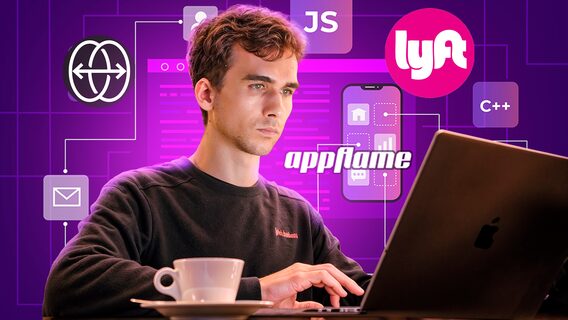
“I studied Data Science since I was 4 years old. Every math lesson was important.” The story of a math genius from a small village in Volyn who is now creating LLMs for Lyft, Reface, and AppFlame
“I studied Data Science since I was 4 years old. Every math lesson was important.” The story of a math genius from a small village in Volyn who is now creating LLMs for Lyft, Reface, and AppFlame
Imagine a Ukrainian who was born and raised in a small village with a population of 270 people, and now works for a tech giant in the USA. This is the real story of Serhiy Savin, a Data Scientist from the village of Khrypalichi, Volyn region. Serhiy told dev.ua about his path to global IT, work at Lyft, Reface, AppFlame in the USA, his desire to share knowledge and recording a course for «Diya.Osvita», as well as his own plans and ambitions. What follows is his direct speech.
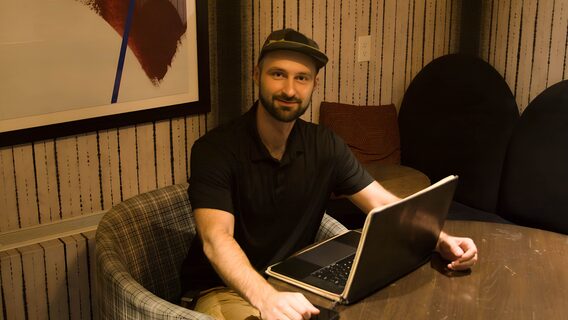
“I resigned from an American company for the sake of a Ukrainian miltech project.” The story of a KPI graduate who saved an American healthtech startup from collapse, created a mini-competitor to Netflix, and is now preparing an AI defense system against Russian FPV
“I resigned from an American company for the sake of a Ukrainian miltech project.” The story of a KPI graduate who saved an American healthtech startup from collapse, created a mini-competitor to Netflix, and is now preparing an AI defense system against Russian FPV
34-year-old Kyiv resident Oleg Polishchuk is the CIO of a Ukrainian AI startup in the miltech sector, which creates a product for tracking and shooting down FPV drones. He has actively integrated into the American IT community and, in addition to commercial activities, devotes a lot of time to science. His IT background includes several successful startup projects in the HealthTech and media sectors, and he is currently focused on a miltech startup, for the development of which he even resigned from the position of Head of Engineering in an American company, which he led out of crisis several years ago. Oleg has over 10 scientific publications and experience working in multinational teams. He is a polyglot, speaks four languages, so he knows how to open any door. dev.ua talked to a CIO from overseas and learned a lot of startup insiders that will be useful to every startup owner.

Blending Business and Science: How Infinity Technologies Builds R&D Hubs
Blending Business and Science: How Infinity Technologies Builds R&D Hubs
In 2019, something remarkable happened: a Swiss pension fund chose Ukrainian entrepreneur Oleksandr Yatsentyuk and his IT company, Infinity Technologies, to lead a large-scale digital transformation. Under his leadership, the team built one of Switzerland’s first interactive portals for hundreds of thousands of members. Previously, fund clients relied on paper correspondence and waited weeks for appointments. With the new portal, all communication moved online.

“It’s like processing 120,000 football fields in 25 days.” Why are UAVs increasingly used in agribusiness instead of tractors despite the constant work of electronic warfare? Rodion Soroka from Drone Agroflot spoke about the intricacies of the work of agricultural drones in Ukraine
“It’s like processing 120,000 football fields in 25 days.” Why are UAVs increasingly used in agribusiness instead of tractors despite the constant work of electronic warfare? Rodion Soroka from Drone Agroflot spoke about the intricacies of the work of agricultural drones in Ukraine
In a full-scale war, where the sound of a drone makes the heart beat faster and is the No. 1 target for the MVG, Drone Agroflot is betting on drones in the agribusiness sector. The company not only survived a Russian missile attack on its office and the constant loss of drones due to electronic warfare, but also managed to increase the volume of work and develop the direction of pilot training. Rodion Soroka, a key person shaping the strategic development of the commercial direction of Drone Agroflot, told dev.ua about the peculiarities of working with agricultural drones and the survival strategy in conditions of constant competition and military risks.
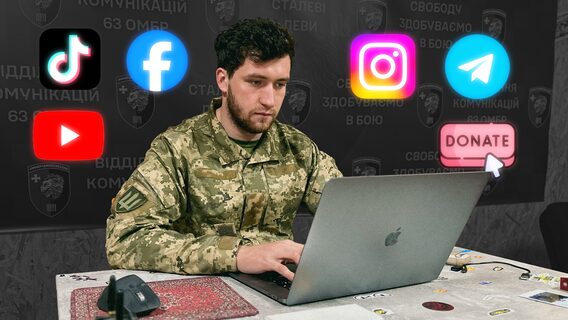
“I closed the last two fundraisings in less than a day.” PM SoftServe was a blogger in civilian life and became one for his brigade: now he helps close fundraisings quickly and attract volunteers
“I closed the last two fundraisings in less than a day.” PM SoftServe was a blogger in civilian life and became one for his brigade: now he helps close fundraisings quickly and attract volunteers
Artur Dmytryshyn, a Project Manager at SoftServe, joined the army about 10 months ago through recruitment. Although he is only 24 years old now, he decided not to wait until he reached military age, but to join the Armed Forces of Ukraine right away.
Thanks to his blog Keep Going, Artur is known to a fairly wide audience outside the IT bubble, and some of his posts have hundreds of thousands or even millions of views. It was his blogging experience that Artur decided to use to the maximum for the army, conducting meetings, solving recruiting issues, and creating viral content for the 63rd Separate Mechanized Brigade of the Armed Forces of Ukraine.

“Customers and PMs joked that I shouldn’t rush and relax a bit.” How a developer from Lviv is building an AI-Healthcare system in the USA: an interview with a Ukrainian who conquered global IT
“Customers and PMs joked that I shouldn’t rush and relax a bit.” How a developer from Lviv is building an AI-Healthcare system in the USA: an interview with a Ukrainian who conquered global IT
«I am inspired by creating something that really changes people’s lives and the work of teams,» says Kateryna Babiy, a 36-year-old developer from Lviv, who has been living and working in the USA for several years, where she is actively pursuing her career as an IT specialist.
According to Katya, what drives her the most is when complex technical challenges turn into effective solutions: for example, optimizing architecture or implementing new approaches that allow teams to launch features faster, and users to receive a stable and reliable product. «I get pleasure from being able to combine technology and innovation with practical benefits, I constantly learn on my own and help others develop through mentorship. Participation in hackathons and pet projects adds even more drive: here there are fast deadlines, new technologies, ideas and people — and you never know which next innovation will turn into a real product. The greatest joy is to see that your work and your experience transform the team, the product and even the industry,» says the IT professional.
In an interview with dev.ua, she told how she conquered America, what those who plan to move to the land of opportunities should prepare for, and whether American IT differs much from local Ukrainian IT. And also about mentorship, startups, and dreams. Next is Katya’s direct speech.
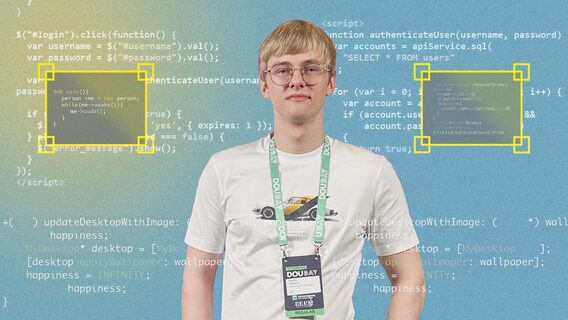
“I hated programming and never thought IT would be my life.” The story of a developer whose career was forced to start at 16. Now 19, he is already a middle manager at his dream company and plans to found his own startup in the U.S.
“I hated programming and never thought IT would be my life.” The story of a developer whose career was forced to start at 16. Now 19, he is already a middle manager at his dream company and plans to found his own startup in the U.S.
The story of 19-year-old Maksym Tyulyukov from Mykolaiv is about a thirst for knowledge, uninvited cardinal changes in life due to the war, and a successful attempt to build an IT career while still in school. He is perhaps the youngest middleware developer that the dev.ua editorial team has ever heard of. His career in IT began at the age of 16.
The fact is that Maksym is from Mykolaiv. And in the first 10 days of a full-scale war, he saw a column of tanks with Z-tanks in person, and realized that he had to leave. For the next six months, the guy and his family lived in Bulgaria, but due to hardship and moral exhaustion in a foreign country, they returned to Ukraine and settled in Odessa. Currently, Maksym is a student at the Odessa State University of Intellectual Technologies and Communications. He works at his dream company and ambitiously plans to move to San Francisco, found his own startup, and, of course, work for global tech giants.
Today’s story is about the difficult but inspiring path of a young man who confidently steps towards his dream despite the war, forced relocations, and circumstances that arise unexpectedly. Next is a direct speech by Maksym, who at 19 is already a Middle Back-End Engineer at OBRIO.

“Working on a ladder in a bulletproof vest is very difficult. Besides, for the enemy it’s like a red rag to a bull.” The director of an internet provider from Kramatorsk told how he lost 80% of subscribers at the beginning of the full-scale war, but kept the business, and now he’s even investing in development
“Working on a ladder in a bulletproof vest is very difficult. Besides, for the enemy it’s like a red rag to a bull.” The director of an internet provider from Kramatorsk told how he lost 80% of subscribers at the beginning of the full-scale war, but kept the business, and now he’s even investing in development
On the eve of the interview with dev.ua, employees of the local Internet provider Elite-Line were eliminating the consequences of the arrivals — in Kramatorsk they deal with this constantly. According to the director of the provider, Mykola Kucheruk, while their team was working on it, three KABs flew literally 500 meters from their office. The consequences of this arrival will also have to be resolved quickly, because some subscribers were again left without the Internet.
Elite-Line specialists arrive at the destination in a few hours, having endured a pause: no one has canceled the tactic of repeated strikes against the Russians, so it is highly undesirable to leave immediately. In this regard, the Internet provider’s employees are exposed to the same risks as rescuers and medics arriving at the scene.

Instead of relaxing on the ocean shore, there are soldering irons in hand and workshops. How Ukrainian IT professionals gathered a community of like-minded people in Portugal who help assemble FPV drones
Instead of relaxing on the ocean shore, there are soldering irons in hand and workshops. How Ukrainian IT professionals gathered a community of like-minded people in Portugal who help assemble FPV drones
It would seem like a futile task to assemble FPV drones for the needs of the Defense Forces in sunny Portugal, but a union of Ukrainian IT workers has banded together to attract local residents to help Ukraine. And all this despite the Russians' attempts to sabotage the volunteers' activities. The founder and communications officer of DroneAid Porto told dev.ua about the peculiarities of fundraising in Portugal, what amounts locals donate and how DroneAid manages to attract new supporters.

"I had to go on sabbatical to get back to life and not fall into a severe depression." Project manager told dev.ua why she left IT and opened a dog shop
"I had to go on sabbatical to get back to life and not fall into a severe depression." Project manager told dev.ua why she left IT and opened a dog shop
Before the war, Katrin Yarosh had her own online store, and after the full-scale invasion began, she worked as a project manager in a large outsourcing company. But one day, Katrin realized that she needed a break so as not to burn out completely. The Aityvitsa radically changed her field of activity and created a store of goods for four-legged friends. We tell you what motivated her and how her life turned out after IT.
1 comment

"It was a hot Odessa summer, the air conditioner wasn't working... I forgot that I had turned on the camera and started to "air out" myself." The ІТ-people told many funny stories that happened to them during the meet. Thread with 200+ comments
"It was a hot Odessa summer, the air conditioner wasn't working... I forgot that I had turned on the camera and started to "air out" myself." The ІТ-people told many funny stories that happened to them during the meet. Thread with 200+ comments
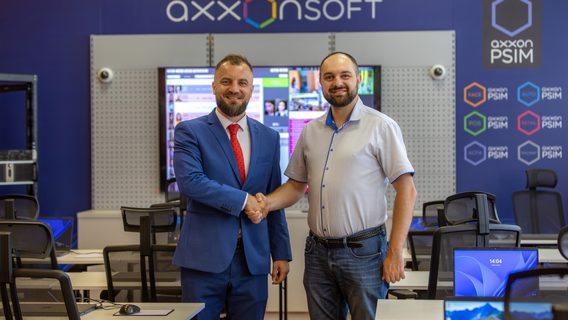
KAI and AxxonSoft launched the first AI security laboratory in Ukraine worth over 5 million hryvnias
KAI and AxxonSoft launched the first AI security laboratory in Ukraine worth over 5 million hryvnias
Oleksandr Kurinny, a graduate of KAI and CEO of AxxonSoft Ukraine, together with the Kyiv Aviation Institute, opened the first intelligent video surveillance laboratory in Ukraine. Thanks to this cooperation, students will be able to learn to develop complex security systems based on artificial intelligence. The company invested more than 5 million hryvnias in the project, which allowed creating a unique educational program. A dev.ua journalist visited the opening of the Axxonsoft intelligent video surveillance laboratory and tells how this modern space will function.
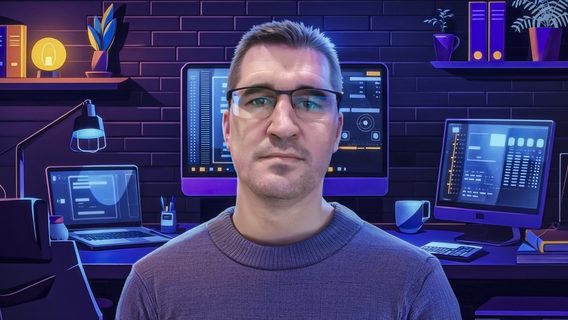
"I have a deferment thanks to school." A candid conversation with an IT professional from Pingle Studio, who teaches computer science at a Kharkiv school, about mathematics, the pains of Ukrainian education, AI in teaching, and the combination of pedagogy and work in IT
"I have a deferment thanks to school." A candid conversation with an IT professional from Pingle Studio, who teaches computer science at a Kharkiv school, about mathematics, the pains of Ukrainian education, AI in teaching, and the combination of pedagogy and work in IT
43-year-old Oleksandr Omelayenko from Kharkiv successfully combines work in IT and teaching at school. In parallel with his work in a game development company, he works as a computer science teacher in grades 5-11. And this, the IT specialist admits, gives him important preferences. In particular, thanks to the school, the specialist has a deferment from mobilization.
dev.ua continues the series of articles about IT specialists who combine work in business and teaching. Below is a frank conversation with Project Lead of Unreal Department at Pingle Studio Oleksandr Omelayenko about Ukrainian education, NMT, bureaucracy, and the difference between working in IT and at school. Next is the direct speech of the specialist.





